Pakistan steps deeper into space from satellites to lunar orbit
By
Web Desk
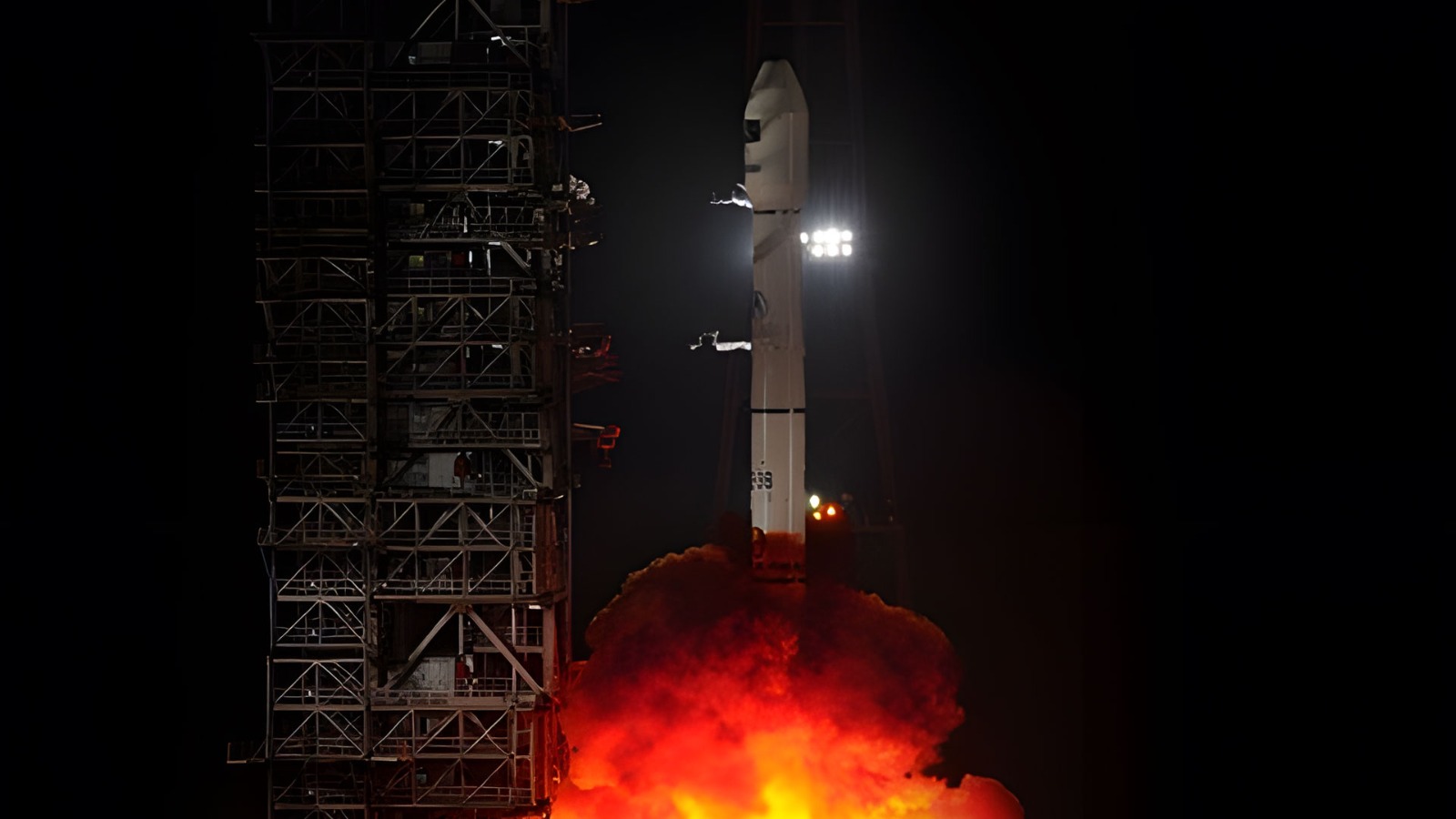
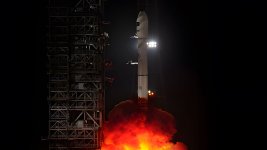 Pakistan’s space program has expanded rapidly with a series of satellite launches between 2024 and 2026. (SUPARCO)
ISLAMABAD: Pakistan’s third satellite in three months was launched on April 25, lifting off from a launch center in central China and slipping into orbit, completing a surveillance network Pakistan had been assembling, node by node, since 2025.
Pakistan’s space program has expanded rapidly with a series of satellite launches between 2024 and 2026. (SUPARCO)
ISLAMABAD: Pakistan’s third satellite in three months was launched on April 25, lifting off from a launch center in central China and slipping into orbit, completing a surveillance network Pakistan had been assembling, node by node, since 2025.
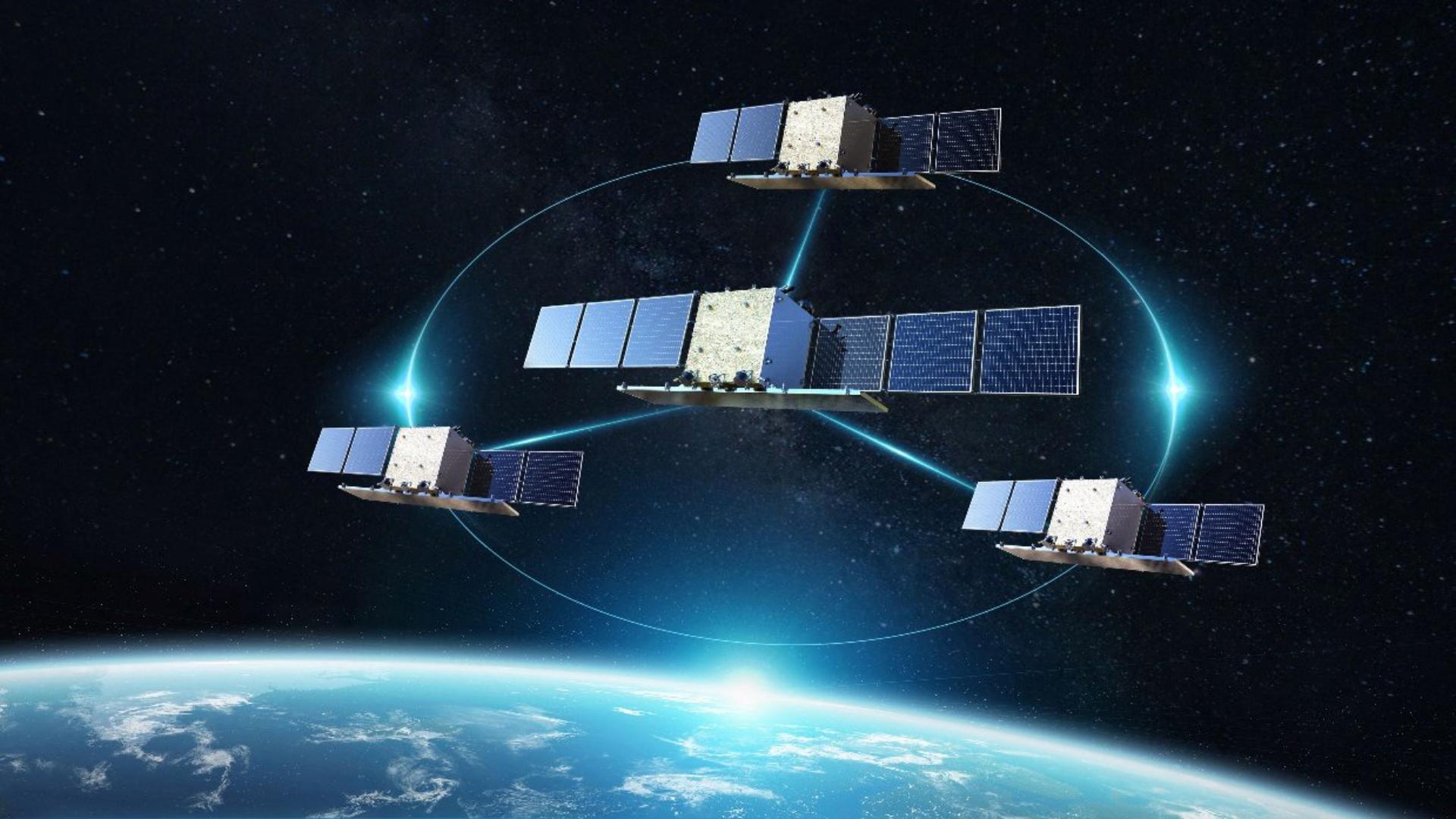
The spacecraft, called PRSC-EO3, does something its predecessors could not: it processes imagery in orbit, using an artificial intelligence system to filter and prioritize data before sending it down to Earth.
That distinction matters more than it might appear.
In flood response or infrastructure monitoring, the gap between data capture and action can render a satellite either an early-warning system or an after-action report.
Pakistan, which loses billions to climate-related disasters annually according to its own national space policy, is not building this constellation as a prestige project.
Since January 2025, it has launched five satellites; add two from 2024, including a 7-kilogram nanosatellite that reached lunar orbit aboard China's Chang'e 6 mission, and the country has placed seven spacecraft into orbit in roughly two years. That pace is historically new for most developing economies.
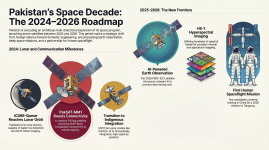
(
AI generated)
What changed
For most of Pakistan's space history, the country's relationship with orbit was transactional. It leased foreign satellites, contracted foreign manufacturers, and depended on foreign rockets. A $297 million loan from a Chinese state bank financed PakSAT-1R in 2011. The satellite was built abroad, launched abroad, and delivered to Pakistan already in orbit.
The shift began quietly. In 2018, Pakistani engineers designed and assembled a 285-kilogram satellite, PakTES-1A, using commercially available components and their own integration work. It was not the most sophisticated spacecraft ever built. But it was built in Pakistan.
But today’s PRSC-EO3, with its onboard AI processor and stereo imaging module, can generate three-dimensional terrain maps, according to a Ministry of Foreign Affairs statement. It is a direct descendant of Pakistan’s earlier effort.
Budget allocations to SUPARCO, Pakistan's space agency, have increased in each of the last two fiscal years, specifically directed toward indigenous technology.
What the data is already doing
The satellites are not merely symbolic. Research published in the peer-reviewed journal Sensors found that integrating data from Pakistan's earlier Earth observation satellite with commercial imagery improved national crop yield estimates and reduced water use through precision irrigation.
That was with a single satellite providing intermittent passes. Three coordinated nodes change the calculus: coverage becomes persistent rather than occasional, and the data becomes the kind governments can build policy around.
A separate hyperspectral satellite, HS-1, launched in October 2025, adds an entirely different layer of information. While standard cameras measure light intensity, hyperspectral sensors distinguish between mineral composition, soil moisture, and crop stress across hundreds of spectral bands simultaneously. Pakistan now operates both.
The next frontier
Pakistan also announced this month the selection of two astronaut candidates, Muhammad Zeeshan Ali and Khurram Daud, for training at China's Astronaut Center. One will be selected for a mission to the Tiangong space station before the year ends, according to China Daily.
The scientific experiments planned for the mission, which include materials research in microgravity and biotechnology studies, are unlikely on their own to transform Pakistan's economy. What the mission produces is harder to quantify: a first generation of Pakistani scientists and engineers with direct experience in human spaceflight. That kind of institutional knowledge, once absent, tends to compound.
Pakistan's space program has a recurring logic: it identifies a dependency, builds toward eliminating it, then moves to the next one. Seven satellite launches in roughly two years are the clearest expression of that pattern to date.

www.pakistantv.com







 initiate them and they have come to fruition now on schedule.....