Pakistan vows to defend Saudi Arabia against Iran-backed Houthis by ‘whatever means’

Feroze

Trusted Member
Joined
Apr 18, 2023
Messages
7,372
Reaction score
5,913
Reputation
2,129.3
Country of Origin
Country of Residence

Pakistan vows to defend Saudi Arabia against Iran-backed Houthis by ‘whatever means’​

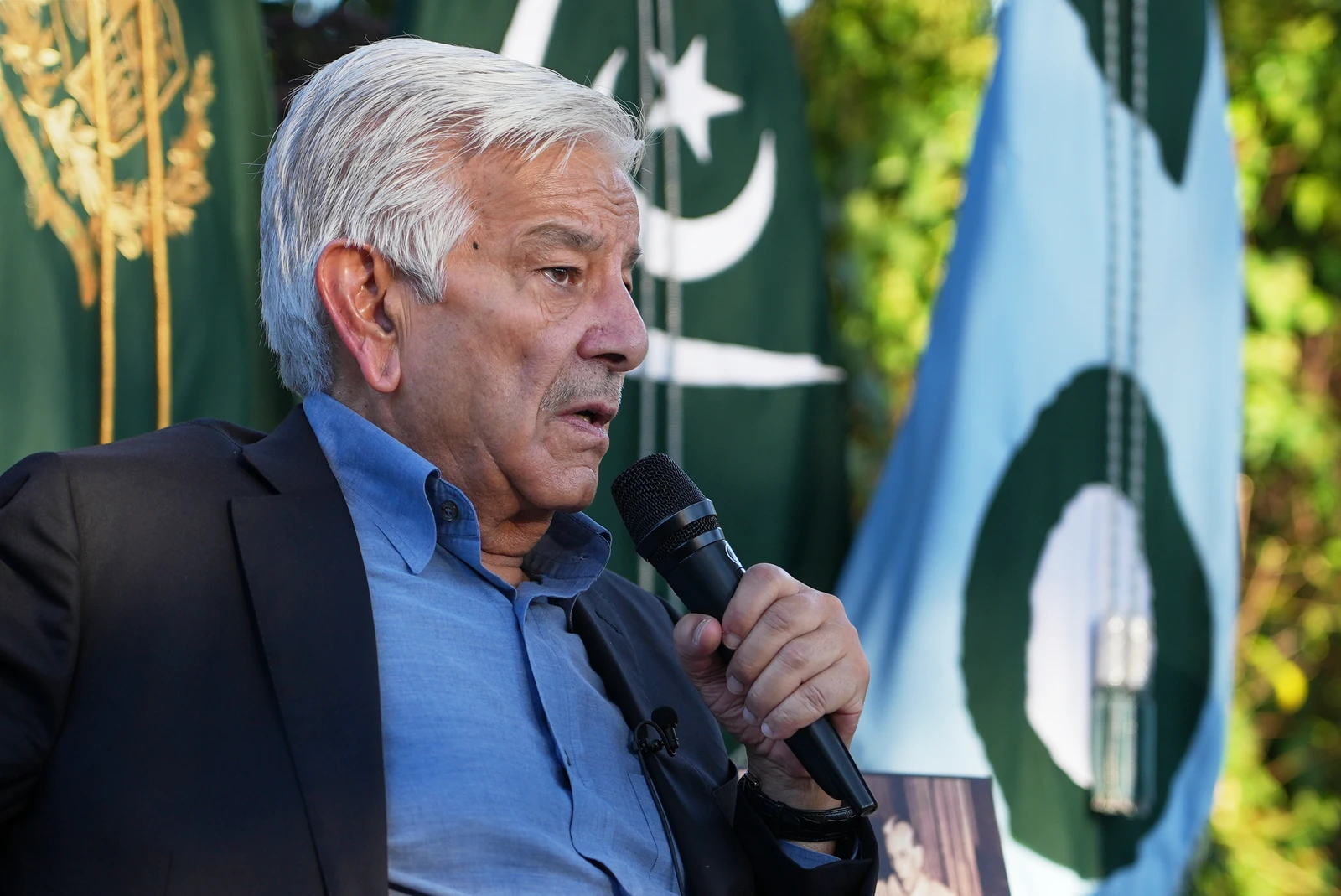
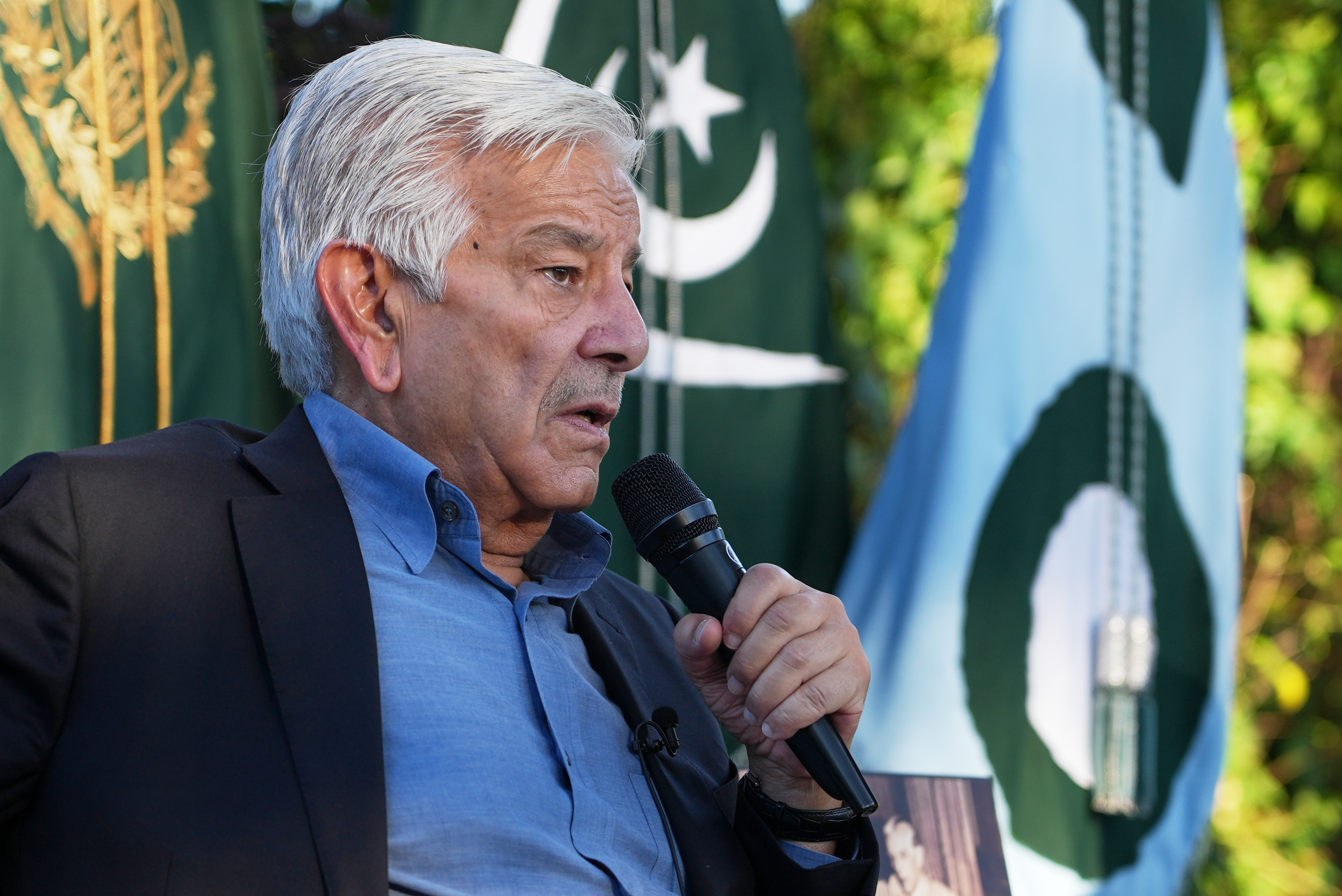
Pakistan's Defense Minister Khawaja Mohammad Asif speaks with media at the Pakistani Embassy in Rome, Italy, Tuesday, Sept. 29, 2026. (AP Photo/Andrea Rosa)
Short Url
Updated 30 September 2026 02:33
AP
September 30, 202602:23


Follow
  • Pakistan's defense minister has stated the country will use 'whatever means are available' to defend Saudi Arabia against Iran-backed Houthi militants.
  • A new mutual defense pact between Pakistan, Saudi Arabia, and Turkey allows Pakistan to support Saudi Arabia militarily, although specifics about participation in airstrikes remain unconfirmed.
ROME: Pakistan will use “whatever means are available” to defend Saudi Arabia against Iran-backed Houthi rebels, the country’s defense minister said Tuesday, offering one of Islamabad’s clearest indications yet that it could become directly involved in the widening regional conflict.

Defense Minister Khawaja Muhammad Asif declined to say whether Pakistani forces had already participated in airstrikes. He said, however, that Pakistan’s military capabilities would be available to Saudi Arabia under a new mutual defense pact with Saudi Arabia and Turkey.

“I’m not going into detail, but obviously when I say that we are bound by this arrangement to defend Saudi Arabia, that means whatever means are available at our disposal, they’ll be available to Saudi Arabia also. I think that’s a categoric statement,” Asif told reporters during a visit to Rome when asked whether Pakistan had been involved in airstrikes against Iranian operators in Yemen.

His response did not explicitly confirm Pakistani participation in any strikes. He also did not say whether Saudi Arabia, which has been repeatedly attacked by the Houthis in recent weeks, had asked for assistance.


Military commanders recently met

His comments came days after the army chiefs of Pakistan, Turkey and Saudi Arabia met in Riyadh to discuss responses to Houthi attacks.

Asif said the Houthis had intensified missile and drone attacks on Saudi Arabia and expanded their control along Yemen’s Red Sea coast.

The Houthis recently captured the strategic port city of Mokha and several Red Sea islands, extending their reach toward the Bab el-Mandeb Strait, a maritime route through which about 12% of global trade passes. They, along with allied militias in Iraq, also have attacked Saudi oil facilities and sought to prevent Saudi tankers from using the strait.


New alliance is still taking shape

Asif described the Houthis as aggressors and said Pakistan’s commitment to Saudi Arabia was unambiguous.

“Any enemy of Saudi Arabia is enemy of Pakistan. That should be very clear,” he said.

Saudi Arabia, Pakistan, and Turkey signed the Makkah Joint Defense Agreement on Aug. 7, declaring that an attack on one member would be treated as an attack on all three. The countries have described the pact as defensive and said it is not directed against any particular state.

The agreement brings together oil-rich Saudi Arabia, NATO member Turkey and nuclear-armed Pakistan. Asif did not mention nuclear weapons or suggest they were part of Pakistan’s commitment to Saudi Arabia.


Saudis plan assault on Houthis to break Red Sea chokehold​


RIYADH: Saudi Arabia is planning an offensive against Houthis in Yemen, with options being considered including a coastal push to secure the Red Sea shipping route or an assault on multiple fronts, regional and Western officials told Reuters.

The operation, expected to be launched in the coming weeks, will by led by Yemeni forces on the ground, which are overseen by Riyadh, and supported by Saudi air strikes, according to six people with knowledge of the preparations.

While the US is already providing intelligence to support Riyadh’s operations in Yemen, and some regional and European nations are providing mainly defensive military aid to the kingdom, the Saudi allies aren’t expected to play a direct role in combat operations, said the people who requested anonymity to discuss security matters.

Saudi Arabia entered neighboring Yemen’s civil war in 2015 at the head of an Arab coalition in support of the internationally recognised government, which the Houthis had driven out of the capital Sanaa. A truce agreed between the warring parties in 2022 largely held until this year when the Houthis launched missileand drone attacks on Saudi shipping and oil infrastructure in a spillover from the Iran war.

A key objective of the planned Saudi offensive, which hasn’t been previously reported, is aimed at reversing the rapid gains made by the Houthis last month when they advanced down the coast and seized control of the Bab el-Mandeb strait, according to the people with knowledge of the plans who include Gulf and Yemeni officials and Western diplomats.

The Saudis are considering two possible options for the assault, the Gulf and Yemeni officials said: Either a narrowly focused attack on the area around Bab el-Mandeb or a broader offensive that also includes other synchronised attacks on multiple fronts around Yemen, in the governorates of Al-Bayda, Marib, Taiz and Al-Jawf.

More than 100,000 Yemeni troops could be mobilised in the offensive, depending on the scale, the officials all said.


Spokespeople for the Saudi and Yemeni governments, the Houthis, and the US military didn’t immediately respond to requests for comment about the Saudi plans.

Bab el-Mandeb is the southern exit passage of the Red Sea, a key shipping route between the Mediterranean and Asia that’s assumed even more importance this year as an alternative to the Strait of Hormuz, which has been effectively closed by the Iran conflict.

Riyadh has concluded it cannot enter new Yemeni peace negotiations with the Houthis while they remain in control of Bab el-Mandeb, giving them significant global leverage, the Western diplomats and Gulf official said.

The six people with knowledge of the Saudi preparations couldn’t give a precise timing for the launch of the offensive, with their estimates ranging from within a week to until after the US mid-term elections in early November.

Michael Ratney, a former US ambassador to Saudi Arabia, said he expected an offensive to be narrowly focused and certainly more modest in scope than the Saudi-led operation in 2015.

“As much they want to vanquish the Houthis completely, they also need to get back to status quo ante before Houthis controlled territory along Bab el-Mandeb,” he added. “Ideally, it would be a fairly limited operation to retake coastal areas and get back to normal maritime traffic.”

Trump, Turkiye, and Pakistan

Washington, Saudi Arabia’s most powerful ally, is providing military advisers and intelligence including targeting information to support Saudi air operations in Yemen, according to one of the Western diplomats.

However, the extent of support may be limited. Reuters has previously reported that US President Donald Trump rebuffed requests by Saudi crown prince Mohammed bin Salman for direct military support such as air strikes.

Pakistan and Turkiye, with whom Saudi Arabia signed a joint defence agreement last month, have provided military equipment that the kingdom is using in Yemen, Pakistani and regional officials said.

Pakistan will defend Saudi Arabia in any conflict, says Khawaja Asif

Last month, Pakistan sent four cargo planes with equipment including air defence systems, light artillery, drones and anti-drone systems to Aden, the seat of Yemen’s Saudi-backed government, a Pakistani government official said.

Pakistani military advisers are also on the ground with Saudi counterparts to support Yemeni forces, according to a second Pakistani official, the Gulf official and a Western diplomat. Turkish drones, bought by Saudi Arabia before the current war, have also been deployed over Yemen, they added.


One of the kingdom’s key concerns in launching a new offensive in Yemen is how to protect its oil facilities and other infrastructure from Houthis drone and missile attacks, according to regional officials who said Riyadh has asked several allies for help with defensive systems.

Pakistan has deployed between 30,000 and 40,000 troops to Saudi Arabia to help defend the kingdom’s land borders and help with drone and missile interceptions, according to the second Pakistani official, who said the troops arrived in waves beginning last year but also after the recent escalation. Islamabad hasn’t made any decision to send troops into Yemen in a fighting capacity, the official said.

Pakistan, Turkiye, Saudi Arabia, Egypt affirm Riyadh’s right to defend itself

The Pakistani and Turkish defence ministries didn’t respond to requests for comment on their military support for Riyadh.

France, meanwhile, has announced it will send defensive systems and troops to Saudi Arabia to help protect the Red Sea port ‌city of Yanbu.

Fractured Yemeni forces

Any ground operation inside Yemen will rely on the disparate coalition of Yemeni fighting factions.

“Many anti-Houthi forces are still not organised or prepared for the kind of sustained offensive required to push back a disciplined Houthis military force. And they are being tested right now, as the Houthis apply pressure across several fronts at once,” said Yemen analyst Mohammed Albasha.

Ali Shihabi, a Saudi political analyst close to government thinking, cautioned the outcome of any offensive by the Saudis against the Houthis would depend on how ground forces perform.

“The priority so far has been to defend the positions on the ground and stabilise the front, but certainly they will be going on the offensive,” he said. “Success greatly depends on the quality of the performance of the local forces.”


Pakistan vows to defend Saudi Arabia against Iran-backed Houthis by ‘whatever means’​

Pakistan's Defense Minister Khawaja Mohammad Asif speaks with media at the Pakistani Embassy in Rome, Italy, Tuesday, Sept. 29, 2026. (AP Photo/Andrea Rosa)'s Defense Minister Khawaja Mohammad Asif speaks with media at the Pakistani Embassy in Rome, Italy, Tuesday, Sept. 29, 2026. (AP Photo/Andrea Rosa)
Pakistan's Defense Minister Khawaja Mohammad Asif speaks with media at the Pakistani Embassy in Rome, Italy, Tuesday, Sept. 29, 2026. (AP Photo/Andrea Rosa)
Short Url
Updated 30 September 2026 02:33
AP
September 30, 202602:23


Follow
  • Pakistan's defense minister has stated the country will use 'whatever means are available' to defend Saudi Arabia against Iran-backed Houthi militants.
  • A new mutual defense pact between Pakistan, Saudi Arabia, and Turkey allows Pakistan to support Saudi Arabia militarily, although specifics about participation in airstrikes remain unconfirmed.
ROME: Pakistan will use “whatever means are available” to defend Saudi Arabia against Iran-backed Houthi rebels, the country’s defense minister said Tuesday, offering one of Islamabad’s clearest indications yet that it could become directly involved in the widening regional conflict.

Defense Minister Khawaja Muhammad Asif declined to say whether Pakistani forces had already participated in airstrikes. He said, however, that Pakistan’s military capabilities would be available to Saudi Arabia under a new mutual defense pact with Saudi Arabia and Turkey.

“I’m not going into detail, but obviously when I say that we are bound by this arrangement to defend Saudi Arabia, that means whatever means are available at our disposal, they’ll be available to Saudi Arabia also. I think that’s a categoric statement,” Asif told reporters during a visit to Rome when asked whether Pakistan had been involved in airstrikes against Iranian operators in Yemen.

His response did not explicitly confirm Pakistani participation in any strikes. He also did not say whether Saudi Arabia, which has been repeatedly attacked by the Houthis in recent weeks, had asked for assistance.


Military commanders recently met

His comments came days after the army chiefs of Pakistan, Turkey and Saudi Arabia met in Riyadh to discuss responses to Houthi attacks.

Asif said the Houthis had intensified missile and drone attacks on Saudi Arabia and expanded their control along Yemen’s Red Sea coast.

The Houthis recently captured the strategic port city of Mokha and several Red Sea islands, extending their reach toward the Bab el-Mandeb Strait, a maritime route through which about 12% of global trade passes. They, along with allied militias in Iraq, also have attacked Saudi oil facilities and sought to prevent Saudi tankers from using the strait.


New alliance is still taking shape

Asif described the Houthis as aggressors and said Pakistan’s commitment to Saudi Arabia was unambiguous.

“Any enemy of Saudi Arabia is enemy of Pakistan. That should be very clear,” he said.

Saudi Arabia, Pakistan, and Turkey signed the Makkah Joint Defense Agreement on Aug. 7, declaring that an attack on one member would be treated as an attack on all three. The countries have described the pact as defensive and said it is not directed against any particular state.

The agreement brings together oil-rich Saudi Arabia, NATO member Turkey and nuclear-armed Pakistan. Asif did not mention nuclear weapons or suggest they were part of Pakistan’s commitment to Saudi Arabia.


Pakistani politicians and the Generals including their Green card children can go to the front lines and fight this war for the Zionists...
 
Pakistan should stay away from Riyadh’s war of choice. Why involve yourself in other people’s war when major regions of your country are no go zones for your state.
 
When you have your critical oil infrastructure out in the open which can easily be targetted by anyone in the region (zions, proxies, or enemies or subjugated people) then perhaps u shouldn't take PANGA with others.

Why broke the ceasefire ? Now here we are with the conflict increasing in intensity everyday, and Pakistani military being confronted on multiple fronts......

Indian firing across the border just killed 2-3 civilians just now. Where is the response from the Asim Munir and Co ??
 
Pakistani politicians and the Generals including their Green card children can go to the front lines and fight this war for the Zionists...
This has nothing to do with the Zionists and over-simplification helps nobody except the ignorant crowd who keep on perpetuating silly conspiracy theories. Just like the Iranian clergy in power, the Saudi royalty wants to ensure their survival. The Yemen conflict dates back to the 90s. It is a proxy conflict between KSA and Iran. The former feels Iran has too much influence in its backyard and they don't want that. Whether that is right or wrong can be debated. Iran felt the same with the US being next door to it in Iraq which it now considers its backyard.

For those saying Pakistan should stay out, we helped out Syria, Jordan, Iraq too in the past wars. Second, KSA has put their money where their mouth is for Pakistan in every financial crunch (including when we went nuclear in 1999). While I really hope Pakistan is not dragged into this conflict between KSA/Iran (as long as Pakistan remains defensive, which it intends to, we can manage it), staying on the sidelines is not an option for either Pakistan or Turkey.

To its credit, Pakistan has tried its level best to make peace between Iran and other camps including KSA.
 
Remember a time when Saudis fought alongside Pakistan against India? Me neither. Stay the f&uk out of this mess, Pakistan.
They provided financial resources to Pakistan, which is what they could do.
 
Indian firing across the border just killed 2-3 civilians just now. Where is the response from the Asim Munir and Co ??
These snakes like munir and co will without hesitating drop a nuke on their own population if someone arab or a gora offered them a few more dollars and some green cards for their children.

"BuT aL SuAds iS oUR rEdLiNe"
 
recall what Saudis did to Janat Al Baqi..
and Meccah and Madina when they sacked both cities ?
for almost a decade they have embargoed an entire country and are no less than Israelis when it comes to indiscriminate bombings.

its a given that Saudis will not help Pakistan against Indians and Afghans Turks will ( as they did before).

its not unthinkable a false flag can bring gullible pakistanis to send troops to the meat grinder called Yemen.
 
Another Sectarian mud fest thread in the making... Pakistan signed a pact with KSA, so did Turkiye, sooner or later they have to do something if they are not already doing it behind the scenes, remember that Iranian were cussing Houthis when they were not firing any missiles on American ships and Iran was getting hammered, Pakistani's with their submissive kink are always ready to verbally abuse their own country for Iranians or Houthis or whatnot just because some Mullah in Masjid or Imam bargha has told them so.
 

Users who are viewing this thread

Pakistan Defence Latest

Back
Top