Namkeen Gosht
BISMA TIRMIZI
Namkeen Gosht is a meat delight hailing from Khyber Pakhtunkhwa and its adjoining regions; Afghanistan, the tribal belt and Central Asia, where dishes similar to our local
Namkeen Gosht are still enjoyed today.
This meat fare is a favourite amongst the mountain people, where the consumption of meat is a way of combating the rigorous terrain of the region; staying strong and warm. Its tender melt in the mouth texture, because of its slow cooking and minimum use of ingredients makes it an all-time favourite amongst meat lovers.
What makes
Namkeen Gosht such a hit?
Salt, ginger and pepper are the main ingredients, hence the flavour and tender bite of the meat, generally cooked after being freshly slaughtered, is not lost in a multitude of spices and vegetables, maintaining its subtle flavour.
In the city of Peshawar, and its surrounding areas, meat is king at meal times. Historically speaking, lamb and goat meat (mutton) has always been the favoured meat of South Asia, Middle East, Central Asia, and the Mediterranean.
Maybe it was the availability or size that made it an animal of choice to be hunted as a quick and easy dinner, or the fact that goat or lamb meat is extremely tender and juicy.
'At a garden party at Khyber in the 1920s, a British civil servant sampled the sort of [goat] kababs Babar would have eaten in the early 16th century. The local Afridis, a warlike nomadic mountain people, had invited the British to watch a display of guns, fireworks, and an exhibition of how they attack in enemy’s position. An old Afridi came up and offered a lump of sheep’s flesh freshly roasted. These had to be pulled off and eaten with fingers.'
It is believed that the ruling Mughal’s hearty appetite for beef, lamb and goat clashed with the dietary habits of many of their subjects in the subcontinent. But the mountain people of Khyber were used to the hearty meat-based diet of the nomadic shepherds of the region. The warrior nature of the Pukhtuns, Mongols (the ancestors of the Mughals) and others in the mountainous region encouraged consumption of the undomesticated animal, and vegetarianism was considered the diet of the people of the plains.
Food historian Lizzie Collingham says:
'The consumption of meat was associated with strength and valour. It was considered that environmental essences contained in the soil were transferred from plants and then into herbivores, which in turn were eaten by carnivores. Each transference created a more powerful distillation of essences. Meat was thus the most intense of foods.'
How did the traditional
Namkeen Gosht come to be?
My research pointed me to the land of the Pukhtuns. The dish is believed to be the ancestor of the
karahi gosht, since tomato and green chillie are not indigenous to the region, but black pepper has been indigenous to southern India for thousands of years and travelled to the mountains of the Pukhtuns; with conquerors, explorers and travelers making it the spice of choice in
Namkeen Gosht. From the north, the delicious
Namkeen Gosht travelled to the Punjab, where the people of the plains started adding green chillies to it.
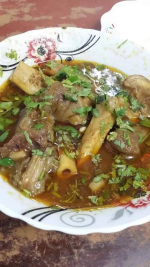
Namkeen Gosht is a deliciously rustic meat dish. Traditionally, small cubes of lamb or goat are cooked in ginger, salt, black pepper and/or green chillie, and preferably animal fat. The fresh meat provides the fat base for cooking, and it is most sumptuous when served with a side of hot naan and chopped onions.
My two favourites every Eid-ul-Azha were the
Namkeen Gosht my mother made and the special
karahi gosht made by my father. Oddly enough, I never asked Ammi for the recipe of
Namkeen Gosht, but instead got it from my friend Noreen, who recently made the same for a ladies lunch. My first bite transported me 30 years back in time. Here is the recipe, from my kitchen to yours:
Ingredients
2 lbs goat leg, cut in small cubes
1 ½ to 2 tbsp. freshly chopped ginger
½ to 1 freshly diced tomato
4 to 5 green chillies slit lengthwise, (optional, but preferable, this gives it a real kick)
Salt to taste
Oil ¼ to ½ cup, but with freshly slaughtered meat the animal fat should suffice
Method
Heat oil in heavy-lidded wok. Fry green chillies and ginger for a minute, adding meat, salt, tomato and black pepper, stir on high heat for a few minutes until the heat causes the meat to release its juice.
Seal pot with lid and simmer on low to medium heat for a few minutes, turning the heat to low and cooking until meat is tender and falling off the bone.
The meat juices gradually steam and evaporate, sealing in the juices, and slow cooking to perfection. Avoid adding water if possible, but if need arises, add a little to complete the cooking process.
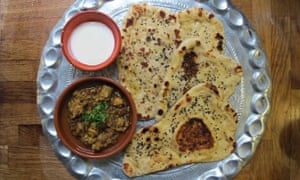
Serve with naan, lemon wedges and sliced onions.








 PTI Murad Saeed in Afghanistan, was 'controlling KP govt' from there: Rana Sanaullah (22 Viewers)


