Navigation
Install the app
How to install the app on iOS
Follow along with the video below to see how to install our site as a web app on your home screen.
Note: This feature may not be available in some browsers.
More options
Style variation
You are using an out of date browser. It may not display this or other websites correctly.
You should upgrade or use an alternative browser.
You should upgrade or use an alternative browser.
Pakistani Food
- Thread starter ghazi52
- Start date
More options
Who Replied?


ghazi52
THINK TANK: CONSULTANT
- Thread starter
- #197
. Samosa
BISMA TIRMIZI —
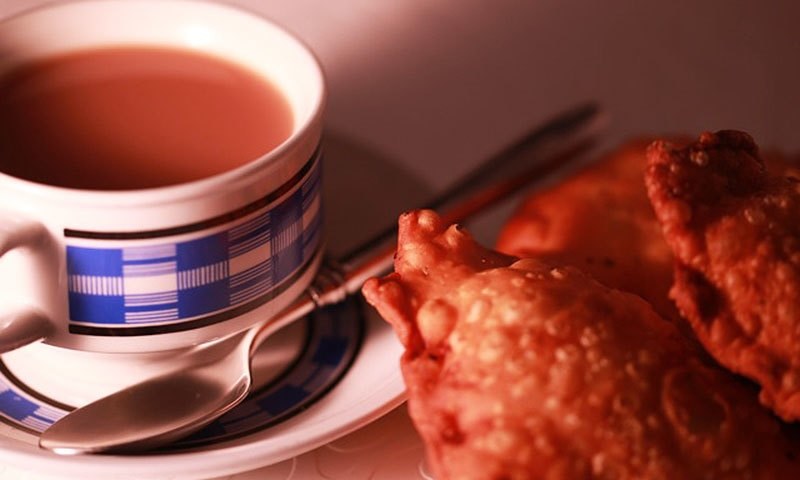
Named samsa after the triangular pyramids of Central Asia, the samsosa came to the subcontinent on ancient trade routes.
How is one to capture the essence of a samosa through the written word?
Growing up my favourite samosa had to be the one sold at my school tuck shop owned by Mr. Wellows. Anyone who went to the missionary schools in Karachi has had to have tasted the legendary alloo ka samosa sold at their canteens.
It was golden brown, crisp, flaky, delicious all at 40 paisas only! And if the school samosa wasn’t enough our chowkidar used to make the best homemade samosas, hence I’ve literally grown up on samosas.
But does the samosa really belong to the subcontinent?
No, it does not, to our utmost chagrin it migrated from Central Asia. Yes, yet another immigrant food on the desi plate that has adjusted so well to its adoptive land.
The immigrant samosa travelled the length and breath of the region and came to the subcontinent along the ancient trade routes of Central Asia.
The Oxford Companion To Food by Alan Davidson says;
The Indian [subcontinent] samosa is merely the best known of an entire family of stuffed pastries or dumplings popular from Egypt and Zanzibar to Central Asia and West China. Arab cookery books of the 10th and 13th centuries refer to the pastries as sanbusak (the pronunciation still current in Egypt, Syria and Lebanon), sanbusaq or sanbusaj, all reflecting the early medieval form of the Persian word sanbosag, though originally it was named samsa, after the triangular pyramids of Central Asia.
Like the Egyptian falafel, the samsa was also a travellers snack.
The wanderers and travellers of ancient days cooked the keema stuffedsamsas, roasted it on open flames and enjoyed it as a travel snack, and a long way it has come.

From travel snack to chai time, king of the iftar table and more importantly, an ever present item in almost all refrigerators in desi households.
So what happened after and how did the favourite desi snack evolve in the ancient days of Delhi?
It is said that the snack became such an intrinsic and favoured menu item in the royal kitchens of the 14th century dynasty of Muhammad Tughlaq, that he often requested for them to be made with onions, ghee and meat.
The poet Amir Khusrao wrote that the Delhi royalty enjoyed the snack immensely, and that tradition continues today from Delhi to Lahore and Karachi to Mumbai.

My wonderfully delicious samosa food journey took me to the days of the travelling Ibn Battuta who famously quoted the following about the sambusak, another name for the samosa; a near perfect description:
Minced meat cooked with almonds, pistachios, onions and spices placed inside a thin envelop of wheat and deep-fried in ghee and was served before the third course of pulao in the royal house of Tughluq.
A few hundred years after the honourable mention by Ibn Battuta, thesanbusa was mentioned by Abul Fazl in the famed Akbarnama also known as the Ain-e-Akbari. Abul Fazl said that a “wheat dish qutab is also something the royals love, which the people of Hind call the sanbusah. That which we call a samosa, by any other name would taste as delicious”.
In Spanish a similar kind of pastry is called empanadas, and initially when I moved away from Pakistan and craved the samosa I would happily settle for these, the stepbrother of the samosa.

When it was time for me to make samosas I turned to Shazli Auntie's recipe. The end result: heavenly. Here it is from my kitchen to yours.
Ingredients (for 12 pieces)
2 cups flour
4 tbsp. oil
12 to 14 tbsp. water
1 tsp. carom seeds
Salt to taste
Oil for frying
Potato Stuffing: Boil 3 medium sized potatoes. Once boiled, peel, add salt to taste, ½ tsp cumin, ¼ tsp red chillie powder, 1 tsp chopped cilantro, ¼ tsp chopped green chillie, fried onions, ½ tsp carom seeds, ½ tsp crushed coriander seeds, mash together and fry on high heat in 4 tbsp. oil for a few minutes.
Keema Stuffing: Brown ½ medium sized onion in 2 to 3 tbsp oil, once golden brown add 1 lbs ground meat, ½ tsp cumin, ½ tsp chillie powder, ½ tsp garam masala, ½ tsp ginger and garlic paste and salt to taste. Cook on medium heat for 15 to 20 minutes, raising the heat to high and stirring constantly for another 5 minutes or until the oil separates from the meat.
Method
Mix all ingredients for shell, and then knead for 10 minutes forming dough, cover with damp cloth and set aside for an hour in room temperature.
Divide into 6 equal dough balls, make 6 round rotis, cut into semi circle and on the straight edge of the sliced roti apply some water and fold to form a seal.
Stuff the prepared samosa cone with the potato, or mince stuffing and apply water on the round samosa cone circumference and pinch edges to seal.
Slide samosa in hot oil (at full heat), and turning heat to low after droppingsamosa in fryer and until it turns golden brown. Increase heat to hot again and remove from fryer. Drain and enjoy.
BISMA TIRMIZI —
Named samsa after the triangular pyramids of Central Asia, the samsosa came to the subcontinent on ancient trade routes.
How is one to capture the essence of a samosa through the written word?
Growing up my favourite samosa had to be the one sold at my school tuck shop owned by Mr. Wellows. Anyone who went to the missionary schools in Karachi has had to have tasted the legendary alloo ka samosa sold at their canteens.
It was golden brown, crisp, flaky, delicious all at 40 paisas only! And if the school samosa wasn’t enough our chowkidar used to make the best homemade samosas, hence I’ve literally grown up on samosas.
But does the samosa really belong to the subcontinent?
No, it does not, to our utmost chagrin it migrated from Central Asia. Yes, yet another immigrant food on the desi plate that has adjusted so well to its adoptive land.
The immigrant samosa travelled the length and breath of the region and came to the subcontinent along the ancient trade routes of Central Asia.
The Oxford Companion To Food by Alan Davidson says;
The Indian [subcontinent] samosa is merely the best known of an entire family of stuffed pastries or dumplings popular from Egypt and Zanzibar to Central Asia and West China. Arab cookery books of the 10th and 13th centuries refer to the pastries as sanbusak (the pronunciation still current in Egypt, Syria and Lebanon), sanbusaq or sanbusaj, all reflecting the early medieval form of the Persian word sanbosag, though originally it was named samsa, after the triangular pyramids of Central Asia.
Like the Egyptian falafel, the samsa was also a travellers snack.
The wanderers and travellers of ancient days cooked the keema stuffedsamsas, roasted it on open flames and enjoyed it as a travel snack, and a long way it has come.
From travel snack to chai time, king of the iftar table and more importantly, an ever present item in almost all refrigerators in desi households.
So what happened after and how did the favourite desi snack evolve in the ancient days of Delhi?
It is said that the snack became such an intrinsic and favoured menu item in the royal kitchens of the 14th century dynasty of Muhammad Tughlaq, that he often requested for them to be made with onions, ghee and meat.
The poet Amir Khusrao wrote that the Delhi royalty enjoyed the snack immensely, and that tradition continues today from Delhi to Lahore and Karachi to Mumbai.
My wonderfully delicious samosa food journey took me to the days of the travelling Ibn Battuta who famously quoted the following about the sambusak, another name for the samosa; a near perfect description:
Minced meat cooked with almonds, pistachios, onions and spices placed inside a thin envelop of wheat and deep-fried in ghee and was served before the third course of pulao in the royal house of Tughluq.
A few hundred years after the honourable mention by Ibn Battuta, thesanbusa was mentioned by Abul Fazl in the famed Akbarnama also known as the Ain-e-Akbari. Abul Fazl said that a “wheat dish qutab is also something the royals love, which the people of Hind call the sanbusah. That which we call a samosa, by any other name would taste as delicious”.
In Spanish a similar kind of pastry is called empanadas, and initially when I moved away from Pakistan and craved the samosa I would happily settle for these, the stepbrother of the samosa.
When it was time for me to make samosas I turned to Shazli Auntie's recipe. The end result: heavenly. Here it is from my kitchen to yours.
Ingredients (for 12 pieces)
2 cups flour
4 tbsp. oil
12 to 14 tbsp. water
1 tsp. carom seeds
Salt to taste
Oil for frying
Potato Stuffing: Boil 3 medium sized potatoes. Once boiled, peel, add salt to taste, ½ tsp cumin, ¼ tsp red chillie powder, 1 tsp chopped cilantro, ¼ tsp chopped green chillie, fried onions, ½ tsp carom seeds, ½ tsp crushed coriander seeds, mash together and fry on high heat in 4 tbsp. oil for a few minutes.
Keema Stuffing: Brown ½ medium sized onion in 2 to 3 tbsp oil, once golden brown add 1 lbs ground meat, ½ tsp cumin, ½ tsp chillie powder, ½ tsp garam masala, ½ tsp ginger and garlic paste and salt to taste. Cook on medium heat for 15 to 20 minutes, raising the heat to high and stirring constantly for another 5 minutes or until the oil separates from the meat.
Method
Mix all ingredients for shell, and then knead for 10 minutes forming dough, cover with damp cloth and set aside for an hour in room temperature.
Divide into 6 equal dough balls, make 6 round rotis, cut into semi circle and on the straight edge of the sliced roti apply some water and fold to form a seal.
Stuff the prepared samosa cone with the potato, or mince stuffing and apply water on the round samosa cone circumference and pinch edges to seal.
Slide samosa in hot oil (at full heat), and turning heat to low after droppingsamosa in fryer and until it turns golden brown. Increase heat to hot again and remove from fryer. Drain and enjoy.
ghazi52
THINK TANK: CONSULTANT
- Thread starter
- #198
The palla, the shrine, the catch and the cook

A fisherman shows a freshly caught palla.
It is flooding season again in River Indus, with choppy waters rushing downstream towards the Kotri barrage. Under the water's surface though, there is a different kind of activity. The palla fish zooms ahead, continuing its journey upstream against the powerful river currents.
The palla machli, with its silver body glistening from first light, is trapped. The nets positioned just a stone’s throw away from the imposing gates of the Kotri barrage have worked; and a fisherman, Gul Hassan Mallah, has his first catch of the day.
The palla is unique in more ways than one. Unlike most fish, it swims in a straight line against the strong currents of the river, too fast to be caught with routine and known fishing methods. As such, it requires special methods to catch it — nets known locally as mun, dudi, khas, muno, kacho, and pakko, as well as nylon nets, are produced especially to catch palla.
Secondly, it is not confined to the river Indus, being able to thrive in freshwater as well as saltwater. Arab Mallah, a 70 year old fisherman who is an influential part of a union of fishermen in the region, the Taraqi Pasand Mallah Tanzeem, explained, “There are two kinds of palla. The first one lays its eggs in the river and when the eggs hatch, the fish returns to the sea. The other type of palla lays its eggs in the sea and when the fries grow up after a year or so, they travel towards the Indus.”
But palla's affinity with Sindh is much deeper than just inhabiting its principal river. In fact, the legend of the palla is one often told by mohanas (fishermen). It is believed that when the palla starts traveling upstream from Thatta, it is black in colour. But as it passes by the Zindapir shrine near Sukkur, it gains a shining silver colour all over its skin and boasts a beautiful red spot on its head.
Gul Hassan also believes that this affects the taste of the palla. A cooked palla in Thatta tastes like a normal fish, he said, but “when you cook palla caught in Jamshoro (further upstream) the entire neighbourhood would smell its aroma."
And what an aroma it is; a scent that send hunger pangs reverberating throughout one’s body. Fry it or steam it, base it in rice or in curry, the palla provides its exceptionally distinctive taste and smell to every of dish.
Gul Hassan personally prefers the fish roasted, wrapped in a piece of muslin and kept in the soil with some coal providing the necessary heat. Another fan favourite is the palla pulao. And of course, the fried palla, pictured below, is one that never fails to delight the palla lovers.

Fresh palla being fried in a restaurant.
With a rich historical tradition and an unparalleled taste, the palla maintains an important status in Sindhi culture and society. Along with mangoes, the palla is often gifted to people in Sindh’s cities and villages. Families also do not miss the opportunity of having palla for lunch or dinner during the flood season. And no official gathering or meeting is complete without palla on the menu.
Part of the reason of its popularity, according to Arab, is that it doesn’t eat anything other than silt, giving its meat a delicious taste.
“This is the only fish that is eaten from tail to head and every part of it has a different taste”, he said. In fact, in order to meet the demand for palla during off-season, palla has to be especially imported from Iran’s Zahidan area to be sold in Sindh’s markets.

Fishing boats head to Kotri barrage.

A fisherman shows his catch. -Photo by author

Most people prefer the fish to be fried. -Photo by author

Crispy fried and ready to be served.
A fisherman shows a freshly caught palla.
It is flooding season again in River Indus, with choppy waters rushing downstream towards the Kotri barrage. Under the water's surface though, there is a different kind of activity. The palla fish zooms ahead, continuing its journey upstream against the powerful river currents.
The palla machli, with its silver body glistening from first light, is trapped. The nets positioned just a stone’s throw away from the imposing gates of the Kotri barrage have worked; and a fisherman, Gul Hassan Mallah, has his first catch of the day.
The palla is unique in more ways than one. Unlike most fish, it swims in a straight line against the strong currents of the river, too fast to be caught with routine and known fishing methods. As such, it requires special methods to catch it — nets known locally as mun, dudi, khas, muno, kacho, and pakko, as well as nylon nets, are produced especially to catch palla.
Secondly, it is not confined to the river Indus, being able to thrive in freshwater as well as saltwater. Arab Mallah, a 70 year old fisherman who is an influential part of a union of fishermen in the region, the Taraqi Pasand Mallah Tanzeem, explained, “There are two kinds of palla. The first one lays its eggs in the river and when the eggs hatch, the fish returns to the sea. The other type of palla lays its eggs in the sea and when the fries grow up after a year or so, they travel towards the Indus.”
But palla's affinity with Sindh is much deeper than just inhabiting its principal river. In fact, the legend of the palla is one often told by mohanas (fishermen). It is believed that when the palla starts traveling upstream from Thatta, it is black in colour. But as it passes by the Zindapir shrine near Sukkur, it gains a shining silver colour all over its skin and boasts a beautiful red spot on its head.
Gul Hassan also believes that this affects the taste of the palla. A cooked palla in Thatta tastes like a normal fish, he said, but “when you cook palla caught in Jamshoro (further upstream) the entire neighbourhood would smell its aroma."
And what an aroma it is; a scent that send hunger pangs reverberating throughout one’s body. Fry it or steam it, base it in rice or in curry, the palla provides its exceptionally distinctive taste and smell to every of dish.
Gul Hassan personally prefers the fish roasted, wrapped in a piece of muslin and kept in the soil with some coal providing the necessary heat. Another fan favourite is the palla pulao. And of course, the fried palla, pictured below, is one that never fails to delight the palla lovers.
Fresh palla being fried in a restaurant.
With a rich historical tradition and an unparalleled taste, the palla maintains an important status in Sindhi culture and society. Along with mangoes, the palla is often gifted to people in Sindh’s cities and villages. Families also do not miss the opportunity of having palla for lunch or dinner during the flood season. And no official gathering or meeting is complete without palla on the menu.
Part of the reason of its popularity, according to Arab, is that it doesn’t eat anything other than silt, giving its meat a delicious taste.
“This is the only fish that is eaten from tail to head and every part of it has a different taste”, he said. In fact, in order to meet the demand for palla during off-season, palla has to be especially imported from Iran’s Zahidan area to be sold in Sindh’s markets.
Fishing boats head to Kotri barrage.
A fisherman shows his catch. -Photo by author
Most people prefer the fish to be fried. -Photo by author
Crispy fried and ready to be served.
ghazi52
THINK TANK: CONSULTANT
- Thread starter
- #199
Lahori Paya Curry لاہوری پایا کری
Paya Curry
Paya Curry (Trotters Curry) is one of the most popular Dish in Lahore, Punjab. Phajjay Ke Paye are the most popular. Now You can cook this tasty delight at your home any part of the world.
I dedicate my most popular recipe to my friend Nasir Gulzar (late), The Son in Law of Barkhodaria Trust.
Nasir Gulzar Bhai brought cooked Paya Curry from his home to serve us at office, we were enjoying this wonderful curry, suddenly Nasir Gulzar Bhai informed us that he is feeling certain type of pain like kidney pain, we rushed him to emergency mediacal centre at Export Processing Zone with Hazrat Feroz Memon, after treatment he was not feeling well, he was then shifted to Liaquat National Hospital, where he was diagonized with some pancreas infectin, it was too late, he was expired in Hospital . I always pray for him , he was the Khalifa of Hazrat Moulana Hakim Muhammad Akhtar damat barkathum. May Allah fill his grave with lights(Noor).

Ingredients:
Procedure:

Prepared Paya (Roasted on fire then cleaned with knife)
Read more: Cuisine of Karachi: Lahori Paya Curry لاہوری پایا کری
@Armstrong bismillah karo ji
Paya Curry
Paya Curry (Trotters Curry) is one of the most popular Dish in Lahore, Punjab. Phajjay Ke Paye are the most popular. Now You can cook this tasty delight at your home any part of the world.
I dedicate my most popular recipe to my friend Nasir Gulzar (late), The Son in Law of Barkhodaria Trust.
Nasir Gulzar Bhai brought cooked Paya Curry from his home to serve us at office, we were enjoying this wonderful curry, suddenly Nasir Gulzar Bhai informed us that he is feeling certain type of pain like kidney pain, we rushed him to emergency mediacal centre at Export Processing Zone with Hazrat Feroz Memon, after treatment he was not feeling well, he was then shifted to Liaquat National Hospital, where he was diagonized with some pancreas infectin, it was too late, he was expired in Hospital . I always pray for him , he was the Khalifa of Hazrat Moulana Hakim Muhammad Akhtar damat barkathum. May Allah fill his grave with lights(Noor).
Ingredients:
- Mutton Paya (Prepared and Cleaned) 8 nos.
- Yoghurt beaten 1 cup
- Oil 1 cup
- Onion chopped 3 nos.
- Garlic crushed 2 medium pods
- Ginger crushed 3 inch long piece
- Fresh Coriander leaves for garnish
- Salt to taste
- Red Chilli powder to taste
- Haldi 1 teaspoon
- Coriander powder 2 teaspoon
- Garam Masala 1 teaspoon
Procedure:
- Boil paya in 10-12 glass of water with 1 teaspoon salt, 7-8 garlic cloves (lehsan ke javey), 1 inch ginger crushed and 1 chopped onion in a large pan for 8-10 hours on medium flame till paya are well done.
- Now in a separate pan saute 2 chopped onion in oil, remove saute onion and grind keep aside.
- Now in the same oil add remaining crushed garlic, ginger and fry for 1-2 minutes then add haldi, Red chilli powder, Corinader powder and grinded onion and fry for 1-2 mintes then add yoghurt and fry for 5 minutes .
- Now add boiled Paya to this gravy and cook on medium to high flame to a desired gravy cosistancy.
- Now sprinkle garam masala and simmer for 10 minutes.
- Sprinkle fresh coriander leaves and serve hot with Naan/Roti
Prepared Paya (Roasted on fire then cleaned with knife)
- Jenay Lahore nai dekhia o jamia ee nai (Who not seen Lahore, he is not born)
Read more: Cuisine of Karachi: Lahori Paya Curry لاہوری پایا کری
@Armstrong bismillah karo ji
ghazi52
THINK TANK: CONSULTANT
- Thread starter
- #200
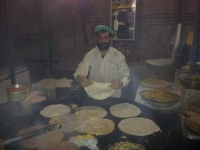
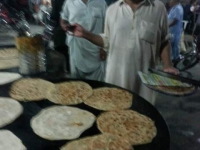
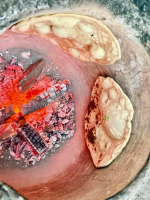
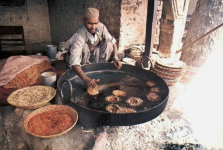
Parathas – crispy treats for every meal
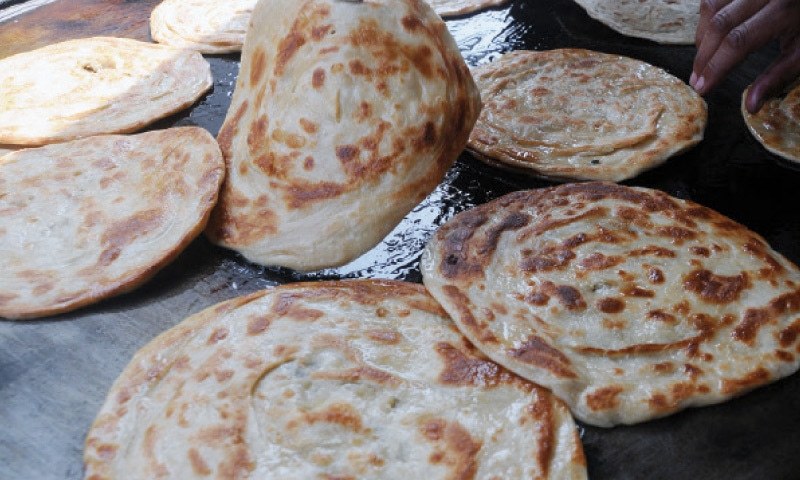
Crispy parathas are a must in many households.
Although roti or bread – in its various forms – and rice are the staples of choice for any meal, the desi palate is yet to accept either one of the two on the breakfast menu.
Naan bread is nutritious but heavy, and most Punjabis worth their salt do not like to begin their day with anything but the greasy, crispy treat, known as the paratha.
Parathas come in different varieties. There is the Aloo (potato) wala Paratha, cauliflower, raddish, Qeema (minced meat) as well as daal (pulses) wala Paratha.
Lately, a simple and crispy Paratha with butter and chicken kebab is also gaining popularity among the citizens at different eateries in the garrison city.
In Punjab, people used to love eating Paratha after topping it with butter and Saag and salted Lassi in the morning. But now it has been replaced with tandoori in different eateries as people also like to have it with Haleem, Chicken Karahi and, of course, Nuli Nihari.
While visiting the downtown areas, one can find different shops and stalls offering hot and crispy Parathas.

Crispy parathas are a must in many households.
“We make Paratha with layers as per our traditional method and mostly people want to eat it on the spot,” said Suhail Ahmed, a shop owner at the Commercial Market.
He said there was a simple recipe for making Paratha.
“We make dough of wheat flour filled with vegetable oil and twist it and then give the shape of a round ball, make a roti and then fry it on a shallow pan with lots of oil.”
He said it was an art to know when to twist the dough and give the shape of a round ball and make a Paratha. Though with experience one can learn the art, most of the people have no time and prefer to eat Parathas from the bazaars.

Sharif Ahmed, a shopkeeper at Bhabara Bazaar, said he started making Parathas with different verities which people had taste in their houses like Daal wala Paratha, Moli wala Paratha and Aloo wala Paratha.
“I love to eat Paratha with Saag and Haleem. I usually buy Paratha from the bazaar. We use brown wheat flour in making Parathas but in the bazaars they use fined wheat flour which is comparatively white,” said Hassan Qureshi, a resident of Scheme-III.
He said his wife was a working woman and did not have time even at the weekends so he brought Parathas from the bazaar for the breakfast as well as dinner.
Asfandyar Ali, a resident of Westridge, said he wanted different items in the breakfast, especially on Sundays, and brought Parathas from the bazaar twice a week.
He said Tawa Paratha was popular among the citizens. With the opening of new outlets for Parathas, most of the people have stopped preparing it at home.
“Though many known food companies have also introduced frozen Parathas in the market, the taste of a freshly made Paratha is different,” he said.
Crispy parathas are a must in many households.
Although roti or bread – in its various forms – and rice are the staples of choice for any meal, the desi palate is yet to accept either one of the two on the breakfast menu.
Naan bread is nutritious but heavy, and most Punjabis worth their salt do not like to begin their day with anything but the greasy, crispy treat, known as the paratha.
Parathas come in different varieties. There is the Aloo (potato) wala Paratha, cauliflower, raddish, Qeema (minced meat) as well as daal (pulses) wala Paratha.
Lately, a simple and crispy Paratha with butter and chicken kebab is also gaining popularity among the citizens at different eateries in the garrison city.
In Punjab, people used to love eating Paratha after topping it with butter and Saag and salted Lassi in the morning. But now it has been replaced with tandoori in different eateries as people also like to have it with Haleem, Chicken Karahi and, of course, Nuli Nihari.
While visiting the downtown areas, one can find different shops and stalls offering hot and crispy Parathas.
Crispy parathas are a must in many households.
“We make Paratha with layers as per our traditional method and mostly people want to eat it on the spot,” said Suhail Ahmed, a shop owner at the Commercial Market.
He said there was a simple recipe for making Paratha.
“We make dough of wheat flour filled with vegetable oil and twist it and then give the shape of a round ball, make a roti and then fry it on a shallow pan with lots of oil.”
He said it was an art to know when to twist the dough and give the shape of a round ball and make a Paratha. Though with experience one can learn the art, most of the people have no time and prefer to eat Parathas from the bazaars.
Sharif Ahmed, a shopkeeper at Bhabara Bazaar, said he started making Parathas with different verities which people had taste in their houses like Daal wala Paratha, Moli wala Paratha and Aloo wala Paratha.
“I love to eat Paratha with Saag and Haleem. I usually buy Paratha from the bazaar. We use brown wheat flour in making Parathas but in the bazaars they use fined wheat flour which is comparatively white,” said Hassan Qureshi, a resident of Scheme-III.
He said his wife was a working woman and did not have time even at the weekends so he brought Parathas from the bazaar for the breakfast as well as dinner.
Asfandyar Ali, a resident of Westridge, said he wanted different items in the breakfast, especially on Sundays, and brought Parathas from the bazaar twice a week.
He said Tawa Paratha was popular among the citizens. With the opening of new outlets for Parathas, most of the people have stopped preparing it at home.
“Though many known food companies have also introduced frozen Parathas in the market, the taste of a freshly made Paratha is different,” he said.
ghazi52
THINK TANK: CONSULTANT
- Thread starter
- #203
Tawa gurda kapoora - aka Taka tak
While the world is talking about the weirdness of Beijing style food, I thought of highlighting the position of Lahori food on the chart of bizarreness. I am sure it stands somewhere in the top 10. So here we go:
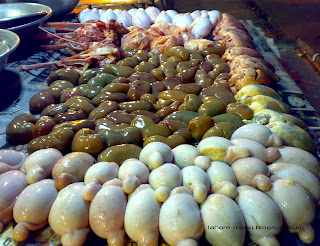
Roughly translated, Tawa gurda kapoora means kidneys and testicles in a large frying pan. To avoid the embarrassment of associating such words with food, most of us now call it Taka tak. It refers to the sound made by the skillful chef while frying these organs and hitting the pan with two sharp slicers in a captivating rythm. He keeps slicing and frying them until the kapooray (testicles), gurday (kidneys), dil (heart), maghaz (brain) and chaampain (ribs) become a homogeneous mixture of meat and thick masala curry. You can make your pick and choose which parts to include in your serving. It is DELICIOUS.
One of the most famous spots to try this out is Butt taka tak at Lakshmi chowk, Gawalmandi. It islocated right next to Butt Karahi that has been reviewed earlier. Not only will you enjoy the typical outdoor dining experience in the heart of Lahore, you will also find a bunch of live chickens to give you company while you listen to the magical beat of taka tak. Not to mention all those large tables smothered with uncooked goat organs (as you can see in the above picture) giving you a feeling of being part of a massive autopsy project.

2015
What? .. Yikes? .. No! The moment you take the first bite of this scrumptious meal, will be the time when everything else, such as traffic noise, diesel smoke, smell of chicken shit, autopsy tables, etc., will stop bothering you. So dive in and give it a try.
While the world is talking about the weirdness of Beijing style food, I thought of highlighting the position of Lahori food on the chart of bizarreness. I am sure it stands somewhere in the top 10. So here we go:

Roughly translated, Tawa gurda kapoora means kidneys and testicles in a large frying pan. To avoid the embarrassment of associating such words with food, most of us now call it Taka tak. It refers to the sound made by the skillful chef while frying these organs and hitting the pan with two sharp slicers in a captivating rythm. He keeps slicing and frying them until the kapooray (testicles), gurday (kidneys), dil (heart), maghaz (brain) and chaampain (ribs) become a homogeneous mixture of meat and thick masala curry. You can make your pick and choose which parts to include in your serving. It is DELICIOUS.
One of the most famous spots to try this out is Butt taka tak at Lakshmi chowk, Gawalmandi. It islocated right next to Butt Karahi that has been reviewed earlier. Not only will you enjoy the typical outdoor dining experience in the heart of Lahore, you will also find a bunch of live chickens to give you company while you listen to the magical beat of taka tak. Not to mention all those large tables smothered with uncooked goat organs (as you can see in the above picture) giving you a feeling of being part of a massive autopsy project.

2015
What? .. Yikes? .. No! The moment you take the first bite of this scrumptious meal, will be the time when everything else, such as traffic noise, diesel smoke, smell of chicken shit, autopsy tables, etc., will stop bothering you. So dive in and give it a try.
ghazi52
THINK TANK: CONSULTANT
- Thread starter
- #204
Pakistani styled stir-fried spicy minced meat
This bhunna qeema (stir-fried minced meat) is dry yet juicy and all love it!
Here is the simple recipe. Hope you enjoy it!
Ingredients:
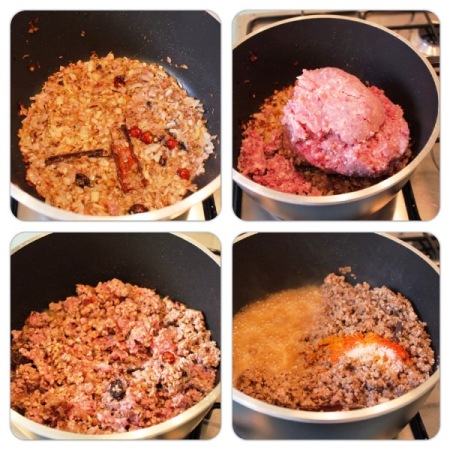
5. Add salt, chilli powder and turmeric. Mix further and dry half of the liquid in the pan.
6. Add tomatoes and two green chillies, and cook for two to three minutes on high heat.
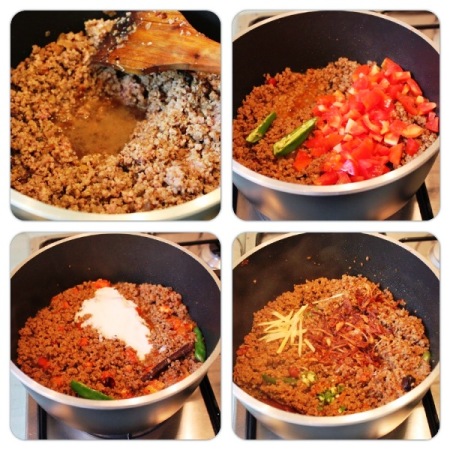
7. Add yogurt and mix. Reduce heat, cover the pan and let it cook for 20-25 minutes till tomatoes break down completely and yogurt disappears.
8. Add half of ginger, fried onions and remaining chopped green chillies. Cook for two minutes.
9. Garnish with fresh coriander, remaining ginger and fresh green chillies.
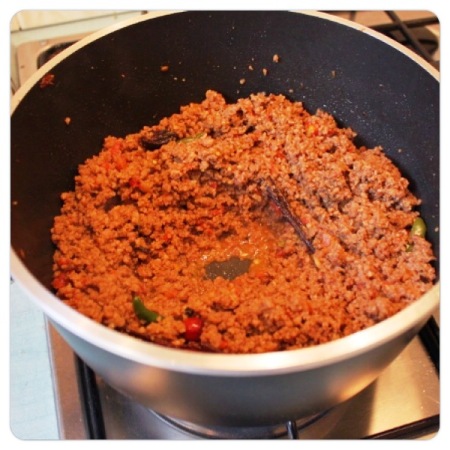
This can be served with homemade flat bread, naan or even paratha. The left over qeema makes for an awesome stuffing for qeema paratha for breakfast or brunch the next day. And the same filling can be used to make stuffed samosas at home. It’s simple, quick and effective in quenching that desi food craving you may have had.
Happy desi meat cooking!
This bhunna qeema (stir-fried minced meat) is dry yet juicy and all love it!
Here is the simple recipe. Hope you enjoy it!
Ingredients:
- Minced mutton – 1 kilo
- Oil – ½ cup
- Onion – 1 large (finely chopped)
- Tomatoes – 3 medium (chopped)
- Ginger garlic paste (freshly made) – 1 tbsp heaped
- Roasted cumin seeds – 1 tsp heaped (crushed)
- Roasted coriander seeds – 1 tsp heaped (crushed)
- Cinnamon sticks – 2 (1 ½ inches long)
- Black cardamoms – 3 whole
- Cloves – 6
- Whole peppercorns – 6 to 8
- Whole red chillies – 3 to 4 round ones or 2 regular dried ones.
- Green chillies – 3 medium sized
- Fried onions – 3 to 4 tbsp
- Yogurt – 5 tbsp
- Salt – 1 tsp
- Chilli powder – ½ tsp
- Turmeric – ¼ tsp
- Fresh ginger – 1 inch julienne
- Fresh coriander (for garnish) – handful
Method:
1. Put the minced meat in a tea towel and wash under running water for a couple of minutes. Let it sit for about 20 minutes till the water drains. Squeeze the water out as much as you can before cooking.
2. Heat the oil in the pan and add chopped onions to it.
3. Wait till the onions become translucent; then add cinnamon, cardamom, cloves, peppercorn, crushed cumin and coriander seeds, whole red chillies and ginger garlic paste. Cook till everything changes colour to a gentle brown.
4. Squeeze water out of the minced meat. Add it to the onions and cook until brown.
5. Add salt, chilli powder and turmeric. Mix further and dry half of the liquid in the pan.
6. Add tomatoes and two green chillies, and cook for two to three minutes on high heat.
7. Add yogurt and mix. Reduce heat, cover the pan and let it cook for 20-25 minutes till tomatoes break down completely and yogurt disappears.
8. Add half of ginger, fried onions and remaining chopped green chillies. Cook for two minutes.
9. Garnish with fresh coriander, remaining ginger and fresh green chillies.
This can be served with homemade flat bread, naan or even paratha. The left over qeema makes for an awesome stuffing for qeema paratha for breakfast or brunch the next day. And the same filling can be used to make stuffed samosas at home. It’s simple, quick and effective in quenching that desi food craving you may have had.
Happy desi meat cooking!

 Zalima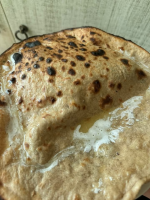
Users who are viewing this thread
Total: 1 (members: 0, guests: 1)
Pakistan Defence Latest
-
 PTI Murad Saeed in Afghanistan, was 'controlling KP govt' from there: Rana Sanaullah (22 Viewers)
- Latest: hydrabadi_arab
-
-

-

Country Watch Latest


Latest Posts
-

-

-
-
Israel declares all Arab states as Illegitimate Official government declaration (21 Viewers)
- Latest: r3alist
-