Development of indigenous engine takes time, in fact lot of time, engine development is one of the most difficult field in the world and Turkiye has no experience in development of F-119 class engine
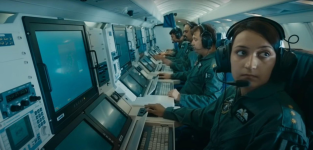
A female officer of the Pakistan Air Force on duty onboard an Airborne Early Warning and Control System (AEWACS) of the PAF.
AEWACS are designed to detect aircraft, ships, vehicles, missiles and other incoming projectiles at long ranges, as well as performing command and control of the battlespace in aerial engagements by informing and directing friendly fighter and attack aircraft.
AEW&C units are also used to carry out aerial surveillance over ground and maritime targets, and frequently perform battle management command and control (BMC2).
When used at altitude, the radar system on AEW&C aircraft allows the operators to detect, track and prioritize targets and identify friendly aircraft from hostile ones in real-time and from much farther away than ground-based radars.
China's KJ-500 airborne early warning aircraft upgrade boosts detection of US F-22 and F-35 stealth fighters.
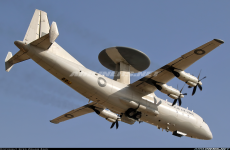
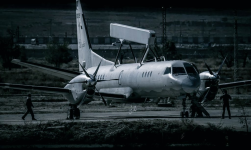
On November 4, 2024, the People’s Liberation Army Air Force (PLAAF) KJ-500, an airborne early warning and control (AEW&C) aircraft, arrived at Zhuhai Jinwan Airport to participate in the Zhuhai Airshow 2024. Developed by Shaanxi Aircraft Corporation and based on the Y-9 airframe, the KJ-500 features a radar system capable of detecting various targets, including low radar cross-section aircraft such as the American F-22 Raptor and F-35 Lightning II stealth fighters.
Equipped with a tri-array active electronically scanned array (AESA) radar, the KJ-500 operates with a fixed radome, enabling full coverage without a rotating radar. (Picture source: Weibo/Hunter Chen)
The KJ-500, measuring 34 meters in length and spanning 38 meters, represents a significant advancement in China’s AEW&C systems. It is more compact than earlier models like the KJ-2000 and integrates digital phased-array radar technology, enabling continuous 360-degree surveillance coverage. Powered by four WJ-6C turboprop engines with six-blade composite propellers designed by Zhuzhou Southern Aviation Engine Company, the aircraft generates 3,800 kilowatts, supporting a maximum cruising speed of 550 kilometers per hour. With a range of 5,700 kilometers and an endurance of 12 hours, the KJ-500 extends operational reach within China’s air defense network. Its radar can track 60 to 100 targets within a 470-kilometer radius, providing capabilities suited for identifying stealth, high-speed, and maneuverable targets............
China's KJ-500 airborne early warning aircraft upgrade boosts detection of US F-22 and F-35 stealth fighters.
On November 4, 2024, the People’s Liberation Army Air Force (PLAAF) KJ-500, an airborne early warning and control (AEW&C) aircraft, arrived at Zhuhai Jinwan Airport to participate in the Zhuhai Airshow 2024. Developed by Shaanxi Aircraft Corporation and based on the Y-9 airframe, the KJ-500 features a radar system capable of detecting various targets, including low radar cross-section aircraft such as the American F-22 Raptor and F-35 Lightning II stealth fighters.
Equipped with a tri-array active electronically scanned array (AESA) radar, the KJ-500 operates with a fixed radome, enabling full coverage without a rotating radar. (Picture source: Weibo/Hunter Chen)
The KJ-500, measuring 34 meters in length and spanning 38 meters, represents a significant advancement in China’s AEW&C systems. It is more compact than earlier models like the KJ-2000 and integrates digital phased-array radar technology, enabling continuous 360-degree surveillance coverage. Powered by four WJ-6C turboprop engines with six-blade composite propellers designed by Zhuzhou Southern Aviation Engine Company, the aircraft generates 3,800 kilowatts, supporting a maximum cruising speed of 550 kilometers per hour. With a range of 5,700 kilometers and an endurance of 12 hours, the KJ-500 extends operational reach within China’s air defense network. Its radar can track 60 to 100 targets within a 470-kilometer radius, providing capabilities suited for identifying stealth, high-speed, and maneuverable targets............
1) Erieye connecting with other assets better
2) Commonality with having one AEW system
3) Copability over sea
4) Currently PAF does not have to worry about F-22/F-35
1) Erieye connecting with other assets better
2) Commonality with having one AEW system
3) Copability over sea
4) Currently PAF does not have to worry about F-22/F-35
U do have a point but the imp bit here is that we have the platform n it only requires an upgrade to make it our most capable awacs.....most capable in the region.
The way things are In the middle east n with u.s actively involved with its stealth ac complement in the region...no harm in having an eye in the sky watching over things.
Its like PAF don't have to worry about a stealth ac ibut are actively engaged in getting one.......
Which is good as for a change PAF is being proactive.
The more we look at things now.....it seems more n more that the main reason n perhaps the only reason why the karakorum eagle was grounded was that the retirement fund mafia was in actiom
U do have a point but the imp bit here is that we have the platform n it only requires an upgrade to make it our most capable awacs.....most capable in the region.
The way things are In the middle east n with u.s actively involved with its stealth ac complement in the region...no harm in having an eye in the sky watching over things.
Its like PAF don't have to worry about a stealth ac ibut are actively engaged in getting one.......
Which is good as for a change PAF is being proactive.
The more we look at things now.....it seems more n more that the main reason n perhaps the only reason why the karakorum eagle was grounded was that the retirement fund mafia was in actiom
No
It was a half backed system whose radar was not on par and had other issues. It’s best retired because it was a product of Musharraf shoving a system down the PAF’s throat(and quite possibly someone getting kickbacks)
The Chinese were offering upgrades all along that would have rectified any prob if at all.
The prob was not the sys but the ac.....PAF bought it when non were available to it, it gave PAF a capability it never had.
Pakistan can't afford to do away with capabile sys on a whim......we don't have those sort of means at our disposal
No
It was a half backed system whose radar was not on par and had other issues. It’s best retired because it was a product of Musharraf shoving a system down the PAF’s throat(and quite possibly someone getting kickbacks)
This is exactly what I heard from a PAF officer who was not even involved but word got round the whole air force that the system was imposed on us, nothing really wrong as China was giving us a helping hand in many areas, we were the testing ground in the hope other countries would buy it, but results were not good. Anyway, good thing we have moved on quickly
This site uses cookies to help personalise content, tailor your experience and to keep you logged in if you register.
By continuing to use this site, you are consenting to our use of cookies.