
hydrabadi_arab
Trusted Member

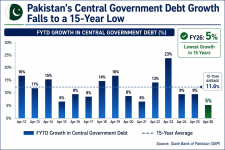
Pakistan’s central government debt growth has slowed to its lowest pace in 15 years, with debt expanding just 5% year-to-date (FY26), down from 23% in FY23, showing what officials describe as improving debt sustainability and prudent fiscal management.
“Some social media posts compare governments using absolute debt figures. That is not how sovereign debt is assessed anywhere in the world. Debt is not measured by headlines. It is measured by sustainability,” said Finance Adviser Khurram Schehzad on a social media platform X on Friday.
Citing the data released by the State Bank of Pakistan (SBP), Schehzad said that Pakistan’s current central government debt is Rs81.9 trillion. “The Rs97-100 trillion figure being quoted refers to total debt and liabilities, which also includes private sector liabilities—not just central government debt,” he said.
The advisor said that the globally accepted measure is Debt-to-GDP, not debt in absolute rupees.
Pakistan’s “debt-to-GDP has fallen from around 76% in FY19/20, remained around 75% through FY22/23, and has now declined to around 68% in FY26.
“More importantly, external debt-to-GDP has fallen from around 28% in FY19/20, remained around 28% through FY22/23, and is now down to around 21% in FY26—significantly reducing external repayment risks.
“That is the direction every country aims for,” he said.
The advisor noted that the central debt has slowed dramatically, growing from 23% in FY23 to 5% FYTD—“the lowest pace in the last 15 years, compared with a historical average of around 12% per year”.
Moreover, Pakistan’s average domestic debt maturity has increased from 2.8 years to 3.8 years, significantly reducing refinancing risk. On the other hand, debt amounting to Rs4.7 trillion has been retired—a first in Pakistan’s history.
Schehzad concluded that every government borrows, repays and refinances maturing debt.
“The real question is whether debt is becoming more sustainable, more affordable, and less risky. Today, the answer is yes,” he said.
“Some social media posts compare governments using absolute debt figures. That is not how sovereign debt is assessed anywhere in the world. Debt is not measured by headlines. It is measured by sustainability,” said Finance Adviser Khurram Schehzad on a social media platform X on Friday.
Citing the data released by the State Bank of Pakistan (SBP), Schehzad said that Pakistan’s current central government debt is Rs81.9 trillion. “The Rs97-100 trillion figure being quoted refers to total debt and liabilities, which also includes private sector liabilities—not just central government debt,” he said.
The advisor said that the globally accepted measure is Debt-to-GDP, not debt in absolute rupees.
Pakistan’s “debt-to-GDP has fallen from around 76% in FY19/20, remained around 75% through FY22/23, and has now declined to around 68% in FY26.
“More importantly, external debt-to-GDP has fallen from around 28% in FY19/20, remained around 28% through FY22/23, and is now down to around 21% in FY26—significantly reducing external repayment risks.
“That is the direction every country aims for,” he said.
The advisor noted that the central debt has slowed dramatically, growing from 23% in FY23 to 5% FYTD—“the lowest pace in the last 15 years, compared with a historical average of around 12% per year”.
Moreover, Pakistan’s average domestic debt maturity has increased from 2.8 years to 3.8 years, significantly reducing refinancing risk. On the other hand, debt amounting to Rs4.7 trillion has been retired—a first in Pakistan’s history.
Schehzad concluded that every government borrows, repays and refinances maturing debt.
“The real question is whether debt is becoming more sustainable, more affordable, and less risky. Today, the answer is yes,” he said.


