Navigation
Install the app
How to install the app on iOS
Follow along with the video below to see how to install our site as a web app on your home screen.
Note: This feature may not be available in some browsers.
More options
Style variation
You are using an out of date browser. It may not display this or other websites correctly.
You should upgrade or use an alternative browser.
You should upgrade or use an alternative browser.
Pakistan's Special Operations Forces: SSG | SSGN | SSW | SOW | SOG
- Thread starter ghazi52
- Start date
More options
Who Replied?


DESERT FIGHTER
Elite Member
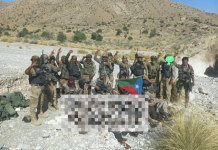
not special forces, those are army and frontier corps balochistan troops.
 !!
!!
ghazi52
THINK TANK: CONSULTANT
- Thread starter
- #471
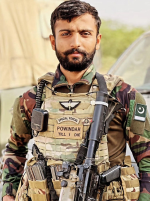
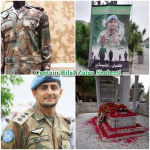
Captain Husnain, of the 3rd Commando Battalion ‘Powindahs’ of the Special Service Group (SSG) of the Pakistan Army, embraced martyrdom on 20th March, 2025 in Karri Malang, Dera Ismail Khan, Khyber Pakhtunkhwa during IBO in which a total of 10 Indian funded terrorists were eliminated.
The Shaheed, of the 143rd Long Course (PMA), displayed the utmost valour during an ambush by terrorists thar morning, sacrificing his life to save his fellow servicemen in the line of enemy fire.
In April 2025, SSG conducted successful operation and eliminate 17 terrorists of the same group including their leader taking revenge of this brave lad. (The video that we shared yesterday)
A grateful nation always remembers and honours the sacrifice of their saviours.
ghazi52
THINK TANK: CONSULTANT
- Thread starter
- #472
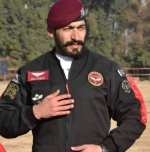
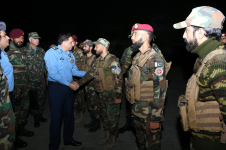
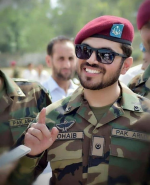
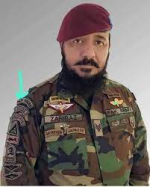
Captain Abid Zaman (Tamgha-e-Basalat) from Swabi led the hostage rescue operation in #APSPeshawar on 16 Dec 2014 & his Al-Zarrar ATU (Anti Terrorist Unit) killed all the terrorists saving the lives of 900+ other students.
He was injured in the same operation. Hero!
He was injured in the same operation. Hero!


ghazi52
THINK TANK: CONSULTANT
- Thread starter
- #479
Special Services Group (SSG): The Black Storks of Pakistan
Jawhar Farhat
May 4, 2025
The Special Services Group (SSG) is a prestigious special operations unit within the Pakistan army established in 1955. The unit is known as the “Black Storks” and “Maroon Berets”. Furthermore, their headquarters are in Tarbela in Pakistan’s Khyber Pakhtunkhwa province.
With a reputation for excellence, they’re often compared to elite units like the US Army’s Special Forces and the British Army’s SFSG. Despite their exact number of combat battalions being classified, they’re highly skilled in weaponry, including machine guns, sub-machine guns, and pistols.
Trained for speed and accuracy in firing, they excel in both armed and unarmed combat, particularly in guerrilla and anti-guerrilla operations.
Moreover, their expertise is most crucial in missions deep behind enemy lines, where their small size belies their ability to inflict significant damage. As a vital force multiplier for the Pakistan army, they’re strategically deployed to support conventional offensives, leveraging their impact on the enemy. [source]
Images Sourced From: r/Pakistan, Ministry of Defence of the Russian Federation

General Asim Munir met SSG member in HQ SSG Terbela
1. Motto, Symbols, Patches

SSG motto
Slogan: Faith, piety, jihad for the sake of God.
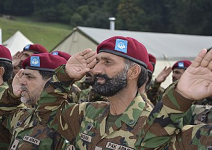
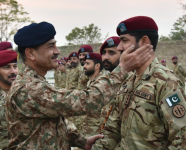
Pakistani Special Services Group members wear maroon berets with a silver metal tab on a light blue felt square. Initially, they wore khaki uniforms like the regular army, but in 1972, a new combat tunic was introduced army-wide, only to be abandoned in 1979.

SSG unit wearing maroon berets
Today, they wear US woodland pattern camouflage. Furthermore, various operational dresses are used based on terrain. Additionally, they wear a bullion SSG para-wing on the right chest, with variations for master parachutists and riggers. Moreover, the SSG badge, featuring a dagger framed with lightning bolts, is worn on the left shoulder, while qualification badges go on the right shoulder.

2. History and organization
2.1 SSG Formation and Early Years
The Pakistan army’s involvement in covert operations traces back to 1948 when tribesmen from Pakistan’s northern regions launched raids into the Kashmir valley, aiming to seize control from its Hindu ruler. While these raids fell short of their primary objective, they succeeded in spotlighting the Kashmir valley’s disputed status on the global stage.Moreover, drawing from the lessons of special operations during World War II by both the Allies and Germans, along with insights from the Pathan tribesmen’s raids, the army recognized the strategic advantages of having a specialized force capable of operating clandestinely behind enemy lines to disrupt adversary war efforts. [source]
As Pakistan’s relationship with the United States solidified, the Pakistan Army swiftly sought assistance in establishing a specialized special forces unit. In 1953-54, within the existing Baloch Regiment (Regt), a battalion of special forces was raised, discreetly designated as the 10th Battalion.
By 1956, this unit was formally designated as the 19th Battalion of the Baloch Regiment and relocated to its current headquarters in Cherat, approximately 40 miles from Peshawar. Its inaugural commanding officer was Lieutenant Colonel Abu Bakr Osman Mitha, later promoted to Major General. Initially, the 19th Baloch comprised roughly six units. [source]
In March 1964, as part of the U.S. “Military Aid to Pakistan” program, members of the U.S. Army’s 10th Special Forces Group (Airborne) arrived in Pakistan to assist in establishing the country’s first airborne school in Peshawar. Four U.S. Special Forces riggers were deployed to train members of the Special Service Group (SSG) for airborne operations.
Furthermore, Pakistani SSG officers underwent advanced training at Fort Bragg and Fort Benning, including basic and jumpmaster courses, enabling the 19th Baloch to achieve full airborne qualification.
2.2 Expansion and Evolution
Just in time for the baptism under fire during the 1965 Indo-Pak War, Pakistani special forces acquired this capability. In 1965, the 19th Baloch was officially re-designated as the Special Service Group (SSG), initially comprising a single battalion with units specialized in various roles such as desert, mountain, ranger, marine warfare, demolition/sabotage, and intelligence gathering operations.Moreover, the desert units underwent training with the US 10th Special Forces Group in 1964 and conducted desert survival training in the Sibbi area for participating US Special Forces. This collaborative training and operational relationship with US Special Forces persisted and strengthened throughout the Cold War and later during the Afghan War.
Consequently, Pakistani special forces adopted many training concepts and operational doctrines, mirroring their American counterparts because of this close interaction.[source]
Following less successful operations against the Indian Army in 1966, the SSG underwent a significant reorganization and expansion. Two new battalions were added, bringing the total to three, each comprising around 700 men and led by a lieutenant colonel. Cherat remained the headquarters, with Attock Fort as a secondary base.
Tragically, in 1989, the SSG lost its commanding officer, Brigadier Tariq Mahmood, in a parachute failure accident. However, today, the SSG continues to rotate its battalions between Cherat and Attock Fort. This rotation involves maintaining one for training, one for operational duties along borders or in peacekeeping missions, and one for securing strategic locations like nuclear plants.
With extensive experience from conflicts with India, operations on the Siachen Glacier, involvement in the Afghan War, and counterterrorism efforts, the SSG is widely recognized as one of the world’s finest special forces units.[source]
3. Organization of Special Services Group
The Special Service Group (SSG) is renowned for its elite status and specialized operations within the armed forces. Understanding its organizational structure is paramount to comprehending its effectiveness and strategic deployment.- 1st Commando Yaldrum Battalion
- Ayub unit
- Liaqat unit
- Kamal unit
- Mitha unit
- 2nd Commando Rahbar Battalion
- Ghazi unit
- Tipu unit
- Quaid unit
- Bilal unit
- 3rd Commando Powindahs Battalion
- Hamza unit
- Ibrahim unit
- Zakria unit
- Easa unit
- 4th Commando Yalghar Battalion
- Shaeen unit
- Jungju unit
- Yaqub unit
- Yusuf unit
- 5th Commando Zilzaal Battalion
- 6th Commando Al Samsaam Battalion
- 7th Commando Babrum Battalion
- 5th Division Troops
- Zarrar unit
- Iqbal unit
- Musa unit
- Special Operations School
- Para Training School [source]
4. Special Services Group Training and missions
4.1 SSG Recruitment
The training of SSG cadres is rigorous, with special emphasis on molding soldiers into individual commandos capable of taking independent initiative. SSG operatives are all volunteers from other Pakistan army formations. Officers must have at least two years of military service, and if selected, are assigned to a three-year posting within the SSG. Enlisted men, including the NCOs, serve permanently in the SSG as long as they can keep up with the tough physical regimen and retain a medical category of “aye”.The selection process begins with the GHQ “General Headquarter” screening through scores of applications and allowing approximately 100 or so to undergo the entrance tests. the entrance tests are spread over a few days. interested candidates are grilled with intelligence and aptitude tests continuously over these few days and nights. [source]
4.2 Basic Commando Training
4.2.1 Selection Process and Initial Training
The candidates also face strict timelines and mentally and physically exhausting tests. At the tail end of the selection process, the candidates undergo physical tests that include negotiating obstacle courses and individual and group tasks. Only a small fraction of the initial number undergoes induction for training.All trainees undergo a nine-month course at Cherat for basic commando training. Attrition is usually very high during this part of the training due to the intense and demanding regimen. The basic SSG course emphasizes tough physical conditioning, including grueling forced 58km marches (post exercises) to complete in 12 hours, a practice first institutionalized by the 19th Baloch. SSG candidates must also run 8km in under 40 minutes with full gear.
ghazi52
THINK TANK: CONSULTANT
- Thread starter
- #480

SSG member during training
At the end of this nine-month course, all SSG candidates must take and pass the four-week para-training course at the airborne school in Peshawar. Subsequently, SSG members gain their wings and the coveted maroon berets after completing five day and two night-jumps (non-SSG members only have to complete 5-day jumps).
After completing the basic commando course, the newly inducted commandos undergo the advanced commando course, which lasts an additional 25 weeks. Only at the end of these two grueling phases do operators become integral members of the SSG.[source]
Many SSG operators are also HALO (high altitude low opening) and more recently HAHO (high altitude high opening) qualified. the halo course consists of five free fall jumps that earn the commando a ‘skydiver’ tab. additionally, many SSG operators also participate in the courses conducted at the army’s mountain warfare school in Abbotabad.
4.2.2 Diverse Skill Set
SSG operators in the diver companies attend the SSGn course (described separately) in Karachi to earn the ‘combat diver’ badge. Currently, there are three classes of combat divers. The 1st class comprises those who complete an 28km swim, 2nd class combat divers must finish a 19km swim, while the 3rd class divers undertake the 10km swim.Another high-altitude mountain warfare school has been established at Khappalu to train the SSG and other army units for operations on the Siachen Glacier. Other areas of the commando training include [source]:
- Internal security
- Assault and small unit tactics
- Sniping
- Demolition
- Survival
- Languages
- Small-arms familiarisation
- Fighting in built up areas (FIBUA)
- Close quarters battle tactics (CQB)
- Long range recce patrol (LRRP)
- Martial arts
- Espionage
- Psychoanalytic training
- Criminal psychology
4.2.3 Operational Capabilities
As a result of exposure to a wide range of training, the SSG is capable of carrying out a variety of missions. These include:- Unconventional warfare
- Long-range reconnaissance
- Intelligence gathering missions
- Riverine operations
- Counterterrorism
- Tactical assaults against enemy positions
In the past, SSG members have also served as air marshals aboard airlines; however, this practice has been stopped. The SSG has served as an instrument of influence and assistance to friendly countries on behalf of the Government of Pakistan.
SSG has been deployed in many countries for the training of the host nations’ armed forces and advisory roles. In the mid-80s, SSG helped train members of Sri Lankan special forces to counter the Tamil Elam fighters in that country. Similarly, in early 1994, the SSG took on the task of training the Special Services Regiment of the Malaysian Army in high-altitude warfare to prepare them for deployment and operations in Bosnia-Herzegovina as part of the United Nations peacekeepers. [source]
5. Special Services Group Equipment
5.1 Close quarter combat weapons
- Heckler & Koch mp5
- POF-Eye corner shot weapon
- FN/FNP 90
- Colt m4 commando

SSG member hold POF-Eye corner shot weapon
5.2 Assault rifles
- 5.56mm M16A1
- MK16
- Steyr AUG
- 7.62mm Heckler & Koch G3A3
- Type 56 Tactical (Chinese AK-47 variant)
- AK-47
- AK-74
- Colt M4
- Locally produced version of Rheinmetall 7.62mm MG-3

Type 56 assault rifle

MK16

Steyr AUG

SSG member hold AK-74
Users who are viewing this thread
Total: 1 (members: 0, guests: 1)
Pakistan Defence Latest


Country Watch Latest


Latest Posts
-

-

-
 Govt 'seriously' considering imposing emergency in Khyber-Pakhtunkhwa: Tariq Fazal (14 Viewers)
- Latest: شَاھِین شَاہِ لَولَاک
-
 Makkah Defence Alliance: Turkey, Saudi Arabia, and Pakistan, news & updates (37 Viewers)
- Latest: F.O.X
-
Afghans yet to receive ‘genuine justice’ for Western coalition abuses: HRW (17 Viewers)
- Latest: Lulldapull