Panama High Court Gives Trump a Win Over Canal by Ousting Hong Kong Port Operator

Hamartia Antidote

Elite Member
Joined
Nov 17, 2013
Messages
47,262
Reaction score
26,976
Reputation
588.8
Country of Origin
Country of Residence

In blow to China, Supreme Court says CK Hutchison’s contract breaches the constitution


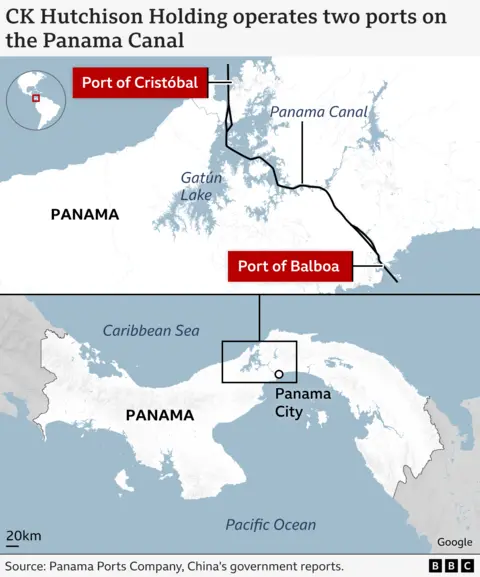
The Supreme Court of Panama has annulled a contract for a Hong Kong company to operate two ports at either end of the Panama Canal, handing President Trump a victory for his security ambitions in the Western Hemisphere and denting China’s influence in the region.

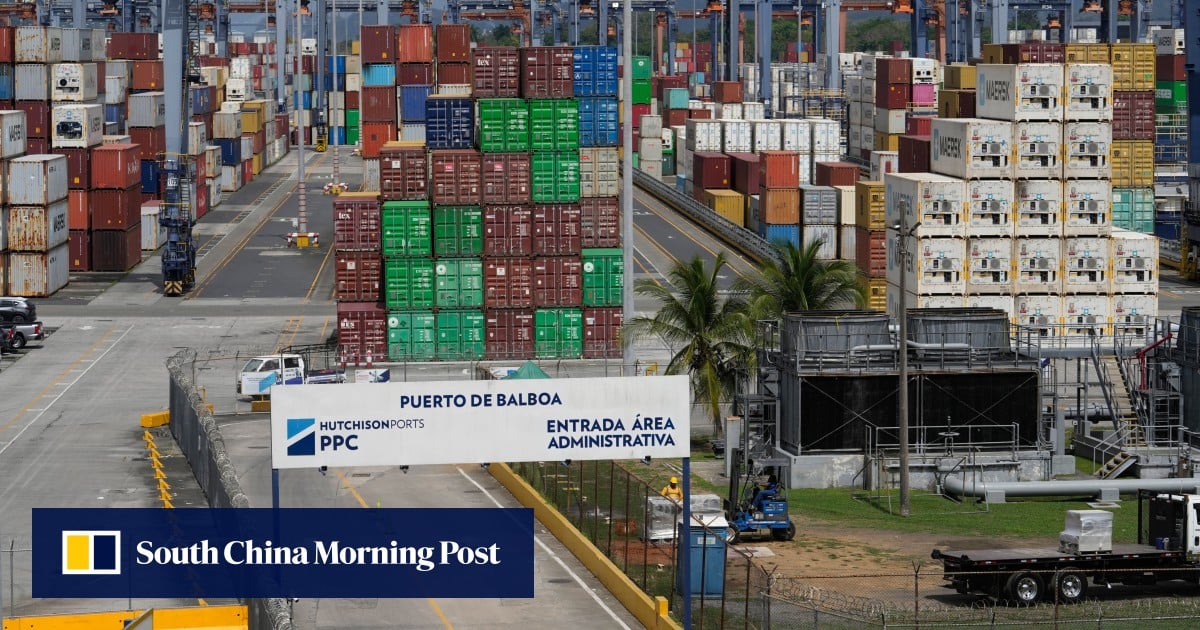
The high court said the terms under which CK Hutchison runs the ports of Balboa on the Pacific Coast and Cristóbal on the Atlantic side were unconstitutional, setting the stage for the company’s departure from the port facilities.

81ca5cb0-f9e3-11ef-8c03-7dfdbeeb2526.png.webp


Shipping giant Maersk to take over Panama Canal ports after court ruling​

Danish firm Maersk will temporarily operate two ports on the Panama Canal after a court ruled that contracts given to a Hong Kong firm were unconstitutional.


February-24-2026

China says it will safeguard rights, interests of CK Hutchinson following Panama court-ordered takeover​

The Hong ‌Kong conglomerate said on Tuesday that Panama authorities had threatened its ⁠employees with ⁠criminal prosecution if they defied orders to ⁠leave two strategic ports near the Panama Canal, after the country ⁠finalised the legal annulment of concessions ⁠for the Balboa and Cristobal terminals.


So instead of CK Hutchinson selling and making $22.8 Billion+ they decided to delay... and have now lost everything...

2025

CK Hutchison Reaches Agreement with BlackRock to Sell its Ports in Panama for $22.8 Billion​

 
Last edited:

China detaining Panama-flagged ships amid battle over port control, FMC says​


LOS ANGELES, March 26 (Reuters) - The U.S. Federal Maritime Commission (FMC) said on Thursday it is closely monitoring a surge in detentions of Panama-flagged vessels in China that appears tied to a Panama court ruling against Hong Kong-based CK Hutchison.

Panama's Supreme Court in late January invalidated the legal framework supporting the 1997 concession granting CK Hutchison's (0001.HK), opens new tab Panama Ports Company the right to operate the Balboa and Cristobal terminals on the Pacific ⁠and Atlantic sides of the Panama Canal.

China has said it firmly opposes the ruling against Hutchison's port concessions, calling it an "act of bad faith".

Following the ruling, the Panamanian government appointed U.S. subsidiaries Maersk APM Terminals and Mediterranean Shipping Company's (MSC) Terminal Investment Limited as interim operators under 18-month agreements.

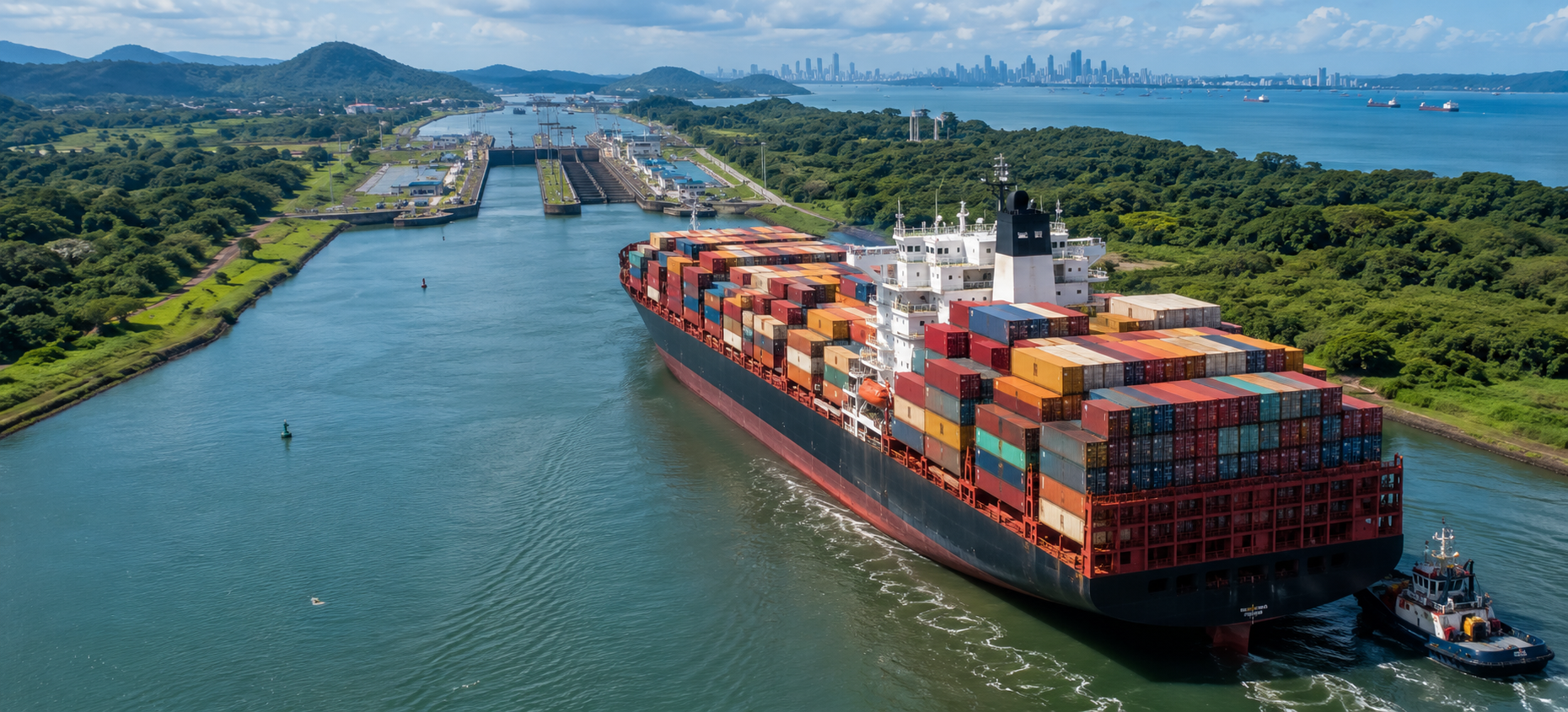
The cancellation followed mounting U.S. pressure to curb Chinese influence around the strategic canal, which handles about 5% of global maritime trade.
Commissioner Laura DiBella, chair of the FMC, said China's detentions of Panama-registered ships far exceeded historical norms. The number had reached nearly 70 since March 8, according to a Lloyd's List Intelligence report.

"These intensified inspections were carried out under informal directives and appear intended to punish Panama after the transfer of Hutchison's port assets," ‌DiBella ⁠said in a statement.
"Given that Panama-flagged ships carry a meaningful share of U.S. containerized trade, these actions could result in significant commercial and strategic consequences to U.S. shipping," she said, adding that FMC is legally empowered to investigate whether regulations or practices of foreign governments could harm U.S. trade.
In a parallel move, the Chinese Ministry of Transport had summoned Maersk (MAERSKb.CO), opens new tab and MSC to Beijing for high‑level discussions, ⁠DiBella said. The ministry did not reveal details.

"The repeated irresponsible remarks from the U.S. only expose its own plot to forcibly take control of the canal," the Chinese foreign ministry spokesperson Lin Jian said about the U.S. statement at a regular news briefing on Friday.

China's ⁠Ministry of Transport did not immediately respond to a separate request for comment by Reuters.

CK Hutchison, which operated the ports for nearly 30 years, has strongly rejected the Panama court ruling, accused Panamanian authorities of unlawfully seizing property, and launched ⁠an international arbitration case against Panama, claiming damages of more than $2 billion.

The dispute has also complicated CK Hutchison's planned $23 billion sale of a majority stake in its global ports business to a consortium led by BlackRock and MSC.
 

US, Latin America countries criticise China’s retaliation over Panama Canal​


China has detained nearly 70 Panamanian-flagged ships after a Supreme Court ruling on the Panama Canal


Bolivia, Costa Rica, Guyana, Paraguay, Trinidad and Tobago, and the United States have released a joint statement in support of Panama, while criticising Chinese economic retaliation, after a Hong Kong-based conglomerate lost a legal dispute over the management of ports on the Panama Canal.

Panama’s Supreme Court in late January annulled contracts that had allowed a subsidiary of Hong Kong’s CK Hutchison to administer the Balboa and Cristobal port terminals on the Panama Canal after deeming the decades-old agreements unconstitutional.

In their joint statement on Tuesday, the six countries claimed that following the court ruling, China has retaliated against Panama with “targeted economic pressure” on Panamanian-flagged ships.

China detained nearly 70 Panamanian-flagged ships in March, according to the US Federal Maritime Commission, a number “far exceeding historical norms”.

“These actions – following the decision of Panama’s independent Supreme Court regarding the Balboa and Cristobal terminals – are a blatant attempt to politicise maritime trade and infringe on the sovereignty of the nations of our hemisphere,” the signatories said.
 
Panama encourages dialogue and bridge-building at UN as canal tensions with China simmer

Panama’s foreign minister used a United Nations Security Council debate on Tuesday to call for dialogue over confrontation, saying his country was “born to connect oceans, continents, cultures and economies” in a speech delivered before an assembly chaired by China’s top diplomat, Wang Yi, as the two countries navigate their worst bilateral crisis since establishing ties in 2017.

China holds the rotating presidency of the Security Council in May and convened a high-level open debate on Tuesday to uphold the UN Charter and strengthen the multilateral system, which Wang said included more than 20 countries.
Wang, who travelled to New York to lead the session, used a separate press conference to take a veiled swipe at Washington, warning that “the purposes of the UN Charter have been disregarded” and that world peace was “in great jeopardy”, without naming the United States or President Donald Trump. He did not take questions on Panama.

“Dialogue is not a sign of weakness. It is the highest form of trust in reason, in diplomacy, and in the ability of human beings to find peaceful settlements to disputes,” Panama’s foreign minister told the council.

Martinez-Acha also defended what he called “useful multilateralism”, one “not measured solely by the number of resolutions adopted, but by its capacity to prevent conflicts, protect lives and offer concrete answers to the challenges of our peoples”.

The speech came amid a sharp deterioration in Panama-China relations triggered by a January Supreme Court ruling that struck down the concession held by Panama Ports Company, a subsidiary of Hong Kong conglomerate CK Hutchison, over the ports of Balboa and Cristobal at both entrances to the canal.
The government awarded temporary operations to APM Terminals and TIL Panama, subsidiaries of European shipping giants Maersk and MSC, respectively.

China responded with a surge in port inspections, and in April alone, 136 of 164 vessel detentions at Chinese ports involved Panama-flagged ships, more than 82 per cent of the total, according to the Central American country. President Jose Rahul Mulino called the pattern a “political message” and said it was not fair for Panama-flagged vessels to be used “to attempt to exert pressure”.

Days before the Security Council session, Martinez-Acha had addressed the China dispute more directly.

Speaking at the Organisation of American States in Washington last Thursday, ahead of a June assembly the organisation will hold in Panama City, he called for a multilateralism “without ideological trenches” and said Panama expected China to “respect the constitution and the rule of law, just as we respect the countries with which we maintain diplomatic relations”.
Earlier in May, he had told reporters the situation with Beijing had to be handled “with precision, prudence and respect for the legal frameworks in force”.

Martinez-Acha and Wang were expected to hold a bilateral meeting on the sidelines of Tuesday’s session. Neither government released details or a readout, and Wang did not address the Panama bilateral at his press conference after the Council’s meeting.

Earlier on Tuesday, Foreign Ministry spokeswoman Mao Ning also declined to confirm the meeting, telling journalists that China would release details on the meeting “in a timely manner … if there is relevant information”.
Despite Beijing’s reticence, Panama secured a separate diplomatic win. Austria announced on Tuesday it would become the latest country to accede to the Protocol to the Treaty of Permanent Neutrality and Operation of the Panama Canal, joining Switzerland and Portugal, which announced accessions earlier in May.
More than 40 countries have now signed the 1977 treaty, which obliges signatories to respect the canal’s permanent neutrality and open passage for vessels of all nations, but China is not among them.

Panama has described the accession drive as a strategy to build broader international legal and political backing for its sovereignty over the waterway.

Each new signatory also broadens the coalition of states formally committed to protecting the canal’s neutrality, reinforcing Panama’s position as sovereign guarantor of one of the world’s busiest maritime routes at a moment when the Trump administration has publicly questioned Chinese influence over the canal and floated the idea of reasserting US control.
 

China steps up pressure on Panama after loss of Canal port concessions​


The dispute involving CK Hutchison Holdings, the Panama Canal and China-U.S. relations has become one of the most closely watched geopolitical flashpoints tied to global logistics in recent years.

The standoff brings together two of the world’s largest economies, a waterway that carries about 6% of global trade and some of the biggest names in international port operations. At the center of the dispute is CK Hutchison’s loss of the concessions to operate Balboa and Cristóbal, the ports located at the Pacific and Atlantic entrances to the Panama Canal.

Since March 2026, China has increased inspections and detentions of Panamanian-flagged vessels. Ambrey Analytics, the maritime intelligence unit of British firm Ambrey, said the number of detentions has reached unprecedented levels.

In April alone, Chinese authorities held 136 Panamanian-flagged ships, 6.4 times the average recorded in 2025. Another 96 vessels were detained in March. Beijing has cited technical and safety issues, but the measures have caused delays, raised logistics costs and disrupted global transport chains.

The escalation followed a decision by Panama’s Supreme Court declaring unconstitutional the concession that allowed Panama Ports Company, a CK Hutchison subsidiary, to operate the Balboa and Cristóbal terminals. The original contracts dated back to 1997 and had been renewed in 2021.

The ruling drew international attention because of the ports’ strategic location at both ends of the Canal. Under the Trump administration, the issue became a priority in U.S.-Panama relations, with Washington raising concerns about China’s growing presence in the region.

There is no public evidence that China controls the Panama Canal. Still, Beijing has sharply expanded its investments in infrastructure and logistics in Panama over the past several decades. Panama’s government rejects allegations of foreign interference in the waterway’s administration.

CK Hutchison accused Panama of illegally confiscating its assets and launched international arbitration proceedings, seeking more than US$2 billion in compensation.

Economic pressure and political signaling

Analysts view the vessel detentions as a form of indirect economic pressure. Alicia García-Herrero, chief economist for Asia-Pacific at Natixis and a senior fellow at Bruegel, said the measures send a warning to governments that take decisions Beijing sees as harmful to Chinese interests.

Evan Ellis, a researcher at the Strategic Studies Institute of the U.S. Army War College, made a similar assessment, saying the move appears intended to show the costs of actions that affect Chinese companies or firms linked to Hong Kong.

China’s response has gone beyond vessel inspections. COSCO has suspended services at Balboa, Chinese officials have held meetings with executives from Maersk and MSC, and new Chinese investment in Panama has been put on hold.

Why the Canal matters

For Beijing, the Panama Canal is a strategic artery in global maritime trade. Balboa and Cristóbal were part of a logistics network seen as important for securing access to international routes, reducing dependence on rival-controlled corridors and expanding China’s commercial influence in the Western Hemisphere.

Analysts also say the response may be tied to CK Hutchison’s attempt to sell part of its global port portfolio to a consortium led by BlackRock and MSC. The deal, announced in 2025, involved assets valued at about US$20 billion.

Beijing may have interpreted the sale of assets it considers strategic as a move made without sufficient alignment with Chinese state interests, according to analysts.

Implications for Latin America

The episode fits a broader pattern often associated with Chinese economic diplomacy. Rather than using formal sanctions, Beijing frequently relies on customs controls, regulatory pressure and technical barriers to signal political displeasure.

Similar pressure has appeared in disputes involving Argentina, Guatemala, Guyana and Chile. In those cases, agricultural products and other exports faced restrictions or tighter inspections after decisions viewed as contrary to Chinese interests.

So far, there has not been a major shift away from Panama’s ship registry. But industry players say Chinese financiers have been encouraging shipowners to move vessels to other flags.

The outcome of the dispute could shape not only the future of Panama’s port sector, but also the balance of influence among China, the United States and Latin America at a time of growing competition over strategic logistics corridors.
 

Users who are viewing this thread

Pakistan Defence Latest

Latest Posts

Back
Top