POST WAR assessment of recent conflict.

Sukkur airport was also hit, looks like a hangar received major damage

To view this content we will need your consent to set third party cookies.
For more detailed information, see our cookies page.


The Indian accounts have focused heavily on battle damage assessment of hit bases while Pakistani don’t even bother even though evidently Pakistan hit more Indian bases.
 
The Indian accounts have focused heavily on battle damage assessment of hit bases while Pakistani don’t even bother even though evidently Pakistan hit more Indian bases.
Indian Army admitted there was a damage on Indian airbases so the scores were even… This whole war was fought by India alone as Pakistan showed no interest in it until the last day when they struck 9 or 12 airbases and Pakistan responded with attacking 26 locations in India, mostly Airbases.

The Air defence system prevented some missile strikes on both sides but couldn’t fully defend the territory, the airbases were hit on both sides and once again it was a minor damage on both sides. The S-400 seemed useless as the Indian Army spokeswomen accepted the damage on 26 Indian locations. The pictures shown by Indian Army were funny in a way that they were showing minor damages to the Airbases inside Pakistan and zero proof of any assets being hit. It was largely in the middle of a runway which is already being repaired or a building somewhere at the corner with no proof of assets being hit
 
Indian Army admitted there was a damage on Indian airbases so the scores were even… This whole war was fought by India alone as Pakistan showed no interest in it until the last day when they struck 9 or 12 airbases and Pakistan responded with attacking 26 locations in India, mostly Airbases.

The Air defence system prevented some missile strikes on both sides but couldn’t fully defend the territory, the airbases were hit on both sides and once again it was a minor damage on both sides. The S-400 seemed useless as the Indian Army spokeswomen accepted the damage on 26 Indian locations. The pictures shown by Indian Army were funny in a way that they were showing minor damages to the Airbases inside Pakistan and zero proof of any assets being hit. It was largely in the middle of a runway which is already being repaired or a building somewhere at the corner with no proof of assets being hit

I hear you, brother but where’s the evidence of Pakistani hits on Indian bases? We see a lot of Pakistani bases hit by India but nothing for Pakistan except one blurry image released by ispr during that press conference.
 
State of Indian economy I think was a factor which our Media has not picked up yet , they were already down Trillion dollar based on their own news papers, I was not aware things was this bad
1747191055227.png

Pakistan was just dragged in to divert attention
 
I hear you, brother but where’s the evidence of Pakistani hits on Indian bases? We see a lot of Pakistani bases hit by India but nothing for Pakistan except one blurry image released by ispr during that press conference.
India herself accepted it so why do you need further evidence? Didn’t you hear the press conference of Indian Army?
 
Let’s recap.

Spectrum ascendancy achieved during initial skirmish - 5 aircraft splashed.

Did the armed forces send in drones to capture footage of the wreckage? This could provide the irrefutable proof everyone is looking for.

Unfortunately, from here onwards, it is a story of unprofessionalism. Instead of taking the initiative and imposing a relentless anti-IADS campaign to lock in your dominance, you literally sat comfortably behind your own IADS, comfy in your delusion of spectrum dominance.

The enemy started probing you and DGISPR is on record saying we had to turn off our air defence systems because the system gave the indication it is being ‘tracked’. This is technically wrong. Tracking by its very nature is passive. You cannot know when you are being tracked. What most likely happened is that the enemy learnt the pattern of your frequency hopping and started jamming you. Even after this eye opener, they shamelessly kept collecting ‘war trophies’ instead of going to the source where the drones were coming from.

Seeing your rank amateur antics, giving empty threats of wait for our response while practicing restraint, the enemy now escalated to Brahmos. You again employed EW tactics and showed amateurish over-confidence. Jam GPS signals? The laser gyro across 100 km is pretty reliable. Forget that, at these ranges the enemy can send one initial missile with telemetry, learn the positions of the control surfaces while observing the trajectory, and then simply employ salvos with slightly adjusted parameters for control surfaces until he scores a hit. The enemy doesn’t just buy the Brahmos, he manufactures it. He probably has it in the hundreds to thousands. And he can play with you all day long until he gets his parameters right and doesn’t rely on GPS.

Use microwaves to fry circuits? They can be shielded against.

You NEEDED a hard kill system in large numbers and the pathetic air chief showed unprofessionalism, naïveté, and just sheer stupidity when he did not include hard kill in the plans. You were screwed from the beginning and instead of going all out to take out the threat before it can materialise, you kept restraining yourself, as if this is a schoolyard and Miss will give you a gold star.

The enemy, gobsmacked at your sheer stupidity, violated one red line after the other. Water was already closed. You thought he will go by the predetermined playbook you agreed upon as gentlemen: no strikes on major airbases and installations. All gentlemanliness gone to dust. The enemy is a vile Hindutva crazed maniac and you are acting like you are still a schoolboy.

Finally you acted. But consider: according to your own admission, the Beas facility has fired salvos of hundreds of Brahmos. This facility is now EMPTY. And you are proud you targeted it?

The following applies to both sides: don’t be impressed by 30 ft craters in the ground. Filling up runway craters is air warfare 101. That crater only means you spent millions of dollars to dig a hole in the ground. It’s a case of fool and his money parting ways quickly. Same goes for big fires and explosions. It’s a missile striking an airbase. There will be an explosion and a fire. Possibly because flammable material was placed as decoy to give the impression of heavy damage. Ask yourself: did it strike ammo dump? Radar installation? Actual jets on the ground? Personnel? All the rest can be reconstructed.

Taking out S400? Imagine a projectile of 5000 km/hr. This is approx Mach 4. It takes 1.2 mins to cover 100 km. Give S400 30 seconds to start moving at 60 km/hr. In 42 sec it will be 0.7 km away. You need to saturate a circular area with radius 0.7 km. Or you need to predict its movement with perfection. The AVM used extremely carefully calibrated language: we targeted the S400. But the juicy bit is in the logical conclusion: if the S400 is forced to move, you get a window to attack what it was protecting. Because it’s shoot AND scoot: if it shoots it doesn’t scoot, and if it scoots it doesn’t shoot. So the question arises: what was the S400 protecting?

Finally, as the enemy laid waste to all your stupid assumptions of non-escalation and rational behaviour, the NCA meeting was called and the nuclear threat led to de-escalation. If that’s what it takes, you have failed miserably.

The morons in 65 caused a traffic jam and got awards instead of being sacked. This air chief brought us to the brink and will get a medal from a moron nation that can be fed some technical jargon, pumped with religious terminology, and laps up everything it is fed.
Thanks bro for the incisive analysis.
 
India herself accepted it so why do you need further evidence? Didn’t you hear the press conference of Indian Army?

For historical bookkeeping these sort of stuff should be collected and shared, especially as India’s current narrative centers around these hit bases which are being picked up by reputable western accounts and used to further certain narratives. India’s word isn’t good enough because it means nothing.
 
A simple drone flying in a blue sky.

Topic: Security
Blog Brand: The Buzz
Region: Asia
Tags: Drones, India, India-Pakistan War, Operation Sindoor, and Pakistan

How Pakistan’s Drone Army Won the War Against India​

May 13, 2025
By: Brandon J. Weichert

One side in the India-Pakistan War invested heavily in drone capabilities over the last decade. The other did not.

The night of May 9, 2025, should henceforth be required course material for all Western defense experts. That was the night when the Pakistani military retaliated against their Indian neighbors in what Islamabad has come to call “Operation Bunyaan al-Marsoos,” (derived from the Quran, meaning “a structure firmly joined together”) with a massive drone swarm.


Pakistan’s operation was truly massive, involving the coordination of hundreds of drones. And it demonstrated the importance of the weapons—Turkish drones, to be precise—as much as Islamabad’s effective shooting down of multiple European and Russian-made warplanes demonstrated the effectiveness of Chinese-made, Pakistani-operated warplanes and missiles.


During the drone operation, Pakistan launched an astonishing 400-500 drones that penetrated deep inside Indian territory. The idea was for the drones to trigger India’s air defense systems. Pakistan’s military would then map out those systems, gathering essential data for a future full-scale attack.


Explore How Tech is Revolutionizing University Education Todaybevex.online
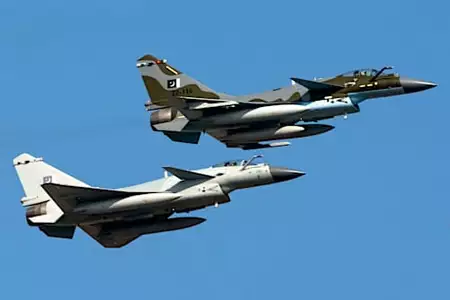

How Pakistan’s Fleet of J-10 Fighters Defeated the Indian Air ForceHow Pakistan’s Fleet of J-10 Fighters Defeated the Indian Air Force


And there is evidence to suggest that Pakistan used the information their drones collected on May 9 for a massive jamming operation on May 10. Indeed, while unconfirmed, there are multiple reports indicating that the Pakistanis even targeted the powerful Russian-built S-400 air defenses that India had ringing their airbases.


All the claims made by Pakistan have been denied by India. But that’s just par for the course; Pakistan routinely does the same to India when New Delhi has battlefield successes.


Plus, it remains likely that, should the current ceasefire break down and the war continue, and if the Indians continue escalating on their end, India will enjoy the upper hand over its Pakistani rivals. For now, however, the Pakistanis have deftly used whatever capabilities at their disposal—and a lot of gumption—to stymie India’s offensives.


Drones Are the Future of Warfare​

Just as in the Ukraine War and the various iterations of fighting between Iran-backed militants and Israel in the Middle East, one side in the India-Pakistan War—Pakistan, in this case—invested heavily in drone capabilities over the last decade. Specifically, Pakistan purchased drones from Turkey and China, each of which produces high-quality drones at relatively low cost.


Because of their indigenous production capabilities and strong partnerships with China and Turkey, Pakistan has managed to avoid a fate that most everyone assumed would befall them. They did not lose to India. And, as noted above, in key instances, they pushed back hard against the Indians.


India made the mistake, perhaps understandably, of trying to model its military on those of the West. But the Western militaries no longer possess the war-winning formulae they once did. Sure, Western militaries have expensive gadgets. But with countries like China, Russia, and Turkey now rising, having the most expensive systems are no longer viable substitutes for victories.


Even with the Russian example, it should be noted that India relies heavily on Russian military technology. Their Su-30MKI was among the five planes shot down by Pakistan in the opening phases of the war. Further, the Pakistanis managed to blast the S-400s after jamming them on May 10. Here, too, are lessons U.S. and NATO planners could learn in how best to stymie powerful Russian air defense systems.


Pakistan Used Its Drones Brilliantly​

Pakistani strategists likely calibrated their forces for the four-day-long engagement with India to maximize their advantages, notably with Turkish drones and Chinese weapons. Comprehensively, the Indians are a superior force. Yet, specifically, in terms of the kind of tactical engagements Indian and Pakistani forces found themselves in, the Pakistanis had flipped the board in their favor.


India will next have to return to the drawing board and begin developing far more effective countermeasures for shooting down incoming drones. What’s more, they must invest in their own drone swarms.


It was an understandable move by India to rely on standoff weapons. In fact, those systems did destroy massive numbers of Pakistani military infrastructure (multiple airbases, for instance). Yet, the fact that New Delhi was moving toward destroying economic hubs, like Karachi, or that Indian forces had fired at Pakistani nuclear weapons facilities, indicated that Indian war planners were desperate. The reason? The Indians—like the Taiwanese, like the Afghan National Army, and so many other proxies of the United States—attempted to emulate the technology and tactics of the Americans and their Western allies. The Pakistanis, however, did not.


The Future Of Higher Education: Trends In University LearningSponsored | bevex.online


Both sides have accepted a stalemate and both sides are telling their people they won. But it should not have been close. Pakistan should have never been able to fight back as well as they did, given the economic and technological advances of the Indian military and wider society. That India struggled as they did indicate that, at least in the first phase of the conflict, Pakistan was winning.


Whether that would have persisted is unlikely. But it’s a vital warning that Western military analysts need to hear—notably Taiwanese military leaders, as their own great power war approaches.


About the Author: Brandon J. Weichert​

Brandon J. Weichert, a Senior National Security Editor at The National Interest as well as a contributor at Popular Mechanics, who consults regularly with various government institutions and private organizations on geopolitical issues. Weichert’s writings have appeared in multiple publications, including the Washington Times, National Review, The American Spectator, MSN, the Asia Times, and countless others. His books include Winning Space: How America Remains a Superpower, Biohacked: China’s Race to Control Life, and The Shadow War: Iran’s Quest for Supremacy. His newest book, A Disaster of Our Own Making: How the West Lost Ukraine is available for purchase wherever books are sold. He can be followed via Twitter @WeTheBrandon.


Image: Shutterstock / lzf.
 
A plane flying in a cloudy sky.

Topic: Military
Blog Brand: The Buzz
Region: Asia
Tags: China, India Pakistan, India-Pakistan War, PL-15, and Technology

How Chinese Missiles Routed India’s Air Force Over Pakistan​

May 8, 2025
By: Brandon J. Weichert

The recent battle between Pakistani and Indian forces ended in an unambiguous victory for Pakistan.

Now that the latest India-Pakistan War appears to be underway, we are getting a glimpse at how the two militaries are squaring off against each other. Thus far, the conflict is not playing out the way that many—this analyst included—assumed it would.


In the run-up to open hostilities between the two warring subcontinental powers, many experts simply assumed that the Indians would trounce their Pakistani neighbors, given their larger size, manpower, and military budget.


Yet in the opening hours of the conflict, the Pakistanis seem to have gotten the better of their Indian rivals. Details about the fighting are still somewhat scarce, but in the early hours of Wednesday, May 7, 2025, Islamabad made a series of incredible announcements about aerial victories over India—which India, conspicuously, has made no effort to refute.


The Future Of Higher Education: Trends In University Learningbevex.online


How Pakistan’s Fleet of J-10 Fighters Defeated the Indian Air ForceHow Pakistan’s Fleet of J-10 Fighters Defeated the Indian Air Force


Understanding Pakistan’s PL-15 Air-to-Air Missile​

Namely, Islamabad claimed that Chinese-made PL-15 air-to-air missiles—probably fired by Pakistan’s Chinese-provided J-10C warplanes—downed three Indian Air Force (IAF) French-built Rafale jets, one Indian-built Su-30MKI, and one Russian-built MiG-29. These planes—and in particular the Rafales—were among some of the strongest warplanes in the IAF.


In short, the recent battle between Pakistani and Indian forces ended in an unambiguous victory for Pakistan. It is also a warning to the West that China’s military technology, as seen in Pakistan, should not be underestimated.


China’s PL-15 is an active radar-guided, long-range air-to-air missile. Designed by the Luoyang-based China Airborne Missile Academy (CAMA), it serves as a beyond-visual-range (BVR), weapon for the People’s Liberation Army Air Force (PLAAF), People’s Liberation Army Naval Air Force, and the Pakistani Air Force.


First test-fired in 2011, China’s PL-15 was first spotted in 2013 mounted on a Chengdu J-20 “Mighty Dragon” fifth-generation warplane. The missile entered service between 2015 and 2017. Within the Pakistan Air Force, the PL-15 is equipped on their Chinese-produced JF-17 Block III warplanes, as well as the J-10CE fighters—the class of warplane that, according to initial reports, shot down all those IAF birds.


The PL-15 is designed to engage high-value targets like airborne early warning and control aircraft, tankers, and fighters at extended ranges, replacing the older PL-12 missile as the standard BVR missile for Chinese and Pakistani forces. The missile employs a dual-use solid-fuel rocket motor, though its export variant, the PL-15E—likely used in the dogfight on Wednesday—uses a slightly different propellant or motor. Some sources argue that the PL-15s can achieve speeds of up to Mach 5, though this is unconfirmed.


Most analysts believe that the Chinese domestic PL-15 model is equivalent to the Anglo-French MBDA Meteor missile. It is also meant to compete against the U.S.-made AIM-120D AMRAAM. In fact, China’s creation of the PL-15 likely prompted the U.S. military to create the AIM-260 and the AIM-174B to counter it.


These missiles feature hybrid guidance systems, including the Inertial Navigation System (INS) along with a mid-course two-way datalink for updates from the launching aircraft or airborne command and control planes. There is an onboard active electronically scanned array (AESA) radar seeker with active and passive modes for terminal homing, offering high precision and resistance to countermeasures.


Folding fins designed for an internal carriage in stealth aircraft, such as the J-20, are one of the defining features of this missile. The PL-15E variant has folding rear fins to increase internal payload capacity; this gives it a reduced range compared to its domestic PL-15 Chinese cousin.


Pakistan Won Using China’s Defense Technology​

Nevertheless, the Pakistanis have deployed this system with lethal impact in their growing conflict with India. Their successful engagement downing five IAF warplanes is a tremendous blow to the IAF, as well as to India’s military. While any military engaging in a near-peer conflict can expect large numbers of its airplanes to be damaged or destroyed, the fact of the matter is that the Pakistanis were not supposed to be this effective.


It is still the earliest phase of the conflict, and further clashes are likely. India, at least on paper, has many advantages over their Pakistani neighbors. But the successful attacks by the Pakistani planes indicate that Islamabad is playing for keeps. What’s more, it is a warning to the Americans that Chinese missile technology should not be underestimated—especially as the Americans and Chinese circle each other for a future battle over Taiwan.


Explore How Tech is Revolutionizing University Education TodaySponsored | bevex.online


About the Author: Brandon J. Weichert​

Brandon J. Weichert, a Senior National Security Editor at The National Interest as well as a contributor at Popular Mechanics, who consults regularly with various government institutions and private organizations on geopolitical issues. Weichert’s writings have appeared in multiple publications, including the Washington Times, National Review, The American Spectator, MSN, the Asia Times, and countless others. His books include Winning Space: How America Remains a Superpower, Biohacked: China’s Race to Control Life, and The Shadow War: Iran’s Quest for Supremacy. His newest book, A Disaster of Our Own Making: How the West Lost Ukraine is available for purchase wherever books are sold. He can be followed via Twitter @WeTheBrandon.


Image: Shutterstock / Fasttailwind.
 

Key Lessons Learned

  1. Strategic Restraint Requires Strategic Communication
    Restraint prevented escalation but was misinterpreted as inaction by the public. A clear gap exists in narrative control during crisis moments.
  2. Operational Momentum Must Be Sustained
    Tactical pauses post-initial advantage allowed Indian forces to reposition. Decisive follow-through was missing.
  3. Intelligence Gaps Weakened Strike Effectiveness
    Pakistan’s retaliatory strikes were limited in impact due to inadequate real-time ISR (Intelligence, Surveillance, Reconnaissance).
  4. Maritime Rules of Engagement (ROE) Too Restrictive
    Missed opportunities at sea indicate the need for revised engagement protocols and improved naval assertiveness.
  5. Asymmetric Warfare Tools Underutilized
    Cyber and electronic warfare capabilities were not fully activated—limiting Pakistan's ability to inflict non-kinetic disruption.
  6. Delayed Diplomatic Mobilization
    Absence of immediate international outreach created a narrative vacuum exploited by Indian media and diplomats.

Key Shortcomings & Strategic Fixes

CategoryShortcomingImmediate Fix (0–6 Months)Medium-Term Strategy (6–24 Months)
Joint Military OpsLack of momentum after tactical advantageCreate escalation matrix and “Pursuit Protocols”Establish a Permanent Joint Command HQ
ISR CapabilitiesPoor real-time targeting and battlefield visionDeploy UAV grids; integrate satellite feedsBuild National ISR Command with AI and cross-service inputs
Naval EngagementOverly cautious ROEs limited strategic responseReview wartime maritime ROEs; simulate response drillsExpand undersea warfare capabilities and surveillance networks
Public ConfidenceDisconnect between military actions and public moraleActivate Strategic Communication Cell (ISPR + MOFA)Establish Crisis Communication Doctrine and media war rooms
Asymmetric ResponseCyber & EW response limitedForm Cyber Strike Taskforce under SPDDevelop indigenous cyber weapons and spectrum denial capabilities
Diplomatic FrontDelayed international engagementDeploy rapid-response diplomacy unitsPre-prepare legal & diplomatic responses for multilateral forums

Strategic Recommendations

  1. Institutionalize a Unified Command and Control System
    Establish an integrated National Defense Command for real-time coordination across Army, Navy, Air Force, Cyber, and Intelligence units.
  2. Launch Pakistan’s Cyber Warfare Division
    Form a dedicated cyber command under Strategic Plans Division (SPD) with offensive and defensive capabilities for state-level conflict deterrence.
  3. Expand and Localize ISR Infrastructure
    Fast-track partnerships with domestic tech firms for indigenous drone, radar, and satellite surveillance development.
  4. Develop Narrative Warfare Capabilities
    Build a media strategy team to counter enemy disinformation and shape domestic/international perceptions in real time.
  5. Create a Pre-Conflict Diplomatic Activation Protocol
    Mandate immediate diplomatic outreach within 24 hours of any escalation involving envoys, think tanks, diaspora networks, and legal bodies.
  6. Revise ROEs for Decisive Naval and Air Engagement
    Allow commanders flexibility under hostile engagement with safeguards to ensure proportional response aligned with international law.

Conclusion

The Pakistan Armed Forces have shown remarkable discipline, precision, and professionalism in the face of overwhelming pressure during the 2025 conflict. However, defense in the 21st century requires agility, technology, and narrative supremacy. We must now shift from a reactive defense posture to a proactive, deterrence-focused strategy—backed by digital dominance, operational readiness, and global diplomatic alignment.
 
Key Lessons Learned
  1. Strategic Restraint Requires Strategic Communication
    Restraint prevented escalation but was misinterpreted as inaction by the public. A clear gap exists in narrative control during crisis moments.
  2. Operational Momentum Must Be Sustained
    Tactical pauses post-initial advantage allowed Indian forces to reposition. Decisive follow-through was missing.
  3. Intelligence Gaps Weakened Strike Effectiveness
    Pakistan’s retaliatory strikes were limited in impact due to inadequate real-time ISR (Intelligence, Surveillance, Reconnaissance).
  4. Maritime Rules of Engagement (ROE) Too Restrictive
    Missed opportunities at sea indicate the need for revised engagement protocols and improved naval assertiveness.
  5. Asymmetric Warfare Tools Underutilized
    Cyber and electronic warfare capabilities were not fully activated—limiting Pakistan's ability to inflict non-kinetic disruption.
  6. Delayed Diplomatic Mobilization
    Absence of immediate international outreach created a narrative vacuum exploited by Indian media and diplomats.

Key Shortcomings & Strategic Fixes

Category

Shortcoming

Immediate Fix (0–6 Months)

Medium-Term Strategy (6–24 Months)

Joint Military Ops

Lack of momentum after tactical advantage

Create escalation matrix and “Pursuit Protocols”

Establish a Permanent Joint Command HQ

ISR Capabilities

Poor real-time targeting and battlefield vision

Deploy UAV grids; integrate satellite feeds

Build National ISR Command with AI and cross-service inputs

Naval Engagement

Overly cautious ROEs limited strategic response

Review wartime maritime ROEs; simulate response drills

Expand undersea warfare capabilities and surveillance networks

Public Confidence

Disconnect between military actions and public morale

Activate Strategic Communication Cell (ISPR + MOFA)

Establish Crisis Communication Doctrine and media war rooms

Asymmetric Response

Cyber & EW response limited

Form Cyber Strike Taskforce under SPD

Develop indigenous cyber weapons and spectrum denial capabilities

Diplomatic Front

Delayed international engagement

Deploy rapid-response diplomacy units

Pre-prepare legal & diplomatic responses for multilateral forums

Strategic Recommendations
  1. Institutionalize a Unified Command and Control System
    Establish an integrated National Defense Command for real-time coordination across Army, Navy, Air Force, Cyber, and Intelligence units (Somewhat in progress).
  2. Launch Pakistan’s Cyber Warfare Division
    Form a dedicated cyber command under Strategic Plans Division (SPD) with offensive and defensive capabilities for state-level conflict deterrence. (in progress)
  3. Expand and Localize ISR Infrastructure
    Fast-track partnerships with domestic tech firms for indigenous drone, radar, and satellite surveillance development.
  4. Develop Narrative Warfare Capabilities
    Build a media strategy team to counter enemy disinformation and shape domestic/international perceptions in real time.
  5. Create a Pre-Conflict Diplomatic Activation Protocol
    Mandate immediate diplomatic outreach within 24 hours of any escalation involving envoys, think tanks, diaspora networks, and legal bodies.
  6. Revise ROEs for Decisive Naval and Air Engagement
    Allow commanders flexibility under hostile engagement with safeguards to ensure proportional response aligned with international law.

Conclusion
The Pakistan Armed Forces have shown remarkable discipline, precision, and professionalism in the face of overwhelming pressure during the 2025 conflict. However, defense in the 21st century requires agility, technology, and narrative supremacy. We must now shift from a reactive defense posture to a proactive, deterrence focused strategy backed by digital dominance, operational readiness, and global diplomatic alignment.
 
I have a strong hunch that the situation is as follows:

1) The ceasefire is being held in place by US threats to sever trade with both countries

2) A condition of the ceasefire is DGISPR will refrain from humiliating India further (and leading to the destruction of Hindu morale which was built up over decades of British colonialism, historical revisionism, propaganda and oppression of minorities)

3) The US and UK, not wanting another escalation, will apply pressure to India and Pakistan to talk on Kashmir. UNSC res 80 (optimistic) or the Chenab Formula (realistic) would be applied.

The reason I am optimistic they will attempt to make us resolve Kashmir is that the root cause of Kashmir militancy is not some Pakistani conspiracy, but local anger against Indian occupation and atrocities. We Kashmiris know it. Pakistanis know it. Indian intelligence agencies know it. The world's intelligence agencies know it. The only way to prevent future attacks and subsequent escalations is to address the will of the Kashmiri people.

4) During this whole process, the Modi govt will cover up Indian losses and talks on Kashmir. After a resolution (either UNSC res 80 or Chenab Formula) is applied, India will declare Kashmir a no-go area to Indian tourists for 'security reasons,' while in reality the referendum/partition is taking place under an information blackout. By the time Modi's term ends and the next Congress govt takes power, the 'no-go' designation and info blackout will be lifted, a false flag possibly occurs, and Congress will be blamed for losing Kashmir.

The internal turmoil that follows would allow the angry Hindu majority to overthrow Congress and declare India a Hindu Rashtra under Modi/RSS's leadership.

5) Everyone goes home happy.

Kashmiris get what they want (partition or referendum).

India gets to drop the facade and proudly become Hindu, no longer bound by cucked secular laws. With growing global hinduphobia and racism, Indian Hindus need a safe heaven to live in, a Hindu version of Israel.

With the threat of an Indo-Pakistani war over Kashmir gone, India can focus on countering China and Pakistan on its economy.

The west is happy that India is focusing its efforts on coutnering China and Pakistan is foucsing on coutnering extremist Islam from the western front.
 
Three things that Pakistan needs to do at once in regards of its own flexibility and productivity for weapon production and general economy, carbon materials production facility, heavy machine tools sites and mass 3d printing machinery imports.
Those 3 in combination will yield results beyond anything what you currently have.
 
State of Indian economy I think was a factor which our Media has not picked up yet , they were already down Trillion dollar based on their own news papers, I was not aware things was this bad
View attachment 120575

Pakistan was just dragged in to divert attention
India gained around $1.3 trillion since then.
 

Users who are viewing this thread

Pakistan Defence Latest

Latest Posts

Back
Top