Quwa podcasts & articles | Latest content & discussions

Vast majority of Pakistanis hate Bajwa and I am not fond of him either , however I was impressed with his categorical policy statement in his address to defense university about our relationship with china and America... quote ! We want to have good relationship with both but we will not have relationship with one at the cost of the other..
After this statement our relationship with America improved leaps and bounds and China also realised that she can't take Pakistan for granted.
Bajwa is correct in the sense that diplomacy should not be viewed as a zero-sum game. Strong relations with the United States should not come at the expense of Pakistan's partnership with China, and vice versa.

That said, China's track record of support for Pakistan has generally been more consistent than that of the United States. Historically, Washington has repeatedly imposed sanctions on Pakistan during periods of political or strategic divergence, whereas countries such as China and Türkiye have often continued their support during difficult times.

A recent example was Operation Bunyan-un-Marsoos, during which China and Türkiye were the only countries that openly expedited military supplies to Pakistan, even if these deliveries were technically the execution of existing contracts rather than new commitments.

Pakistan does not need to treat the United States as an adversary. Maintaining constructive relations and cooperation in areas of mutual interest remains important. However, pursuing better ties with Washington should not require Pakistan to downplay or distance itself from partners that have consistently stood by it when it mattered most. Strategic diversification is sensible, but so is recognizing who has proven reliable over time.
 
In fact, China continued supporting Pakistan despite several major episodes that strained bilateral trust in recent years.

1. Disclosure of Chinese loan contracts to the IMF

Pakistan granted the IMF access to Chinese loan agreements despite Beijing's repeated preference for confidentiality. Following its assessment, the IMF concluded that CPEC-related debt was manageable, while Pakistan's broader debt position remained unsustainable:

"The debt sustainability analysis showed that CPEC loans were manageable, but the country's overall debt situation was not sustainable."
This episode reportedly caused discomfort in Beijing and raised concerns regarding Pakistan's handling of sensitive bilateral arrangements.

2. The Dasu Hydropower attack

The 2021 attack on Chinese personnel working on the Dasu Hydropower Project became another major point of friction. Initial Pakistani attempts to characterize the incident as an accident were met with an unusually firm response from China, which publicly demanded a thorough investigation and subsequently participated in the investigative process. The episode exposed gaps in security arrangements and appears to have shaken Chinese confidence in Pakistan's ability to safeguard critical Chinese interests and personnel.

3. Payment disputes involving Chinese IPPs

Persistent payment and circular debt issues affecting Chinese Independent Power Producers (IPPs) have remained a recurring source of concern in bilateral economic relations. These disputes have contributed to investor uncertainty and are widely viewed as one of the factors behind the slowdown in new large-scale Chinese investment commitments in Pakistan.

Taken together, these episodes suggest that Pakistan-China relations, while strategically important and resilient, have not been free from tensions. At times, short-term policy considerations and implementation failures on the Pakistani side have created friction with Beijing, potentially undermining the long-term trust required for a sustained strategic partnership.
 
...... China realized by late 1990s and mid 2000s that they need to root out ground level corruption in military and bureaucracy if they want to unlock next level of industrial growth, above the standard textiles, cheap toys, appliances type economy. The went bezerk in rooting out corruption and the result is that China competes right at the top in almost all modern technologies, 5th Gen jets? They got it. Advanced chips to counter western ones? They got it. Complete social media networks and cyber space? They got it. Advanced Machine Learning and AI? They got it. Advanced ship building, materials, jet engines, cars? They got it.
From the late 1990s to the mid-2000s, I worked full-time in a special agency affiliated with the CCP, handling political affairs.

Your analysis of China during this period contains many misunderstandings.

I can tell you very clearly that from 1990 to 2010, within the CCP's internal management system, there was a tacit acceptance of "corruption." ------ This was a form of political wisdom. Ordinary people find this logic difficult to grasp. Therefore, this issue has never been made public.

However, this issue seems to have strayed from the main topic of this thread.
 
Bajwa is correct in the sense that diplomacy should not be viewed as a zero-sum game. Strong relations with the United States should not come at the expense of Pakistan's partnership with China, and vice versa.

That said, China's track record of support for Pakistan has generally been more consistent than that of the United States. Historically, Washington has repeatedly imposed sanctions on Pakistan during periods of political or strategic divergence, whereas countries such as China and Türkiye have often continued their support during difficult times.

A recent example was Operation Bunyan-un-Marsoos, during which China and Türkiye were the only countries that openly expedited military supplies to Pakistan, even if these deliveries were technically the execution of existing contracts rather than new commitments.

Pakistan does not need to treat the United States as an adversary. Maintaining constructive relations and cooperation in areas of mutual interest remains important. However, pursuing better ties with Washington should not require Pakistan to downplay or distance itself from partners that have consistently stood by it when it mattered most. Strategic diversification is sensible, but so is recognizing who has proven reliable over time.
Hard to disagree with what you said however one shall not put all the eggs in one basket....we have used and abused America as much as America used and abused us ...we always went against America's stated policies and the committments we made to her ... anyway we are keeping our strategic independence and that's what matters most.
 
Hard to disagree with what you said however one shall not put all the eggs in one basket....we have used and abused America as much as America used and abused us ...we always went against America's stated policies and the committments we made to her ... anyway we are keeping our strategic independence and that's what matters most.
It is true that Pakistan’s strategic leadership has often approached Pakistan–US relations in a largely transactional manner, but geography remains a fundamental reality in international politics. Pakistan shares a border with China, whereas the United States is a distant power. That distinction matters.

Had Pakistani policymakers focused on fully operationalizing the infrastructure and connectivity potential of CPEC, rather than prioritizing short-term projects such as metros and IPPs, CPEC could have evolved into Pakistan’s equivalent of a modern-day Suez Canal—a critical trade and logistics corridor with immense strategic and economic value. Strategic partnerships are ultimately built on mutual interests and mutual dependence. Greater economic integration with China would have increased Pakistan’s strategic leverage and yielded benefits beyond what we have achieved so far.

This does not mean Pakistan should ignore the United States. Cooperation with the US in areas of mutual interest—such as counterterrorism, trade, technology, and regional stability—remains important. However, recent events illustrate the limits of expecting a fully aligned strategic partnership. Despite the unusually warm rhetoric from the US administration toward Prime Minister Shehbaz Sharif and Field Marshal Asim Munir, Washington reportedly opposed the joint China–Pakistan effort to designate the BLA under a UN Security Council mechanism. Such divergences are likely to remain a recurring feature of Pakistan–US relations.

The sensible approach is not to choose one side over another, but to pursue a clear set of strategic principles. Pakistan should deepen and strengthen its long-standing partnerships with China, Turkey, Azerbaijan, and Saudi Arabia, while maintaining stable and constructive relations with the United States in areas where interests converge. Foreign policy should be guided by national interests, strategic geography, and long-term economic objectives rather than short-term tactical gains.
 
It is true that Pakistan’s strategic leadership has often approached Pakistan–US relations in a largely transactional manner, but geography remains a fundamental reality in international politics. Pakistan shares a border with China, whereas the United States is a distant power. That distinction matters.

Had Pakistani policymakers focused on fully operationalizing the infrastructure and connectivity potential of CPEC, rather than prioritizing short-term projects such as metros and IPPs, CPEC could have evolved into Pakistan’s equivalent of a modern-day Suez Canal—a critical trade and logistics corridor with immense strategic and economic value. Strategic partnerships are ultimately built on mutual interests and mutual dependence. Greater economic integration with China would have increased Pakistan’s strategic leverage and yielded benefits beyond what we have achieved so far.

This does not mean Pakistan should ignore the United States. Cooperation with the US in areas of mutual interest—such as counterterrorism, trade, technology, and regional stability—remains important. However, recent events illustrate the limits of expecting a fully aligned strategic partnership. Despite the unusually warm rhetoric from the US administration toward Prime Minister Shehbaz Sharif and Field Marshal Asim Munir, Washington reportedly opposed the joint China–Pakistan effort to designate the BLA under a UN Security Council mechanism. Such divergences are likely to remain a recurring feature of Pakistan–US relations.

The sensible approach is not to choose one side over another, but to pursue a clear set of strategic principles. Pakistan should deepen and strengthen its long-standing partnerships with China, Turkey, Azerbaijan, and Saudi Arabia, while maintaining stable and constructive relations with the United States in areas where interests converge. Foreign policy should be guided by national interests, strategic geography, and long-term economic objectives rather than short-term tactical gains.
As far as foreign policy is concerned Pakistan is doing exactly what you are suggesting... Pakistan was never lacking in skills to navigate the international politics....our Achilles heel has always been our domestic politics , populist rhetorics and vision less economic policies....take CPEC as an example , on paper it could have done wonders for us instead it became an albatross on our necks....yep , china is a friendly neighbour , however she was getting a little cocky and condescending....she believed we are down and have nowhere to go and exploited CPEC to the hilt .....as far as economic relations with china are concerned I don't see much benefits in it .... we need export markets and have nothing worth exporting to China..
Best we are hoping for is to improve our agricultural sector and supply china with agricultural products.
 
From the late 1990s to the mid-2000s, I worked full-time in a special agency affiliated with the CCP, handling political affairs.

Your analysis of China during this period contains many misunderstandings.

I can tell you very clearly that from 1990 to 2010, within the CCP's internal management system, there was a tacit acceptance of "corruption." ------ This was a form of political wisdom. Ordinary people find this logic difficult to grasp. Therefore, this issue has never been made public.

However, this issue seems to have strayed from the main topic of this thread.
Hi Michael,

I believe the corruption you are talking about is systematic and exists pretty much everywhere. White collar types.

I am talking about corruption that is visible in everyday life of a common man. For example, being able to bribe a customs officer, bribe a policeman and get out of crime, bribe a Judge and get the decision in your favor. Pakistan suffers from such type of corruption where damage to the state is done as well its citizens.

This kind of corruption is like termites, it eats the nation from inside out.
 
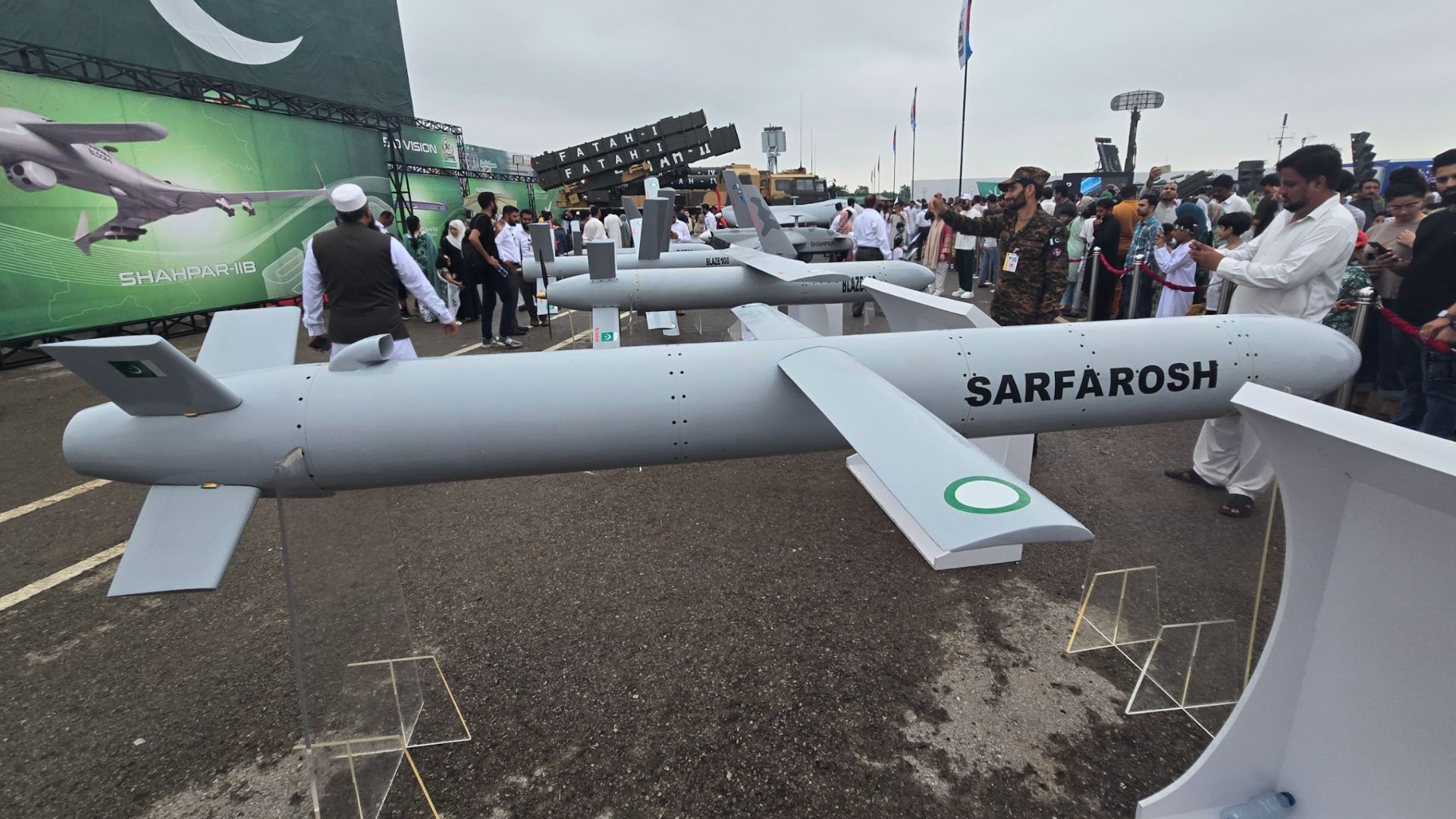
The latest edition was quite interesting. It's odd how for so long warfare has relied on sophisticated, expensive weapons, and while they are still needed, the balance of capability is shifting to cheap, easy to manufacture weapons deployed in large numbers, as shown by the Ukraine and Iran wars. In that respect, countries with less developed technical and industrial capabilities should be able to gain leverage in terms of developing systems and weapons. While the asymmetrical capabilities mean that less developed nations can fair better in conflicts, a military comprising sophisticated technology integrated with overwhelm scale still seems to dominate.
 
Last edited:
The latest edition was quite interesting. It's odd how for so long warfare has relied on sophisticated, expensive weapons, and while they are still needed, the balance of capability is shifting to cheap, easy to manufacture weapons deployed in large numbers, as shown by the Ukraine and Iran wars. In that respect, countries with less developed technical and industrial capabilities should be able to gain leverage in terms of developing systems and weapons. While the asymmetrical capabilities mean that less developed nations can fair better in conflicts, a military comprising sophisticated technology integrated with overwhelm scale still seems to dominate.
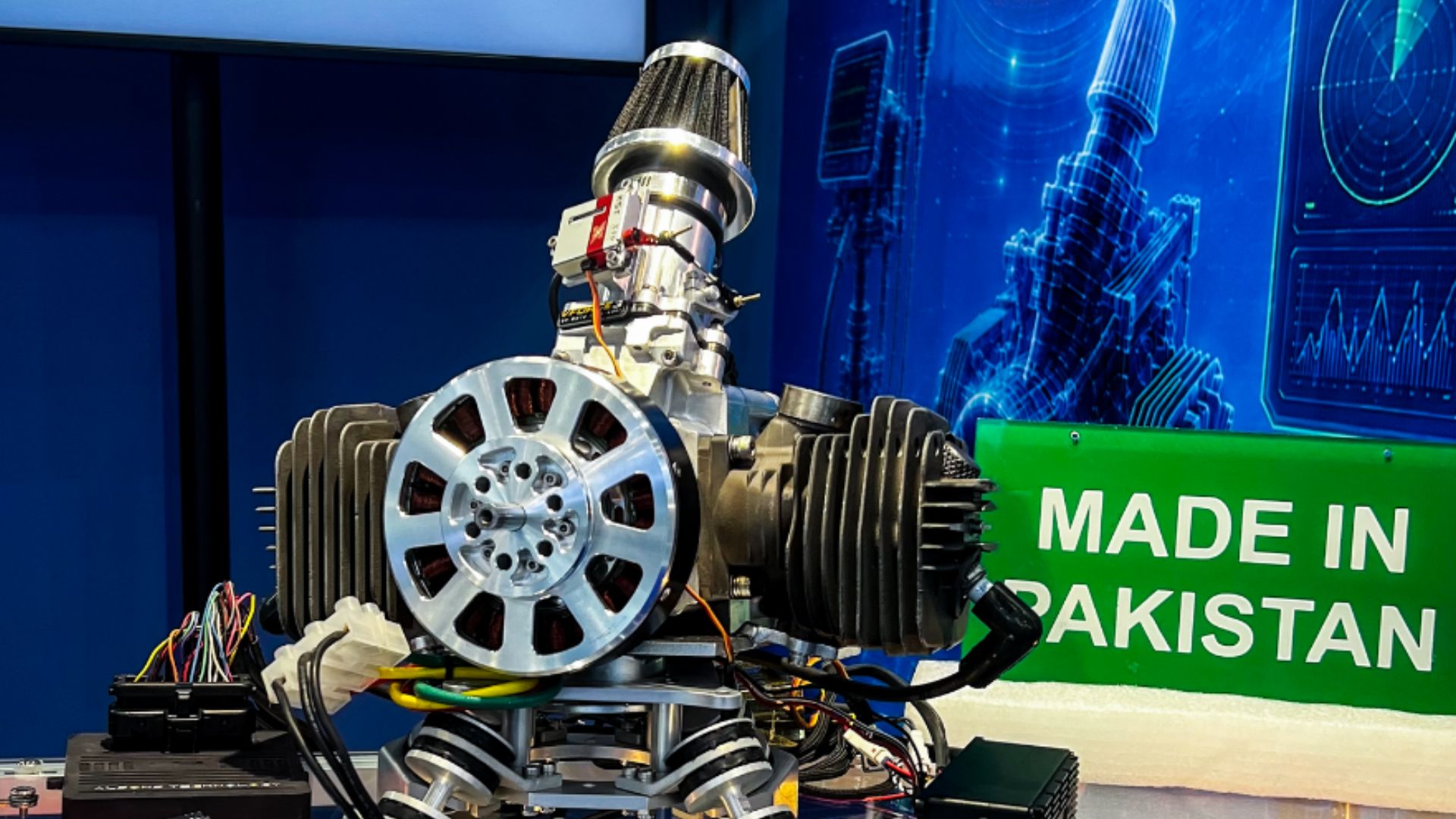
Yes, and the big point is that the more Pakistan is able to indigenize, esp., for propulsion (piston and turbojet), fibre optics, plastics, fan motors, etc, the bigger advantage it will have in a cost and scaling perspective.

This might also be one of those situations where, because everyone now needs gigantic numbers of these munitions, there could be much, much more willingness to transfer production know-how and systems to Pak so as to lower acquisition costs.

It's worth keeping in mind that Alsons Group/AKAL revealed their piston engines in France at Eurosatory, and already, they've begun talking to several French and European CNC companies there.
 
Besides the private sector, the military's growing expertise in technology can also generate significant spillovers for Pakistan's broader technological ecosystem. Historically, the Pakistani military has not been particularly technology-intensive compared to some of its international counterparts. However, recent investments in initiatives such as the National Aerospace Science & Technology Park (NASTP) and various defence-linked technology and innovation programs have the potential to change that dynamic.

The benefits extend beyond defence applications. Investments in advanced research, artificial intelligence, cybersecurity, aerospace engineering, robotics, and dual-use technologies often create pools of highly skilled talent, strengthen university-industry linkages, and encourage entrepreneurship. These capabilities can eventually diffuse into the civilian economy through startups, private enterprises, and research collaborations.

A useful example is Israel, where many of the country's most successful technology entrepreneurs and innovators emerged from the military's elite intelligence and technology units, particularly Unit 8200. The skills, networks, and problem-solving culture developed there played a major role in the growth of Israel's globally competitive technology sector.

Pakistan's circumstances are different, but the underlying principle remains the same: when military technology programs are connected with academia, industry, and entrepreneurship, they can become catalysts for a broader innovation ecosystem. If managed effectively, initiatives such as NASTP could help create a pipeline of talent and technological capabilities that benefits not only national security but also the country's long-term economic and technological development.

 
Besides the private sector, the military's growing expertise in technology can also generate significant spillovers for Pakistan's broader technological ecosystem. Historically, the Pakistani military has not been particularly technology-intensive compared to some of its international counterparts. However, recent investments in initiatives such as the National Aerospace Science & Technology Park (NASTP) and various defence-linked technology and innovation programs have the potential to change that dynamic.

The benefits extend beyond defence applications. Investments in advanced research, artificial intelligence, cybersecurity, aerospace engineering, robotics, and dual-use technologies often create pools of highly skilled talent, strengthen university-industry linkages, and encourage entrepreneurship. These capabilities can eventually diffuse into the civilian economy through startups, private enterprises, and research collaborations.

A useful example is Israel, where many of the country's most successful technology entrepreneurs and innovators emerged from the military's elite intelligence and technology units, particularly Unit 8200. The skills, networks, and problem-solving culture developed there played a major role in the growth of Israel's globally competitive technology sector.

Pakistan's circumstances are different, but the underlying principle remains the same: when military technology programs are connected with academia, industry, and entrepreneurship, they can become catalysts for a broader innovation ecosystem. If managed effectively, initiatives such as NASTP could help create a pipeline of talent and technological capabilities that benefits not only national security but also the country's long-term economic and technological development.

You know, I think one good initiative the Pakistan military SHOULD consider is providing retired officers and jawans seed funding for businesses. So, if retiring engineers, pilots, technicians, etc., partner together to design and build a munition, drone, LM, etc., perhaps co-invest in their company?
 
You know, I think one good initiative the Pakistan military SHOULD consider is providing retired officers and jawans seed funding for businesses. So, if retiring engineers, pilots, technicians, etc., partner together to design and build a munition, drone, LM, etc., perhaps co-invest in their company?
I think this is the direction the Fauji Group should seriously consider. Rather than remaining concentrated in mature, protected sectors such as fertilizers, banking, and power generation, it should leverage its capital, institutional capacity, and strategic linkages to invest in defence-related technology, manufacturing, and industrial innovation. In one of the recent project proposal challenges, I remember one of the team came up with the proposal of Fauji group venturing into drones market. The advantage of Fauji group is that you have a very solid backing, you can raise funds from banks, or from Public through IPO. These facilities are not available to young , standalone startups.

The focus should be on identifying priority sectors where Pakistan seeks greater self-reliance—such as electronics, sensors, drones, aerospace components, advanced materials, communications equipment, cybersecurity, and precision manufacturing. These are areas that generate high-value employment, encourage technology transfer, and create capabilities with spillover benefits for the broader economy.

No single business group can build such an ecosystem alone. Fauji Group could partner with major private-sector conglomerates such as the Nishat Group and Lucky Group, along with universities, startups, and public-sector institutions, to develop a domestic downstream industrial base. The objective should not simply be assembling imported systems, but gradually localizing components, building supply chains, and nurturing indigenous design and engineering capabilities.

Countries that have successfully developed advanced industrial sectors often used defence demand as a catalyst for broader technological development. Investments in aerospace, electronics, software, and advanced manufacturing frequently create commercial applications that benefit civilian industries as well.

Ultimately, the real opportunity for Fauji Group is to transition from being primarily a participant in rent-generating sectors to becoming a driver of industrial and technological development. Pakistan does not lack capital; what it needs is long-term investment in productive capabilities that can strengthen both economic competitiveness and national technological capacity.
 

Users who are viewing this thread

Latest Posts

Back
Top