Navigation
Install the app
How to install the app on iOS
Follow along with the video below to see how to install our site as a web app on your home screen.
Note: This feature may not be available in some browsers.
More options
Style variation
You are using an out of date browser. It may not display this or other websites correctly.
You should upgrade or use an alternative browser.
You should upgrade or use an alternative browser.
Railway News / Discussion
- Thread starter ghazi52
- Start date
More options
Who Replied?


ghazi52
THINK TANK: CONSULTANT
- Thread starter
- #17
Work on ML-1 railway project to begin from Karachi Port in July 2026: minister
News Desk
January 13, 2026
The work on the Main Line-1 (ML-1) railway project is expected to begin in July 2026 from the Karachi Port, said Minister of Railways Hanif Abbasi on Tuesday.
The ML-1 project aims to upgrade and modernise key infrastructure to enhance freight and passenger connectivity from Karachi to Peshawar.
Last month, a review meeting on the key Public Sector Development Programme (PSDP) projects was also informed that the project will begin in July this year.
According to a press release issued today, Abbasi, in a meeting with the Chairman Karachi Port Trust (KPT) Rear Admiral (retd) Shahid Ahmed, on January 9, said that the construction of the project will begin from the Karachi Port, starting in July.
During the meeting, he informed chairman KPT that under the project, a 54-kilometre railway section from “KPT to Pipri will be upgraded to ensure seamless cargo movement”.
The two also discussed “measures for strengthening the railway system for efficient cargo transportation from Karachi Port”.
Reduction of congestion at KPT and the surrounding road networks also came under discussion, with the suggestion of shifting “a larger share of cargo transportation from roads to rail”.
ghazi52
THINK TANK: CONSULTANT
- Thread starter
- #18
Pipri Freight Corridor to link Karachi with China and Central Asia
By Fatima Javed | Gwadar ProJan 15, 2026
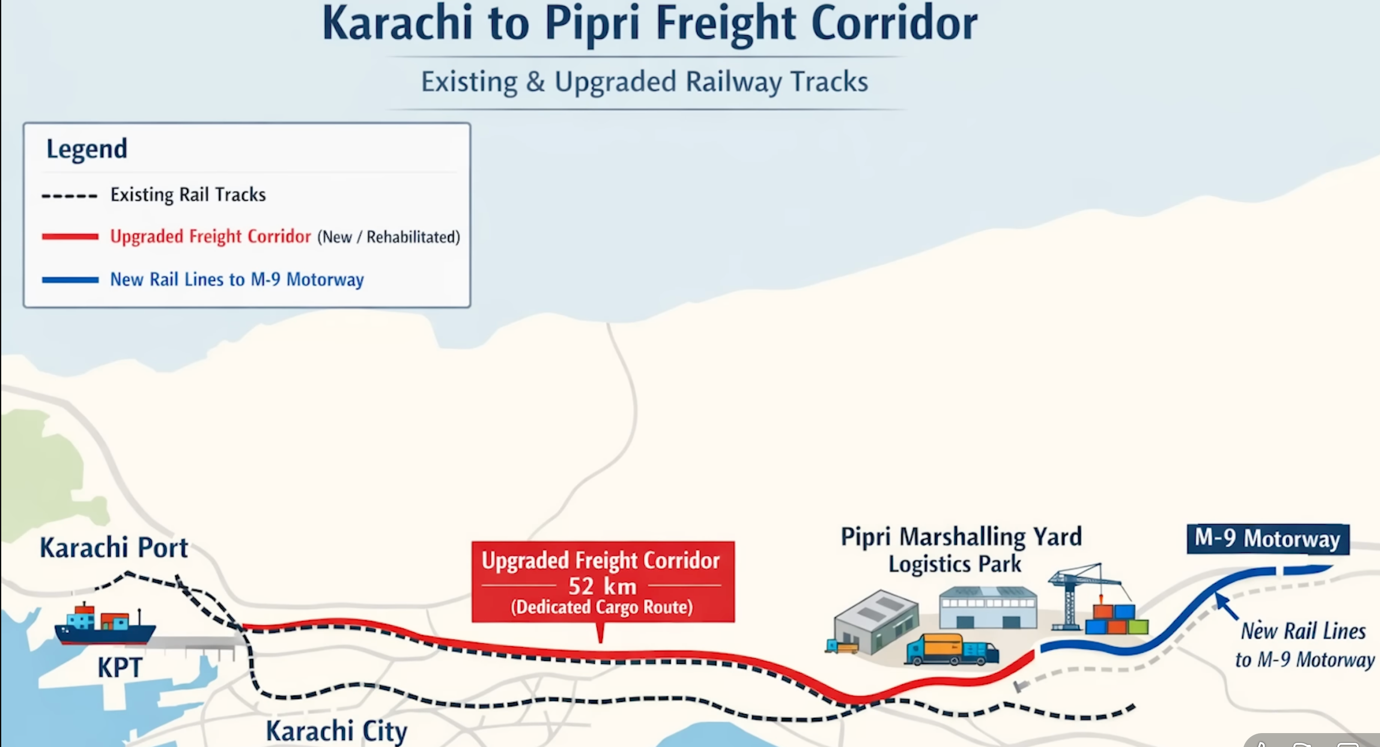
The route will connect Karachi port cargo to M9 motorway and eventually to CPEC route (Picture credits: Rich Pakistan)
ISLAMABAD - Pakistan on January 10 formally launched construction of the Pipri Dedicated Freight Corridor (DFC) and Multimodal Logistics Park, a major China–Pakistan Economic Corridor (CPEC)-aligned infrastructure project aimed at strengthening freight connectivity between Karachi’s ports, Pakistan’s inland markets, and onward routes to China and Central Asia.
The construction follows a groundbreaking ceremony held at the project site, attended by Federal Minister for Railways Hanif Abbasi, DP World Group Chairman and CEO Sultan Ahmed bin Sulayem, and senior representatives from the National Logistics Corporation (NLC), Pakistan Railways, and port and terminal operators.
ghazi52
THINK TANK: CONSULTANT
- Thread starter
- #19
The project is being jointly developed by DP World, Pakistan Railways and NLC, with NLC serving as the executing agency. It involves an estimated $400 million in foreign direct investment and is expected to generate annual savings of up to Rs100 billion by reducing logistics costs and transit times.
The first phase includes the rehabilitation of a 52-kilometre railway corridor linking Karachi Port with the Marshalling Yard at Pipri, alongside the development of a state-of-the-art Multimodal Logistics Park. Phase one is targeted for completion within four months.
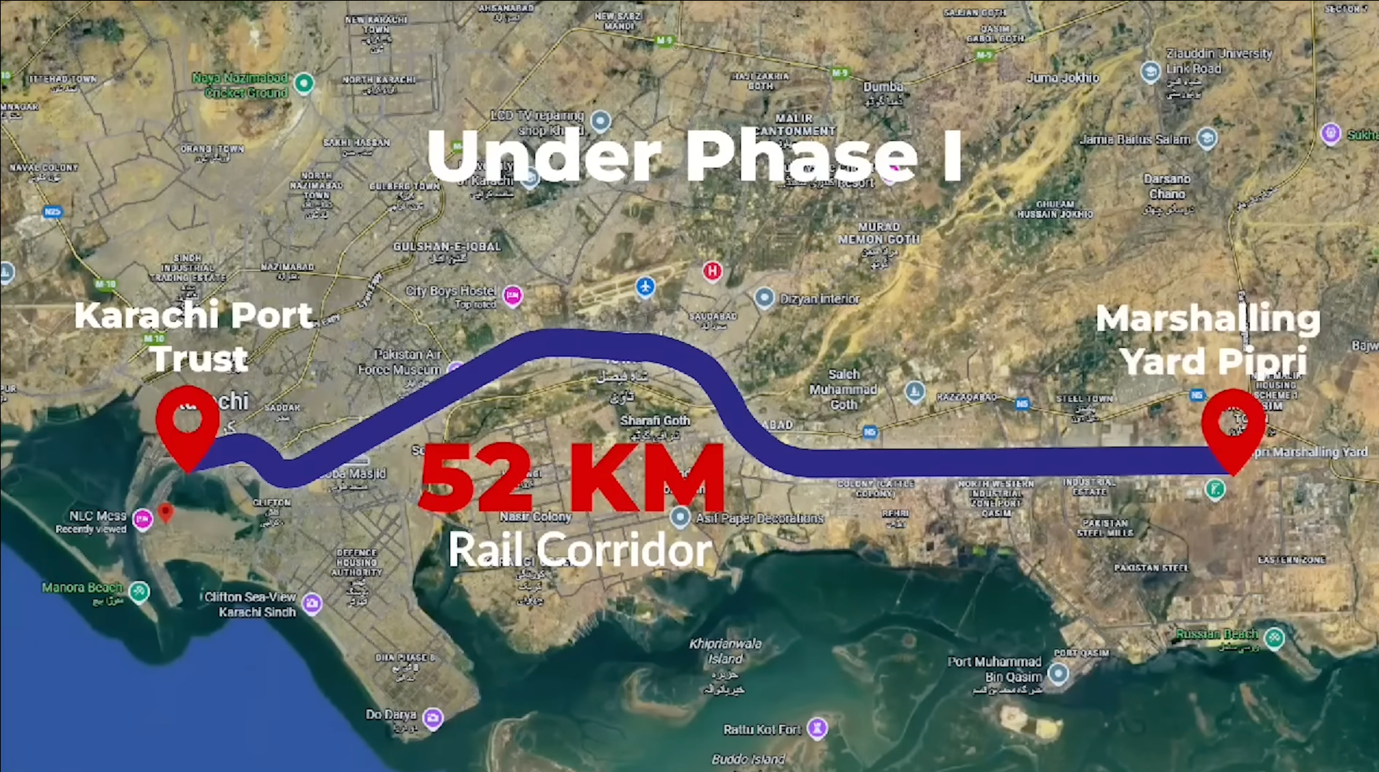
Phase 1 of the 52 km rail corridor to complete in 4 months- (Picture credits: Rich Pakistan)
The first phase includes the rehabilitation of a 52-kilometre railway corridor linking Karachi Port with the Marshalling Yard at Pipri, alongside the development of a state-of-the-art Multimodal Logistics Park. Phase one is targeted for completion within four months.
Phase 1 of the 52 km rail corridor to complete in 4 months- (Picture credits: Rich Pakistan)
ghazi52
THINK TANK: CONSULTANT
- Thread starter
- #20
Once operational, import containers arriving at Karachi’s ports will be transported directly by rail to Pipri and then dispatched onward by rail and road to destinations across Pakistan, as well as to China, Central Asia and other regional markets. Pakistani export cargo will follow the reverse route, improving turnaround times and overall supply chain efficiency.
The project aims to address chronic container congestion at Karachi Port by shifting freight movement from road to rail. Pakistan’s limited rail-based freight capacity has long contributed to slow cargo clearance, increased road congestion, higher emissions, and accelerated wear and tear on urban road infrastructure.
Designed as a long-term solution, the Pipri Dedicated Freight Corridor and integrated logistics park will combine rail, road and port operations into a single logistics hub, offering warehousing, stuffing and de-stuffing, cargo consolidation and other value-added services.
The project aims to address chronic container congestion at Karachi Port by shifting freight movement from road to rail. Pakistan’s limited rail-based freight capacity has long contributed to slow cargo clearance, increased road congestion, higher emissions, and accelerated wear and tear on urban road infrastructure.
Designed as a long-term solution, the Pipri Dedicated Freight Corridor and integrated logistics park will combine rail, road and port operations into a single logistics hub, offering warehousing, stuffing and de-stuffing, cargo consolidation and other value-added services.
ghazi52
THINK TANK: CONSULTANT
- Thread starter
- #21
The corridor is aligned with Pakistan Railways’ ML-1 project under the CPEC framework and is expected to significantly decongest Karachi’s ports, divert heavy container traffic away from city roads, lower carbon emissions and extend the lifespan of critical road infrastructure.
Speaking at the ceremony, Sultan Ahmed bin Sulayem said the integration of rail, road and port infrastructure through the Pipri project would enhance trade flow efficiency, support sustainable logistics and strengthen Pakistan’s position as a key regional trade gateway.
The collaboration between DP World, NLC and Pakistan Railways was formalised through the signing of a term sheet in January 2025, followed by a commercial agreement in the fourth quarter of 2025. The start of construction marks the next phase of DP World’s continued investment in trade-enabling infrastructure in Pakistan and the wider region.
Speaking at the ceremony, Sultan Ahmed bin Sulayem said the integration of rail, road and port infrastructure through the Pipri project would enhance trade flow efficiency, support sustainable logistics and strengthen Pakistan’s position as a key regional trade gateway.
The collaboration between DP World, NLC and Pakistan Railways was formalised through the signing of a term sheet in January 2025, followed by a commercial agreement in the fourth quarter of 2025. The start of construction marks the next phase of DP World’s continued investment in trade-enabling infrastructure in Pakistan and the wider region.
ghazi52
THINK TANK: CONSULTANT
- Thread starter
- #22
CDWP Clears ML-1, Havelian Dry Port Designs, Key CPEC Transport Projects
By Tahir AliISLAMABAD-In a major step toward modernizing Pakistan’s transport infrastructure and enhancing regional connectivity, the Central Development Working Party (CDWP) the Preliminary Design and Drawings for the Main Line-1 (ML-1) railway project and the Havelian Dry Port, valued at Rs16.26 billion, to the Executive Committee of the National Economic Council (ECNEC) for final approval.
The move marks a pivotal milestone in advancing CPEC Phase II, reaffirming the government’s commitment to transforming the nation’s logistics backbone.
Chairing the meeting, Federal Minister for Planning, Development and Special Initiatives Ahsan Iqbal described ML-1 as “Pakistan’s leap into the 21st century,” emphasizing that railway modernization is essential for the country to remain competitive as the world shifts toward electric and high-speed trains.
He also urged Pakistan Railways to commercialize its extensive land assets to generate revenue for sustainable infrastructure upgrades.
ghazi52
THINK TANK: CONSULTANT
- Thread starter
- #23
Pakistan must put rail before roads
Low incomes, high density make rail viable backbone for inclusive mobility
Nadeem M Qureshi
January 19, 2026
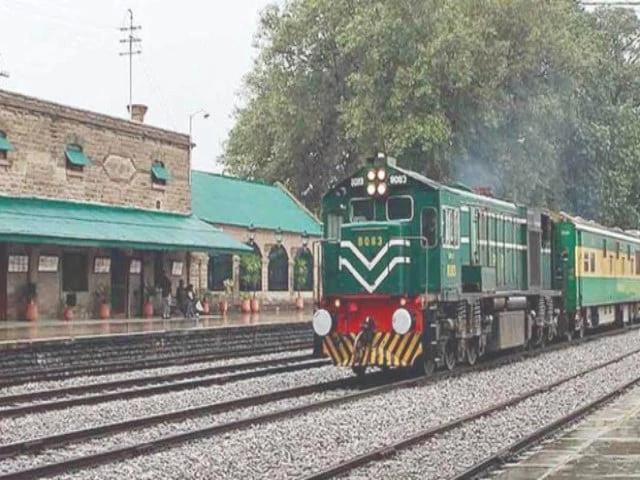
Pakistan must put rail before roads
KARACHI: Pakistan has not one but two transport policies. The first, titled National Transport Policy of Pakistan 2018, was prepared by the Planning Commission. The second, the National Freight and Logistics Policy, was issued by the Ministry of Communications in 2020.
The first policy states that it "reflects the government of Pakistan's aim to create a world-class transport sector." The second offers up some more detail, "To drive economic growth and trade in Pakistan by increasing the country's competitiveness through an integrated, seamless, efficient, reliable and cost-effective freight transport and logistics network, leveraging best in class technology, processes and manpower."
These vision statements miss the point. What Pakistan needs is a transport sector that works for its people – all its people, rich and poor. It does not need it to be "world class" or leverage "best-in-class technology".
Reading the policies themselves, one is struck by a strange disconnect: There is a complete absence or discussion of factors critical to the design and implementation of any transport system. These include demographics, population density and distribution, topology – particularly for intercity transport – per capita income, and income distribution.
Transport systems do not exist in a vacuum. There must be a full understanding of the enabling environment. Without this understanding and specific design objectives, what is likely to emerge is an unstructured, inefficient and largely dysfunctional mix of transport modes. And this, sadly, is what has happened in Pakistan.
Of particular concern is the way rail has been marginalised in favour of road transport. Over the years, many impressive multilane intercity highways have been built. Billions of rupees have been spent constructing them, and billions more are spent every year maintaining them.
ghazi52
THINK TANK: CONSULTANT
- Thread starter
- #24
How many of these people can buy a car to make use of our magnificent highways? A cynic would say, "Well, they can always take a bus." And, indeed, this is what they are obliged to do. But here we run into another problem – the issue of cost, and in particular energy cost. Consider the following comparison between rail and road transport: Rail has a massive physics advantage: steel wheels on steel rails result in an extremely low rolling resistance.
A freight train requires less than one-third of the energy per tonne-kilometre compared to a truck. This is due to lower rolling resistance, better aerodynamics per unit of cargo, and the ability to move large volumes in a single consist.
The same logic applies to intercity passenger rail, provided trains operate at high occupancy levels. Electrified rail systems (metros, suburban rail) are among the most energy-efficient passenger modes. Passenger buses and cars have higher per-passenger energy use unless operating at very high occupancy.
Rail also trumps road along other dimensions. Rail freight produces less than one-fifth of the greenhouse gas emissions of road freight per tonne-kilometre. Electric passenger rail systems again rank among the most efficient modes in terms of emissions.
Rail transport cost for freight can be higher than road on a per-shipment basis. But this is only the case when volumes are low. At high volumes, rail easily outcompetes road. The same argument applies to passenger transport costs. Operating costs per-passenger kilometre can only be lower when trains run at high occupancy.
A freight train requires less than one-third of the energy per tonne-kilometre compared to a truck. This is due to lower rolling resistance, better aerodynamics per unit of cargo, and the ability to move large volumes in a single consist.
The same logic applies to intercity passenger rail, provided trains operate at high occupancy levels. Electrified rail systems (metros, suburban rail) are among the most energy-efficient passenger modes. Passenger buses and cars have higher per-passenger energy use unless operating at very high occupancy.
Rail also trumps road along other dimensions. Rail freight produces less than one-fifth of the greenhouse gas emissions of road freight per tonne-kilometre. Electric passenger rail systems again rank among the most efficient modes in terms of emissions.
Rail transport cost for freight can be higher than road on a per-shipment basis. But this is only the case when volumes are low. At high volumes, rail easily outcompetes road. The same argument applies to passenger transport costs. Operating costs per-passenger kilometre can only be lower when trains run at high occupancy.
ghazi52
THINK TANK: CONSULTANT
- Thread starter
- #25
Land usage in the case of rail is also much lower than road. The land needed for an up-and-down train track is a fraction of the land needed to build a dual-carriage six-lane highway. Not to mention the damage done to the environment and agriculture when forests and fields are replaced by six-lane highways.
Pakistan possesses all the characteristics that strongly favour rail over road. Almost all major cities and industrial activity lie along the Indus River basin. This basin, from Karachi to Peshawar, constitutes a natural high-density rail corridor, enabling the sort of volumes that make rail a better and cheaper alternative to road.
There is, of course, the issue of capital cost. In general, the cost per kilometre of rail is of the same order as road. Rail can be more expensive depending on other supporting infrastructure, such as stations and bridges that need to be designed to carry very heavy dynamic loads.
Pakistan's geography, demographics and economic realities all point clearly in one direction: rail should be the preferred mode of transportation. Yet, for some reason, we seem to have marginalised rail in favour of road transport.
Pakistan possesses all the characteristics that strongly favour rail over road. Almost all major cities and industrial activity lie along the Indus River basin. This basin, from Karachi to Peshawar, constitutes a natural high-density rail corridor, enabling the sort of volumes that make rail a better and cheaper alternative to road.
There is, of course, the issue of capital cost. In general, the cost per kilometre of rail is of the same order as road. Rail can be more expensive depending on other supporting infrastructure, such as stations and bridges that need to be designed to carry very heavy dynamic loads.
Pakistan's geography, demographics and economic realities all point clearly in one direction: rail should be the preferred mode of transportation. Yet, for some reason, we seem to have marginalised rail in favour of road transport.
ghazi52
THINK TANK: CONSULTANT
- Thread starter
- #26
A sensible transport policy would look very different. At the intra-city level, Pakistan's cities are characterised by high population densities and generally low incomes.
It is neither practical nor possible for everyone to own a car. Policy should, therefore, prioritise mass transit systems in all major cities. These systems would combine conventional rail, elevated rail, trams and buses.
Trains should operate along high-density corridors, with trams and buses branching out to carry passengers to their final destinations.
Such systems would primarily be for people's movement. Freight movement within cities would still have to rely mainly on trucks. And for this purpose, roads should be built to the proper standards. Trucks operating on public roads would have to comply with maximum axle load limits to prevent damage to the roads.
At the intercity level, the logic is even clearer. Given the low-income levels of most of our citizens, the only sensible system that can provide transport to most of our public at a reasonable price is rail.
To this end, we need to upgrade, develop and expand our rail networks and systems to cover all major cities. Rail must be the primary mode of transportation between cities for both people and freight. The objective is to provide fast, convenient and frequent services between most urban centres.
It is neither practical nor possible for everyone to own a car. Policy should, therefore, prioritise mass transit systems in all major cities. These systems would combine conventional rail, elevated rail, trams and buses.
Trains should operate along high-density corridors, with trams and buses branching out to carry passengers to their final destinations.
Such systems would primarily be for people's movement. Freight movement within cities would still have to rely mainly on trucks. And for this purpose, roads should be built to the proper standards. Trucks operating on public roads would have to comply with maximum axle load limits to prevent damage to the roads.
At the intercity level, the logic is even clearer. Given the low-income levels of most of our citizens, the only sensible system that can provide transport to most of our public at a reasonable price is rail.
To this end, we need to upgrade, develop and expand our rail networks and systems to cover all major cities. Rail must be the primary mode of transportation between cities for both people and freight. The objective is to provide fast, convenient and frequent services between most urban centres.
ghazi52
THINK TANK: CONSULTANT
- Thread starter
- #27
The focus on road networks should mainly be on 'farm to market' or 'farm to rail' roads. These should be upgraded and built wherever traffic densities do not justify a rail link. Such roads are critical to our primarily agricultural economy since produce must be moved quickly to minimise loss and wastage.
Pakistan has spent enormous time and money building a road network that ultimately serves only a small minority. It is time now to put the needs of the vast majority – the poor – over the needs of the few.
Pakistan has spent enormous time and money building a road network that ultimately serves only a small minority. It is time now to put the needs of the vast majority – the poor – over the needs of the few.
ghazi52
THINK TANK: CONSULTANT
- Thread starter
- #28
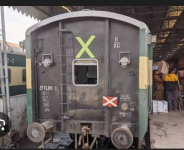
Do you know that if a small red board on the last trunk of a train disappears, the entire train can be stopped? Yes! There is a red board on the last box of every train, which is very important for the safety and proper functioning of the train. This is called the Tail Board and it is the symbol of a complete train.
If there is no tailboard on the last box, it means that the train is incomplete, which is considered to be a very dangerous situation. When a train passes a station, the station master and cabin man give the green signal to send off the train. Yes, but then they stare at the whole train to make sure everything is in perfect condition. Especially they must check the red tailboard at the end.
If the tailboard is present, it means that the train is complete and passing safely. But if the tailboard is missing, the station master immediately contacts the guard in charge of the train, because the responsibility of the tailboard is with the guard in charge . If the guard reports the train is full and the board has fallen along the way or has been stolen, the guard in charge installs a new tailboard at the next station.
But if the incharge guard cannot give a clear answer about the tailboard, the station master immediately informs the section controller. In this case, the train is stopped at the next station and Complete Arrival is taken from the incharge guard. Because the tailboard The absence of a train can also be a sign that some train compartments are left in the block section, which can cause major accidents for the following trains.
This is how tailboard guarantees full train. This is why every passenger and cargo carrier (freight) must put tailboard on the last box of the train. The guard in charge always has two tailboards in his toolbox. This purpose at night The red light is used for.
The tailboard is usually red in colour with white cross lines formed on it. This small tailboard may seem trivial, but it has great significance in the railway system, as it not only complements the train but also the passengers and the railway system. Total safety is also guaranteed.
Written by: Pak Rail Tech

Fatman17
THINK TANK: CONSULTANT
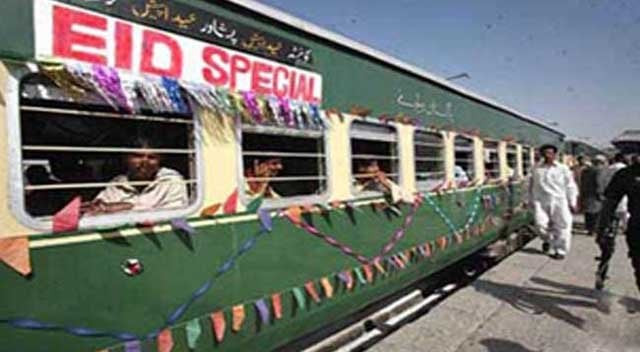
Financial woes derail Eid train plans | The Express Tribune
PR yet to issue schedule with Eid just days away
 search.app
Eid train plan derailed
Fatman17
THINK TANK: CONSULTANT
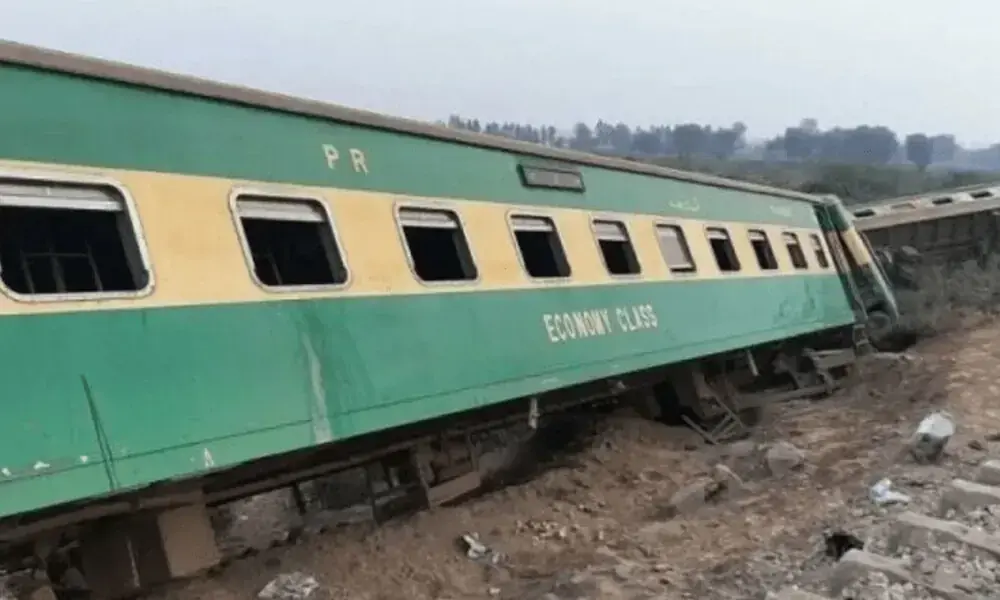
Fault lines on the tracks
EDITORIAL: When an internal inspection finds that nearly 60 percent of a passenger train’s coaches were operating...
share.google
Fault lines on the tracks
Users who are viewing this thread
Total: 2 (members: 0, guests: 2)
Pakistan Defence Latest
-
-
 KP govt backs out of counterterrorism commitments during talks: Naqvi (8 Viewers)
- Latest: Distant_Observer
-
-

-


