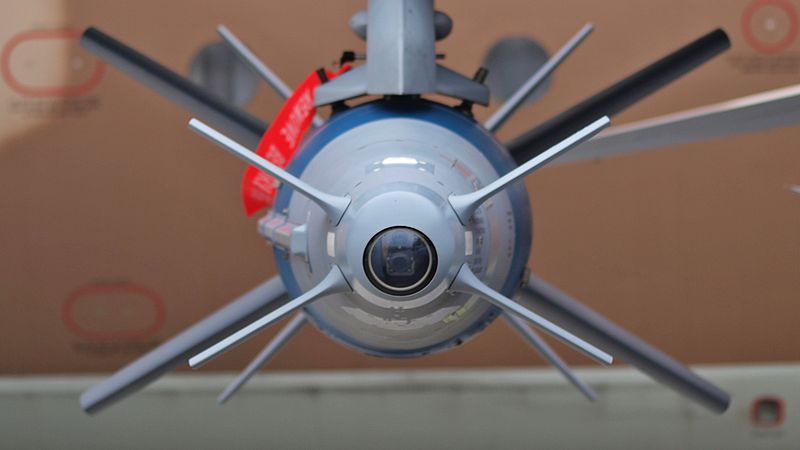
Revealed ! Why The Israeli Spice Bombs Failed in Indians in Balakot Strikes

Background-
Balakot facility had been tracked by R&AW for almost 20 years. On multiple occasions it had featured in Indian diplomatic protests where it was called 'Ivy league' of terrorism. Indian intelligence had noted to CIA, European intelligence agencies etc. that dedicated 'air wing' training, 'water attack' trainbing etc. were coming up.

In the days leading up to the attack R&AW had, detailed lists of
a) when the 'courses' would be starting/ ending. How many people are in training
b) Names and profiles of instructors, teachers, professors etc
c) Total 'intake' of students per course, when they enter, names, age, when they pass out etc.
d) detailed comms surveilance, including machinery that identified total number of active mobile phones, specific numbers, ingoing, outgoing what was getting discussed etc. Basis comms surveillance it was estimated about 300 phone connections were 'active' on the night of the attack that 'vanished'

IAF task-
Liquide the facility
Why Spice was used:
a) 5 separate ways of validating the target to ensure high accuracy
-GPS, interntial navigation

- Waypoint navigation constantly updating attack coordinates and missile progress
-Artificial intelligence enable image recognition. R&AW intelligence + satellite imagery had been fed into the missile so that as it approached the final attack it would compare the building it was attacking with stored memory images and carry out the attack
the above is the reason why there can never be a 'systemic deviation'. That theory is false because Spice doesn't just attack GPS coordinates, it does image conparison
-
Final safety- at any point of the time if the computers do not belive the missiles can hit the distance, the plane will not give permission to launch the missile. In all cases the Mirages allowed the Spice to be launched, so all cases the computers were confident the missles can reach the target

Warhead comosition: The facilities in Balakot were very basic. The roof was light cement structure. and buildings were generally flimsy. The 'students' all slept in groups without individual roms. Puncturing the roof in a top down attack could be done with the momentum of the missile itself. Once the roof was punctured and the missile was embedded within the structure, the shockwaves alone was enough to kill off the people inside. 'soft tissue' death I believe is how it was described. To create shockwaves a smaller warhead was necessary. the above is the reason why buildings remain standing and no external damage need to be seen
Aftermath
On the day of the attack R&AW's instruments noted about 300 active mobile connections 'vanished' immediately after the strike.


Multiple maulanas including the son in law of Masood Azhar raged and it took one month for ISI to reopen the place
To view this content we will need your consent to set third party cookies.
For more detailed information, see our cookies page.
 
Last edited:
mean the Indian Air Force entered deep into Pakistan, bombed Balakot, and returned without being detected. How did the Indian Air Force manage to do this without any stealth fighter jets?

It was definitely detected and chased off. Both neighboring countries do not have any buffer zone. Either side can enter and leave quickly. As a result of this skirmish, both sides spent on their air defense systems and acquired more batteries. Air defense systems were traditionally being used to defend important installations but in light of this event, both sides have now bought and installed more of them. Still, any professional air force would know precisely from where and how to enter enemy air space and leave successfully.

PAF also entered, locked on their important installations but then instead of destroying them. Choose to fire adjacent - unpopulated areas and return. Just to show deterrence and capability while not escalating the skirmish into a full blown war. Video footage of this was also released to the publics.
 
mean the Indian Air Force entered deep into Pakistan, bombed Balakot, and returned without being detected. How did the Indian Air Force manage to do this without any stealth fighter jets?


Means two things

Either you dont understand English, need tutoring, or you are delusional, want to believe contrary to the proof at hand, (its. called high resolution images, which were not provided by Pakistan but a third party satellite company)

and my statement: IQ of 60.
 
It was definitely detected and chased off. Both neighboring countries do not have any buffer zone. Either side can enter and leave quickly. As a result of this skirmish, both sides spent on their air defense systems and acquired more batteries. Air defense systems were traditionally being used to defend important installations but in light of this event, both sides have now bought and installed more of them. Still, any professional air force would know precisely from where and how to enter enemy air space and leave successfully.

PAF also entered, locked on their important installations but then instead of destroying them. Choose to fire adjacent - unpopulated areas and return. Just to show deterrence and capability while not escalating the skirmish into a full blown war. Video footage of this was also released to the publics.
i think they discharged their ammo earlier and ran out of fuel. why ? Fear of PAF approaching, or miscalculation of the maximum firing distance of missle from the target
 
We need KAB 1500 to be dropped from Su 30

Now we also have Hammer and Indigenous Long Range Glide Bomb

We can try Everything

Something will Work at least 😂😂
 
It was definitely detected and chased off. Both neighboring countries do not have any buffer zone. Either side can enter and leave quickly. As a result of this skirmish, both sides spent on their air defense systems and acquired more batteries. Air defense systems were traditionally being used to defend important installations but in light of this event, both sides have now bought and installed more of them. Still, any professional air force would know precisely from where and how to enter enemy air space and leave successfully.

PAF also entered, locked on their important installations but then instead of destroying them. Choose to fire adjacent - unpopulated areas and return. Just to show deterrence and capability while not escalating the skirmish into a full blown war. Video footage of this was also released to the publics.
PAF didn't enter Indian airspace on February 27th. In fact, it was the IAF that entered Pakistani airspace, which is why the MiG-21 piloted by Wing Commander Abhinandan and another unknown aircraft with two unidentified pilots fell inside Pakistani territory.
 
Background-
Balakot facility had been tracked by R&AW for almost 20 years. On multiple occasions it had featured in Indian diplomatic protests where it was called 'Ivy league' of terrorism. Indian intelligence had noted to CIA, European intelligence agencies etc. that dedicated 'air wing' training, 'water attack' trainbing etc. were coming up.

In the days leading up to the attack R&AW had, detailed lists of
a) when the 'courses' would be starting/ ending. How many people are in training
b) Names and profiles of instructors, teachers, professors etc
c) Total 'intake' of students per course, when they enter, names, age, when they pass out etc.
d) detailed comms surveilance, including machinery that identified total number of active mobile phones, specific numbers, ingoing, outgoing what was getting discussed etc. Basis comms surveillance it was estimated about 300 phone connections were 'active' on the night of the attack that 'vanished'

IAF task-
Liquide the facility
Why Spice was used:
a) 5 separate ways of validating the target to ensure high accuracy
-GPS, interntial navigation

- Waypoint navigation constantly updating attack coordinates and missile progress
-Artificial intelligence enable image recognition. R&AW intelligence + satellite imagery had been fed into the missile so that as it approached the final attack it would compare the building it was attacking with stored memory images and carry out the attack
the above is the reason why there can never be a 'systemic deviation'. That theory is false because Spice doesn't just attack GPS coordinates, it does image conparison
-
Final safety- at any point of the time if the computers do not belive the missiles can hit the distance, the plane will not give permission to launch the missile. In all cases the Mirages allowed the Spice to be launched, so all cases the computers were confident the missles can reach the target

Warhead comosition: The facilities in Balakot were very basic. The roof was light cement structure. and buildings were generally flimsy. The 'students' all slept in groups without individual roms. Puncturing the roof in a top down attack could be done with the momentum of the missile itself. Once the roof was punctured and the missile was embedded within the structure, the shockwaves alone was enough to kill off the people inside. 'soft tissue' death I believe is how it was described. the above is the reason why buildings remain standing and no external damage need to be seen
Aftermath
On the day of the attack R&AW's instruments noted about 300 active mobile connections 'vanished' immediately after the strike.


Multiple maulanas including the son in law of Masood Azhar raged and it took one month for ISI to reopen the place
To view this content we will need your consent to set third party cookies.
For more detailed information, see our cookies page.

Dude the level BS you spew here is amazing. Read the report by ASPI. A 2000lb bomb falling from such a height and speed would have levelled the shanty tin roof structure.


However, publicly available imagery acquired by European Space Imaging the day after the strike suggests that buildings at the camp were not visibly damaged or destroyed (see image below). This imagery, which is of a higher resolution than that available previously, shows conspicuously undamaged roofs that are not consistent with either a SPICE 2000 strike or a strike with other munitions. We believe that even a weapon with reduced explosive fill would cause damage to buildings that would be identifiable in the satellite imagery.

Even Reuters published article and they found no evidence from satellite imagery of a successful strike


Until now, no high-resolution satellite images were publicly available. But the images from Planet Labs, which show details as small as 72 cm (28 inches), offer a clearer look at the structures the Indian government said it attacked.
The image is virtually unchanged from an April 2018 satellite photo of the facility. There are no discernible holes in the roofs of buildings, no signs of scorching, blown-out walls, displaced trees around the madrasa or other signs of an aerial attack.

The images cast further doubt on statements made over the last eight days by the Indian government of Prime Minister Narendra Modi that the raids, early on Feb. 26, had hit all the intended targets at the madrasa site near Jaba village and the town of Balakot in Pakistan's Khyber Pakhtunkhwa province.
India's foreign and defense ministries did not reply to emailed questions sent in the past few days seeking comment on what is shown in the satellite images and whether they undermine its official statements on the airstrikes.
 
We need KAB 1500 to be dropped from Su 30

Now we also have Hammer and Indigenous Long Range Glide Bomb

We can try Everything

Something will Work at least 😂😂
Tejas armed with BrahMos NG will be highly effective but should be reserved for high value targets because Brahmos is expensive. Currently, the air launched version of the BrahMos can also be used, but only with Su-30MKI. Tejas is replacing the MiG-21 at the India-Pakistan border. With a combat radius of 749 kilometers, it can drop bombs anywhere in Pakistan on short notice. It maintains the small size of the MiG-21 but offers a much bigger payload, greater combat range, AESA radar, BVR missiles, and advanced bombs.
 
PAF didn't enter Indian airspace on February 27th. In fact, it was the IAF that entered Pakistani airspace, which is why the MiG-21 piloted by Wing Commander Abhinandan and another unknown aircraft with two unidentified pilots fell inside Pakistani territory.

Your information is incorrect.

This video documentary contains the on board cameras footage of locking on Indian targets inside Indian airspace. The actual on board footage was shared with international journalists as well. And it was shared via official PAF and or DG ISPR channels as well. Now I don't have enough time to go back and find those links however you can watch this documentary from: 16:06/37:37 mark

To view this content we will need your consent to set third party cookies.
For more detailed information, see our cookies page.
 
Last edited:
mean the Indian Air Force entered deep into Pakistan, bombed Balakot, and returned without being detected. How did the Indian Air Force manage to do this without any stealth fighter jets?

The feat is even more impressive when you realize that while doing all of this they still managed to very precisely hit nothing.

So you're saying that Pakistani radars only work during daylight or that the Pakistan Air Force can't scramble jets at night?

Yup....and only in clear weather.

PAF didn't enter Indian airspace on February 27th.

Might want to tell your air force that as well..... Guessing their radars weren't working either.

To view this content we will need your consent to set third party cookies.
For more detailed information, see our cookies page.


In fact, it was the IAF that entered Pakistani airspace, which is why the MiG-21 piloted by Wing Commander Abhinandan and another unknown aircraft with two unidentified pilots fell inside Pakistani territory.

It was the clouds, wasn't it?
 
Last edited:
mean the Indian Air Force entered deep into Pakistan, bombed Balakot, and returned without being detected. How did the Indian Air Force manage to do this without any stealth fighter jets?
Because Pak Army know that no one can do anything to them as they see other way.
 
Because Pak Army know that no one can do anything to them as they see other way.
I think Pakistani establishment knew that Indian Air Force jets were inside Pakistani airspace, but they refrained from attacking the Mirages to avoid escalating the conflict, as Su-30MKIs were right behind the Mirages, ready to engage Pakistani jets.
 
I think Pakistani establishment knew that Indian Air Force jets were inside Pakistani airspace, but they refrained from attacking the Mirages to avoid escalating the conflict, as Su-30MKIs were right behind the Mirages, ready to engage Pakistani jets.
Only if the RoE had permitted, scores of InAF planes would have been smoked that night. I mean 10s of planes and that too on the night of your abyssmal attack. The day of 27th is another story.

Ask your persons in blue as to how scared were they of Viper drivers wielding longer sticks that night. I leave you with that.
 
Only if the RoE had permitted, scores of InAF planes would have been smoked that night. I mean 10s of planes and that too on the night of your abyssmal attack. The day of 27th is another story.

Ask your persons in blue as to how scared were they of Viper drivers wielding longer sticks that night. I leave you with that.
Su-30MKIs are not small fighter jets like the F-16. Each Su-30MKI has 12 hardpoints that can carry up to 8,000 kg of ordnance, including air-to-air, air-to-ground, and anti-radiation missiles. Even if only 12 Su-30MKIs were present inside Pakistani airspace, they would carry enough firepower not only to engage Pakistani jets but also to annihilate ground targets.
 
Yes

Like they have been doing against ukerine in past 2 years against a non existent airforce
 

Users who are viewing this thread

Country Watch Latest

Latest Posts

Back
Top