Hamartia Antidote
Elite Member

- Thread starter
- #16
Rocket Lab Adds Hall-Effect Thruster To Commercial Offerings | Aviation Week Network
Rocket Lab on April 14 added a high-performance, Hall-effect satellite thruster to its growing catalog of space technologies and flight services.
 aviationweek.com
Rocket Lab Adds Hall-Effect Thruster To Commercial Offerings
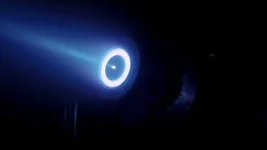
COLORADO SPRINGS—Rocket Lab on April 14 added a high-performance, Hall-effect satellite thruster to its growing catalog of space technologies and flight services.
The company has established a production line capable of manufacturing up to 200 of the electric thrusters, named Gauss, per year.
“Proliferated constellations are now the norm for commercial and national security space users, but the propulsion systems needed to maneuver these spacecraft in orbit have simply not been reliably available at any kind of scale. Rocket Lab is solving this bottleneck with Gauss,” CEO Peter Beck said in a statement at the 2026 Space Symposium, being held here April 13-16.
“We’ve successfully scaled other satellite components to thousands of units per year to meet the market’s needs for volume and speed. Now we’re giving electric satellite propulsion the same treatment,” he added.
The Gauss thruster—which is powered by Xenon with a possible option for Krypton—is designed to produce a higher specific impulse compared to traditional chemical propulsion systems, making it more efficient for long-duration missions, the company noted in a press release.
“Because of this high efficiency, the Gauss thruster will allow spacecraft to carry less propellant while still achieving high performance, making it ideal for prolonged missions, such as deep space exploration, and satellite station-keeping within constellations,” Rocket Lab said.