Navigation
Install the app
How to install the app on iOS
Follow along with the video below to see how to install our site as a web app on your home screen.
Note: This feature may not be available in some browsers.
More options
Style variation
You are using an out of date browser. It may not display this or other websites correctly.
You should upgrade or use an alternative browser.
You should upgrade or use an alternative browser.
Royal Saudi Arabia Armed forces
- Thread starter The SC
- Start date
More options
Who Replied?

The SC
INT'L MOD
- Thread starter
- #47
A plan to develop the physical fitness of the armed forces
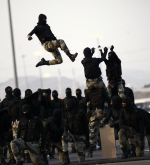
The Ministry of Defense has announced the companies that qualify for the pre-qualification program for the project: (Improve Forces Physical Fitness)
Which aims to develop an integrated plan to implement a program to improve physical fitness in all branches of the armed forces.
According to the project document, which Akhbar 24 reviewed, the Ministry seeks to ensure that the implementation period of the physical fitness development project does not exceed 18 months.. From the beginning of the contractor receiving the project.
The Ministry aims through the project to evaluate current fitness policies and programs and determine fitness requirements by defining the future vision, comparing it to the current one, discovering gaps, and updating policies and programs for physical fitness
Developing a plan to modernize facilities and programs to comply with standard criterion, setting priorities, and defining leadership responsibilities.
The Ministry also seeks to evaluate current physical fitness programs and policies, and to know the report on physical fitness requirements to set fitness standards for male and female cadres at the level of all branches of the armed forces, and to draft a policy and physical fitness program, and develop an integrated plan to apply the program to all branches of the armed forces.

The Ministry of Defense has announced the companies that qualify for the pre-qualification program for the project: (Improve Forces Physical Fitness)
Which aims to develop an integrated plan to implement a program to improve physical fitness in all branches of the armed forces.
According to the project document, which Akhbar 24 reviewed, the Ministry seeks to ensure that the implementation period of the physical fitness development project does not exceed 18 months.. From the beginning of the contractor receiving the project.
The Ministry aims through the project to evaluate current fitness policies and programs and determine fitness requirements by defining the future vision, comparing it to the current one, discovering gaps, and updating policies and programs for physical fitness
Developing a plan to modernize facilities and programs to comply with standard criterion, setting priorities, and defining leadership responsibilities.
The Ministry also seeks to evaluate current physical fitness programs and policies, and to know the report on physical fitness requirements to set fitness standards for male and female cadres at the level of all branches of the armed forces, and to draft a policy and physical fitness program, and develop an integrated plan to apply the program to all branches of the armed forces.
The SC
INT'L MOD
- Thread starter
- #48
Saudi air defense systems
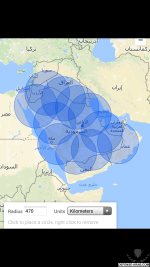
The first qualitative leap for Saudi air defense
After Prince Sultan bin Abdulaziz was appointed Minister of Defense and Aviation in 1962, he began implementing an ambitious and urgent development plan for comprehensive air defense, in response to the size and nature of the threats that the Kingdom was facing at that time. In light of all this, the Emir decided to begin implementing a practical program to protect the country’s airspace, consisting of an advanced system of radars, means of communication, modern command and control, and a mixture of interceptor aircraft and anti-aircraft missiles. It was then decided to separate air defense from the artillery force and it became an independent weapon, after Its formations expanded and its tasks increased, as its armament at the time was 30 mm, 40 mm, 90 mm, and 120 mm anti-aircraft artillery.
From here, the army began studying air defense systems, such as modern anti-aircraft artillery, rocket-propelled grenades, and radars. The Air Force began studying and evaluating modern interceptor fighters, and sent a number of commanders to the United States, the United Kingdom, and France to evaluate the interceptor aircraft.
In 1965, the Kingdom decided to begin developing air defense through a comprehensive air defense project in cooperation with the United Kingdom and the United States. The main elements of that pivotal development project during the 1960s were as follows:
First: the United Kingdom
– Purchasing (46) F-53 Lightning interceptor aircraft
– Purchasing (12) Hawker Hunter aircraft
Purchase of (8) T-55 Lightning aircraft designated for training
Purchasing two Hawker Hunter T-66 aircraft designated for training
– Purchase of (25) BAC-167 Strikemaster training and ground attack aircraft, MK-80 version.
– Purchase of (8) Cessna-172 aircraft
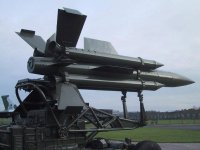
– Purchase of (6) Thunderbird missile systems with its radar system and missile control and guidance unit, in addition to (97) missiles.
– Purchasing a modern and secure wireless communication and control system that uses modern technologies
– Purchasing (5) early warning systems consisting of 5 warning radar stations connected to a monitoring unit and (27) mobile tactical radars.
Second: The United States
– Purchase of (10) additional F-86Fs Saber fighter aircraft
– Purchasing (10) T-33A T-Bird training aircraft
– Purchasing (3) Cessna-310K aircraft
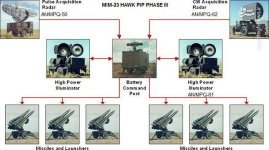
– Purchasing (10) MIM-23A HAWK missile systems, in addition to (400) missiles for the system.
– Purchasing (400) FIM-43C Redeye portable anti-aircraft missiles
– Purchase of (76) M-42A1 Duster self-propelled anti-aircraft guns
Through this project, which was considered at the time to be a comprehensive, highly sophisticated and complex air defense network project, the Saudi air defense became among the strongest defense networks in the region.
The second phase of developing Saudi air defense
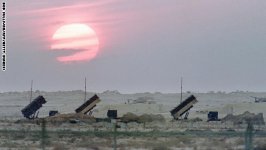
The Israeli violations of the Kingdom’s airspace during the 1967 war, and the exposure of the northern border cities and villages to potential danger, led to the strengthening of defensive capabilities in the north of the Kingdom and led to the motivation of the Kingdom’s leadership to develop the concept of comprehensive air defense, especially since the Middle East region is witnessing conflicts and an arms race with jet fighters, as well as the emergence of anti-missile missiles. For aircraft as a future weapon in the field of air defense.
The leadership decided to develop the air defense network by purchasing the latest in the world at that time, including modern fighters, modern missiles, radars, communication systems, and command and control. The development of air defense began in cooperation with the United Kingdom, the United States, France, and Switzerland. The main weapons for development in the seventies were as follows:
First: the United States
In 1971, the Kingdom purchased (10) F-5B aircraft
In 1971, the Kingdom purchased (94) F-5E Tiger-2 fighters
In 1972, the Kingdom purchased (8) KC-130H Hercules air refueling aircraft to enhance the capabilities of the fighters’ survival in the air.
In 1974, the Kingdom purchased (400) AIM-9J/P Sidewinder air-to-air missiles to arm F-5 fighters.
In 1975, the Kingdom purchased (190) FIM-43C Redeye shoulder-fired missiles.
In 1976, the Kingdom purchased (16) MIM-23B I-Hawk systems, in addition to (1458) systems.
In 1976, the Kingdom purchased (60) M-163 VADS self-propelled anti-aircraft guns.
In 1976, the Kingdom purchased a fixed and mobile early warning radar
In 1978, the Kingdom purchased (62) F-15C Eagle fighters
In 1978, the Kingdom purchased (1,000) AIM-7F Sparrow air-to-air missiles to arm F-15C fighters.
In 1979, the Kingdom purchased (660) AIM-9J/P Sidewinder air-to-air missiles to arm F-15 fighters.
Second: France
- In 1972, the Kingdom purchased (32) Mirage 5SDE fighters ((the Kingdom presented them with 6 Mirage 5SDD fighters and (100) Matra R530 air-to-air missiles as a gift to the Republic of Egypt and was compensated for by increasing the number of F-5 fighters))
In 1974, the Kingdom purchased (440) R-550 Magic-1 air-to-air missiles to arm F-5 fighters.
In 1975, the Kingdom purchased (20) Crotale systems, in addition to (300) R-440 missiles for the system.
In 1979, the Kingdom purchased (8) towed Crotale ATTS systems, in addition to (175) R-440 missiles for the system.
Third: The United Kingdom
In 1971, the Kingdom purchased (8) F-53 Lightning fighters
In 1972, the Kingdom purchased (150) Firestreak air-to-air missiles
In 1972, the Kingdom purchased (150) Red Top air-to-air missiles
In 1975, the Kingdom purchased (10) Strikemaster Mk-80 aircraft
In 1976, the Kingdom purchased (5) early warning radars spread in 5 regions
Fourth: Switzerland
- In 1975, the Kingdom purchased (128) GDF 35mm cannons.
These weapons and equipment have enhanced the capabilities of the air defense network in protecting the country’s airspace from any attempt to violate or penetrate it, and the Saudi air defense has now possessed an integrated defense system in addition to its previous capabilities.
The third stage of developing Saudi air defense
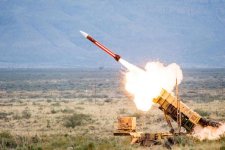
In this part, we will discuss the third phase - which is the most prominent in developing the capabilities of the air defense network - which witnessed the establishment of a huge ground-based and portable radar network, a command and control center, and centers spread throughout the rest of the regions.
The First Gulf War broke out in 1980, and Iran threatened the Gulf states because of their support for Iraq. At that time, it sent 4 F-4 fighter jets. The Kingdom shot down two of the fighter jets and hit a third (it managed to escape with the fourth fighter). All of this led to the leadership’s motivation to develop the Kingdom’s defense network by providing the best possible means, and then Saudi Arabia began to embark on an air defense network development program in cooperation with the United States, the United Kingdom, France, and Switzerland. This cooperation resulted in the largest projects undertaken by the Kingdom to develop the comprehensive air defense network, which is the Shield Project. Al Salam, Al Yamamah 1 project and Al Thaqib project, which are as follows:
First: the United States
“Peace Shield Project” is one of the most famous projects undertaken by the Kingdom, which included portable radars and ground radars. The highly advanced project contains a main command and control center in Riyadh and 6 command and control sub-sectors linked to the main center and spread in several regions of the Kingdom. The Peace Shield also links this system to ground-based radars and communication systems for the ground forces, and is also linked to communication and information exchange systems with the control towers of the naval forces, naval vessels, and command centers in the naval forces. The Kingdom also purchased anti-aircraft missile systems.
This development included the following:
In 1982, the Kingdom purchased (15) F-5E Tiger-2 fighters
In 1982, the Kingdom purchased (10) I-HAWK systems, in addition to (300) missiles for the system.
In 1984, the Kingdom purchased (12) F-15D Eagle fighters
In 1986, the Kingdom purchased (5) AEW&C E-3A Sentry aircraft
In 1986, the Kingdom purchased (8) KE-3A refueling aircraft to enhance the continuity of the presence of early warning aircraft and combat aircraft.
In 1986, the Kingdom purchased (29) TPS-43 radars, (17) TPS-77 radars, and (28) TPS-63 radars.
In 1987, the Kingdom purchased (1,717) AIM-9L/M Sidewinder air-to-air missiles to arm F-5 and F-15 fighters.
In 1989, the Kingdom purchased (120) AIM-7F Sparrow missiles to arm F-15 fighters.
Second: The United Kingdom
“Al-Yamamah Project 1” – This huge project included:
In 1985, the Kingdom purchased (30) Hawk-60 aircraft
In 1986, the Kingdom purchased (24) Tornado ADV interceptor fighters.
In 1986, the Kingdom purchased (48) Tornado IDS attack fighters
In 1986, the Kingdom purchased (560) Skyflash air-to-air missiles to arm Tornado fighters.
Third: France
“The Insightful Project”
In 1981, the Kingdom purchased (8) Crotale systems in addition to (278) R-440 missiles for the system.
In 1984, the Kingdom purchased (24) Shahine systems, in addition to (550) R-460 missiles for the system.
In 1984, the Kingdom purchased (10) towed Shahine ATTS systems for coastal protection, in addition to (300) R-460 missiles for the system.
In 1989, the Kingdom purchased (700) portable Mistral missiles
Fourth: Switzerland
In 1988, the Kingdom purchased (64) Skyguard radar
These deals were the most prominent qualitative shift in the diverse Saudi defense network of ground radars, airborne radars, modern fighters, and advanced air defense systems.
The fourth stage of developing Saudi air defense

We spoke earlier about the phase of establishing the Saudi air defense, the phase of the introduction of anti-aircraft missiles for the first time, and the development of the air defense network from the sixties until 1989. The next episode will include the phase in which a defense system against ballistic missiles for the Saudi air defense was organized for the first time.
When Iraq occupied the State of Kuwait in 1990 and the drums of war began beating, the Kingdom of Saudi Arabia realized the danger of ballistic missiles and began seriously searching for the best available systems to repel the threat of these missiles. At that time, anti-missile systems were rare and it was not known how effective they were.
At this stage, the Kingdom purchased anti-ballistic missile systems, in addition to anti-mobile missile defense systems, multi-mission fighters, and electronic warfare aircraft, as follows:
First: The United States:
In 1990, the Kingdom purchased (10) I-HAWK systems, in addition to (276) missiles for the system.
In 1990, the Kingdom purchased (600) portable FIM-92 Stinger anti-aircraft missiles.
In 1990, the Kingdom purchased (4) Patriot systems in addition to (187) MIM-104B PAC-1 missiles.
In 1991, the Kingdom purchased (770) AIM-7M Sparrow air-to-air missiles to arm F-15C fighters.
In 1992, the Kingdom purchased (8) Patriot systems in addition to (384) MIM-104C PAC-2 missiles.
In 1992, the Kingdom purchased (72) F-15 Strike Eagle fighters.
In 1994, the Kingdom purchased (13) Patriot systems in addition to (761) MIM-104C PAC-2 missiles.
In 1996, the Kingdom purchased (6) TPS-43 radars and (8) TPS-63 radars.
In 1997, the Kingdom purchased (2) RE-3A SIGINT aircraft.
In 1997, the Kingdom purchased (12) TPS-70 radar.
In 1998, the Kingdom purchased a RE-3B SIGINT aircraft.
Second: France
In 1990, the Kingdom purchased (6) Crotale systems in addition to (175) R-440 missiles.
In 1991, the Kingdom purchased (200) portable Mistral anti-aircraft missiles.
In 1993, the Kingdom purchased (12) Shahine systems in addition to (341) R-460 missiles.
Third: Britain
In 1991, the Kingdom purchased (200) ALARM anti-radar missiles.
In 1993, the Kingdom purchased (20) Hawk-65A aircraft.
In 1994, the Kingdom purchased (48) Tornado IDS aircraft.
These projects contributed to enhancing the Kingdom's defense capabilities in various fields and giving it ideal capabilities to repel all different air targets, including ballistic or cruise missiles, fighters, helicopters, and others.
The fifth phase of Saudi air defense development (2017-2000)
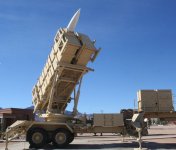
The first four stages of the process of building and developing the Saudi air defense network from its inception until 1999 were published above. In this part, the modern stage of the air defense network will be discussed, which is considered one of the most powerful and mysterious stages of development, and what the Kingdom of Saudi Arabia has done to develop its defense capabilities will be mentioned.
This stage was characterized by cooperation with many parties, whether local or international, with the United States, the United Kingdom, France, Germany, Spain, Switzerland, China, Sweden, Turkey, and Ukraine. The following are the most important projects undertaken by the Kingdom at this stage to develop its defense capabilities:
First: The United States of America
In 2005, the Kingdom developed the Command, Control, Communications, Computer, Intelligence, Surveillance and Cyber Solutions (C3isr) system into (C4isr)
This system provides the communication ability for soldiers with each other, the communication ability for soldiers with their leadership in the field, the ability for field commanders to communicate with the central command, the communication ability between the branches of the ground forces with each other, the communication ability between the ground, air and naval forces, the monitoring, reconnaissance, photography and sensing ability for the various branches of the armed forces. . In addition, it provides early warning capabilities and helps the air defense forces carry out their tasks through monitoring and early warning, and assists the ground forces by providing the necessary information about enemy lines and through accurate reconnaissance and enquiry. It also provides high radar obstruction, electronic warfare, monitoring and eavesdropping capabilities, and the ability to carry out tactical operations and landing operations behind enemy lines by carefully monitoring enemy movements.
In 2007, the Kingdom purchased (4) TPS-70 radars.
In 2011, the Kingdom concluded a huge deal that included purchasing (84) F-15SA fighters and developing (70) F-15s locally into F-15SA. The deal included a huge number of various ammunition and advanced systems.
In 2012, the Kingdom purchased (9) TPS-77 radars.
In 2012, the Kingdom purchased (2) King Air-350 ISR aircraft.
In 2013, the Kingdom purchased (4) Patriot PAC-3 squadrons, in addition to (174) MIM-104F PAC-3 missiles.
In 2013, the Kingdom purchased (22) SR-22 aircraft.
In 2014, the Kingdom developed (5) E-3 aircraft to the level of (BLOCK 45-40)
In 2015, the Kingdom upgraded the Command, Control, Communications, Computer, Intelligence, Surveillance and Cyber Solutions (C4isr) system to (C5isr), which greatly doubled the Kingdom’s capabilities.
In 2015, the Kingdom purchased an unspecified number of Patriot PAC-3 squadrons, in addition to (320) MIM-104F PAC-3 missiles.
In 2015, the Kingdom signed an agreement to establish a Saudi company between the Satellite Technology Company and the American company Digital Hearts for the purpose of manufacturing and marketing a group of small satellites designated for space imaging reconnaissance.
In 2017, the Kingdom purchased (10) AEROSTAT 74K air surveillance and reconnaissance balloons.
Second: France
In 2004, the Kingdom developed the CROTALE 2000 and CROTALE 4000 systems into CROTALE NG, and the development included developing the weapon’s electronics (anti-jamming, improving processors, changing screens, changing infrared surveillance cameras, improving electro-optical systems...)
In 2009, the Kingdom purchased (6) A-330 MRTT aircraft.
In 2011, the Kingdom purchased (1,000) missiles for the MISTRAL ATLAS system.
In 2011, the Kingdom purchased (49) MPCV systems in addition to (800) MISTRAL missiles.
In 2011, the Kingdom purchased (20) Ground Master-60 radar.
In 2012, the Kingdom purchased an unspecified number of the VL-MICA system.
In 2012, the Kingdom purchased an unspecified number of the Rapid Fire anti-aircraft system.
In 2013, the French company Thales was chosen to produce a major electronic air defense system for the Saudi Air Force, known as the Umbrella. This system consists of electronic warfare centers with 6 axes, in addition to a mobile center for training personnel (air defense battery operations, Shaheen Cortal Hawk, Patriot). ) and personnel of electronic warfare systems.
In 2013, the Kingdom developed the CROTALE 4000 system and integrated the VT-1 missile into the system.
Third: Germany
In 2009, the Kingdom signed an agreement with the German company EADS, the American Raytheon company, and the French company THALES, to establish the “MIKSA” system, or the border electronic barrier project, which is considered the largest defensive electronic barrier in the world. This project contains radars that monitor the sky, land, and sea 24 hours a day over a border distance of more than 4,000 miles, marine surveillance boats, drones, mobile command and control centers, and a huge collection of equipment, sensors, and radars. It closes the entire Saudi border and operates 24 hours a day.
In 2013, the Kingdom established the SAMOC system, produced by the German company EADS, which is the main integrated system in the German air defense and air force currently.
It entered service in 2008 and connects the Hawk and Patriot with the duo Shaheen and Kurtal. It has the ability to connect several command and control centers at once and has the ability to use advanced fiber-optic infrastructure in the case of fixed centers or to communicate through TDL in the event of movement.
In 2010, the Kingdom obtained a license to produce LUNA reconnaissance drones.
Fourth: The United Kingdom
- In 2007, the Kingdom purchased (72) Typhoon fighters.
In 2012, the Kingdom purchased (22) Hawk-165 aircraft.
In 2014, the Kingdom developed (88) Tornado fighters to GR4 level.
In 2015, the Kingdom purchased (22) Hawk-165 aircraft
Fifth: Sweden
In 2010, the Kingdom purchased (2) Saab-2000 AEW early warning aircraft.
In 2014, the Kingdom purchased an unspecified number of AESA Giraffe 4A radar.
Sixth: Switzerland
In 2004, the Kingdom purchased (22) Skyguard radars.
In 2012, the Kingdom purchased (55) PC-21 aircraft.
Seventh: China
In 2007, the Kingdom purchased an unspecified number of a QW-2 portable missile.
Eighth: Ukraine
In 2015, the Kingdom funded the “Dunbar” air defense missile project.
Ninth: Türkiye
-In 2015, the Kingdom signed an agreement to establish a Saudi company between Defense and Security Technology and the Turkish company ASELSAN for the purpose of developing, manufacturing and marketing electronic warfare equipment and systems, radars and electro-optics in the Kingdom, and the agreement was made to manufacture the KALKAN radar.
Tenth: Saudi Arabia
A technology company produced the “Sarab” radar, which is a small radar carried on a vehicle that is difficult to detect with electronic reference devices, and can detect small targets, whether ground, air, or sea. It is characterized as a two-dimensional radar (gives the range and direction of the target), covering a full 360-degree angle, with a range of 40 km and a height of up to 10,000 feet. It is capable of operating in different climatic conditions to monitor small targets.
This radar is used in continuous aerial monitoring operations at low altitudes, whether in a coastal, mountainous, or desert environment, and it can be used to monitor land and sea borders. The system is also effective in surveillance operations that require rapid presence.
The Prince Sultan Institute of Technology produced the “Aircraft Guardian” and “Lightning” drones for the Air Force.
Eleventh: Italy
In 2010, the Kingdom purchased (24) Falco UAV tactical reconnaissance drones.
In 2015, the Kingdom purchased (24) Falco UAV tactical reconnaissance drones.
The SC
INT'L MOD
- Thread starter
- #49
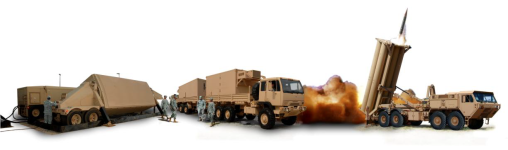
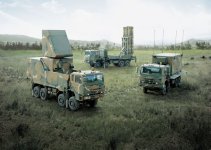
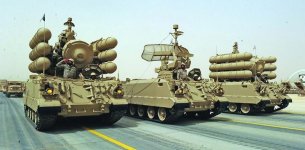
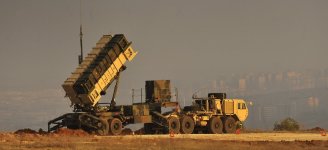
According to the latest information published on the SIPRI (Stockholm International Peace Research Institute) arms trade database, the United States is set to deliver seven THAAD air defense missile systems and 360 THAAD missiles to Saudi Arabia, with delivery planned for the period between 2023 and 2027.
The SC
INT'L MOD
- Thread starter
- #53
As of today..there are:
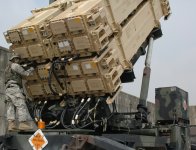
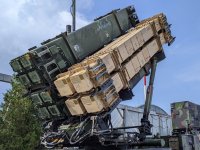
- 108 M902 launchers for the Patriot PAC-3 long-range missile defense system, divided into 6 battalions.
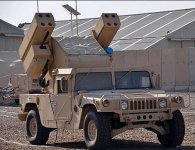
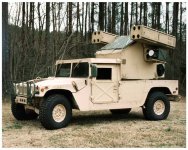
- 400 M1097 Avenger short-range anti-aircraft systems.
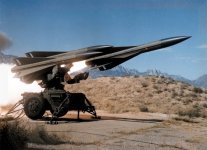
- 128 MIM-23B Improved Hawk Surface to Air Missiles, divided into 16 battalions
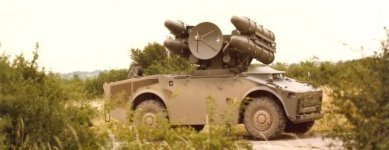
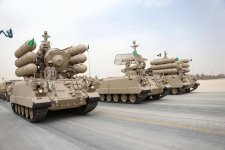
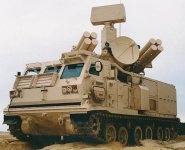
- 40 Crotale air defense system as well as 141 units of its local version called Shaheen, organized into 17 battalions.
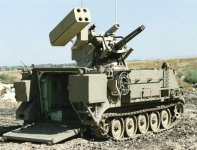
- 90 M163 Vulcan self-propelled anti-aircraft artillery systems
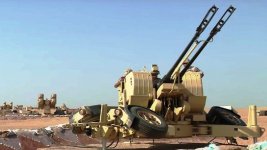
- 128 Oerlikon GDF 35 mm anti-aircraft gun
- Unknown numbers of FIM-92 Stinger and Crotale NG Portable air defense systems

- 108 M902 launchers for the Patriot PAC-3 long-range missile defense system, divided into 6 battalions.
- 400 M1097 Avenger short-range anti-aircraft systems.
- 128 MIM-23B Improved Hawk Surface to Air Missiles, divided into 16 battalions
- 40 Crotale air defense system as well as 141 units of its local version called Shaheen, organized into 17 battalions.
- 90 M163 Vulcan self-propelled anti-aircraft artillery systems
- 128 Oerlikon GDF 35 mm anti-aircraft gun
- Unknown numbers of FIM-92 Stinger and Crotale NG Portable air defense systems

GoMig-21
Elite Member


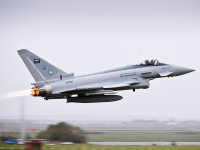
Woah! Fire. Such a beautiful aircraft. One of the sexiest radomes (I know that's sounds strange & kinky loool) but the shape is just perfect. The only other radome that comes to mind is the one of the Su-35S. Pure perfection.
And the one thing I always wondered why they design almost all fighters this way, no matter which manufacturer be it US, Russian, French or Chinese, the pilot sits so far forward to the console almost like he's jammed up against it when the cockpit seems so much more spacious behind him. So odd and this photo shows that perfectly. Look how far up forward the pilot is jammed up against the console and all the room behind him is almost wasted.
Patriot Advanced Capability-3 (PAC-3) Missile system
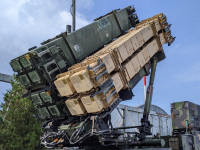
Those Pac-III quad packs are the nuts. I'm a firm believer that this system is better than the S-400 and there are technical reason as well as statistics to prove that. Maybe someday we'll get into it. But Saudiya did the right thing investing heavily in this missile system despite the rough learning curve.
The SC
INT'L MOD
- Thread starter
- #55
it is a space for life support systems I guess.. like Oxygen...etcAnd the one thing I always wondered why they design almost all fighters this way, no matter which manufacturer be it US, Russian, French or Chinese, the pilot sits so far forward to the console almost like he's jammed up against it when the cockpit seems so much more spacious behind him. So odd and this photo shows that perfectly. Look how far up forward the pilot is jammed up against the console and all the room behind him is almost wasted.
The SC
INT'L MOD
- Thread starter
- #56
Saudi Telecom acquired polish counter drone system “Ctrl+Sky”
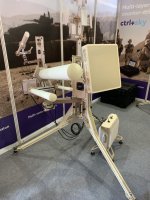
Field-proven military-grade technology
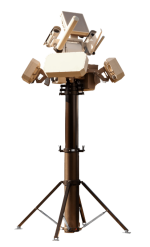
Instrumented range 7 – 50 km
Minimum detection range 1 m
Maximum detection range 2 – 10 km
Range accuracy 10 – 1 m
Range resolution 6 – 3 m
Minimum target altitude 1 m
Maximum target altitude 7 – 50 km
Azimuth/elevation 90°-20°/60°-10°
Frequency X-Band
Technologies AESA/MIMO
Tx output power (peak) 8W – 24 W
WiFi detection 2.4 GHz and 5 GHz
The system is available in stationary, portable and mobile versions

- Modular and fully-configurable radar sensor,
- 3D MIMO radar technology for improved performance,
- Radar tracking based on MHT (multi-hypothesis tracking) algorithm,
- RF sensor with the whitelisting capability,
- Fully-integrated and automated proprietary jammer for drone neutralization,
- Dedicated web-based C2 (command and control) application for monitoring, configuration and controlling the system.
The SC
INT'L MOD
- Thread starter
- #57
APS delivers SKYctrl skid C-UAS to GCC customer
Polish company APS delivers an anti-drone system to a Gulf customer
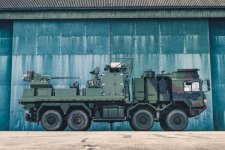
An APS spokesperson told Janes on February 14 that a customer from a GCC country had ordered an undisclosed number of SKYctrl skis, with deliveries continuing since December 2023. They were unable to clarify the order for security reasons.
Skid is a multi-layered unmanned aerial vehicle (C-UAS) solution with kinetic and non-kinetic effectors designed to detect, track, classify and neutralize unmanned aerial vehicles (UAVs). The C-UAS system was jointly developed by APS and UK-based MSI Defense Systems and includes non-kinetic FIELDctrl 3D MIMO (soft kill) radar panels, a CyView C2 (command and control) system, and a 30mm MK44. Bushmaster serial gun manufactured by MSI Defense Systems.
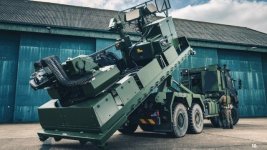
FIELDctrl 3D MIMO enables detection, tracking and classification of UAVs, and features a frequency-modulated continuous wave (FMCW) radar that has a field of view of 90 degrees in azimuth and 60 degrees in elevation. The effective detection and classification range for small UAVs (0.2-20 kg) is 3 km with a radar cross-section of at least 0.01 m² at a height of 1 m and above, including when the UAV is hovering (0 m/s). The 31.4 kg radar operates in the 9.7-10 GHz operating and tuning frequency range with a 300 MHz bandwidth and measures 645 x 360 x 180 mm. It has IP66/IP67 ingress protection, requires a supply voltage of 24V DC and 230V AC, and has an output power of 80W, 19dBW.
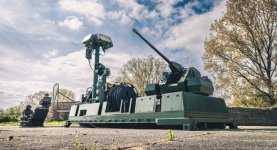
Meanwhile, CyView C2 tracks the drone's position, direction, and altitude, transmitting data to both non-kinetic and kinetic operators.
https://www.janes.com/defence-news/news-detail/aps-delivers-skyctrl-skid-c-uas-to-gcc-customer
In the presence of the Ambassador of the Republic of Poland to the Kingdom, Robert Rostec, a strategic cooperation agreement was signed between the Center and the Polish company (APSystem) for the purpose of joint cooperation in developing radar systems.
Polish company APS delivers an anti-drone system to a Gulf customer
An APS spokesperson told Janes on February 14 that a customer from a GCC country had ordered an undisclosed number of SKYctrl skis, with deliveries continuing since December 2023. They were unable to clarify the order for security reasons.
Skid is a multi-layered unmanned aerial vehicle (C-UAS) solution with kinetic and non-kinetic effectors designed to detect, track, classify and neutralize unmanned aerial vehicles (UAVs). The C-UAS system was jointly developed by APS and UK-based MSI Defense Systems and includes non-kinetic FIELDctrl 3D MIMO (soft kill) radar panels, a CyView C2 (command and control) system, and a 30mm MK44. Bushmaster serial gun manufactured by MSI Defense Systems.
FIELDctrl 3D MIMO enables detection, tracking and classification of UAVs, and features a frequency-modulated continuous wave (FMCW) radar that has a field of view of 90 degrees in azimuth and 60 degrees in elevation. The effective detection and classification range for small UAVs (0.2-20 kg) is 3 km with a radar cross-section of at least 0.01 m² at a height of 1 m and above, including when the UAV is hovering (0 m/s). The 31.4 kg radar operates in the 9.7-10 GHz operating and tuning frequency range with a 300 MHz bandwidth and measures 645 x 360 x 180 mm. It has IP66/IP67 ingress protection, requires a supply voltage of 24V DC and 230V AC, and has an output power of 80W, 19dBW.
Meanwhile, CyView C2 tracks the drone's position, direction, and altitude, transmitting data to both non-kinetic and kinetic operators.
https://www.janes.com/defence-news/news-detail/aps-delivers-skyctrl-skid-c-uas-to-gcc-customer
In the presence of the Ambassador of the Republic of Poland to the Kingdom, Robert Rostec, a strategic cooperation agreement was signed between the Center and the Polish company (APSystem) for the purpose of joint cooperation in developing radar systems.
The SC
INT'L MOD
- Thread starter
- #58
Lockheed Martin and Fincantieri Marinette Marine are building four MMSC ships for Saudi Arabia, which will carry the Mk41 Vertical Launching System (VLS), Combatss-21 combat management system and MBDA’s CAMM Extended Range (ER) Missiles.
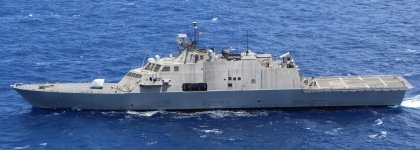
The MMSCs sensing capabilities will be provided by a Hensoldt TRS-4D AESA radar and Thales Captas Variable Depth Sonar (VDS).
The Combatts-21 system on the MMSC ships, is built from the Aegis combat management system library.
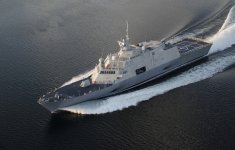
Lockheed Martin continues to work with local partners to identify what systems and components can be integrated locally in a drive to assist the development of local Saudi industrial capability.
A key area of capability development is the facilitation of maintenance, repair, and overhaul (MRO).
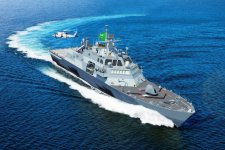
These are built for the Saudis from the ground up with everything they wanted..
They are fitted out as multi-mission ships from the get-go, so they don't have modules. They can do ASW, air warfare and surface warfare with the permanently installed systems they ordered.

Saudi Arabia orders SM-6 missiles on LCS FREEDOM
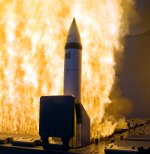
By having the SPY radar and the SM-6 missile, you almost have the whole Aegis..
The LCS has 16 MK41 launch cells.. 8 are designated for the ESSM.. These 8 cells hold 32 ESSM missiles (each cell carries 4 missiles).. There are 8 cells that can carry the SM-6.
The SM-6 is worth every penny paid for it. It is truly a multi-tasking monster that combats everything from air targets to sea targets to short-range and medium-range ballistic missiles to its use in targeting ground targets. What distinguishes it is that it carries a dual active and semi-active radar seeker, which enables it to be applied to its targets in the final stage without the need to illuminate the target from the guidance radar of the launch pad... Its MK125 warhead has also been updated to reach its weight of approximately 115 kg, which is a highly explosive fragmentation head with a tremendous ability to penetrate, without talking about the missile’s enormous ability on maneuvering with a duration exceeding 300 km...
This missile SM-6, Standard 6, or RIM-174 - called ERAM, which means active missile with extended range. It is a new air defense missile with a length of 6.55 meters, a diameter of 530 mm, and a weight of 1,500 kg. It uses a two-stage propulsion system used in each a solid-fuel rocket propulsion engine that reaches a speed of Mach 3.5. Its improved range in the Block 1 version reaches 200 nautical miles, or about 370 kilometers, and it can reach an altitude of 33 kilometers.
In addition to its great range, speed and power, this missile, which was developed based on the Block 4 version of the Standard 2 missile, can rely on itself in the final stage of its guidance towards the target, which is the landing stage, and this depends on the fact that it is used in addition to the semi-active guidance...also guidance. Active radar using the AMRAAM missile's seeker head... This means increasing the overall ability to engage multiple targets at the same time for each Frigate.
Raytheon's Standard Missile-6, already deployed in anti-air warfare and as an interceptor for ballistic missiles at sea, has now proven effective capability against targets in anti-surface warfare.
The SM-6 is a very capable missile.. One missile with one hardware configuration performs all three missions.
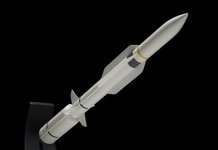
It is an anti-aircraft missile, anti-drones, and cruise missiles. It deals with ballistic missiles in their final stage and intercepts them at an altitude of 35 km.
The Block 1A version of the missile has the ability to target ships and land targets..
The missile destroyed five targets in "over-the-horizon, engage-on-remote" missions. Those tests, in part, confirmed SM-6's ability to engage threats beyond the sight of operators on the ship, using its own radar..
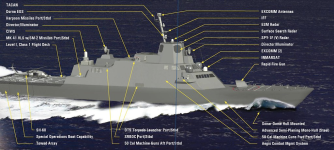
Saudi Arabia is Interested in the land version of the Aegis..

The MMSCs sensing capabilities will be provided by a Hensoldt TRS-4D AESA radar and Thales Captas Variable Depth Sonar (VDS).
The Combatts-21 system on the MMSC ships, is built from the Aegis combat management system library.
Lockheed Martin continues to work with local partners to identify what systems and components can be integrated locally in a drive to assist the development of local Saudi industrial capability.
A key area of capability development is the facilitation of maintenance, repair, and overhaul (MRO).
These are built for the Saudis from the ground up with everything they wanted..
They are fitted out as multi-mission ships from the get-go, so they don't have modules. They can do ASW, air warfare and surface warfare with the permanently installed systems they ordered.
Saudi Arabia joins the Aegis family
Saudi Arabia orders SM-6 missiles on LCS FREEDOM
By having the SPY radar and the SM-6 missile, you almost have the whole Aegis..
The LCS has 16 MK41 launch cells.. 8 are designated for the ESSM.. These 8 cells hold 32 ESSM missiles (each cell carries 4 missiles).. There are 8 cells that can carry the SM-6.
The SM-6 is worth every penny paid for it. It is truly a multi-tasking monster that combats everything from air targets to sea targets to short-range and medium-range ballistic missiles to its use in targeting ground targets. What distinguishes it is that it carries a dual active and semi-active radar seeker, which enables it to be applied to its targets in the final stage without the need to illuminate the target from the guidance radar of the launch pad... Its MK125 warhead has also been updated to reach its weight of approximately 115 kg, which is a highly explosive fragmentation head with a tremendous ability to penetrate, without talking about the missile’s enormous ability on maneuvering with a duration exceeding 300 km...
This missile SM-6, Standard 6, or RIM-174 - called ERAM, which means active missile with extended range. It is a new air defense missile with a length of 6.55 meters, a diameter of 530 mm, and a weight of 1,500 kg. It uses a two-stage propulsion system used in each a solid-fuel rocket propulsion engine that reaches a speed of Mach 3.5. Its improved range in the Block 1 version reaches 200 nautical miles, or about 370 kilometers, and it can reach an altitude of 33 kilometers.
In addition to its great range, speed and power, this missile, which was developed based on the Block 4 version of the Standard 2 missile, can rely on itself in the final stage of its guidance towards the target, which is the landing stage, and this depends on the fact that it is used in addition to the semi-active guidance...also guidance. Active radar using the AMRAAM missile's seeker head... This means increasing the overall ability to engage multiple targets at the same time for each Frigate.
Raytheon's Standard Missile-6, already deployed in anti-air warfare and as an interceptor for ballistic missiles at sea, has now proven effective capability against targets in anti-surface warfare.
The SM-6 is a very capable missile.. One missile with one hardware configuration performs all three missions.
It is an anti-aircraft missile, anti-drones, and cruise missiles. It deals with ballistic missiles in their final stage and intercepts them at an altitude of 35 km.
The Block 1A version of the missile has the ability to target ships and land targets..
The missile destroyed five targets in "over-the-horizon, engage-on-remote" missions. Those tests, in part, confirmed SM-6's ability to engage threats beyond the sight of operators on the ship, using its own radar..
Saudi Arabia is Interested in the land version of the Aegis..
The SC
INT'L MOD
- Thread starter
- #59
Saudi Arabia’s air and space forces merger to happen this year
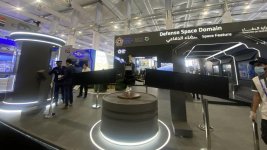
April 09, 2024
Saudi Arabia plans to merge its air and space forces into a single organization sometime this year, three Saudi military officials told Breaking Defense, in part of what experts say is an ambitious but ultimately long-term plan for the Kingdom to develop robust space-based defense capabilities.
While plans can always change, one of the Saudi Ministry of Defense officials — who like the others spoke with Breaking Defense on the condition of anonymity at the World Defense Show outside Riyadh earlier this year — said, “We need space for deterrence. In 2024, MoD will merge air and space forces to defend the assets it has.”
That MoD official, who was at the Saudi MoD’s defense space domain stand at the show, added that the Kingdom also has plans that include launching a “satellite to support military applications in the near future.”
The Kingdom of Saudi Arabia (KSA) reportedly announced its intention to join its air and space forces in May 2022, but has not publicly provided a timeline for the move. Photos on the public US military image database DVIDS show US Air Force officials met with their Saudi counterparts at the Pentagon in October 2023 and “provided guidance to Saudi Arabian staff for the upcoming merger of the air force and air defense force into the Royal Saudi Air and Space Force.”
...
“We need space for deterrence,” one of the MoD officials at the World Defense Show said, adding KSA plans to “expand” its capabilities “to eliminate [related] challenges.”
“Saudi Arabia is not alone in placing a new focus on not just space, but space security specifically,” Swope said. “A number of countries over the last few years have reorganized or optimized their military organizations to better address space. This includes Japan, South Korea, and Australia. Also, the UK established a Space Command in 2021 and the US set up the Space Force in 2019. All of this in the last five years.”
Swope especially highlighted Saudi Arabia’s partnership with the US when it comes to space.
“On space, Saudi Arabia is a signatory of the US-led Artemis Accords, for example. The US Space Force has said partnerships with allies is one of its top priorities, specifically noting that allies in the Middle East have expressed interest in their own space forces,” Swope said.
https://aviationweek.com/defense-space/space/royal-saudi-air-force-eyes-future-space-capabilities
It is clear that it will include air defense as well..
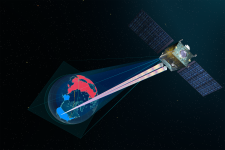
It is intended to link satellites for monitoring, reconnaissance, surveillance, communications, and others with the Air Force, and air defense so that they form a single system.
There is $4 billion allocated for space capabilities, spy and communications satellites and directing interceptor missiles..
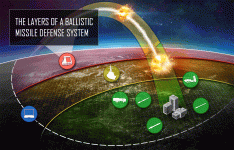
In addition to $18 billion allocated to the C2BMC system to fully manage the battles against ballistic missiles..Capable of communicating with TPY-2 radars as well as SBIRS satellites..with high-range engagement systems..
GoMig-21
Elite Member
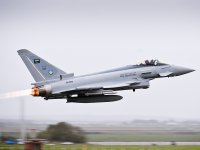
4 RSAF Eurofighter Typhoons arriving in Greece for Iniochos 2024 exercise. Great landings and interesting to see only the 2nd one use its speed break on its spine while the other 3 don't. First one stayed nose up for a super long time that was impressive. And the 4th one is the impeccable 2-seat version.
Users who are viewing this thread
Total: 1 (members: 0, guests: 1)
Pakistan Defence Latest
-
-
-
 Federal cabinet gives nod to imposition of emergency in KP; summary sent to president (28 Viewers)
- Latest: prothought
-
-


