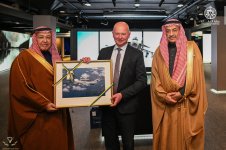
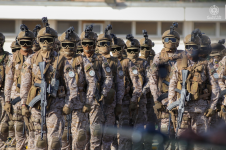
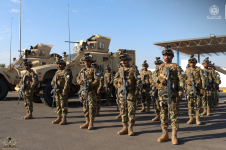
Royal Saudi Arabia Armed forces

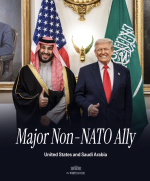
US President Donald Trump on Tuesday said Saudi Arabia was being designated as a “major, non-Nato ally”.

“Tonight, I’m pleased to announce that we’re taking our military cooperation to even greater heights by formally designating Saudi Arabia as a major non-Nato ally, which is something that is very important to them,” Trump said during a formal black-tie dinner at the White House.

Read more: https://www.dawn.com/news/1956010
1763566130400.png
 
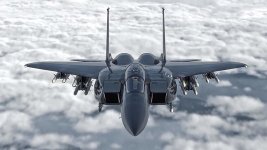
Saudi Arabia Sets New Airpower Benchmark With Plan to Acquire 60 F-15EX and 48 F-35 Fighters Under Vision 2030 Modernization Drive

Boeing confirmed that the F-15EX aircraft represents the cornerstone of its efforts to support the Kingdom's military capabilities.. Not only by providing advanced aerial platforms, but also by building an integrated local industrial base that Includes manufacturing, maintenance services, knowledge transfer, and training of national competencies.

1763602848372.jpeg

Rob Blinder Novotny, Boeing's executive director of fighter development, said In an exclusive interview with Asharq Al-Awsat:

The F-15EX is considered one of the most advanced fighters in the world, and the company is working closely with Saudi partners.
Among them is the Saudi Military Industries Company (SAMI).
To localize its production operations and technical support within the Kingdom, in line with the goals of “Vision 2030”
Aiming to localize more than 50 percent of military spending.
 
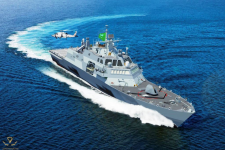
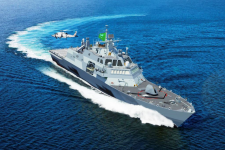
Inauguration of the Saudi frigate SAUD 820
1763603916490.png

In collaboration with Lockheed Martine, Pearlson Shiplift and Fincantieri.
One of the newest combat frigates

The frigate itself has a powerful armament consisting of CAMM/CAMM-ER air defense missiles Which is considered one of the best systems

As well as Harpoon anti-ship missiles, anti-submarine torpedoes, etc

It has much more powerful radars to suit the needs of the Royal Saudi Navy
The MMSC is a fast, powerfully armed frigate
It is designed specifically for Saudi Arabia to be part of a huge modernization of the naval fleet
It gives the Kingdom advanced capabilities in protecting the Red Sea and the Gulf.

Frigate capabilities in brief:

  • Vertical launch systems for CAMM/CAMM-ER air defense missiles
  • OTO Melara 76mm main gun
  • Harpoon Block II anti-ship missiles
  • SeaRAM for Close Defense
  • Advanced torpedoes
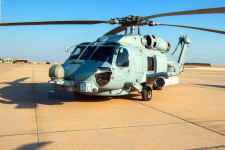
  • MH-60R helicopter
  • Sonar systems for searching for submarines
  • Data link Link 16
  • High firepower and protection in one platform

By the way, it carries systems derived from Aegis.

1763604061542.jpeg

Some of its most important features

- CAPTAS-4 sonar

- TRS-4D AESA GaN radar

- Mark 41 cells
 

What to know about the F-35 fighter jet Trump just sold to Saudi Arabia​


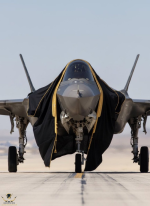
President Donald Trump has agreed to proceed with the sale of the United States' most advanced fighter jet, the F-35, to Saudi Arabia, despite significant concerns that China could gain access to the aircraft's vaunted American technology.

The agreement was reaffirmed during Saudi Crown Prince Mohammed bin Salman’s recent visit to Washington.

Within the Republican administration, apprehension also exists that providing the F-35 to Saudi Arabia could undermine Israel's crucial qualitative military advantage over its neighbors. This concern is particularly salient as Trump seeks Israeli backing for his proposed Gaza peace plan.

Israel, which utilized the F-35 during its 12-day conflict with Iran in June, is one of 19 nations globally that either possess the advanced jet or have agreements in place to acquire it.

It was nearly 20 years ago when the first F-35 Lightning strike fighter rolled off an assembly line in Fort Worth, Texas, hailed as a technological leap and lamented as a military money pit.

Since then, more than 1,200 of the stealth jets have been made, underpinning what Lockheed Martin says are nearly 300,000 jobs connected to its supply chain across 49 states and Puerto Rico. The planes have been delivered to the U.S. Air Force, Navy and Marines.

Here are things to know about the F-35:

The fighter jet is coveted by many​


Marines used the F-35 to execute strikes against enemy targets in Afghanistan, while Italian F-35s were part of a NATO response in September to Russian aircraft in Estonian airspace.

But the stubby-nosed aircraft with twin tail fins has been criticized since its inception, in part because it was designed to serve the varying needs of three different military branches. For example, the Navy launches them off aircraft carriers, while the Marines Corps’ version can take off and land like a helicopter.

It is the most expensive Pentagon spending program ever — they cost up to $77 million a piece in 2023, according to the Congressional Research Service — while they have been famously beset with cost overruns and delays.

Meanwhile, China may have at least some intelligence, albeit several years old, on the planes already. The Defense Science Board, which advises the Pentagon, released a report in 2013 alleging that Chinese cyberattacks accessed data from dozens of Pentagon programs, including the joint strike fighter.

The F-35 is “widely recognized as America’s best and most advanced fighter jet,” according to Bradley Bowman, senior director of the Center on Military and Political Power at the Foundation for Defense of Democracies.

Bowman noted that American military systems are constantly being updated and improved, counteracting any possible stolen secrets years ago.

“That’s why you have 19 partner nations already and why countries like Saudi Arabia want it,” Bowman said. “If the aircraft was so compromised because of theft from the Chinese, the Saudis wouldn’t want it.”

First proposed in the 1990s, the F-35 was meant to replace several aging fighters, including the Air Force’s workhorse F-16. The plane was designed to allow pilots to easily shift from bombing runs to aerial combat on the same mission.

Described as a fifth-generation fighter, its technologies include stealth coatings as well as advanced radar and sensors, according to the Congressional Research Service.

“What makes the F-35 particularly formidable is the increased difficulty our adversaries have in detecting it,” Bowman said. “So if you can’t see it, you can’t kill it.”

Bowman said the plane also has advanced sensors to better detect enemies as well as networking capabilities to communicate with allied planes and ground forces during combat.

Each plane was supposed to be relatively cheap to build, with each variation constructed on the same assembly line. But as the first F-35 prepared for its inaugural flight in 2006, the program’s cost had grown substantially.

High costs for the aircraft​


According to a September report from the Government Accountability Office, a Defense Department estimate said maintaining, operating and modernizing the planned 2,470 planes over a 77-year life cycle will exceed $2 trillion.

The report also found that Lockheed delivered 110 aircraft last year, all of which “were late by an average of 238 days, up from 61 days in 2023.”

Meanwhile, there have been concerns about readiness. In 2023, the rate at which the aircraft can perform one of its tasked missions was about 55%, far below program goals, the Government Accountability Office found. Part of the problem was delays in setting up maintenance facilities, inadequate equipment and supply issues.

Dan Grazier, a senior fellow and director of the National Security Reform Program at the Stimson Center, said the F-35 program has ultimately been a failure.

He pointed to the aircraft's stealth coating to evade radar detection, which he said requires a lot of maintenance, while a camera system to provide situational awareness also has had problems.

“It does not matter what kind of transformational combat capability an aircraft has if it cannot be relied upon,” he said,

The F-35 was designed to replace several different older airplanes at once, Grazier said, noting that it does “a lot of things kind of well, but it doesn’t do anything great.”

“It also costs a fortune,” he said. "So you pay a fortune for an aircraft that is actually in many cases less capable than what came before it.”

Lockheed Martin pushed back on such criticisms.

“The F-35 is the cornerstone of the battlespace for 20 allied nations, enabling peace through strength,” the company said in a statement. “It is combat proven and offers the most advanced capability and technology. With more than 1 million hours flown and more than 1,255 aircraft in service, the F-35 is an indispensable contributor to global security.”


https://www.independent.co.uk/news/world/americas/f35-fighter-jet-price-trump-saudi-b2867943.html
 
To view this content we will need your consent to set third party cookies.
For more detailed information, see our cookies page.


To view this content we will need your consent to set third party cookies.
For more detailed information, see our cookies page.


To view this content we will need your consent to set third party cookies.
For more detailed information, see our cookies page.


"Under the new Strategic Defense Agreement, Washington has agreed to sell F-35 fighter jets and approximately 300 Abrams tanks to the Kingdom of Saudi Arabia, in a step that bolsters defensive capabilities and expands the military partnership between the two countries.Negotiations are also underway for additional systems including MQ-9B aircraft and Loyal Wingman platforms, which reflects a direction toward advanced capabilities in sensing."
To view this content we will need your consent to set third party cookies.
For more detailed information, see our cookies page.


"I feel like the F-35 topic has been covered enough. So we'll move on to something else. From the joyful news is the 300 M1A2 Abrams tanks
1-They'll be a replacement for the M60E32
-According to American doctrines, a single armored brigade has around 63 tanks
Meaning you can equip 5 brigades
Meaning you can say it's possible to replace all M60 tanks
3-The US Army's storage has around 3700 stored tanks (because Abrams production stopped) and all of them are in good condition and can be easily upgraded to the M1A2S model"
Little reminder:

To view this content we will need your consent to set third party cookies.
For more detailed information, see our cookies page.
 
Last edited:
@The SC

Further elaboration on your post 469 for those interested:

To view this content we will need your consent to set third party cookies.
For more detailed information, see our cookies page.


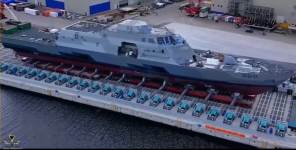
"Good news for our armed forces continues to pour inFincantieri Marinette Marine, Wisconsin (a Lockheed Martin contractor for shipbuilding)announces the completion of construction work on the first ship within the Tawag project (out of 4 ships)His Majesty King Saud-class ship HMS SAUD 820Details of the ship's capabilities and its combat package in this thread."
To view this content we will need your consent to set third party cookies.
For more detailed information, see our cookies page.


"Sensors and Communications Systems
- TRS-4D Radar: The ship's primary radar for target detection and fire control (range 250 km)
- Ceros-200 Fire Control Radar
- CAPTAS-4 CI Towed Array Sonar
- IFF Mode IV, V - Link-16 Digital Data Interchange System
- LINK-22 Long-Range Digital Data Interchange System"​

To view this content we will need your consent to set third party cookies.
For more detailed information, see our cookies page.


"Electronic Warfare Systems (EW Systems)
- WBS-2000 Electronic Warfare Packages for Jamming Radars and Guided Munitions
- CHAFF Radar Disperser Launcher, FLARE Thermal Disperser
- AN/SLQ-25 Nixie Torpedo Jammering System"​

To view this content we will need your consent to set third party cookies.
For more detailed information, see our cookies page.


"Weapon Systems Bundles
-1x Mk110 MOD 0 57mm Cannon
-8x Mk41 VLS Vertical Launching Cells
Carry 32 RIM-162 ESSM or MBDA CAMM Missiles
-1x Mk15 Mod 31 SeaRAM CIWS Close-In Defense Rocket Launcher
Loaded with 11 RIM-116C Block 2 Missiles
-8x RGM-84 Harpoon Rocket Launch Tubes
-6x Mk32 Torpedo Launch Tubes
-2x M621 Narwhal 20mm Cannons (CROWS)
-4x M2HB 12.7mm Machine Guns"​


Aviation - 1x Hangar for MH-60R helicopter with its 15-person crew

1763687061570.png

1763687091385.png 1763687101046.png

- The COMBATSS-21 system, derived from the Aegis Combat System (ACS), collects data from all sensors (radars, sonar, navigation systems, etc.), analyzes it, and displays it on computer screens for personnel in the Combat Information Center (CIC).

It provides users with solutions for firing and using appropriate weapons.

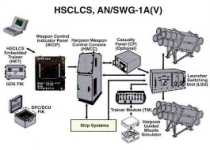
- The AN/SWG-1V HSCLCS system, designed for controlling Harpoon missiles.

1763687131308.png

General Information about the Ship
- Displacement: 4200 tons
- Length: 118 meters
- Beam: 17.5 meters
- Propulsion System: Combined gas turbine and diesel CODAG

Finally, the ship is ready for launch and floatation and balance tests, but the installation of the armament packages, sensors, and communications will be done later.And in conclusion, this was a brief thread and serves as bullet points for the latest ship in the Saudi naval fleet.And may you remain safe....

1763687158863.png
 
To view this content we will need your consent to set third party cookies.
For more detailed information, see our cookies page.


"- Mr. David Alexander mentioned during his speech that the Kingdom of Saudi Arabia will obtain local production rights for the YFQ-42a stealth aircraft (CCA).
- Although the aircraft itself is a major gain, the real gain is that the Kingdom of Saudi Arabia will transfer stealth aviation technologies and design methods locally from the world's best source, which will contribute in the future to obtaining a Saudi stealth product with a local design"​

To view this content we will need your consent to set third party cookies.
For more detailed information, see our cookies page.


"- Mr. David Alexander, President of the American company General Atomics:
- The Kingdom of Saudi Arabia is interested in purchasing up to 200 stealth unmanned aerial vehicles of the Collaborative Combat Aircraft model and 130 MQ-9B unmanned aerial vehicles designed for takeoff from short runways."​

To view this content we will need your consent to set third party cookies.
For more detailed information, see our cookies page.


"One of the top executives from General Atomics confirms that there are talks to sell approximately 130-200 MQ-9B drones to Saudi Arabia. As part of the massive defense deal."​
 
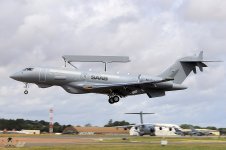
Global Eye plane to Saudi Arabia

1763850963424.jpeg

The news is true and the negotiations have reached advanced stages

1763851005915.jpeg


GlobalEye is one of the most powerful single-aircraft systems in its class

  • AEW&C - Early Warning and Air Control
  • ISR - Reconnaissance and Intelligence Gathering
  • Maritime Surveillance - Marine Surveillance
  • Land Surveillance - Land Surveillance
  • Command & Control
  • ELINT - Electronic Intelligence
  • ESM - Support the EW
 
The importance of the F-35 lies not only in its technical capabilities, but also in the identity of who owns it. The United States has always granted this aircraft to a limited number of allies, while Israel remained the only country in the Middle East to obtain it for many years, thanks to the principle of qualitative superiority established by the Clinton administration and confirmed by successive American presidents. This principle granted Israel the latest and most advanced American weapons, and in return prevented the Arab countries from obtaining the same fighter, and even defense systems capable of confronting it.

To view this content we will need your consent to set third party cookies.
For more detailed information, see our cookies page.


However, the scene changed with Saudi Arabia’s success in convincing President Donald Trump to agree to supply it with F-35 fighters. The decision sparked widespread anger in Israeli circles, which was clearly evident in the “Israel Hayom” newspaper, which considered the deal a direct threat to Israel’s unprecedented air dominance. A writer in the newspaper went on to describe Trump's announcement from the White House as the most dangerous test of the principle of qualitative superiority. The anger was intensified by the statement of former Israeli Chief of Staff Gadi Eisenkot, who strongly criticized Netanyahu, accusing him of being unable to prevent the deal and defend Israel's interests.

On the other hand, Saudi Arabia received the news as a diplomatic achievement before it was an arms deal. Saudi sources confirmed that the agreement came in a completely separate context from the file of normalization with Israel, which is what Trump himself expressed when he announced the deal without linking it to any political demands. This independence in the path strengthened the Saudis’ sense of pride, and communication platforms were filled with widespread celebration.

US President Donald Trump confirmed that Washington intends to supply Saudi Arabia with F-35 fighters “very similar” to those possessed by Israel, indicating during his conversation with Saudi Crown Prince Mohammed bin Salman that Israel would have preferred Riyadh to obtain less advanced aircraft, which “would not be satisfactory” to the Saudis, as he put it.

Trump stressed that both Saudi Arabia and Israel are “great allies” of the United States, and that they are in a position that qualifies them to obtain “the best the market has to offer” in terms of advanced weapons systems.

The US President also revealed that Washington and Riyadh “almost reached” a comprehensive understanding regarding a bilateral defense agreement, in a step that reflects the growing level of strategic cooperation between the two countries.
 
To view this content we will need your consent to set third party cookies.
For more detailed information, see our cookies page.
 
Saudi-Pakistani maneuvers in Tabuk - Al-Battar 2

1764519778715.png

1764519849783.png

To view this content we will need your consent to set third party cookies.
For more detailed information, see our cookies page.
 
Why do S-400 radars see F-35 fighters but cannot target them?

In an in-depth analytical reading of the battle for air control in contemporary wars, an operations specialist in the US Navy revealed the decisive factor that makes the Russian S-400 system’s radars capable of monitoring the F-35 stealth fighter without having the ability to target it or direct missiles at it. This paradox is not just a minor technical detail, but rather represents the essence of the philosophy underlying the design of fifth-generation aircraft and the reason for their qualitative superiority on modern battlefields.

Today, the F-35 Lightning II represents the pinnacle of development in the concept of “21st century security.” It is a platform that combines advanced stealth, data fusion from various sensors, and the ability to operate coordinated with other platforms, which allows it to penetrate highly complex hostile environments and impose unprecedented field awareness on the battlefield.

The fighter's missions are not limited to mere air superiority, but include a wide spectrum of capabilities including strategic attacks, offensive and defensive air support, combating surface targets, strike coordination, advanced reconnaissance, and close air support, all the way to the most sensitive and complex missions: suppression and destruction of enemy air defenses (SEAD/DEAD).

For this purpose, the US Navy is working on introducing AARGM missiles and its longer-range version AARGM-ER, while the Air Force is also considering adopting them to enhance its capabilities in this field.
Behind this effectiveness is the ASQ-239 electronic warfare system, which is capable of passively detecting any hostile radar emission and pinpointing its location precisely by integrating data received from the rest of the aircraft’s systems, turning the F-35 fighters into silent hunters of air defenses.

The S-400 radar can detect the F-35 but cannot target it

But the question remains: Is the F-35 truly invisible to advanced air defense radars such as the S-400?

The answer, as American operations expert Eric Wiklund explains, is: Yes, he detects them... but he cannot target them.

Wiklund likened it to seeing an incoming tsunami wave but not being able to escape. The Russian Nebo-M radar operating on the L-band can detect the “presence” of the aircraft in airspace, but the accuracy of this band is limited, and does not enable it to guide a missile towards its target effectively.

Stealth aircraft like the F-35 are specifically designed to evade guidance radars operating in the S, C, X and Ku bands, the frequencies that are actually used to lock missiles on their targets. Unless the F-35 approaches a relatively short distance—between 20 and 30 miles, depending on conditions—it will not appear on these radar screens.

Thus, the moment the guidance radar begins trying to lock on to the aircraft, the F-35 has done what it came to do: fires an anti-radiation missile (HARM) or a guided munition such as a JDAM, and then turns around to return to its base. In fact, turning off the radar is of no use here; Modern missiles retain the last recorded location of the target, and continue to attack it even after it stops broadcasting.

He concluded that advanced radars could see the F-35 from afar, but could do nothing about it. As for the plane itself, it remains true to the essence of its philosophy: “Work in silence, strike without warning, and leave without being touched.”
 

Saudi Arabia’s F-35 Push Advances After U.S.–Saudi Defense Pact​

Published on: November 21, 2025 at 9:23 PM
Stefano D'Urso

1764866156153.png

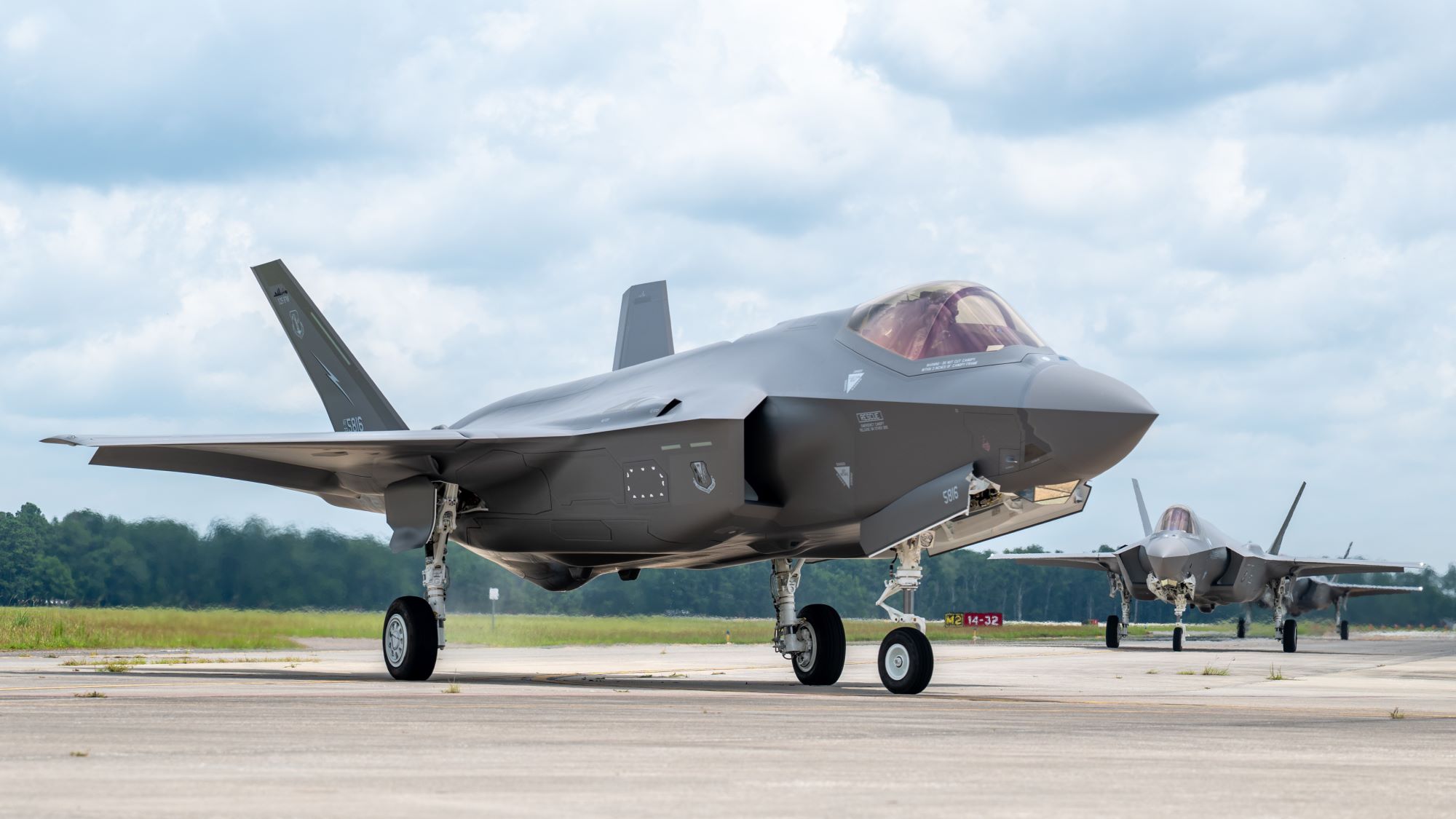
The first F-35A Lightning II aircraft permanently assigned to the Florida ANG 125th Fighter Wing taxi on the flight line after landing at Jacksonville Air National Guard Base, Jul. 9, 2025. (U.S. Air National Guard photo by Staff Sgt. Jacob Hancock)

The prospect of Saudi Arabia becoming the next Middle Eastern operator of the F-35 Lightning II appears to have accelerated sharply following a series of high-profile statements from U.S. President Donald Trump and the signing of a new U.S.–Saudi Strategic Defense Agreement. While the kingdom has pursued the stealth aircraft for years, so far the acquisition never became reality because of various reasons.

However, the latest developments are a clear indication that Washington has changed route and is now ready to authorize a sale that could reshape the Middle East’s balance of airpower. That is especially notable as relations between the two countries had some highs and lows in recent years.

Speaking in the Oval Office and later at a conference in Washington on Nov. 19, 2025, Trump said he expects the sale of F-35s to Saudi Arabia to proceed rapidly through the Foreign Military Sales (FMS) system. According to Air and Space Forces Magazine, Trump framed the approval as all but certain, telling Saudi officials that the process would move “very quickly” and predicting a turnaround of “about 24 hours,” despite the formal steps required under U.S. law.

“We will be doing that, we’ll be selling F-35s. They want to buy them, they’ve been a great ally.”

— President Donald Trump

1764866174225.png

U.S. B-52 and F-15Es during a joint training mission with RSAF F-15SAs over Saudi Arabia. (Image credit: Fahad Rihan)

Trump had first signaled his intent few days earlier, on Nov. 17, ahead of Crown Prince Mohammed bin Salman’s visit to Washington. The following day, the two leaders met at the White House to discuss defense cooperation, advanced technology, and broader investment commitments.

“I’m pleased to announce that we are taking our military cooperation to even greater heights by formally designating Saudi Arabia as a major non-NATO ally.”

— President Donald Trump
As reported by Breaking Defense, the U.S. and Saudi Arabia signed a Strategic Defense Agreement (SDA) on Nov. 18, which included U.S. authorization for both the F-35 sale and the purchase of nearly 300 M1 Abrams tanks. The White House called the SDA “a win for the America First agenda,” highlighting both industrial benefits for the U.S. defense sector and Saudi Arabia’s commitment to deeper security cooperation between the two countries.

“The U.S.-Saudi Strategic Defense Agreement is a historic agreement that strengthens our more than 80-year defense partnership and fortifies deterrence across the Middle East.”

— White House Statement
While the number of F-35s was not formally disclosed, multiple sources indicate that Saudi Arabia is seeking a fleet of up to 48 aircraft. Such a package could be valued between $5.3 and $5.7 billion, excluding munitions and logistics support, according to early estimates cited by Air and Space Forces Magazine.


1764866204254.png

A U.S. Air Force F-35A Lightning II assigned to the 421st Fighter Squadron flies over the Pacific Ocean during a refueling mission in preparation of Exercise Bushido Guardian 2025 near Misawa Air Base, Japan, Sep. 26, 2025. (Image credit: USAF/Senior Airman Patrick Boyle)

Unmanned assets are also a big part of the agreement as, in addition to the F-35 and Abrams deals, Saudi Arabia is reportedly in discussions to acquire up to 130 MQ-9B drones and 200 Gambit loyal wingman systems from General Atomics Aeronautical Systems, according to comments given to Breaking Defense by company’s officials.

Despite the enthusiasm from both Washington and Riyadh, the proposed F-35 sale faces the hurdle of U.S. legal obligations to preserve Israel’s qualitative military edge (QME) in the region. In fact, Congress amended the Arms Export Control Act in 2008 to require that any Middle Eastern arms sale not erode Israel’s ability to maintain a technological and operational advantage.

Here is the definition provided by the Public Law 110-429:

“The term ‘qualitative military edge’ means the ability to counter and defeat any credible conventional military threat from any individual state or possible coalition of states or from non-state actors, while sustaining minimal damages and casualties, through the use of superior military means, possessed in sufficient quantity, including weapons, command, control, communication, intelligence, surveillance, and reconnaissance capabilities that in their technical characteristics are superior in capability to those of such other individual or possible coalition of states or non-state actors.”
Israel has historically opposed the export of the F-35 to Arab states. Israeli media reported that the Israeli Air Force has already raised concerns, producing a white paper warning that Saudi Arabia’s acquisition could “erode or significantly degrade” its QME. Israel similarly objected to F-35 sales to the UAE and to Turkey in the past.


1764866218679.png

Saudi Arabia’s frontline fighters. (Image credit: Ahmed Hader)

Speaking alongside Mohammed bin Salman in the Oval Office, Trump dismissed concerns that the Saudi aircraft would be downgraded compared to Israeli F-35I Adirs. Addressing both sides, he said both countries should get “top of the line.”

“This is a great ally, and Israel’s a great ally, and I know they’d like you to get planes of reduced caliber. I don’t think that makes you too happy. We‘re looking at that exactly right now, but as far as I’m concerned, I think they are both at the level where they should get top of the line.”

— President Donald Trump
“I know they’d like you to get planes of reduced caliber. I don’t think that makes you too happy… As far as I’m concerned, I think they are both at the level where they should get top of the line.”

However, industry officials cited by Air and Space Forces Magazine noted that modifications to Saudi aircraft remain a possibility, including tailored mission-data arrangements or software differences. Israel enjoys unique access to the F-35 program, including authority to integrate domestic systems and weapons, with a level of customization unmatched by any other operator.

Another factor complicating the potential sale involves Saudi Arabia’s use of Chinese-made military systems. Both Air and Space Forces Magazine and Defense News highlightedlong-standing U.S. concerns about the presence not only of foreign radars, but also of Chinese personnel in Saudi Arabia, which compromise sensitive technologies of the F-35.

Similar concerns led to Turkey’s being ejected from the F-35 program in 2019 due to its acquisition of the Russian S-400 air defense system. The acquisition triggered the Countering America’s Adversaries Through Sanctions Act (CAATSA), and the National Defense Authorization Act (NDAA) today still blocks the delivery of F-35s unless the S-400 issue is resolved.

Saudi Arabia currently operates Chinese radars and ballistic missile systems, and Air and Space Forces Magazine reports that Chinese technicians are present in the kingdom to support these assets. While the systems in question are primarily optimized for counter-UAS roles, Washington remains wary of any foreign radar with active electronically scanned array (AESA) capabilities near F-35 infrastructure.

The Royal Saudi Air Force (RSAF) operates one of the region’s most modern and capable fighter inventories. According to World Air Forces 2025, as of December 2024, the inventory included 232 F-15s (of which 84 are the new F-15SAs), 72 Eurofighter Typhoons and 81 Tornado IDS jets, about to be phased out.

The Tornado’s replacement has long shaped Riyadh’s procurement plans. Saudi negotiated for 48 additional Typhoons, although the deal was repeatedly blocked by Germany until 2024. The country also had talks with France for Dassault Rafales, while Boeing has offered the F-15EX Eagle II.

1764866230676.png

China Electronics Technology Group Corporation’s (CETC) S-band 3D TWA low-altitude surveillance radars in Saudi Arabia, among the Chinese systems acquired by the country. (Image credit: X)

Should Riyadh acquire the F-35, Israel would no longer have the monopoly on low-observable combat aircraft in the region, as it has since 2016. As the same time, the F-35 would represent a leap in capabilities, especially when countering Iran and its proxies.

A recurring theme in Trump’s remarks, also echoed by Defense Secretary Pete Hegseth, is the push to drastically accelerate the FMS process. As reported by Air and Space Forces Magazine, Hegseth recently unveiled reforms that shift arms sale approvals from the Pentagon’s policy staff to its acquisition directorates, with the explicit aim of “speeding weapons sales to foreign governments.”

The timeline for a possible delivery of F-35s to Saudi Arabia is yet unclear. However, with the U.S. Air Force slowing down its own F-35 procurement rates, Saudi Arabia and other customers could receive jets faster.

However, while the FMS process might speed up, the political approval might be slower. In the past, Washington refused to export the F-35 to Arab nations due to the combination of QME requirements, concerns over technology security, and the political sensitivities surrounding diplomatic relations.

1764866241450.png

A U.S. Air Force F-35A Lighting II assigned to the 422nd Test and Evaluation Squadron (TES), takes off for a mission from Nellis Air Force Base, Nevada, Aug. 26, 2025. (U.S. Air Force photo by Airman 1st Class Heather Amador)

Because of this, Congress is likely to thoroughly scrutinize the transaction, especially given previous objections tied to human rights issues and Saudi Arabia’s military actions in Yemen. In fact, The War Zone noted that lawmakers had previously moved to block arms transfers to Riyadh following the Khashoggi killing and rising civilian casualty concerns.

At the same time, the SDA and expanding defense cooperation appear to point to a more strategic realignment. Thus, with the political momentum at the highest level of the U.S. administration, the Saudi push for the F-35 might finally go through with shorter delays.


I could very much see KSA ordering another 48 (thus approaching 100 F-35 in total) in the next few years if deliveries of already ordered F-35 will occur at a fast pace as heavily rumored to be the case.

As I wrote on the Arab section, given the huge geography of KSA (largest country by far in the region), the fact that we have the 3rd most natural resources and mineral wealth on the planet (only 8 times larger Russia and 4 times larger USA have more resources - see post 5), hosting Makkah and Madinah and being located in a region of the world where there is instability and war all across the board (almost) requires a large and one of the most powerful air forces in the world.

I could see a second order of another 48 occur before Trump's tenure ends and with a fast tracked delivery as well.

On the other hand I could also potentially see KSA tracking back from the F-35 deal altogether (if possible) if deliveries will be dragged on for years or some unacceptable clauses and obstructions occur from the US side.

Not sure if possible but it would be good to see the first F-35 appearing in the inventory of the Royal Saudi Arabian Air Force within the next year or so.
 
Last edited:

Users who are viewing this thread

Back
Top