Saudi Arabia advances air power with major upgrade to King Salman Air Base
Saudi Arabia has inaugurated the upgraded King Salman Air Base, signalling a significant step in its military modernisation plans
By
Manuela Vergel December 10, 2025
The inauguration of the upgraded King Salman Air Base by Saudi Crown Prince Mohammed bin Salman represents a major development in the Kingdom’s defence capability and long-term
military planning. The new facilities, designed in the Salmani architectural style, merge national identity with operational requirements, creating a modern hub intended to reinforce Saudi Arabia’s strategic position in an increasingly contested regional environment.
According to the Saudi Press Agency, the base’s design echoes Riyadh’s character and aligns with the capital’s broader urban planning framework.
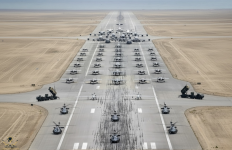
The project incorporates 115 buildings across more than 126,000 square metres, featuring primary and parallel runways, aprons, aircraft hangars, helicopter pads, a control tower, and comprehensive technical, administrative, residential, and security facilities.
Together, these elements provide the foundation for enhanced mission readiness and future force development.
Preparing for advanced air operations
The redevelopment ensures that the air base can support and maintain the Kingdom’s most sophisticated aviation assets, spanning fourth-generation, 4.5-generation and fifth-generation fighter aircraft, as well as advanced uncrewed aerial vehicles.
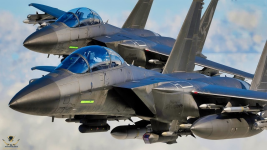
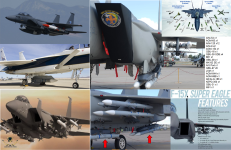
Purpose-built maintenance hangars, simulation centres and upgraded command-and-control systems aim to sustain high availability rates for key platforms, including the Typhoon and F-15.
This infrastructure supports Saudi Arabia’s objective of maintaining air superiority through rapid response capability and modern combat systems.
The enhancements also position the Royal Saudi Air Force (RSAF) to adapt to evolving operational requirements, particularly as regional security dynamics continue to shift.
Localisation and air defence strategy
The modernisation aligns with Vision 2030 goals to expand domestic defence industry capacity.
New workshops and engineering centres provide the capability for in-country maintenance, repair and overhaul, decreasing reliance on foreign support and increasing local economic participation in defence programmes.
The base’s strategic location in Riyadh reinforces national air sovereignty by enabling a swift response to emerging threats.
Its enhanced posture contributes to deterrence amid heightened regional tensions, ensuring Saudi air assets remain ready to support national security objectives.
Core of integrated missile defence
King Salman Air Base also serves as a central node within Saudi Arabia’s Integrated Air and Missile Defence System.
Beyond hosting fighter aircraft, it acts as the command and operational centre for missile defence coverage of the capital and surrounding regions.
Aircraft deployed at the base can conduct suppression of enemy air defences, including operations against missile launch sites, supporting the Kingdom’s layered defence concept.
Lieutenant General Turki bin Bandar bin Abdulaziz, Commander of the RSAF, stated that the development forms part of wider modernisation plans, enabling the force “to detect threats and deploy the most appropriate response within seconds.”
Strengthening international partnerships
The new facilities facilitate advanced joint training and operational coordination with partners such as the United States and the United Kingdom.
This cooperation enhances interoperability and ensures Saudi forces remain aligned with contemporary international military practices.
Overall, the redevelopment of King Salman Air Base signals a significant strengthening of Saudi Arabia’s defence architecture, combining enhanced deterrence, expanded localisation and deeper international collaboration.


 www.ispionline.it