Saudi Arabia continues negotiations with Fincantieri to purchase Todaro submarines and establish its first naval submarine force
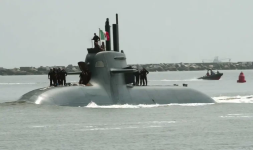
Saudi Arabia continues negotiations with Fincantieri regarding Todaro-class submarines to acquire its first submarine.
January 27, 2026:
Saudi Arabia continues talks with the Italian company Fincantieri to purchase Todaro/Type 212A diesel-electric attack submarines, as part of long-term efforts to establish its first-ever naval submarine force.
Saudi Arabia is still discussing with Italy the issue of Todaro-class submarines, also known as Type 212A. Saudi Arabia does not currently operate any submarines, which means that any purchase will require the establishment of a new branch of the naval force with long timelines for training, infrastructure, and the integration of submarines into operations.
This interest falls within a long-term vision, as Saudi Arabia has been discussing the possibility of acquiring submarines since the mid-2010s, without reaching a final agreement yet. These negotiations reflect the Kingdom's awareness of the importance of submarines in enhancing intelligence and deterrence capabilities and imposing a naval embargo in the Red Sea and the Arabian Gulf. They also highlight the extent of institutional, technical and training adjustments required to possess this capability, which makes the process go beyond simply choosing the structure, as it is expected that the transition from signing the contract to reaching initial operational readiness will take several years.
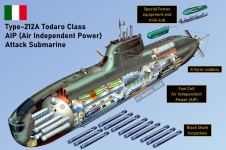
These submarines are the world's first to operate with an air-independent propulsion system based on hydrogen fuel cells, specifically Siemens' proton exchange membrane fuel cells (PEMFC). The Type 212A/Todaro class submarine uses a non-magnetic austenitic (stainless) steel compression hull to reduce its exposure to detection by magnetometry systems and mines, a feature that distinguishes it from export versions such as the Type 214. The acoustic footprint was reduced by diesel generators mounted on floating platforms, extensive flexible machinery insulation, and the use of a low-bore seven-blade propeller designed to operate at low speed underwater. Layers of the structure include silencer tiles designed to absorb active sonar emissions and reduce self-noise transmission, while reducing the thermal footprint is indirectly supported by reducing the number of dives and reducing exposure to exhaust shafts.