
Pakistani Dragon
Elite Member


Saudi Arabia announces maritime defence alliance to secure vital waterways
Fourteen nations sign up to alliance to protect vital trade and energy routes amid escalating hostilities.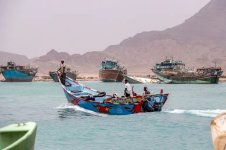
People sit in a fishing boat sailing through the Bab al-Mandeb Strait off Yemen’s southern Taiz province [AFP]
By Al Jazeera Staff
Published On 30 Jul 202630 Jul 2026
Saudi Arabia and 13 other countries have announced the creation of a maritime zone military coalition to safeguard freedom of navigation through the Bab al-Mandeb Strait, the Red Sea and the Gulf of Aden.
In a statement published on Thursday, Saudi Arabia’s Ministry of Defence said the Multinational Maritime Defense Alliance was established as a framework to strengthen collective maritime defence cooperation.
The states declared their intent to protect freedom of navigation, securing international trade routes and energy supply routes through the three waterways, which form a strategic maritime corridor linking the Indian Ocean to the Mediterranean.
The move comes as the United States-Iran conflict has become focused on the Strait of Hormuz. The virtual closure of the route, which formerly carried about 20 percent of global oil and gas exports, is weighing heavily on the global economy.
In a recent escalation, the Bab el-Mandeb-Red Sea-Gulf of Aden route has come under repeated attack from Iran-backed Houthi fighters in Yemen.
‘Shared responsibility’
The representatives of 43 countries – out of 51 that were invited – participated in the meeting for the establishment of the alliance.A European Union delegation was included, the Saudi ministry said. The EU already has a naval protection mission, Aspides, in the Red Sea. It is not clear how the Saudi-led coalition would differ.
Turkiye, Kuwait, Bahrain, Qatar, Jordan, Egypt, Pakistan, Djibouti, Somalia, Bangladesh, Yemen, Sudan and the Comoros are understood to be the other signatories to the alliance.
It is notable that neither the United Arab Emirates nor Oman have signed up, despite having similar security objectives amid the conflict centred on Iran.
“The door remains open for other countries to accede to the coalition’s charter after completing their national procedures,” the Saudi ministry’s statement said.
The participating states share a “conviction that maritime security is a shared responsibility and that cooperation and coordination among states constitute the cornerstone for confronting common and transnational maritime threats”, the statement continued.
It did not say what ships or aircraft each country would contribute. However, activities will include sharing intelligence, information and operational planning, as well as conducting joint exercises and maritime operations.
The alliance is “purely defensive in nature and does not target any state”, it noted.
Saudi Arabia is recognised as a founding member of the alliance and home to its headquarters, though the statement did not specify the exact location.
The Houthi rebel group in Yemen imposed a maritime blockade on Saudi Arabia last week, disrupting oil shipments diverted to the Red Sea.
Since the start of the war in Iran in late February, and the de facto closure of the Strait of Hormuz, Riyadh has been able to continue to export most of its oil thanks to the East-West pipeline, which connects oil refineries in the country’s east to the terminal of Yanbu on the Red Sea coast.
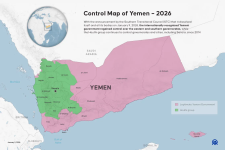
Saudi exports have to cross Bab al-Mandeb, which is located between Eritrea, Djibouti and Yemen, whose western province facing the maritime chokepoint is controlled by the Houthis. That gives the armed group a strategic advantage to target ships in the Red Sea.
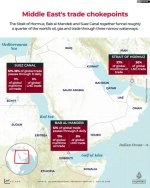
Approximately 10 to 12 percent of global maritime trade passes through the strait, including millions of barrels of oil per day. It is also one of only two exit-entry points to the Red Sea, the other being the Suez Canal.
Bab al-Mandeb is only 29km (18 miles) wide at its narrowest point, limiting traffic to two channels for inbound and outbound shipments. Therefore, any disruption taking place in the area could cause a new surge in global energy prices.


 to reopen it …


