Saudi Arabia strategic Projects: news, discussions & updates


Saudi Arabia Built Its National AI Model on Top of China's MiniMax​

September 3, 2026 at 1:11 PM UTC

Saudi Arabia's PIF-backed Humain unveiled humain-m3 at LEAP 2026 in Riyadh, an Arabic AI model built directly on Chinese lab MiniMax's open M3 model. Humain initially presented it as a homegrown model until users matched its parameters exactly to MiniMax's, forcing a public clarification.

audi Arabia's new Arabic AI model is being sold as sovereign technology, but its base appears to come from China's MiniMax. That choice tells you more about the next AI race than another benchmark table ever could.

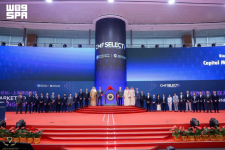
HUMAIN unveiled HUMAIN M3 during LEAP 2026 in Riyadh, where Saudi Arabia used the week to show that its AI plan is no longer just speeches and renderings. The company says the model is open weight and trained further on more than one trillion Arabic tokens. It's built for Arabic language, local culture, tool use and agent work. Then the uncomfortable detail surfaced: HUMAIN M3 shares the same core architecture as MiniMax M3, the open-weight model the Shanghai company released on June 1.

That's the whole tension. A close US partner with huge access to American chips has built a national Arabic AI system on a Chinese model base.

The Model Beneath The Brand​

HUMAIN M3 and MiniMax M3 both use a mixture-of-experts design with 428 billion total parameters and 23 billion active per token. Posts archived from X and a KuCoin flash item citing ChainThink reported that Sultan Alfaifi, who had promoted HUMAIN M3 as a Saudi model, later clarified that it was based on MiniMax M3 after users pointed out the parameter match. The correction matters because model provenance is not a cosmetic detail when governments are buying the stack.

HUMAIN can still claim real work of its own. The company says it post-trained the model on more than one trillion Arabic tokens and reported an average score of 89.37% across seven Arabic-language benchmarks. It also introduced HUMAIN Voice, a conversational platform built for Saudi, Maghrebi, Egyptian and Levantine Arabic dialects, according to coverage from Inc. Arabia. That is not a small feature. Anyone who has watched Arabic speech products struggle outside Modern Standard Arabic knows why Maghrebi support is a real test.

But don't confuse adaptation with origin.

MiniMax's own June 1 release described M3 as an open-weight model with a one-million-token context window, native text, image and video input, and stronger coding and agentic performance than its previous M2 model. The company framed it as the first open-weight model to combine those three capabilities. You don't have to accept every vendor benchmark to see why HUMAIN would use it. The weights are available, and the architecture is large enough to look serious. Starting from scratch is brutal.

Why This Is Awkward For Washington​

OpenAI and Anthropic don't give a sovereign customer the same deal. Their frontier models are closed products. You can buy access. You can build apps and negotiate enterprise terms. But you can't simply take the weights, host the whole thing in Riyadh, change the model deeply and call it national infrastructure. For a state-backed company trying to move fast, that is a hard limit.

Chinese labs have walked through the gap. MiniMax, Alibaba's Qwen, DeepSeek and Moonshot have all made open or open-weight models a serious part of the market, and that changes the buying decision for governments. If you want full control, the strongest usable option may not come from California. Right now, it may come from China.

That is the issue export controls don't neatly solve. The US has spent years trying to limit China's access to advanced AI chips and frontier capability. A Saudi company using American Nvidia hardware to run a Chinese-derived open model is a different problem. It sits in the space between hardware controls and software openness - national AI policy is tangled up in there too, and frankly, that space is getting crowded.

US lawmakers have already noticed the broader risk. In April 2026, the House Homeland Security Committee and the Select Committee on China announced a joint investigation into PRC-developed AI models, naming companies including DeepSeek, Alibaba, Moonshot AI and MiniMax. The committees pointed to concerns about distillation, data security, censorship and the rapid adoption of Chinese open-weight systems. You may dislike the politics around that language, but the strategic question is real: who supplies the foundation layer when every country wants its own AI?


Humain builds national AI platform using MiniMax model, signaling Saudi Arabia’s pragmatic pivot on sovereign AI​

 
Last edited:
Officially.. xAI chooses Saudi Arabia🇸🇦 as its first stop for expansion outside the United States🇺🇸

Elon Musk's company xAI begins in the Kingdom a project to build and operate massive data centers for artificial intelligence, with an initial capacity of 50 megawatts, set to expand in phases to reach 500 megawatts.

The project launch dates back to 2025, with a partnership between xAI and HUMAIN to develop and operate advanced artificial intelligence infrastructure in Saudi Arabia, while the expansion plan was revealed during the LEAP 2026 conference.

 
Huge Chinese investment in the Kingdom.. Tourism and industry are at the forefront. These numbers

1788629410679.png

Chinese investments in Saudi Arabia are entering a more diversified phase, having expanded beyond traditional sectors to include industry, technology, energy, mining, and infrastructure. This expansion coincides with a growing interest in the tourism and hospitality sector, capitalizing on the rapid growth of the Saudi market.

According to the latest Chinese data, the stock of Chinese direct investments in Saudi Arabia reached $4.26 billion by the end of 2025. China maintained its position as the Kingdom's largest trading partner, while Saudi Arabia remains China's largest trading partner in the Arab region.

Bilateral trade between the two countries has exceeded $100 billion annually for four consecutive years, reflecting the evolution of Saudi-Chinese relations from a relationship primarily based on oil and trade to a broader partnership encompassing investment, manufacturing, technology transfer, and new projects.

Industry Takes the Lead

Data reveals that the manufacturing sector accounts for the largest share of Chinese investments in the Kingdom.

The stock of Chinese foreign direct investment in Saudi Arabia rose from SAR 24.1 billion in 2023 to SAR 31.1 billion in 2024, representing a growth of 28.8%. Investment inflows during the same year jumped from SAR 3.2 billion to SAR 8.6 billion, an increase of 163.9%.

In addition to manufacturing, Chinese investments encompassed the financial services, insurance, construction, mining, technology, trade, infrastructure, and healthcare sectors.

These investments align with the Kingdom's transformation into a regional industrial hub. The Ministry of Industry and Mineral Resources issued approximately 1,660 new industrial licenses in 2025, with investments exceeding SAR 76 billion, while 1,201 factories commenced production with investments exceeding SAR 31 billion.

Chinese Vice Minister of Commerce Ling Jie notes that Chinese companies have expanded their operations in the Kingdom in key sectors including petrochemicals, new energy, steel, and manufacturing.

These sectors align with a major aspect of Saudi Arabia’s economic diversification plans, which aim to localize supply chains and advanced industries and increase local content rather than relying solely on imports of finished products.

Chinese interest also extends to electric vehicles, electronics, machinery and equipment, solar energy, and advanced technologies—areas poised to attract a growing share of investment in the coming years.

Tourism

Although industry remains the most prominent sector on the Chinese investment map, tourism is emerging as one of the promising areas of Saudi-Chinese cooperation.

There are currently no published official data detailing the value of direct Chinese investment in Saudi tourism alone, and therefore, it is not possible to provide a precise, independent figure for this sector within the total of $4.26 billion.

However, indicators reveal the expanding Chinese presence in the tourism sector through the implementation of projects related to hospitality and tourism infrastructure, cooperation in attracting Chinese tourists, and connecting Saudi tourism companies with the Chinese market.

Examples of this include the cooperation between Taiba Investment, the Saudi Tourism Authority, and the Chinese i2i Group, aimed at strengthening the Kingdom's presence in the Chinese market and developing aspects related to tourism infrastructure, marketing, and organizing the reception of visitors from China.

$120 Billion in New Tourism Investments

The attractiveness of tourism to Chinese investors is directly linked to the size of the Saudi market itself.

In June 2026, the Ministry of Tourism announced that new tourism investments in the Kingdom had exceeded $120 billion, with more than 50 international hospitality brands expanding into the Saudi market.

The Kingdom has also become home to the largest tourism development project in the Middle East and is among the fastest-growing global markets for luxury hotel supply.

This means that the opportunity for Chinese investment extends beyond simply building a hotel or executing a construction contract. It encompasses hotel and resort management, tourism technology, transportation, hotel supply chains, theme parks, tourism retail, restaurants, and digital services and platforms targeting Chinese tourists.

150 Million Visits

The Kingdom aims to reach 150 million annual visits by 2030, making tourism one of the most promising sectors for attracting foreign investment in the coming years.

From China's perspective specifically, the Kingdom has a dual opportunity: attracting Chinese investors on the one hand, and increasing the number of Chinese tourists on the other.

Every increase in visitors from China can bolster investment opportunities in hotels, restaurants, tourism services, retail, payment systems, technology, and entertainment.

The latest data from the Chinese Ministry of Commerce shows that actual Saudi investments in China surged by 343.7% during the first seven months of 2026 compared to the same period of the previous year.

Saudi investments in China encompass sectors such as petrochemicals, advanced technology, new energy, trade, and culture.

This surge comes at a time when total actual foreign investment in China declined by 6.2% during the same period, further highlighting the strength of investment ties between the two countries.

Key Figures

$4.26 billion: The stock of Chinese direct investments in the Kingdom as of the end of 2025.

More than $100 billion: The volume of Saudi-Chinese trade annually for four consecutive years.

SAR 31.1 billion: The stock of Chinese direct investment in Saudi Arabia according to Saudi data for 2024, compared to SAR 24.1 billion in 2023.

SAR 8.6 billion: Chinese investment inflows to the Kingdom during 2024, an increase of 163.9%.

343.7%: The growth rate of actual Saudi investments in China during the first seven months of 2026.

More than $120 billion: The value of new tourism investments in the Kingdom.

More than 50 international hospitality brands: Currently expanding in the Saudi market.

https://sabq.org/
 

Users who are viewing this thread

Country Watch Latest

Back
Top