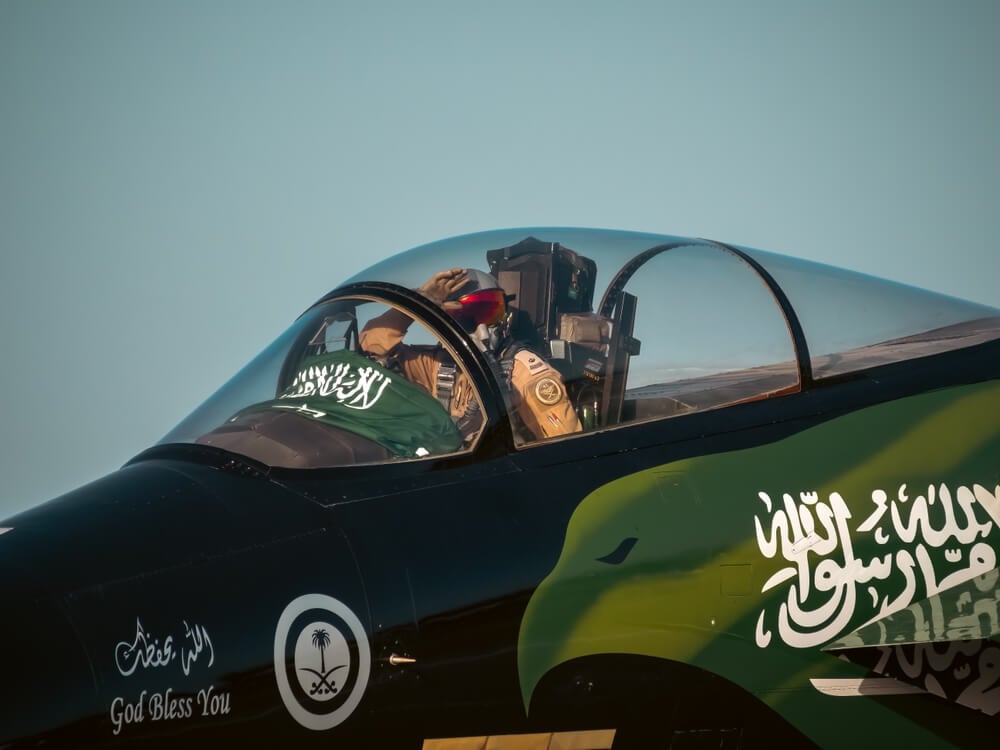
Saudi space capabilities in security and defense

Mishaal al-Shemimry​


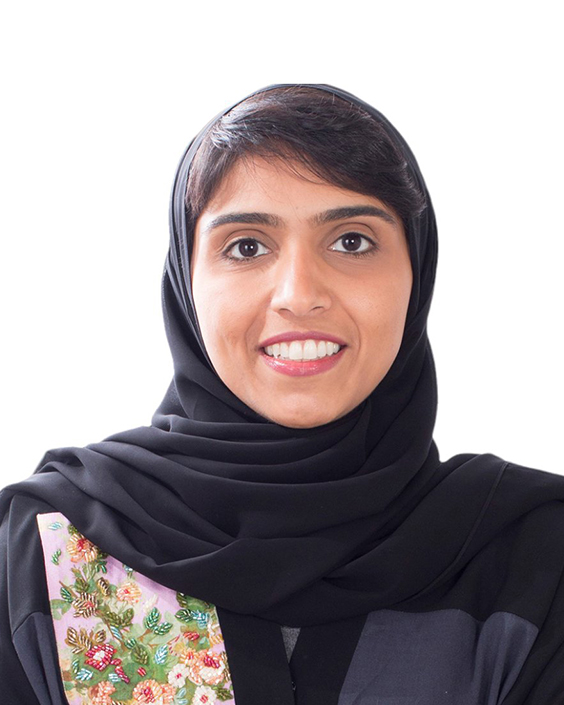
Mishaal al-Shemimry, the first Saudi female aerospace engineer, is the Managing Director of the Center for Space Futures, the Vice President of the International Astronautical Federation (IAF), and an advisor at the Saudi Space Agency. Additionally, she is a commercial pilot and an entrepreneur in the peaceful rockets field. Al-Shemimry has won several awards, including the Inspirational Woman Award.

Mishaal al-Shemimry's education​

Mishaal al-Shemimry earned a Bachelor of Science in Applied Mathematics degree from the Florida Institute of Technology in 2006, where she also earned a Bachelor of Science in Aerospace Engineering. In 2007, she earned a Master of Science in Aerospace Engineering with a thesis entitled "Analysis of a Grooved-Ring Reactor Concept for Nuclear Thermal Propulsion."

Additionally, she obtained several certifications, among which are the following: Certified Commercial Pilot, Certified Advanced Open Water SCUBA Diver, Certified Nitrox SCUBA Diver, and Certified Rescue SCUBA Diver.

Mishaal al-Shemimry's professional life​

Mishaal al-Shemimry's professional life began during her undergraduate studies when she founded and managed the Infinity Math Club in 2004. She worked as a Graduate Research Assistant in the Department of Mechanical and Aerospace Engineering at the Florida Institute of Technology from August 2006 to December 2007, where she achieved several accomplishments, including conducting research for the Space Flight Center affiliated with the National Aeronautics and Space Administration (NASA).

From August to December 2007, she was a graduate teaching assistant at the Mechanical and Aerospace Department of the Florida Institute of Technology. From June 2008 to April 2010, she worked as a systems engineer for Raytheon Missile Systems in Arizona.

In 2010, Mishaal al-Shemimry established her company, "Mishaal Aerospace," specializing in rocket designing and manufacturing. In the same year, she established and co-founded the Beauty Box Company. From November 2015 to May 2018, she provided consultancy in rockets and related matters fields in Paris. From August to December 2019, she worked as a professor in the Mechanical and Aerospace Department at the University of Miami in Florida. Since November 2020, Mishaal al-Shemimry has taken on the role of Space Nuclear Power and Propulsion Consultant at the Northrop Grumman Corporation, where she has achieved several accomplishments, among which is devising space nuclear power and propulsion technology applications for national security and commercial missions. She has also been an advisor at the Saudi Space Agency since 2021.

In 2022, Mishaal al-Shemimry, the Kingdom's representative, won the position of vice president at the International Astronautical Federation (IAF) in a voting process, ahead of fourteen candidates from around the world, making her the first Saudi woman to win a leadership position in the organization.

Her extensive practical and professional experience encompasses several fields, which are the following: aerodynamics, rocket and vehicle design, wind tunnel tests, predictive simulation, and rocket stage-separation analysis, with a strong focus on computational tool development.

Mishaal Al-Shemimry's awards and achievements​

Mishaal al-Shemimry obtained several awards, among which are the following: the Inspirational Woman Award in 2015, the Scientific Achievement Award in 2018, as well as the Outstanding Junior Award in Aerospace Engineering for two consecutive years during her undergraduate studies, and the Pioneer in Science and Technology Award for 2024. She was also granted the Florida Institute of Technology Scholarship from 2003 to 2005, four scholarships from the Florida Institute of Technology from 2002 to 2005, and four Florida Medallion Scholarships from 2002 to 2005.

Mishaal al-Shemimry built a robot during her high school studies and later designed twenty-two rockets for various purposes. She also developed a series of launch vehicles that aid in launching small satellites into the Low Earth Orbit.

Sources​


Saudi Press Agency (SPA).

Saudi Space Agency.

View attachment 179714

THE FIRST FEMALE AEROSPACE ENGINEER IN THE GCC

STARTED HER OWN ROCKET COMPANY AT AGE 26

INSPIRATIONAL WOMAN OF THE YEAR 2015

{ARAB WOMAN AWARDS}

AWARDED FOR SCIENTIFIC ACHIEVEMENT BY HRH KING SALMAN BIN ABDULAZIZ AL SAUD, NOVEMBER 2018

MISH_bio3.jpg


Mishaal Ashemimry – Aerospace Engineer and Founder of MISHAAL Aerospace

Mishaal Ashemimry is a Saudi-American Aerospace Engineer, Aerospace Entrepreneur, commercial pilot, speaker and influencer, who was born in the US and spent a few years of her early life in Saudi, where her fascination with space started. More specifically, she was inspired at the age of six while gazing at the stars in the Unayzah desert. To feed her curiosity, she decided to learn how to build rockets that will enable her to explore space and one day take her there.


As the First female aerospace engineer in the GCC, she realized that this title comes with an enormous responsibility to inspire others to join her field as well as other STEM programs. To reach the youth, she used social media platforms such as Instagram, Twitter, Snapchat and YouTube to educate her follower about her field, experiences, and to inspire them to have a dream and perseverance to pursue it. As a result, she became a public figure and speaker at many events in the GCC and globally. Her influence garnered the attention of Macy’s, Pepsico and Dubai TV in campaigns to educate and empower youth.


Ashemimry is a consultant in her field and was a professor at the University of Miami Mechanical and Aerospace Department. Currently, Ashemimry is an International Astronautical Federation Vice President for Diversity Initiatives and a special advisor to the CEO of the Saudi Space Agency with a strong focus on developing Saudi’s role in the global space market. Prior to joining the Saudi Space Agency, Ashemimry was a Space Nuclear Power and Propulsion Consultant for Northrop Grumman in the US. Moreover, she is living her passion everyday by educating and inspiring others through conferences, webinars, and her social media channels. While based in Miami, Florida, she founded MISHAAL Aerospace at age 26, to pursue her ultimate dream of building rockets. Her company’s objective was to design and build their own rockets to launch small satellites (500 kg) or less to Low Earth Orbit. Previously, she worked for Raytheon Missile Systems’ Aerodynamics Department and contributed to twenty-two different rocket programs. Her professional experience and areas of expertise include aerodynamics, wind tunnel testing, vehicle design, predictive simulation and analysis and rocket stage-separation analysis, with a strong focus on computational tool development.


She earned a Master of Science Degree in Aerospace Engineering from Florida Institute of Technology in Melbourne, Florida, and two Bachelor of Science Degrees in Aerospace Engineering and in Applied Mathematics, also from Florida Institute of Technology. Her academic focus included: experimental and analytical aerodynamics, rocket design and nuclear thermal propulsion.
MISH_EXPERIENCE.jpg


International Astronautical Federation | Paris, France, Remote from Riyadh, Saudi Arabia​

Vice President for Diversity Initiatives
September 2022 - Present

  • Cofounded the Inclusion, Diversity & Equity Administrative (IDEA) Committee
  • Created a plan to incentivize statistical transparency for IAF Member Organizations
  • Developed a plan to engage with IAF member organizations to ensure commitment to IDEA goals

Saudi Space Agency (Formerly the Saudi Space Commission) | Remote from Miami, FL (Sept 2021 – May 2022), Riyadh, Saudi Arabia (May 2022 – Present)​

Technical Advisor/Consultant
September 2021-Present

  • Consulted on developing Saudi’s National Space Strategy
  • Created and lead specific space programs and initiatives including Saudi’s Human Space Flight Program
  • Developed strategies, roadmaps and budget for these space programs and initiatives
  • Advised leadership on national space strategy direction and execution

Northrop Grumman Corporation | Space Systems | Redondo Beach, CA (remote Miami, FL)​

Space Nuclear Power and Propulsion Consultant
November 2020 - Present

  • Assessed feasibility of space nuclear power and propulsion (NEP and NTP) technologies
  • Developed a strategy and roadmap to achieve these space technologies
  • Determined development effort and cost required
  • Devised space nuclear power and propulsion technology applications for national security and commercial missions
  • Proposed a nuclear electric propulsion and power system as a demonstrator using NGC payload for AFRL/USSF
  • Analyzed NASA and DOD budgets to highlight key focus areas for capture
  • Provided an analysis of scientific missions enabled by different propulsion systems
  • Identified potential industry partners to setup teaming or venture agreements with
  • Evaluated Chinese and Russian capabilities in Space Nuclear Power and Propulsion as well as overall capabilities


University of Miami | Mechanical and Aerospace Department| Miami, FL​

Adjunct Professor
August 2019 - December 2019

  • Taught junior and senior level courses, namely MAE 471 Flight Dynamics and MAE 446 Aircraft Design

The Astronauts​

Finalist
March 2019 - June 2019

  • Participated as a contestant for “The Astronauts” a television production for Dubai TV under Col. Chris Hadfield (Canadian Astronaut)
  • Col. Chris Hadfield conducted the show as a real astronaut selection process with 30 challenges and eliminations
  • Selected from a large pool to participate and made it to the top three finalists

Military Industries Corporation| Paris, France​

Consultant
November 2015 - May 2018

  • Called upon for the transition of MIC into a private defense company
  • Consult on matters related to rockets/missiles
  • Created several initial projects to facilitate transfer of know-how and technology
  • Provided a missile systems upgrade roadmap for a specific program

Beauty Box Ltd| Jeddah, Saudi Arabia​

Co-founder and Partner
October 2010 – Present

  • Invested in a cosmetics distribution company with my sisters
  • Distribute several exclusive brands including hair products and treatments, enhancers, and beauty supplies
  • Offer our brands to end-consumers through more than 1,500 authorized distributors and retailers in Saudi Arabia

MISHAAL AEROSPACE | Miami, FL​

President & CEO | Aerospace Engineer
May 2010– November 2020

  • Started my own aerospace company
  • Developed launch vehicles (rockets) dedicated to the launch of small satellites (<=500kg) to orbit
  • Designed, developed and tested our own line of rockets: the M-Rocket Series
  • Created and managed multi-million dollar budget for the entire business
  • Directed all activities in the company including team selection, engineering, finance and business
  • Successfully completing our first static test of the M-SV hybrid rocket propulsion system
  • Worked together with potential clients and received several Letters of Intent to launch their satellites
  • Put rocket development on hold, until new investors are found
  • Provided aerospace consultancy globally

RAYTHEON MISSILE SYSTEMS |​

Systems Engineer II
June 2008–April 2010

  • Worked on 22 different rocket/missile programs
  • Planned, conducted, and analyzed data from wind tunnel tests
  • Wrote pre- and post-test reports and statements of work for model vendors and wind tunnels
  • Wrote computer programs to read and process wind tunnel data
  • Created math models of missile aerodynamic data for autopilot, control, and structural analysis
  • Developed aerodynamic models for 3- and 6-degree-of-freedom trajectory simulation
  • Created code wrappers and modules to run prediction codes and predict missile performance
  • Assessed effects of model-configuration changes on vehicle aerodynamics
  • Improved existing computational tools and made them more robust and generic

FLORIDA INSTITUTE OF TECHNOLOGY |​

Graduate Teaching Assistant to Dr. Chelakara Subramanian
August–December 2007

Fluid Mechanics Laboratory

  • Studied impinging jets and employed flow-visualization techniques
  • Determined major and minor losses in channel bends
Experimental Aerodynamics Laboratory

  • Ran boundary layer experiments in a wind tunnel
  • Experimented with a shock tube
  • Determined the pressure distribution over a cylinder and evaluated airfoil performance
  • Quantified drag by conducting a wake survey

FLORIDA INSTITUTE OF TECHNOLOGY |​

Graduate Research Assistant to Dr. Daniel Kirk
August 2006–December 2007

  • Research conducted for and funded by NASA Marshall Space Flight Center
  • Created analytical and idealized models of NERVA-type reactors
  • Analyzed a novel grooved-ring reactor concept for nuclear thermal propulsion
  • Developed analytical models for that reactor, based on a NASA power-density model
  • Optimized reactor design geometry to reduce thermal gradients and improve performance
  • Investigated properties of para- and ortho-hydrogen

MISH_awards.jpg


  • Recognized and awarded for Scientific Achievement By HRH King Salman Bin Abdulaziz AL Saud, November 2018
  • Inspirational woman of the year 2015 | ARAB WOMAN AWARDS
  • Awarded the Outstanding Senior Award in Aerospace Engineering, 2005–2006
  • Awarded the Outstanding Junior Award in Aerospace Engineering, 2004–2005
  • Awarded Florida Tech grants, 2003–2005
  • Awarded four Florida Tech Faculty Scholarships, 2002–2005
  • Awarded four Florida Medallion Scholarships, 2002–2005
29E0092C-097F-4800-A083-612AB8A35334.jpeg


  • Certified in Executive Leadership Development by Stanford University Graduate School of Business
  • Certified Commercial Pilot with Instrument and Multi-Engine Ratings
  • Certified in General Space Training Elements on the base of Yuri Gagarin Cosmonaut Training Center
  • Certified in Unique Test Flight on board the Laboratory plane IL-76 MDK and trained in conditions of zero-gravity corresponding to conditions of real space flight
  • Certified Open Water SCUBA Diver
  • Certified Advanced Open Water SCUBA Diver
  • Certified Rescue SCUBA Diver
  • Certified Nitrox SCUBA Diver
MISH_edu.jpg


Masters of Science, Aerospace Engineering​

Florida Institute of Technology
2006 - 2007

  • Research: Analyzed and re-designed a grooved-ring reactor concept for NASA Marshall Space Flight Center.
  • Thesis: "Analysis of a Grooved-Ring Reactor Concept for Nuclear Thermal Propulsion". View publication abstract

Bachelor of Science, Aerospace Engineering​

Florida Institute of Technology
2002 - 2006

  • Awarded the Outstanding Junior Award in Aerospace Engineering, 2004-2005.
  • Awarded the Outstanding Senior Award in Aerospace Engineering, 2005-2006.

Bachelor of Science, Applied Mathematics​

Florida Institute of Technology
2002 - 2006

  • Activities and Societies: President and Founder of Infinity Math Club in 2004.

Quite incredible CV.

To view this content we will need your consent to set third party cookies.
For more detailed information, see our cookies page.


We need more talented Saudi Arabian expats to return to work for our space agency etc. instead of working in the West. More and more are returning which is good not to mention the much larger number of local talents who never leave.


Amazingly talented woman.

To view this content we will need your consent to set third party cookies.
For more detailed information, see our cookies page.


To view this content we will need your consent to set third party cookies.
For more detailed information, see our cookies page.


To view this content we will need your consent to set third party cookies.
For more detailed information, see our cookies page.


His Excellency Engineer Abdullah Al-Swaha @aalswaha , Chairman of the Board of Directors of Saudi Space Agency meets in Riyadh with Mr. Kam Ghaffarian, Founder and Executive Chairman of Axiom Space @Axiom_Space , to discuss ways to enhance the strategic partnership in the space sector, develop national capabilities, and invest in the space economy.

The first Arab, Muslim and royal to fly in space (1985).

To view this content we will need your consent to set third party cookies.
For more detailed information, see our cookies page.


Second oldest son of King Salman.
 

HUMAN SPACE FLIGHT PROGRAM​

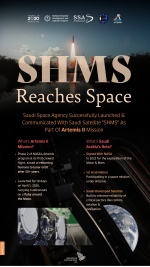
The inaugural mission of this program was launched on May 21st, 2023. This was a historic mission for Saudi as it launched two astronauts, the first female, Rayyanah Barnawi, and the second male, Ali Alqarni, into space, to the International Space Station (ISS), at a 408 km altitude above Earth, on a short-stay mission, namely, 10 days. On this mission, the Saudi Space Agency engaged scientists and research institutes to develop eleven scientific microgravity research experiments focused on human health, cell science, and weather and climate science. In addition, three scientific outreach experiments were also performed engaging 12,000 students across 47 different locations in Saudi Arabia.

The Saudi Space Agency launched the kingdom’s first sustainable Human Space Flight (HSF) program, which aims to prepare Saudi cadres to become professional astronauts. These astronauts will be launched on both short and long-stay missions to conduct research for the benefit of all humanity.

The research focus areas of the HSF program will not only benefit us on Earth but will enable future missions to the Moon and Mars. These focus areas include but are not limited to physical science, human health, biology, biotechnology, biopharma, Earth Science, in-space manufacturing, and technology development.

Additionally, these research opportunities will foster international collaboration further enhancing Saudi’s role and contributions globally.

The HSF Program is a strategic program that will enable the realization of Vision 2030 through growing Saudi’s technical human capital, diversifying the economy, and expanding sectors in Saudi.


Much more information in general:

 
To view this content we will need your consent to set third party cookies.
For more detailed information, see our cookies page.


To view this content we will need your consent to set third party cookies.
For more detailed information, see our cookies page.


1776026773521.png
 
To view this content we will need your consent to set third party cookies.
For more detailed information, see our cookies page.


1781819974476.png

To view this content we will need your consent to set third party cookies.
For more detailed information, see our cookies page.


1781820233398.png
 

Saudi Arabia approves first joint satellite project with Egypt​

Cabinet backs landmark space initiative as Riyadh expands strategic tech ambitions

Last updated: June 23, 2026 | 19:11
Huda Ata, Special to Gulf News

The initiative was approved by the Saudi Cabinet during a session chaired by King Salman bin Abdulaziz in Jeddah.

The initiative was approved by the Saudi Cabinet during a session chaired by King Salman bin Abdulaziz in Jeddah.

Dubai: Saudi Arabia has approved plans to design and build its first jointly developed satellite with Egypt, ushering in a new era in space cooperation between the two Arab nations as the Kingdom expands its ambitions in advanced technologies and strategic industries.

The initiative was approved by the Saudi Cabinet during a session chaired by King Salman bin Abdulaziz in Jeddah, according to Saudi Press Agency.

Few technical details of the satellite programme were disclosed, but the approval signals growing momentum behind regional collaboration in space technologies as Gulf countries increase investments in satellite systems, earth observation capabilities and space research.

The Cabinet also approved executive regulations governing foreign ownership of real estate and endorsed the geographical areas in which non-Saudis may own property, alongside a series of international agreements covering labour recruitment, education, energy, transport and small-business development.

Among the agreements approved were labour cooperation deals with Nepal and Nigeria, an energy cooperation memorandum with Germany, an education and training agreement with the United States and an air transport services agreement with Pakistan.

The satellite initiative comes as Saudi Arabia continues to accelerate investment in high-technology sectors under Vision 2030, which seeks to diversify the economy beyond oil and build domestic capabilities in advanced industries.

The Kingdom has increasingly positioned space technologies, cybersecurity, artificial intelligence and digital infrastructure among its strategic priorities.

During the meeting, the Cabinet also reviewed the Kingdom's recent economic and development performance, highlighting Saudi Arabia's rise to 13th place globally and third among G20 nations in the 2026 World Competitiveness Yearbook. Ministers additionally welcomed the country's retention of the top global ranking in cybersecurity for a third consecutive year.


Joint Satellite Project Strengthens Saudi-Egyptian Push into Space Economy

By Middle East Observer Staff
24th June 2026

5 min. reading time

2-108-696x644.png


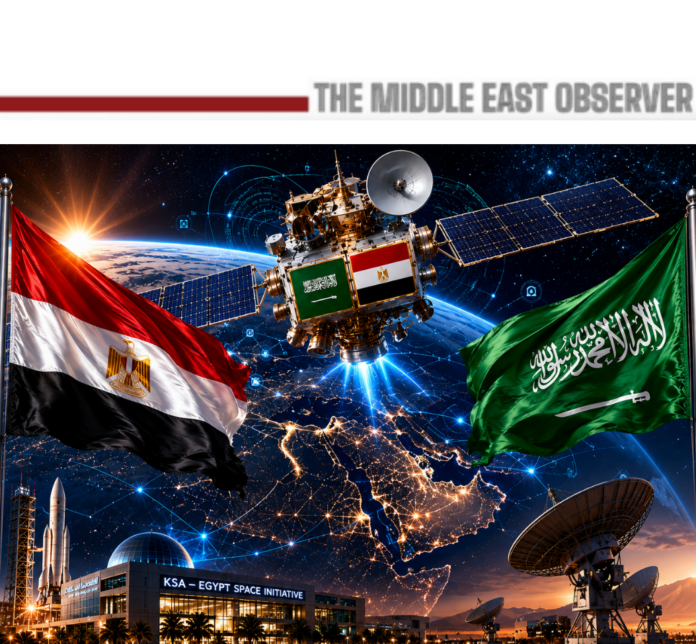
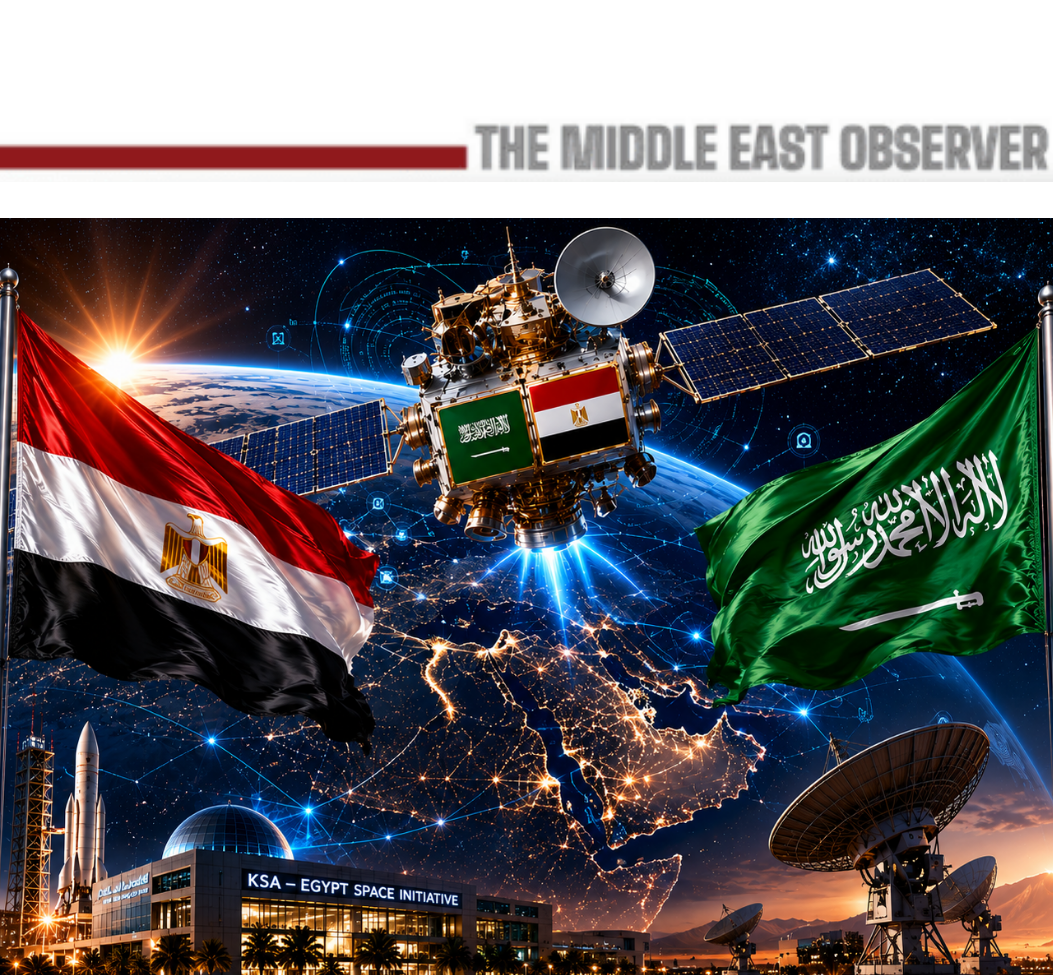
Saudi Arabia has approved an initiative to design and build the first jointly developed Saudi-Egyptian satellite, marking a significant milestone in bilateral cooperation in space technology and underscoring growing regional ambitions to develop indigenous capabilities in advanced industries.

The initiative was approved by the Saudi Council of Ministers as part of broader efforts to strengthen scientific and technological collaboration between the Kingdom and Egypt. The project is expected to become one of the most prominent examples of Arab cooperation in the rapidly evolving space sector, although technical specifications, investment costs and implementation timelines have yet to be disclosed.

The decision builds on a memorandum of understanding signed in December 2023 between the Saudi Space Agency and the Egyptian Space Agency, which established a framework for cooperation in peaceful space activities, satellite technologies, research and development, capacity building and the localisation of industries associated with space technology.

Officials from both countries have increasingly highlighted the strategic importance of developing domestic expertise in advanced technologies as part of wider economic diversification programmesaimed at reducing dependence on traditional sectors and creating new high-value industries.

Expanding​

The satellite initiative reflects the accelerating pace of investment in space programmes across the Middle East, where governments are increasingly viewing space technologies as strategic assets with applications extending far beyond scientific exploration.

Earth observation, communications, environmental monitoring, disaster management, agricultural planning and infrastructure management have become key drivers behind regional investments in satellite technologies. Governments across the Gulf and North Africa are also seeking to develop local engineering expertise and advanced manufacturing capabilities to capture a greater share of the global space economy.

According to international industry estimates, the global space economy is projected to exceed $1 trillion over the coming two decades, driven by demand for satellite communications, Earth observation services, navigation technologies and commercial space applications. As competition intensifies among major powers including the United States, China and the European Union, emerging economies are increasingly seeking positions within a sector viewed as critical to future economic competitiveness.

Saudi Arabia’s Expanding Space Strategy​

For Saudi Arabia, the project aligns closely with Vision 2030, which places technology localisation, innovation and advanced manufacturing at the centre of the Kingdom’s economic transformation agenda. The Kingdom has significantly expanded its space ambitions in recent years through astronaut missions, satellite programmes, research initiatives and investments aimed at building a domestic space ecosystem.

Saudi Arabia’s growing involvement in space activities reflects a broader effort to diversify the economy beyond hydrocarbons while creating highly skilled employment opportunities in science, engineering and advanced technologies. The Kingdom increasingly views space capabilities as an extension of its wider digital transformation and industrial development strategies.

Egypt’s Emerging Role as a Regional Space Hub​

Egypt has simultaneously positioned itself as one of Africa’s leading centres for space research and satellite development. Through major investments in the Egyptian Space Agency and Space City in Cairo, the country has expanded domestic capabilities in satellite design, assembly, integration and testing.

The establishment of the headquarters of the African Space Agency in Cairo has further strengthened Egypt’s role within the continent’s emerging space sector. Over recent years, Egyptian institutions have pursued multiple satellite programmes and international partnerships aimed at building local expertise while supporting national development priorities through satellite-based services.

The joint initiative with Saudi Arabia builds upon these foundations and could accelerate the transfer of knowledge, technical expertise and industrial capabilities between the two countries.

From Cooperation Agreements to Industrial Projects​

The satellite project signals a transition from policy coordination towards practical industrial collaboration. Rather than limiting cooperation to research exchanges and technical dialogue, the initiative seeks to create a tangible technological asset jointly designed and developed by specialists from both countries.

Industry observers view the project as an important step towards establishing a broader Arab ecosystem for space technologies, including research institutions, manufacturing facilities, engineering expertise and specialised supply chains.

The initiative could also contribute to the development of a new generation of Arab aerospace engineers and scientists while supporting future commercial opportunities in satellite services and related industries.

Technology Sovereignty and Strategic Independence​

Beyond its technological significance, the project reflects a growing emphasis on technological sovereignty across the Middle East. Governments increasingly regard access to independent satellite capabilities as essential for communications, environmental monitoring, resource management, infrastructure planning and national development strategies.

The ability to generate, process and control strategic data has become an increasingly important component of economic resilience and national competitiveness. As countries seek to reduce dependence on foreign technological infrastructure, domestic satellite capabilities are gaining strategic importance alongside investments in artificial intelligence, digital infrastructure, cybersecurity and advanced manufacturing.

For Saudi Arabia and Egypt, the initiative represents an opportunity not only to develop technical expertise but also to strengthen regional capabilities in critical technologies that are expected to play a growing role in future economic development.

Strategic and Economic Implications​

The project could create opportunities for future collaboration in Earth observation systems, communications satellites, geospatial services and commercial space applications. Analysts note that successful implementation may pave the way for additional joint ventures involving advanced technologies, research programmes and industrial partnerships.

The initiative also demonstrates the increasing maturity of Arab technology cooperation. Rather than focusing solely on technology acquisition, regional governments are placing greater emphasis on co-development, localisation and the creation of domestic industrial capacity.

Details Awaited​

While the approval marks an important policy milestone, authorities have not yet announced the satellite’s mission profile, launch arrangements, development schedule or financial structure. Additional details are expected to be released by the Saudi Space Agency and the Egyptian Space Agency during the implementation phase.

The success of the project will ultimately be measured not by the launch itself, but by whether it helps create a sustainable regional ecosystem for satellite manufacturing, engineering and space-based services capable of competing internationally. For Saudi Arabia and Egypt, the initiative represents an early test of whether Arab cooperation can translate technological ambition into industrial capability, while positioning both countries more prominently within the rapidly expanding global space economy.


Excellent step. We need more of such intra-Arab and intra-Muslim cooperation on key strategic fields and in general.
 
Last edited:
Saudi Air Force

MIDDLE EAST

Why Saudi Arabia is building an Aerospace Force


When Royal Saudi Air Force Commander Lt. Gen. Prince Turki bin Bandar announced that the establishment of the Royal Saudi Air and Space Force (RSASF) had entered its final phase, the significance was not institutional. It was operational.

The Kingdom is now formalising a military transformation that has been developing since the beginning of the Yemen war in 2015.

The merger of the Royal Saudi Air Force (RSAF) and the Royal Saudi Air Defense Forces (RSADF), along with the incorporation of expanding military space capabilities, reflects a reality already evident on the battlefield.

Air operations, missile defence, intelligence, strategic warning, and space capabilities increasingly function as parts of the same combat system. The new force simply formalises this reality.

Saudi Arabia entered Yemen in 2015 with a large, technologically advanced, and well-equipped air force.

What it lacked was not aircraft, precision weapons, or resources. It continued to conduct warfare in a conventional manner, relying on traditional concepts of air power that were better suited to limited campaigns than to managing a prolonged and highly complex theatre.

A costly learning curve

The early years revealed significant weaknesses in targeting, intelligence fusion, command and control, and shortcomings in integrating military and political objectives.

Yemen became a steep and costly learning curve. Over the following decade, the RSAF progressed from conducting basic air operations to managing the entire battlespace.

By January 2026, that evolution was evident. RSAF operations in South Yemen demonstrated a mature, integrated C6ISR architecture operating at a level very different from the early years of the war.


The removal of the Abu Dhabi-backed Southern Transitional Council (STC) military position in South Yemen demonstrated the extent of the RSAF’s progress in surveillance, targeting, operational sequencing, and theatre command.

By 2026, the RSAF was no longer using fighter jets solely to strike targets. It was employing an integrated architecture of aircraft, intelligence, surveillance, missile defence, and C2 real-time command systems to control the battle itself.

Opposing forces were responding to Saudi decisions rather than shaping events themselves.

The scale of the Saudi challenge

The scale of the Saudi challenge is often underestimated. Saudi Arabia is the largest country in the Middle East.

It contains the world’s largest continuous concentration of energy infrastructure, sits atop the world’s largest proven conventional oil reserves, and lies astride some of the most important energy and commercial maritime corridors in the global economy.


As the conflict evolved, defending the Kingdom increasingly required maintaining awareness across all of Yemen, including Bab al-Mandab, Socotra Island, and the air and maritime routes connecting them.

The mission was no longer limited to defending Saudi national airspace. It became the management of a theatre stretching from the Gulf to the Red Sea, through the Arabian Sea, and the Gulf of Aden.

Retaliatory strikes against Iranian military

The same capability became evident during the Iran war that began in February 2026. By then, the RSAF had developed a standalone fused C6ISR capability able to operate independently across multiple theatres simultaneously.

Separate from American CENTCOM unified military operations, the RSAF demonstrated the ability to identify threats, execute strikes, and assess results within a single command process.

RSAF's retaliatory strikes against Iranian military and security targets were deliberately calibrated to deter attacks on Saudi critical energy infrastructure while maintaining escalation control.


At the same time, RSAF carried out simultaneous operations against Iranian-backed militia networks in southern Iraq responsible for missile and drone attacks on the Kingdom.

RSAF was no longer operating on a single front. It was managing Yemen, Iraq, and Iran simultaneously through an integrated C6ISR command system developed over a decade of war.

What began in 2015 as a large but operationally standard air force had, by 2026, evolved into a force capable of managing interconnected theatres across the region.

That evolution, more than any individual platform, explains the significance of the force now being established.

Strategic effect

The RSAF already has the scale needed to translate operational evolution into strategic effect.

It operates approximately 365 combat aircraft, including about 226 4.5 generation fighters composed of 154 F-15SA (Saudi Advanced) and 72 Eurofighter Tranche 2/3 Typhoons.

They are supported by approximately 59 F-15C/D 4.0+ fighters and around 80 Tornado IDS legacy 4.0 strike aircraft. Saudi Arabia is already the second-largest operator of the F-15 after the United States.

The air-defence architecture supporting this force is equally significant. THAAD (Terminal High Altitude Area Defense) provides the upper tier against higher-altitude ballistic missile threats, while Patriot batteries (PAC-2/PAC-3) form the middle layer, protecting critical infrastructure and population centres.

Beneath them lies a dense SHORAD network, including Shahine and Crotale-derived systems, which repeatedly proved effective against drones and low-flying threats during the Yemen and Iran conflicts.

Only the United States will have a larger layered air- and missile-defence architecture than Saudi Arabia once the Kingdom’s Patriot and THAAD deployments are complete.


One of the most important lessons from the wars in Yemen and Iran was that not every threat requires a strategic interceptor.

Ballistic missiles, cruise missiles, and drones require different defensive layers. Success resulted from integrating these layers rather than relying on a single defensive system.

The transformation extends well beyond combat aviation and missile defence.

Saudi Arabia has invested heavily in indigenous missile and unmanned systems production, with growing emphasis on domestic manufacturing of ballistic missiles, long-range strike systems, reconnaissance platforms, and one-way attack drones.

The objective is a more resilient defence-industrial base capable of sustaining prolonged operations and reducing dependence on external suppliers.

The Royal Saudi Strategic Missile Force (RSSMF) remains outside this restructuring and continues its own modernisation trajectory as Saudi Arabia's distinct strategic forces command.

Space – the next phase

Space is the next phase of the transformation. Saudi Arabia is investing heavily in geospatial intelligence, satellite constellations, secure communications, and strategic warning systems.

Modern military power increasingly depends on seeing further, identifying threats earlier, and responding more quickly.

This is where the transition from C6ISR to C7ISR becomes crucial. Cognition is not simply another sensor; it is the ability to convert information into action more rapidly than an adversary.

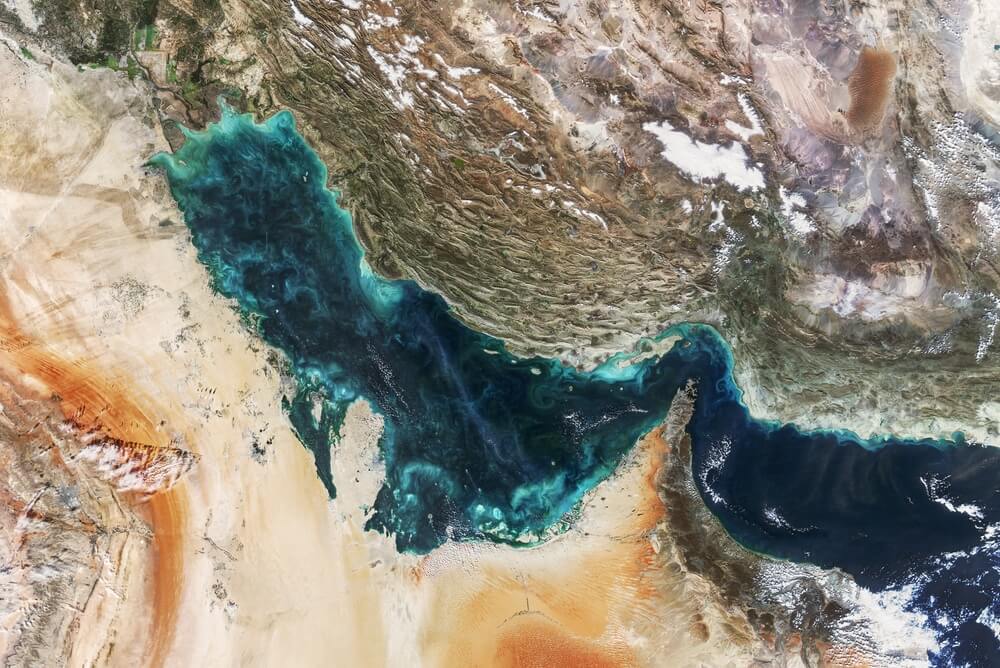
Persian Gulf Satellite
Saudi Arabia is investing heavily in geospatial intelligence, satellite constellations, secure communications, and strategic warning systems
The RSASF is integrating aircraft, missile defences, drones, intelligence systems, and space-based assets under a single command capable of managing the battlespace rather than merely participating in it.

Many programmes for modernising military systems, improving readiness, and strengthening institutional performance are underway. These reforms matter because sophisticated equipment alone does not create military power. Institutions do.

Saudi Arabia entered Yemen in 2015 with a large but operationally standard air force. A decade later, it fields a very different force.

It is supported by a layered missile defence network, increasing indigenous missile and drone production, expanding space capabilities, and an integrated command and control system tested in Yemen, Iraq, and Iran.

What RSASF is now building is the structure designed to preserve, expand, and exploit this over the next generation.

Dr Nawaf Obaid is a Senior Research Fellow at the Department of War Studies, King’s College London.

(The views expressed in this article are those of the author and do not necessarily reflect the editorial position of Tomorrow's Affairs.)


AlUla Manara: Where the Desert Meets the Stars​

02 AlUla Credit NOD 2

In AlUla, amid the golden silence of the Saudi desert, the sky still retains a rare purity.

Here, the stars are not merely distant points of light, but ancient presences—silent guides that have guided travelers, merchants, and communities for millennia. It is from this millennia-old dialogue between Earth and the universe that AlUla Manara was born, destined to become one of the world’s most fascinating destinations for astronomy, scientific research, and astro-tourism.

Because there are places where the sky is not merely a backdrop.

It is memory, guidance, and narrative. It is an ancient presence, capable of guiding peoples, merchants, travelers, and dreamers through the silence of the desert.

AlUla is one of these places.

In the heart of northwestern Saudi Arabia, beneath some of the clearest and darkest skies on the planet, AlUla Manara is taking shape—a destination dedicated to astronomy, scientific research, and astro-tourism, designed to transform stargazing into a profound, immersive, and memorable experience.

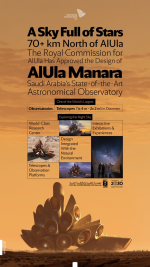
Designed by Heatherwick Studio, the project will be more than just an observatory. It will be a place where science meets wonder, architecture dialogues with the landscape, and humanity once again looks up at the universe with the same curiosity as always, but with new tools.

Located within the world’s third-largest Dark Sky Park, AlUla Manara is situated in a region where the night sky still retains its original purity. Here, far from light pollution, the stars do not appear as distant points, but as a living part of the landscape. Once, they served as a compass, a myth, a calendar, and a story.

Today, they also represent research, education, innovation, and the future.

The project aims precisely to preserve this millennia-old connection between AlUla and the sky,bringing it to life for visitors through a contemporary vision. Immersive exhibitions, galleries, a planetarium, panoramic terraces, research spaces, and areas dedicated to learning will make Manara a destination that speaks to scholars, travelers, astronomy enthusiasts, and those who simply appreciate beauty.

Its architecture draws inspiration from the spiral forms of the universe: galaxies, planetary rings, stars, and cosmic gas. But also from nature on Earth: shells, fossils, and plants. A geometry that unites the sky and the earth, the distant and the near, the mystery of space and the living matter of the desert.

The stone cladding, inspired by the sandstone landscapes of AlUla, creates a visual dialogue with the surrounding environment. The forms seem to emerge from the ground and, at the same time, soar upward. As if the desert itself had decided to reach out toward the cosmos.

03 AlUla Credit Brick 2

AlUla Manara will also be a center for active scientific research. This means that visitors will not only enter a place of contemplation, but will also be able to engage directly with the processes of discovery. Knowledge will not remain confined to the laboratories: it will become experience, wonder, and a shared story.

This is the project’s most fascinating strength: making the sky accessible without trivializing it. Bringing the public closer to science without stripping wonder of its mystery.Transforming astronomy into a human, cultural, and emotional journey

01 AlUla Credit NOD 2

AlUla Manara is part of AlUla’s broader vision for development, where heritage, archaeology, nature, culture, sustainability, and innovation coexist on a single horizon. Following Hegra, Maraya, and the vast nature reserves, Manara represents a new chapter: that of a destination that looks not only to its own millennia-old history, but also to the future of exploration.

In this place, the night will not simply be observed.
It will be heard.
It will be experienced.
It will be understood.

Because under the sky of AlUla, the stars do not belong only to the universe. They also belong to human memory, to humanity’s thirst for knowledge, and to the eternal need to seek direction.

To view this content we will need your consent to set third party cookies.
For more detailed information, see our cookies page.


cisely the deepest meaning of Manara: to remind us that every journey toward the sky always begins at a specific point on Earth.In this case, from the golden silence of the AlUla desert.


Speaking about Al-Ula (one of the largest archeological locations on the planet)

To view this content we will need your consent to set third party cookies.
For more detailed information, see our cookies page.
(10 million views)
 

Users who are viewing this thread

Pakistan Defence Latest

Latest Posts

Back
Top