Navigation
Install the app
How to install the app on iOS
Follow along with the video below to see how to install our site as a web app on your home screen.
Note: This feature may not be available in some browsers.
More options
Style variation
You are using an out of date browser. It may not display this or other websites correctly.
You should upgrade or use an alternative browser.
You should upgrade or use an alternative browser.
SBP - Banking Sector / Federal Board of Revenue
- Thread starter ghazi52
- Start date
More options
Who Replied?

ghazi52
THINK TANK: CONSULTANT

- Thread starter
- #152
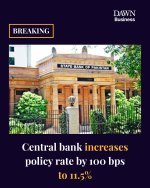
The move to raise the policy rate reflects a growing recognition of the trade-off between growth and stability
Growth to stability
EditorialApril 29, 2026
THE State Bank’s decision to raise its key policy rate by 100 basis points to 11.5pc signals a shift in priorities from supporting growth to protecting macroeconomic stability, preserving exchange rate confidence, and preventing inflation from becoming entrenched amid risks arising from the Gulf crisis.
Coming at a time when inflationary pressures are re-emerging and external vulnerabilities intensifying, the move reflects the assessment that risks to stability now outweigh gains from monetary easing. The decision also reveals a growing recognition of the trade-off between growth and stability.
Headline inflation rose to 7.3pc in March, while core inflation edged up to 7.8pc, and is expected to stay above the medium-term target range of 5-7pc for much of the next fiscal as higher global oil prices feed into domestic costs.
“Inflation was projected to increase up to the upper bound of the target range even before the onset of the Middle East conflict, mainly due to adverse base effects,” the monetary policy noted.
In this context, the SBP governor said the rate hike was a “pre-emptive move” to contain second-round effects before they became entrenched. Policy tightening, therefore, aims to prevent current price pressures from spilling into core inflation, particularly through higher transport and production costs, which can lead to broader price increases.

Fatman17
Moderator

FBR Shockingly Misses Out on a Lowered 10-Month Tax Target by Rs. 683 Billion
The Federal Board of Revenue (FBR) has once again failed to meet its tax collection target, with the shortfall widening to Rs. 683 billion during the
 share.google
FBR misses lowered tax target
Fatman17
Moderator
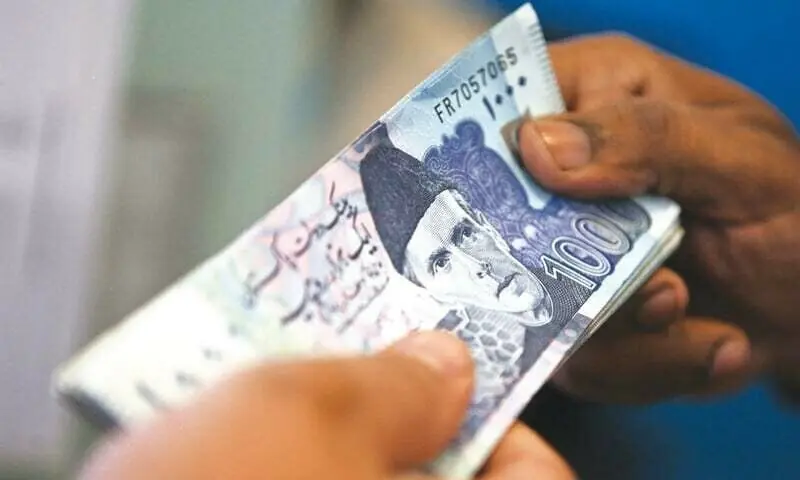
Banks favour govt papers over loans
Investments hit Rs39.1tr, IDR at 104.3pc as private lending stays weak.
share.google
Fatman17
Moderator

Five Biggest Threats to Pakistan’s Financial Stability Revealed in Latest SBP Survey
Global geopolitical tensions, domestic security risks, commodity price volatility, natural disasters, and cybersecurity threats have emerged as the five
share.google
5 biggest risks to Pakistan financial stability.
Population growth is not one of them. Thinking

Fatman17
Moderator
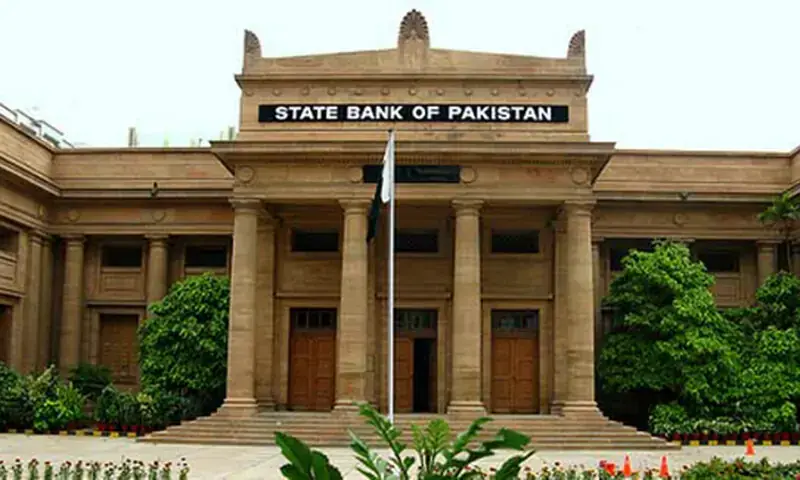
Banking sector expands 17.8pc during calendar year 2025
SBP report says growth mainly driven by investment in govt securities.
share.google
banking sector expands 18%
Fatman17
Moderator

RAAST Transactions Hit Rs. 50 Trillion As Pakistanis Switch to Online Payments
Pakistan’s digital payments landscape expanded rapidly in 2025, with transactions through the State Bank of Pakistan’s (SBP) instant payment system RAAST
share.google
RAAST transactions hit 50 trillion

Pakistani Dragon
Elite Member

PM Shehbaz approves tax litigation system
Mubarak Zeb KhanPublished May 6, 2026
Prime Minister Shehbaz Sharif chairs a meeting in Islamabad on May 5, 2026. —screengrab via video from PMO/x
ISLAMABAD: Prime Minister Shehbaz Sharif has approved a Centralised Litigation Management System (CLMS) and an overhaul of the tax machinery’s legal system nationwide to expedite the disposal of genuine tax litigation.
The prime minister took the decisions on the recommendations of a task force headed by former senior Inland Revenue Service (IRS) officer Shad Muhammad Khan, who helped reconcile litigation cases at the Supreme Court and facilitated the resolution of around 1,800 cases within a year.
The task force report revealed that the total number of tax cases pending before the Supreme Court of Pakistan stood at 2,800, significantly lower than the 5,000 to 6,000 cases earlier cited by the Federal Board of Revenue (FBR).
Of the total, around 1,600 cases pertained to IRS matters, while approximately 1,200 were related to customs disputes, according to the report presented to the prime minister. Moreover, officials informed the meeting that decisions on tax disputes through the Alternate Dispute Resolution (ADR) forum have so far generated Rs24 billion for the national exchequer this year.
CLMS aims to speed up dispute resolution with transparency
The prime minister directed the head of the task force, Shad Muhammad Khan, to submit a report within one week with a timeline for the implementation of the CLMS. He said the CLMS should be established at the earliest. He also instructed officials to engage competent human resources in the legal wing of the FBR as required, ensuring that merit is strictly observed in all such appointments.
Officials said the proposed system is expected to significantly reduce misreporting of legal cases and the amount of tax involved, while improving transparency and accuracy in case management.
During the meeting, the task force presented a six-point reform-based action plan. The plan includes the formation of case scrutiny committees, the establishment of the CLMS, linking the performance reports of officers, including commissioners, with litigation outcomes, as well as introducing other institutional reforms.
It was stated that a digital CLMS will be developed to organise tax litigation data. The new system will improve tracking and reporting of tax disputes, facilitating their timely resolution.
Under the approved plan, the legal system of the FBR will be overhauled through the appointment of directors of tax law at provincial or regional levels.
These directors will coordinate with officers at the additional level designated as legal officers at each RTO to strengthen case management and oversight. Officials said the directors, in coordination with field formations, will pursue tax litigation at high courts and tribunal levels to ensure more effective legal representation.
An official announcement issued by the Prime Minister Secretariat said that the premier stated that ongoing digitisation and reforms in the FBR were yielding positive results.
The prime minister appreciated the efforts of Mr Shad and others for preparing the report with dedication and hard work. He approved the action plan presented by the task force and directed that it be submitted with clear timelines.
The prime minister further instructed that the Alternate Dispute Resolution system be made more effective for the swift resolution of tax disputes. He said this would reduce the burden on courts and ensure timely decisions in tax-related cases.
Fatman17
Moderator

Reforming Pakistan’s tax policy
A system at odds with growth Pakistan’s tax system is increasingly at odds with the country’s core economic...
share.google
Reforming Pakistan’s tax policy
ghazi52
THINK TANK: CONSULTANT
- Thread starter
- #160
SBP projects Pakistan’s FY26 GDP growth at 3.75-4.75%, warns of Middle East war risks
- ME war impact on overall economic activity is not expected to be significant in FY26, says SBP
By BR Web Desk
Despite headwinds from global trade-related uncertainty and domestic floods, Pakistan’s macroeconomic stability strengthened further in H1-FY26, as revealed in the State of Pakistan’s Economy, Half Year Report FY26, released on Tuesday.
The central bank report noted that the Middle East War poses significant risks to the macroeconomic outlook amid heightened uncertainty, where supply chain disruptions are likely to impact inflation trajectory, external trade and remittance flows, and the economic activity in Pakistan.
“However, its impact on overall economic activity is not expected to be significant in FY26,” SBP said.
In its report, the SBP projects real GDP growth close to the lower bound of the earlier projected range of 3.75 to 4.75 percent for FY26.
“Despite momentum in economic activity and higher commodity prices, the current account deficit is now expected to be close to the lower bound of the earlier projected range of 0 to 1 percent of GDP.
“However, a surge in international oil prices and its impact on other commodity prices are expected to keep the NCPI inflation above the upper bound of the medium-term target range of 5 to 7 percent for most of FY27,” it added.
ghazi52
THINK TANK: CONSULTANT
- Thread starter
- #161
Moreover, workers’ remittances may also be impacted in Q4-FY26, considering that remittances from the GCC countries contributed around 55 percent of total remittances between FY21-FY25, said SBP.
“However, on a full-year basis, remittances are expected to remain strong in FY26, which would partially offset the widening in the trade deficit.”
The central bank report noted that economic indicators improved significantly in H1-FY26.
The average National CPI inflation eased further, while SBP’s FX purchases and net financial inflows shored up external buffers.
“These outcomes were supported by prudent monetary and fiscal policies, ongoing structural reforms, favourable commodity prices and an IMF [International Monetary Fund] program. Specifically, SBP continued a cautious monetary policy stance, maintaining an adequately positive real interest rate on a forward-looking basis, while fiscal balance posted a surplus in H1-FY26.
“The macroeconomic stability, in turn, facilitated growth momentum,” it said.
SBP noted that the spike in energy prices and increased insurance and freight charges are also expected to inflate Pakistan’s import bill and freight service payments.
“However, on a full-year basis, remittances are expected to remain strong in FY26, which would partially offset the widening in the trade deficit.”
The central bank report noted that economic indicators improved significantly in H1-FY26.
The average National CPI inflation eased further, while SBP’s FX purchases and net financial inflows shored up external buffers.
“These outcomes were supported by prudent monetary and fiscal policies, ongoing structural reforms, favourable commodity prices and an IMF [International Monetary Fund] program. Specifically, SBP continued a cautious monetary policy stance, maintaining an adequately positive real interest rate on a forward-looking basis, while fiscal balance posted a surplus in H1-FY26.
“The macroeconomic stability, in turn, facilitated growth momentum,” it said.
SBP noted that the spike in energy prices and increased insurance and freight charges are also expected to inflate Pakistan’s import bill and freight service payments.
ghazi52
THINK TANK: CONSULTANT
- Thread starter
- #163
“The landmark Panda Bond issuance of RMB 1.75 billion (equivalent to US$250 million) attracted overwhelming investor demand of over RMB 8.8 billion (approximately US$1.26 billion), resulting in an oversubscription of more than 5 times,” he added.
“The strong order book enabled highly competitive pricing (2.5% coupon), demonstrating the market’s positive assessment of Pakistan’s improving macroeconomic fundamentals, external stability, disciplined fiscal management, and sovereign repayment capacity.”
According to the advisor, the issuance was more than a financing transaction as it marked Pakistan’s entry into China’s capital market and strengthened of Pakistan-China financial cooperation.
- Panda Bonds are yuan-denominated bonds issued by foreign governments or institutions in China.
“The strong order book enabled highly competitive pricing (2.5% coupon), demonstrating the market’s positive assessment of Pakistan’s improving macroeconomic fundamentals, external stability, disciplined fiscal management, and sovereign repayment capacity.”
According to the advisor, the issuance was more than a financing transaction as it marked Pakistan’s entry into China’s capital market and strengthened of Pakistan-China financial cooperation.

Users who are viewing this thread
Total: 2 (members: 0, guests: 2)
Pakistan Defence Latest
-
 Bangladesh Lists 2 Riders For PM Rahman's India Visit. One Is Hasina Return (4 Viewers)
- Latest: Vikramaditya1
-

-
-
-

Country Watch Latest

Latest Posts
-

-

-

-
Trump scales back US-South Korea drills, cites 'very good' ties with Kim Jong Un (8 Viewers)
- Latest: KingQamaR
-