Sea Port / Dry Port and Maritime Updates.

AD Ports Group, LDC partner to upgrade Karachi Port agricultural logistics

  • Agreement is a milestone in advancing bilateral trade and economic development between the UAE and Pakistan

AD Ports Group, a UAE-based logistics company, announced on Friday that Karachi Gateway Terminal Multipurpose Limited (KGTML), part of Noatum Ports, the international ports operating arm of AD Ports Group, and Louis Dreyfus Company Pakistan (Private) Limited, a subsidiary of leading global merchant and agricultural goods processor Louis Dreyfus Company (LDC), has inked a long-term commercial agreement to develop and operate a modern clean bulk handling and storage facility for agricultural goods at Karachi Port.

Under the agreement, KGTML will invest in the design and construction of a highly efficient, food-grade clean bulk facility, including a handling and conveyor system along with associated infrastructure and utilities, to support the efficient handling and storage of dry agricultural bulk cargo, while LDC has committed to providing an inbound volume of agricultural commodities, according to a press statement.

“LDC will leverage the new infrastructure as part of its plans to grow its presence in Pakistan. The investment is in addition to the $75 million previously committed by AD Ports Group during phase one of the KGTML project,” it said.


The company was of the view that the partnership brings together two companies within the portfolio of ADQ to strengthen Pakistan’s agricultural supply chain and port logistics ecosystem.

A Strategic Investment and Infrastructure Utilisation Agreement was signed in Abu Dhabi by Mohammed Al Tamimi, CEO of Noatum Ports, and Rubens Marques, Head of South and Southeast Asia for LDC.

“The new facility will enhance efficiency, reduce handling times and improve the resilience of Pakistan’s agricultural logistics network, in line with international food safety and operational standards,” it said.

Moreover, the agreement marks another significant milestone in advancing bilateral trade and economic development between the UAE and Pakistan.

“This collaboration reflects a shared commitment to strengthening Pakistan’s agricultural supply chain and port logistics ecosystem,” said Mohammed Al Tamimi, Chief Executive Officer of Noatum Ports.

“As a key gateway for regional trade, KGTML plays a vital role in enhancing connectivity and driving efficiency across Pakistan’s maritime sector. This development will significantly upgrade the country’s logistics infrastructure, creating new growth opportunities, and reinforcing Karachi Port’s position as a critical hub for international commerce.”

Rubens Marques, LDC’s Head of South and Southeast Asia, said: “This development reflects our long-term commitment to the country, where we have been operating for over 15 years, and our confidence in its growing role in global agricultural trade. The facility will be a key lever as we work to enhance our supply chain capabilities for the benefit of our business partners upstream and downstream in Pakistan, the region and beyond.”

In addition to KGTML, AD Ports Group is also developing, operating and managing the Karachi Gateway Terminal Limited (KGTL) container terminal at Karachi Port.
 

Chinese group eyes €2bn integrated maritime project at Pakistan’s Port Qasim​

BR Web Desk
181141507678fc0.webp

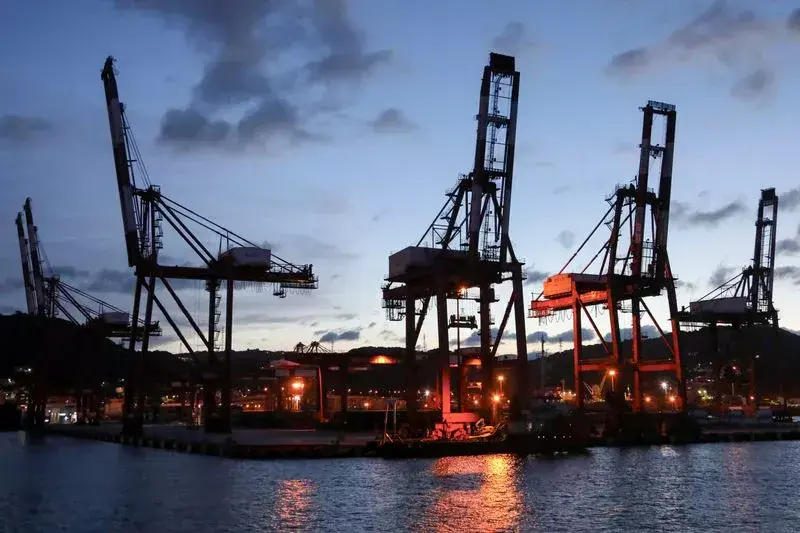
China’s Shandong Xinxu Group has pitched a multi-billion-euro integrated maritime and industrial project at Port Qasim, one of Pakistan’s key ports, marking one of the largest proposed foreign investments in Pakistan’s maritime sector in recent years.

A five-member delegation from China’s Shandong Xinxu Group has met Federal Minister for Maritime Affairs, Muhammad Junaid Chaudhry to discuss a proposed Integrated Maritime Industrial Complex (IMIC) at Port Qasim.

According to a statement released on Thursday, the delegation, led by the company’s chairman Hou Jianxin, discussed a proposal for the project, estimated to cost between €1 billion and €2 billion, aimed at revitalising Pakistan’s maritime and heavy industrial base.

The proposed IMIC would comprise three main components, including the revival of the Iron Ore and Coal Berth (IOCB) Jetty, commonly referred to as the steel jetty, the establishment of shipbuilding and shipbreaking facilities, and the setting up of a steel mill integrated with port operations.

As per the statement, the IOCB was designed to handle bulk cargo, including iron ore and coal, primarily for Pakistan Steel Mills (PSM). The jetty can accommodate vessels ranging between 55,000 and 75,000 deadweight tons (DWT) and is connected to the steel mill through a dedicated conveyor system spanning approximately 4.5 to 8 kilometres, linking directly to stockyards and blast furnaces.

It is pertinent to mention that Shandong Xinxu Group, a major Chinese high-tech enterprise involved in renewable energy, battery manufacturing equipment, and industrial projects, particularly known for driving significant investment and development in Pakistan’s maritime, mining, and industrial sectors.

During the meeting, the federal minister welcomed the interest shown by the Chinese group and asked the delegation to submit an unsolicited proposal outlining plans and a comprehensive roadmap for the proposed project.

Chaudhry emphasised that the roadmap should include clearly defined core concepts, detailed implementation plans and feasibility studies covering technical, financial and environmental aspects.

Following the submission of the comprehensive report, a committee comprising members from the Ministry of Maritime Affairs and Shandong Xinxu Group, led by Additional Secretary Umar Zafar Sheikh, will review the proposal.

The minister underscored the importance of ensuring that the project aligns with Pakistan’s broader industrial and sustainability goals, particularly in terms of job creation, value addition and environmentally responsible development.

The IMIC concept was first unveiled by the minister in November 2025 at an event hosted by Port Qasim Authority in Karachi to mark the port’s recognition as the world’s ninth most improved container port.

If approved, the project could represent one of the largest recent investments in Pakistan’s maritime and industrial sectors, strengthening Port Qasim’s role as a regional hub for heavy industry and logistics.
 

UAE’s AD Ports Group sets up Pakistan logistics JV, takes majority control

  • AD Ports Group will acquire a 51% majority shareholding in the new entity
BR Web Desk
AD Ports Group, a UAE-based logistics company, announced the formation of a new joint venture (JV) with CEI Supply Chain Private Limited, a Pakistani logistics service provider, to develop an asset-light network delivery system.

Under terms of the agreement, AD Ports Group will acquire a 51% majority shareholding in the new entity, further solidifying its presence in Pakistan, a key South Asian market and gateway to the Group’s Central Asia corridor, read a statement.

The new company will leverage CEI’s operational footprint in Pakistan, which includes key offices in Karachi, Lahore, Sialkot, and Islamabad. By integrating these local capabilities with AD Ports Group’s global reach, the JV aims to capture a significant share of the market, particularly in high-growth verticals such as automotive, retail, fast-moving consumer goods (FMCG), and energy.

The new joint venture will be consolidated into AD Ports Group starting in Q1 2026.

“Pakistan is a vital trade gateway for the region, and today’s agreement is a natural evolution of our presence,” said Abdulaziz Zayed Al Shamsi, Regional CEO - AD Ports Group.

“Having secured key port infrastructure and initiated capacity upgrades, we are now entering the hinterland to offer fully integrated logistics solutions,“ he added.
 
“Partnering with a leading integrated trade enabler such as AD Ports Group is a transformative step for CEI, which will support the wider logistics sector in Pakistan,” said Sohail Yasin Suleman, Group Chairman, World Wide Group.

“By aligning our strong local networks and legacy client relationships with AD Ports Group’s global expertise, we are creating a platform that will secure end-to-end business and elevate the standard of logistics services in the country.“

The joint venture agreement caps a year of expansion for AD Ports Group in Pakistan, where the Group has established itself as a major investor in the Port of Karachi.

To date, AD Group has committed $295 million towards developing and enhancing its terminals in Karachi, and in addition, the group recently reached a long-term agreement with Louis Dreyfus Company (LDC), a leading agricultural goods processor, to develop a clean bulk storage facility at Karachi Port, further increasing its investment commitment into the country.
 
Didn't want to start a new thread but this guy apparently connected with President Trump and seems like has faith in Pakistan mentions a 'non China controlled port' in Pakistan as preference for the Americans to be engaged in Pakistan's mineral sectar. A great short interview anyway! "Copper for Pakistan is like oil to Saudi Arabia" [paraphrased].


To view this content we will need your consent to set third party cookies.
For more detailed information, see our cookies page.
 

PM Shehbaz orders massive port reforms to slash business costs, cargo delay

  • Premier orders transparent auctioning system
BR Web Desk

Prime Minister Muhammad Shehbaz Sharif on Wednesday directed port authorities to drastically reduce cargo “dwell time” and eliminate unnecessary laboratory testing to facilitate the business community and bolster national economic growth.

Chairing a high-level meeting of the private sector working group on port development, the prime minister emphasised that Pakistan’s maritime gateways are the backbone of the economy. He instructed that various port charges be further reduced to make Pakistani exports more competitive in the global market.

The prime minister directed that rail connectivity from ports must be upgraded to improve the inland transportation of goods. Dredging and expansion work at all ports—particularly in Karachi—must be accelerated to accommodate larger vessels, he said, adding that tenders for these projects have already been issued.

To prevent delays, initial cargo testing laboratories should be established within the port premises, and redundant lab tests must be abolished, he ordered.
 
KARACHI:
Construction of a 1,100 twenty-foot equivalent unit (TEU) container vessel for the Pakistan National Shipping Corporation (PNSC) has been launched at Karachi Shipyard and Engineering Works (KSEW), as the government seeks to strengthen the country's maritime capacity and reduce dependence on foreign carriers.

According to an official statement issued on Tuesday, the steel-cutting ceremony was inaugurated by Federal Minister for Maritime Affairs Muhammad Junaid Anwar Chaudhry.

Addressing the ceremony, the minister said the project marked a strategic milestone for the maritime industry, saying it reflected the government's commitment to revitalising the shipping and shipbuilding sectors and aligned with national economic priorities. He said the 1,100-TEUvessel was being constructed using domestic resources and expertise, reflecting the country's shipbuilding capabilities.

The minister noted that adding the 1,100-TEU ship to the PNSC fleet would help reduce freight payments to foreign shipping lines, thereby conserving foreign exchange, and would strengthen the corporation's ability to support Pakistan's import and export trade. He said nearly 95% of Pakistan's trade volume is transported by sea, underlining the importance of a functional maritime sector for economic stabilityand growth. Shipping and ship repair, he added, are central components of the National Maritime Policy.

The project is also expected to generate employment for skilled and semi-skilled workers and contribute to industrial activity and technology transfer at Karachi Shipyard.
 
To view this content we will need your consent to set third party cookies.
For more detailed information, see our cookies page.
 

Ferry terminal inaugurated at Karachi Port Trust

  • Move described as a 'gateway to economic opportunities, tourism promotion and regional connectivity'
BR Web Desk
January 8, 2026

Federal Minister for Maritime Affairs Muhammad Junaid Anwar Chaudhry on Tuesday inaugurated a ferry terminal at Karachi Port Trust (KPT), describing the initiative as a landmark move to promote regional and coastal tourism while strengthening Pakistan’s blue economy.

Addressing the inauguration ceremony, the minister said the launch of ferry services will help materialise the long-standing vision of introducing modern, safe and sustainable maritime passenger transport in Pakistan, read a statement.

He added that the ferry service, which is expected to commence later this month, aligns with the vision of the Prime Minister to harness the vast potential of the blue economy and diversify maritime-related economic activities.

“This ferry service is not just a transport initiative but a gateway to economic opportunities, tourism promotion and regional connectivity,” Chaudhry said. He noted that this was the first-ever ferry service licence issued in the history of Pakistan, calling it a historic achievement for the maritime sector.


The minister said the inauguration of the terminal would further strengthen confidence and trust among the business community.

Highlighting the growing interest of investors, Chaudhry shared that more businessmen had shown keen interest in obtaining licences to operate ferry services. He expressed confidence that increased private sector participation would lead to a boom in maritime tourism, opening new avenues for employment, hospitality, transport and allied industries.

The minister urged the business community to come forward with innovative ideas and proposals for doing business with Pakistani ports. “We welcome new concepts and investments, and the ministry will extend full cooperation and facilitation to ensure their success,” he said.
 

After PIA, Arif Habib sets sights on ‘blue economy’

Muhammad Ali
January 12, 2026

KARACHI: Fresh from acquiring a controlling stake in Pakistan International Airlines (PIA), prominent businessman Arif Habib has set his sights on Pakistan’s blue economy and the National Shipping Corporation (PNSC), signalling an intent to tap the country’s underdeveloped maritime potential.

Speaking to journalists at Naya Nazimabad Gymkhana on Sunday, the 73-year-old industrialist revealed that the new PNSC management has invited him for discussions about the future corporation.

The sustainable commercial utilisation of ocean resources is a largely untapped frontier for Pakistan, with an estimated potential of over USD100 billion. Currently, the sector contributes less than 0.5 percent to the national GDP.

On the other hand, there are reports that PNSC has planned to grow its fleet from the current 10 vessels to 54 ships by 2030 to grab the major chunk of an estimated USD6 billion annually, being paid as foreign freight charges to international shipping lines.
 
the 73-year-old industrialist revealed that the new PNSC management has invited him for discussions about the future corporation.

Isn't the new management Fauji Group?
 

Reforms help maritime sector earn Rs100b

Minister terms 2025 transformative year, marked by new legislation, digitisation

Our Correspondent
January 25, 2026

1769464830137.jpeg
Federal Minister for Maritime Affairs Junaid Anwar Chaudhry

ISLAMABAD: The maritime sector posted a record profit of Rs100 billion ($360 million) in 2025 after a year of sweeping reforms that improved port efficiency, reduced costs and cleared long-delayed policies aimed at positioning the country as a regional trade and logistics hub.

It was stated by Federal Minister for Maritime Affairs Muhammad Junaid Anwar Chaudhry in a statement on Saturday.

Outlining the ministry's annual performance, Chaudhry described 2025 as a "transformative year" marked by more than two dozen initiatives spanning legislation, digitisation, infrastructure development and human resources.

"These reforms are modernising our ports, shipping and fisheries to unlock the true potential of the blue economy,"
he said, adding that Pakistan had aligned its regulatory framework with international standards, including conventions of the International Maritime Organisation and the Hong Kong Convention on ship recycling.

The minister stressed that a central plank of the overhaul was the finalisation of the National Maritime Policy, which brings shipping, ports, fisheries and maritime security under a single framework to guide sustainable growth. "The government also approved the National Shipping Policy aimed at expanding the Pakistan-flagged fleet to reduce reliance on foreign carriers, a longstanding drain on foreign exchange."

Chaudhry said stakeholder consultations had been concluded on the National Fisheries and Aquaculture Policy, which targets annual seafood exports of $2 billion and the creation of around two million jobs across coastal communities and allied industries. Operational performance at the country's main ports improved markedly during the year, he mentioned. Karachi Port handled a record 54 million tonnes of cargo, while average vessel dwell time was slashed by 24 to 36 hours through close coordination among port authorities, customs and other agencies aimed at average turnaround of five days, in line with regional benchmarks.

Apart from that, cost-cutting measures delivered substantial savings. Reduced overtime at the Karachi Port Trust alone saved about Rs70 million a month, while the abolition of 2,152 redundant posts across maritime entities lowered human resources cost by billions of rupees.
 
PNSC boosts maritime strength with induction of new oil tanker MT Karachi

1769694206318.jpeg

Web Desk
January 28, 2026


The Pakistan National Shipping Corporation (PNSC) has further strengthened its fleet with the induction of a new oil tanker, MT Karachi, which arrived at Karachi Port on Tuesday with its maiden cargo.

The tanker sailed in from a Gulf country carrying crude oil for the National Refinery, completing its first voyage to Pakistan since becoming part of the national fleet.

Officials said the vessel was acquired for $74 million as part of a broader strategy to enhance Pakistan’s shipping capacity and cut dependence on foreign shipping lines for energy transportation.

With the addition of MT Karachi, the PNSC fleet has expanded to 13 ships. Authorities also disclosed that two more vessels are scheduled to join the fleet next month, further boosting the country’s maritime and energy logistics capabilities.
 

Pakistan secures $3mn GEF funding for marine biodiversity, sustainable fisheries

  • $1.2mn targets biodiversity interventions, while $1.8mn addresses land degradation linked to coastal and marine ecosystems
BR Web Desk

Minister for Maritime Affairs, Muhammad Junaid Anwar Chaudhry announced on Saturday Pakistan had secured $3 million from the Global Environment Facility (GEF) to conserve marine biodiversity and accelerate a shift toward sustainable and regenerative fisheries management.

In a statement, the maritime minister said the project titled ‘Conserving marine biodiversity by accelerating transition to sustainable and regenerative fisheries management practices’ would be executed by the Ministry of Maritime Affairs.

Proposed by the Ministry of Maritime Affairs through the Ministry of Climate Change and Environmental Coordination, it aligns with national priorities and global environmental commitments, developed in consultation with stakeholders.

“Of the total funding from the GEF Trust Fund, $1.2 million targets biodiversity interventions, while $1.8 million addresses land degradation linked to coastal and marine ecosystems”, the minister satated.

GEF supports initiatives in biodiversity, climate change, international waters, land degradation, chemicals and waste, and sustainable forest management as the financial mechanism for major conventions including the UN Framework Convention on Climate Change (UNFCCC), Convention on Biological Diversity (CBD), and others.

Minister Junaid Chaudhry highlighted the fisheries sector’s challenges, which contribute about 1% to Pakistan’s GDP. “Our sector faces overfishing, high post-harvest losses, and illicit practices that strain marine environments,” he said.
 
“With 701 boats in tuna fishing, mostly artisanal with some semi-industrial, unselective methods and poor onboard storage lead to waste and lost market opportunities.”

Pakistan, a key player in the Indian Ocean Tuna Commission (IOTC) and aligned with G16 like-minded coastal states, struggles with unreliable data, weak regulations, and over 70 unofficial landing sites that hinder monitoring, control, and policy-making.

Junaid Chaudhry said the programme aims to leverage political momentum for growth through data collection, policy reform, infrastructure, capacity building, market access, transparency, and better management.

“It builds on commitments like reducing fishing effort, declaring Marine Protected Areas, and cutting bycatch, while advancing traceability and practices,” Junaid Chaudhry added.

Despite progress, persistent issues like overfishing, losses, and non-compliance demand urgent action.

According to the minsiter, the initiative fills critical gaps, modernises the sector, improves fisherfolk livelihoods, and boosts international effectiveness.

“Addressing these will meet national and global commitments, delivering environmental benefits,” he noted. “This recognises fisheries’ economic role and catalyzes transformation for ecological integrity and socio-economic development, aligned with policy frameworks for maximum impact.”
 

Users who are viewing this thread

Back
Top