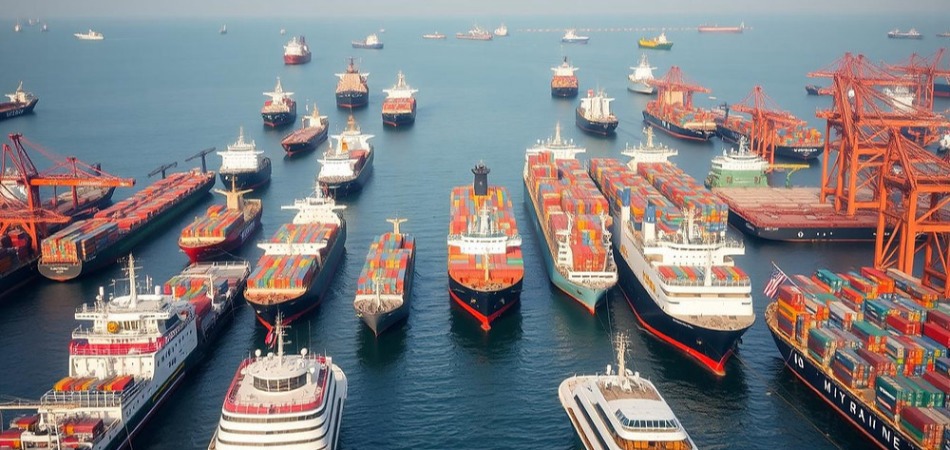
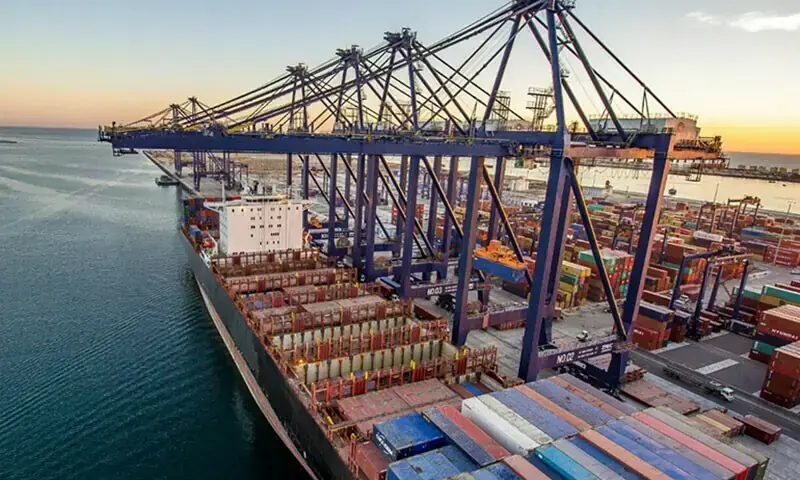
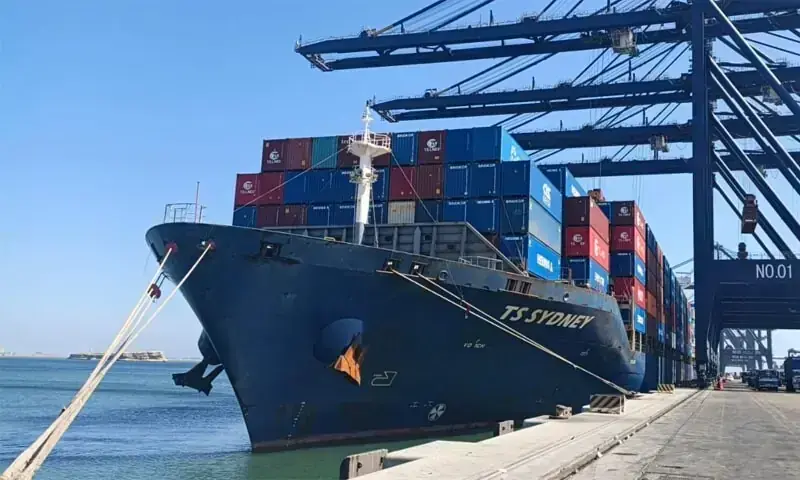
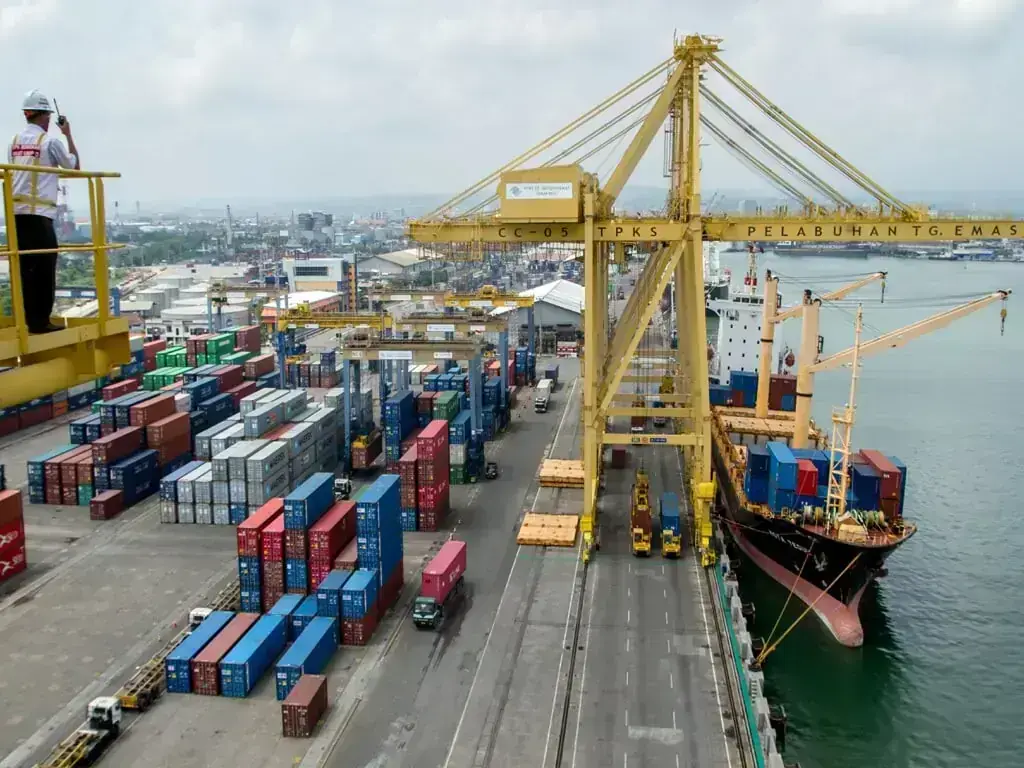
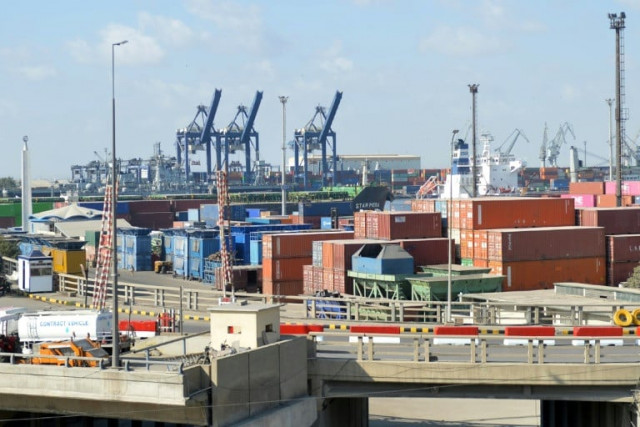
Sea Port / Dry Port and Maritime Updates.

The vessels using Karachi and Gwadar right now represent a "who's who" of global shipping, as nearly every major international line has had to abandon the Strait of Hormuz.

Because Pakistani ports sit just outside the primary conflict zone but remain close enough to the Gulf to serve as a drop-off point, they are being used by a diverse range of national and commercial interests.

Major Global Shipping Lines (The "Big Four")

The most significant volume comes from the world's largest container carriers, which have declared "End of Voyage" for Gulf-bound cargo and are instead offloading in Pakistan.

MSC (Switzerland/Italy): The world’s largest line has been a primary driver of the surge, offloading GCC-bound containers in Karachi to be moved later by land or smaller feeder ships.

Maersk (Denmark): Has diverted several major services (like the ME11 and MECL) to Pakistani ports to avoid the insurance exclusion zones in the Gulf.

CMA CGM (France): Actively using Karachi and Gwadar as "shelter" and transshipment points for cargo originally destined for the UAE and Kuwait.

Hapag-Lloyd (Germany): Using Karachi’s deep-water terminals to stage cargo while navigating the regional "Cape of Good Hope" diversions.

Regional and Feeder Vessels

While the giant "mother ships" drop cargo in Pakistan, a second wave of smaller vessels is picking it up to shuttle it to ports just outside the Strait (like Fujairah, UAE).

Singaporean Tankers: Multiple vessels, such as the MT Nave Atropos, have been recorded delivering massive quantities of gasoline and fuel to Port Qasim to stabilize the region’s energy supply.

Omani and Iraqi Vessels: Ships like the Navigator Atlantic (Oman) and Navigator Aries (Iraq) are using Pakistani ports for petroleum transshipment, bypassing the blocked northern Gulf routes.

UAE-based Feeders: New dedicated services have launched (such as those by Global Feeder Shipping - GFS) to link Karachi directly with the UAE’s East Coast ports.

Strategic and Defense-Linked Vessels

China: As the primary developer of Gwadar, Chinese state-owned COSCO vessels continue to prioritize the port. Additionally, the Chinese Navy (including the warship Daqing) is currently in Karachi for joint exercises (Sea Guardian IV), providing a visible security presence for Chinese merchant ships in the area.

Saudi Arabian Reroutes: Saudi Arabia has been using its East-West pipeline to move oil to the Red Sea, and some of that supply is being shipped to Pakistan (from Yanbu) for further distribution to Asian markets that cannot access the Persian Gulf.
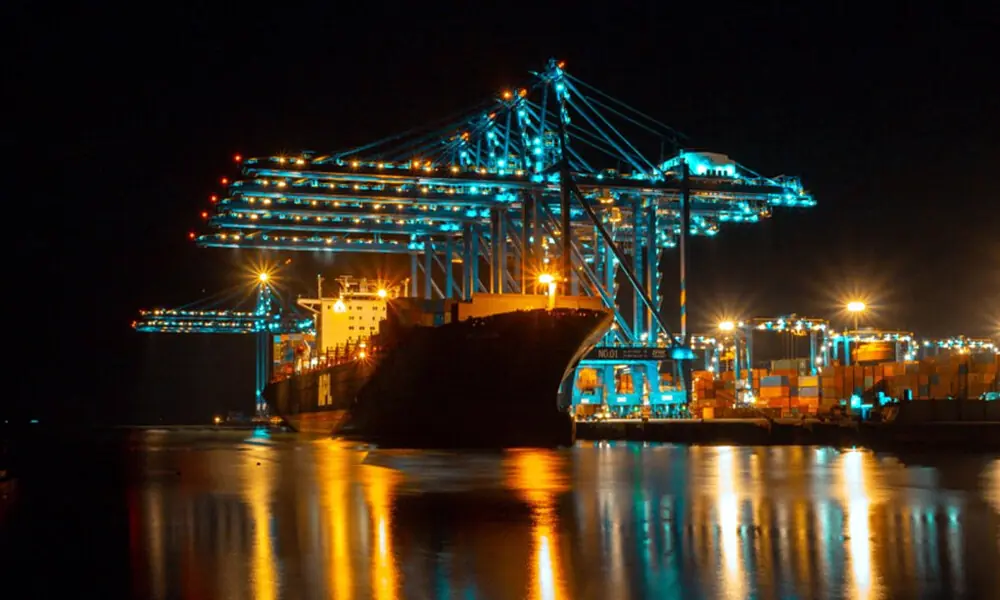

 

Pakistan ports near annual transshipment in just 24 days​


March 27, 2026 (MLN): In a significant economic development, Pakistan is rapidly emerging as a preferred global transshipment hub. A record-breaking surge in transshipment activities at Karachi Port, Port Qasim, and Gwadar Port signals a transformative shift in the region's trade landscape.

In just 24 days, Karachi Port handled a staggering volume of transshipment cargo. This remarkable achievement nearly matches the total transshipment volume handled during the entire previous year.

In an exclusive interview with a local media channel, economic experts Nasir Hussain Shah Bukhari and Abid Qayyum Suleri stated that the surge reflects shifting global dynamics alongside Pakistan’s targeted policy measures.

The government's decision to provide flexibility in international transshipment rules and allow cargo blending at sea and air ports has played a crucial role in attracting international trade.

Experts emphasized the strategic importance of Pakistan’s geographical location, noting that the country serves as a natural gateway connecting the Gulf, China, and Central Asia.

They emphasized that this advantage is increasingly being leveraged as a key strategic asset amid evolving global trade dynamics.

To sustain the current momentum, the experts highlighted the urgent need to address structural gaps, particularly in rail freight connectivity, while accelerating the digitization of customs processes and further strengthening the regulatory framework to improve efficiency and transparency.

They also pointed out that the development of Special Economic Zones (SEZs), along with modern warehouse facilities and cold chain infrastructure, will play a crucial role in transforming Pakistan into a comprehensive multimodal logistics hub capable of supporting regional and global trade flows.

Moreover, the rising activity at Pakistani ports is contributing to a more positive global perception, positioning the country as a safe, stable, and increasingly attractive destination for international investment and trade.

While Karachi remains the present heart of Pakistan’s trade, Gwadar is being hailed as the future of the country’s logistics strategy.

The integration of Gwadar into the transshipment network is expected to unlock further opportunities for foreign exchange and economic stability.

As global shipping routes continue to evolve, Pakistan is well-positioned to become a permanent fixture in the international trade corridors, transitioning from "geography as destiny" to "geography as strategy."

 
Pakistan sees ‘modest’ transshipment boost amid Gulf shipping disruptions


The Gulfies are in panic. Look at the headline.
 
Karachi was supposed to be the main trans shipment port, but Jebel Ali took its place. This is the heavy opportunity cost for the all the decisions taken by GHQ post 1971. If only people would realize this.
 
Iran has permitted two Pakistani cargo ships to transit through the Strait of Hormuz, sources in the Ministry of Maritime Affairs confirmed on Saturday.

The vessels, Multan and P-Akili, which were previously held after Iranian forces took control of the strait — a key global oil supply route — have now crossed and are en route to Karachi. They are expected to dock at Karachi port on March 31, a source familiar with the matter said.

Multan is a general cargo ship, while P-Akili is carrying over 80 million litres of crude oil. Sources added that Iranian authorities not only allowed the vessels to pass but also provided an escort until they cleared the strait’s flashpoint line.
 

Pakistan ports near annual transshipment in just 24 days​


March 27, 2026 (MLN): In a significant economic development, Pakistan is rapidly emerging as a preferred global transshipment hub. A record-breaking surge in transshipment activities at Karachi Port, Port Qasim, and Gwadar Port signals a transformative shift in the region's trade landscape.

In just 24 days, Karachi Port handled a staggering volume of transshipment cargo. This remarkable achievement nearly matches the total transshipment volume handled during the entire previous year.

In an exclusive interview with a local media channel, economic experts Nasir Hussain Shah Bukhari and Abid Qayyum Suleri stated that the surge reflects shifting global dynamics alongside Pakistan’s targeted policy measures.

The government's decision to provide flexibility in international transshipment rules and allow cargo blending at sea and air ports has played a crucial role in attracting international trade.

Experts emphasized the strategic importance of Pakistan’s geographical location, noting that the country serves as a natural gateway connecting the Gulf, China, and Central Asia.

They emphasized that this advantage is increasingly being leveraged as a key strategic asset amid evolving global trade dynamics.

To sustain the current momentum, the experts highlighted the urgent need to address structural gaps, particularly in rail freight connectivity, while accelerating the digitization of customs processes and further strengthening the regulatory framework to improve efficiency and transparency.

They also pointed out that the development of Special Economic Zones (SEZs), along with modern warehouse facilities and cold chain infrastructure, will play a crucial role in transforming Pakistan into a comprehensive multimodal logistics hub capable of supporting regional and global trade flows.

Moreover, the rising activity at Pakistani ports is contributing to a more positive global perception, positioning the country as a safe, stable, and increasingly attractive destination for international investment and trade.

While Karachi remains the present heart of Pakistan’s trade, Gwadar is being hailed as the future of the country’s logistics strategy.

The integration of Gwadar into the transshipment network is expected to unlock further opportunities for foreign exchange and economic stability.

As global shipping routes continue to evolve, Pakistan is well-positioned to become a permanent fixture in the international trade corridors, transitioning from "geography as destiny" to "geography as strategy."

Main question is whether we can actually do anything to retain any of these new ships once the war is over, but it's a big opportunity to take advantage .
 
Are no ships being routed to Gwadar ? It would be a huge failure if that was the case. This is Gwadar's chance to shine.
 
Are no ships being routed to Gwadar ? It would be a huge failure if that was the case. This is Gwadar's chance to shine.
Would it not be considered too risky for a lot of these companies and their insurers since it's closer to Iran and the conflict compared to Karachi? I'd assume that's a big factor
 
Main question is whether we can actually do anything to retain any of these new ships once the war is over, but it's a big opportunity to take advantage .

I believe that if Karachi and Gwadar provide safe passage while the war persists, these ports could become mainstays. Even after the conflict ends, many vessels will likely continue to dock there. With Pakistan offering concessions, the market share for GCC ports may shrink. This presents a massive opportunity, and both Karachi and Gwadar should prioritize port expansion.
 
Pakistan once again have a golden opportunity to turn its economy around, but our leaders will make questionable decision as always, but we also needs to take care of the insurgency within our borders. Baluchistan insurgency must be rooted out in order to fully utilize the benefits of the current geopolitics of the region.
 

Pakistan’s ports emerge as transit hub after Iran war disrupts Gulf routes​


Official data shows Karachi Port handled more transshipments in less than a month than all of 2025

Anadolu Agency
April 01, 2026

photo afp file


PHOTO: AFP

As conflict-related disruptions ripple across Gulf shipping routes, Pakistan’s main ports are emerging as an unexpected transit hub, handling a surge in cargo rerouted away from the region’s traditional maritime centres.

Since early March, ports in Karachi have seen a sharp rise in transshipments — cargo temporarily offloaded and redirected to other destinations — as vessels avoid higher-risk routes linked to the escalating US-Israel war with Iran.

Officials said the increase has been dramatic.

Karachi Port alone handled 8,313 containers over the past 24 days, slightly exceeding the total volume recorded for all of 2025, according to data from the Karachi Port Trust.

The port, which handles more than half of Pakistan’s foreign trade, has absorbed the bulk of the diverted cargo.

The Bin Qasim Port has also handled record-breaking flows since March 1.

The surge came as disruptions linked to the conflict, including restrictions in the Strait of Hormuz as well as attacks on vessels and ports, had slowed operations across the Gulf.

Ports such as Oman’s Salalah and the UAE’s Jebel Ali have been affected by strikes, while others have seen disruptions, creating space for Pakistan to step in, analysts said.
 

Users who are viewing this thread

Country Watch Latest

Back
Top