Navigation
Install the app
How to install the app on iOS
Follow along with the video below to see how to install our site as a web app on your home screen.
Note: This feature may not be available in some browsers.
More options
Style variation
You are using an out of date browser. It may not display this or other websites correctly.
You should upgrade or use an alternative browser.
You should upgrade or use an alternative browser.
Sea Port / Dry Port and Maritime Updates.
- Thread starter ghazi52
- Start date
More options
Who Replied?




Fatman17
THINK TANK: CONSULTANT
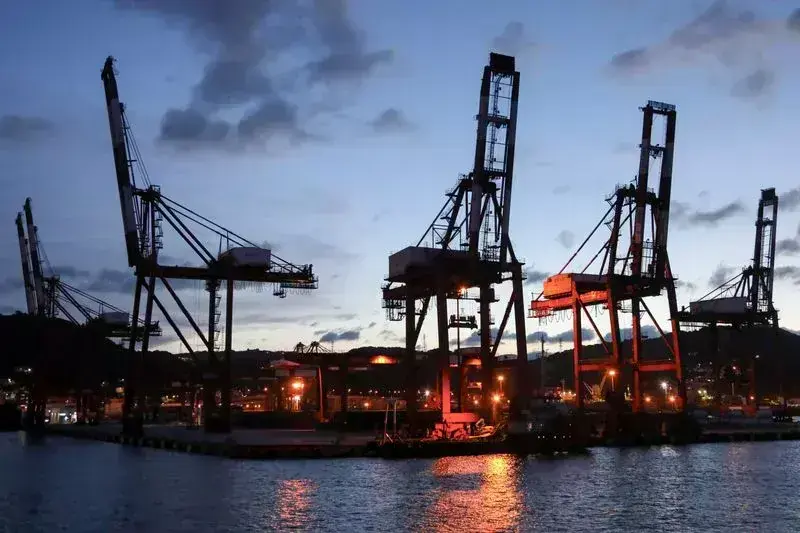
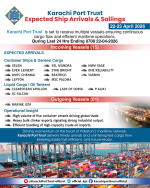
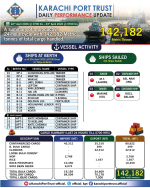
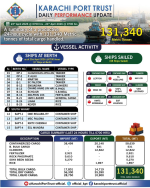
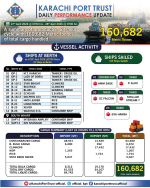
Ports handle 179,335 MT of cargoes in busy Thursday operations
KARACHI: Amid escalating tensions over control of the Strait of Hormuz and uncertainty about peace talks between...
share.google
Ports handle 200K MT in one day

ghazi52
THINK TANK: CONSULTANT
- Thread starter
- #307
How Gwadar Port Is Benefiting From the Strait of Hormuz Crisis
Business at the port has increased amid ongoing tension. But business should not have to depend on disruptions and wars.
By Mariyam Suleman Anees
April 28, 2026

MV Riva Glory with 14,629 MT transshipment cargo arrives at Gwadar Port in Pakistan, April 5, 2026.
On April 16, two cargo vessels arrived at Gwadar Port, carrying 368.7 tons of machinery and general cargo goods, as well as 5,000 metric tons of fertilizer. Earlier in the month, another cargo ship brought over 14,000 metric tons of transshipment cargo goods.
So far in April, Gwadar has handled around 11,000 standard shipping containers. For a port that handled around 8,300 containers in all of 2025 and historically has not seen more than 20 ships dock in an entire year, the current activity is unprecedented.
Some analysts have interpreted this surge as signaling a potential long-term opportunity for Gwadar, one that could improve its visibility in regional shipping networks, build operational credibility and perhaps, attract sustained commercial interest.
Gwadar’s location near the Strait of Hormuz, the narrow chokepoint through which almost 20 percent of global oil and liquified natural gas (LNG) flows, accords it strategic importance.
This and the deep waters of Gwadar’s eastern bay, which give it the capacity to handle large cargo ships, attracted Chinese investment. But despite these advantages, the port has remained underutilized for much of the past two decades.
The recent surge in cargo traffic is driven by regional dynamics and geopolitical tensions, especially connected to the Strait of Hormuz. In recent months, Hormuz has dominated world media headlines to an extent that has rarely been seen before.
This is largely because of the Israel-U.S. war on Iran and the repeated closure, reopening, and blockade of the Strait of Hormuz. Being such an important global energy route, these disruptions have sent shockwaves through global markets, causing supply shortages and surging oil prices.

hydrabadi_arab
Trusted Member
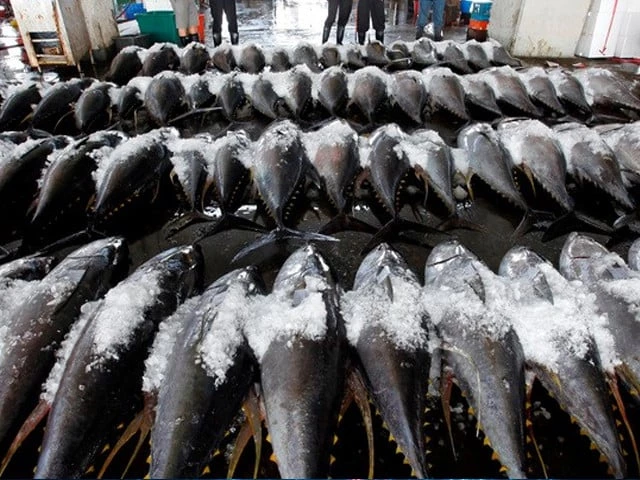
25,000MT tuna quota secured
Pakistan has secured a quota of 25,000 metric tonnes from the Indian Ocean Tuna Commission (IOTC), including 15,000 tonnes of yellowfin tuna and 10,000 tonnes of skipjack, a landmark achievement expected to generate approximately $200 million in exports, Federal Minister for Maritime Affairs Muhammad Junaid Anwar Chaudhry said on World Tuna Day, according to a statement issued on Saturday.
The minister noted that tuna plays a vital role in global food security, livelihoods and economic stability, calling for collective action by governments, industries and consumers. World Tuna Day, established by the UN General Assembly in 2016, underscores the global need to combat overfishing and safeguard tuna stocks.
Chaudhry said Pakistan has taken significant strides in aligning its fisheries sector with international conservation standards. Despite annual catches exceeding 45,000 tonnes, a large portion had remained outside the formal economy due to unregulated practices. The government is addressing this through the National Fisheries and Aquaculture Policy.
Highlighting Pakistan's growing role in global fisheries governance, the minister said a senior official from the Ministry of Maritime Affairs has been elected chair of the IOTC's Standing Committee on Administration and Finance, marking a significant milestone in the country's 28?year engagement with international tuna management. Pakistan is gradually phasing out harmful fishing methods such as gillnetting and trawling, replacing them with selective longlining techniques to reduce bycatch and protect marine ecosystems. With support from the Food and Agriculture Organisation, local fishers are being equipped with modern tools to improve catch quality and value.
Reforms in the export sector have significantly increased certification revenues, while infrastructure upgrades at fisheries harbours, including Korangi, will further enhance Pakistan's export capacity, particularly to European markets. "Pakistan's tuna sector is at a critical juncture, with sustainable quotas, policy reforms and strong international partnerships paving the way for long?term economic growth, environmental protection and increased foreign exchange earnings," the minister concluded.


K2RULEZ
Elite Member

Iran Replaces UAE Routes with Pakistani Ports
WANA (May 03) – In a major shift for regional logistics, Pakistan has issued official authorization for transit goods to pass through its territory to Iran after years of delay. This move positions the ports of Gwadar, Karachi, and Qasim as vital support hubs for Iranian southern ports, effectively providing a strategic alternative during the current maritime blockade.
Activation of the Transit Corridor
Following extensive diplomatic efforts, the Pakistani Ministry of Commerce has issued a directive allowing third-country goods to be transported across its soil to Iran.
The order designates road routes from the ports of Gwadar, Karachi, and Qasim leading to the Gabd and Taftan border crossings. This decision implements a long-standing international passenger and goods transport agreement signed between the two nations in June 2008.
The development is viewed as a significant turning point for Iran’s supply chain security. Historically, Iran relied heavily on UAE ports—specifically Jebel Ali—for imports and transit. However, increased maritime blockades and regional political shifts have rendered those routes unstable, prompting Tehran to diversify its logistics through Pakistan.
Strategic Advantages of Pakistani Ports
The integration of Pakistani infrastructure offers several advantages for the Iranian economy:
Gwadar Port: Due to its proximity to Iran’s eastern border and direct connection to the Gwadar route, it provides a shorter and more cost-effective path for time-sensitive cargo.
Karachi and Qasim Ports: These hubs offer extensive infrastructure and global network connectivity, serving as a robust complement to Iran’s maritime capacity.
Central Asian Access: While Iran gains a bypass to the blockade, Pakistan gains a strategic axis through Iran to reach markets in Central Asia and the Caucasus, especially as instability on the Afghan border has disrupted traditional routes.
Infrastructure Readiness
Crucial to this logistics puzzle are the border terminals of Mirjaveh and Rimdan. Mirjaveh has seen recent infrastructure upgrades, while Rimdan, active since 2020, is being developed into a major commercial node. Both sites have improved their transit capacity to handle the anticipated surge in commercial traffic.
Experts note that the success of this corridor—which targets a $10 billion bilateral trade ceiling—will depend on land route security, the speed of customs procedures, and road quality.
Furthermore, by linking with the $60 billion China-Pakistan Economic Corridor (CPEC) and the Belt and Road Initiative (BRI), this route acts as a strategic bridge between South Asia and Eurasia.
The viability of this corridor was recently demonstrated when a shipment of frozen meat reached Tashkent, Uzbekistan, from Pakistan via Iranian territory under the TIR Convention. This shift highlights Iran’s geographical advantage in overcoming economic and maritime sieges.

 wanaen.com
WANA (May 03) – In a major shift for regional logistics, Pakistan has issued official authorization for transit goods to pass through its territory to Iran after years of delay. This move positions the ports of Gwadar, Karachi, and Qasim as vital support hubs for Iranian southern ports, effectively providing a strategic alternative during the current maritime blockade.
Activation of the Transit Corridor
Following extensive diplomatic efforts, the Pakistani Ministry of Commerce has issued a directive allowing third-country goods to be transported across its soil to Iran.
The order designates road routes from the ports of Gwadar, Karachi, and Qasim leading to the Gabd and Taftan border crossings. This decision implements a long-standing international passenger and goods transport agreement signed between the two nations in June 2008.
The development is viewed as a significant turning point for Iran’s supply chain security. Historically, Iran relied heavily on UAE ports—specifically Jebel Ali—for imports and transit. However, increased maritime blockades and regional political shifts have rendered those routes unstable, prompting Tehran to diversify its logistics through Pakistan.
Strategic Advantages of Pakistani Ports
The integration of Pakistani infrastructure offers several advantages for the Iranian economy:
Gwadar Port: Due to its proximity to Iran’s eastern border and direct connection to the Gwadar route, it provides a shorter and more cost-effective path for time-sensitive cargo.
Karachi and Qasim Ports: These hubs offer extensive infrastructure and global network connectivity, serving as a robust complement to Iran’s maritime capacity.
Central Asian Access: While Iran gains a bypass to the blockade, Pakistan gains a strategic axis through Iran to reach markets in Central Asia and the Caucasus, especially as instability on the Afghan border has disrupted traditional routes.
Infrastructure Readiness
Crucial to this logistics puzzle are the border terminals of Mirjaveh and Rimdan. Mirjaveh has seen recent infrastructure upgrades, while Rimdan, active since 2020, is being developed into a major commercial node. Both sites have improved their transit capacity to handle the anticipated surge in commercial traffic.
Experts note that the success of this corridor—which targets a $10 billion bilateral trade ceiling—will depend on land route security, the speed of customs procedures, and road quality.
Furthermore, by linking with the $60 billion China-Pakistan Economic Corridor (CPEC) and the Belt and Road Initiative (BRI), this route acts as a strategic bridge between South Asia and Eurasia.
The viability of this corridor was recently demonstrated when a shipment of frozen meat reached Tashkent, Uzbekistan, from Pakistan via Iranian territory under the TIR Convention. This shift highlights Iran’s geographical advantage in overcoming economic and maritime sieges.
Iran Replaces UAE Routes with Pakistani Ports - WANA
In a major shift for regional logistics, Pakistan has issued official authorization for transit goods to pass through its territory to Iran...
wanaen.com
K2RULEZ
Elite Member
Pakistan: Gwadar’s Moment Has Arrived
There is a number that stopped me mid-sentence when I first read it. In April 2026, Gwadar Port processed around 11,000 standard shipping containers in a single month. For context, the same port handled roughly 8,300 containers in the entirety of 2025. This is not a record broken by a whisker. It is a record shattered, and behind it lies a story about geography, patience, and a province that will majorly benefit from this.
The trigger is the Strait of Hormuz, the narrow throat of water through which nearly 20 percent of the world’s oil and LNG passes. As tensions there have rattled global shipping lanes, freight operators have scrambled for alternatives, and quietly, almost as if the map had always known this day would come, the answer has materialised on Pakistan’s southwestern coast.
The Geography That History Forgot, Until Now
Gwadar sits roughly 400 kilometres from the Strait of Hormuz, at the exact point where the Arabian Sea opens toward the Gulf of Oman. Its eastern bay is one of the deepest natural harbours in the entire region, capable of accommodating large cargo vessels that shallower ports simply cannot handle. These are advantages Pakistan was born with.
The UAE has its Fujairah bypass pipeline. Saudi Arabia has its East-West link to Yanbu on the Red Sea, but both are partial solutions, they handle a fraction of export volumes and cannot absorb a global rerouting. Gwadar, backed by the full logistics architecture of the China-Pakistan Economic Corridor, offers something categorically different, a complete alternative corridor connecting the Arabian Sea to Central Asia and western China. When the world’s shipping industry needed a detour in April 2026, Gwadar did not raise its hand. It was simply there, in the right place, at the right time.
The Numbers Do Not Lie
On April 16 alone, two cargo vessels docked carrying 368.7 tons of machinery and 5,000 metric tons of fertilizer. Earlier in the month, a single ship brought over 14,000 metric tons of transshipment goods. A port that historically saw fewer than 20 ships in an entire year is now processing that kind of cargo in days.
This is not a blip. This is the beginning of a structural shift, one that Islamabad must now work urgently to make permanent.
CPEC: The Infrastructure That Made It Possible
Gwadar’s surge does not stand alone. It stands on a decade of infrastructure-building under CPEC. The New Gwadar International Airport, inaugurated in January 2025, was built through a $230 million Chinese grant, spanning 4,300 acres, making it Pakistan’s largest airport by area, capable of handling Airbus A380s. The Eastbay Expressway Phase-I, the Khuzdar-Basima Road, and the M-8 motorway linking Hoshab to Gwadar have collectively reduced travel time between Quetta and Gwadar from over 24 hours to roughly eight. These are not headlines. These are the foundations on which April 2026’s cargo volumes rested.
CPEC Phase II is now shifting focus toward Special Economic Zones, agriculture, minerals, and IT, a deliberate pivot from hardware to economic depth. The Planning Commission estimates CPEC has already generated over 200,000 direct jobs nationwide. Gwadar’s moment is the dividend on that investment.
Balochistan Is Being Built Up
For fiscal year 2025-26, the federal government has allocated a record Rs205.99 billion to Balochistan under the Public Sector Development Programme, representing nearly 68 percent of the total combined PSDP for Balochistan, Federal/ICT, and AJK. This is not a marginal increase. It is a statement of intent. By March 2026, Rs73.5 billion had already been disbursed across 148 active projects in the province, spanning roads, water, power, and education.
In Gwadar specifically, 22 projects with a combined cost of Rs184 billion are currently underway. The Pak-China Friendship Hospital, funded with $100 million from China, treated around 43,000 patients from poor communities in 2025, for free. A Chinese-funded desalination plant is providing eight million gallons of drinking water to Gwadar residents.
The Balochistan Special Development Initiative (BSDI), launched in collaboration with the Pakistan Armed Forces, allocated Rs5 billion toward 137 development projects across some of the province’s most rural districts, Kech, Khuzdar, Washuk, Chagai, Panjgur, and Kalat. By end of 2025, 13 projects had already been completed, including solar installations in rural health centres and street lighting in remote areas.
On youth, the provincial government launched its first-ever Balochistan Youth Policy, targeting overseas employment opportunities for 30,000 young people. More than 6,000 skilled youth have already secured jobs abroad. The Balochistan Education Endowment Fund disbursed roughly Rs4 billion in scholarships spanning school, university, and PhD level in 2025 alone. These investments in human capital are the ones that compound over time, and benefits the youth.
The Asian Development Bank approved an additional $48 million for water resource development in Balochistan in November 2025, co-financed by Japan. The project focuses on the Zhob and Mula river basins. Meanwhile, 27,000 agricultural tube wells are being solarised at a cost of Rs55 billion, one of the most significant rural interventions the country has seen.
Perhaps the most consequential long-term development is Reko Diq. One of the world’s largest undeveloped copper-gold deposits sits in Balochistan’s soil. In late 2025, the project secured $3.5 billion in international financing, from the ADB, the US Export-Import Bank, and other partners, formally moving it from planning into construction. First copper exports are projected for 2029. At full production, Reko Diq is expected to employ between 7,500 and 13,500 workers. Over 35 years, it could generate $75 billion, greatly benefitting Pakistan.
Pakistan’s New Leverage
Gwadar offers a new ooportunity, a leverage that grows with use. Pakistan does not merely collect transit fees from Gwadar. It earns geopolitical standing. Gulf states, whose own energy exports depend on Hormuz, have a direct stake in a stable Pakistan with a functional western port.
That calculus is already translating into cash. Saudi Arabia transferred $2 billion to Pakistan in April 2026, with a further $3 billion pledged. These flows reflect Riyadh’s recognition that Pakistan’s stability, and Gwadar’s functionality, serve Gulf interests in a volatile maritime environment. When your port becomes indispensable to your neighbours, your neighbours become invested in your wellbeing. This is soft power expressed in hard currency.
The Window Is Open, But It Will Not Stay That Way
Crises are temporary. The Strait of Hormuz has seen threats before and has reopened each time. When it does, Pakistan cannot rely on emergency rerouting to keep Gwadar busy. The shipping companies arriving now need reasons to stay when normalcy returns. That means there should be competitive port charges, fast customs clearance, security guarantees, and reliable road and rail connectivity.
The $390 million railway connectivity project linking Balochistan’s mineral belt to national logistics networks, with construction beginning in 2026, is a step in that direction. So is the continued development of the Gwadar North Free Zone and the push to operationalise Special Economic Zones that turn Gwadar from a transit node into a production hub. When goods are being made in Pakistan, not merely passing through, the economic stakes deepen permanently.
The New Gwadar International Airport, Pakistan’s largest by area, stands ready. The deep-water berths are receiving cargo. The road network connecting the port to the national grid is expanding. The architecture exists. What is needed now is the commercial and administrative follow-through to make it stick.
Pakistan is building toward that. The investments are real. The projects are underway. The momentum is here. The cargo ships are docking. The cranes are moving, and the country is ready to see a new beginning.

 www.eurasiareview.com
There is a number that stopped me mid-sentence when I first read it. In April 2026, Gwadar Port processed around 11,000 standard shipping containers in a single month. For context, the same port handled roughly 8,300 containers in the entirety of 2025. This is not a record broken by a whisker. It is a record shattered, and behind it lies a story about geography, patience, and a province that will majorly benefit from this.
The trigger is the Strait of Hormuz, the narrow throat of water through which nearly 20 percent of the world’s oil and LNG passes. As tensions there have rattled global shipping lanes, freight operators have scrambled for alternatives, and quietly, almost as if the map had always known this day would come, the answer has materialised on Pakistan’s southwestern coast.
The Geography That History Forgot, Until Now
Gwadar sits roughly 400 kilometres from the Strait of Hormuz, at the exact point where the Arabian Sea opens toward the Gulf of Oman. Its eastern bay is one of the deepest natural harbours in the entire region, capable of accommodating large cargo vessels that shallower ports simply cannot handle. These are advantages Pakistan was born with.
The UAE has its Fujairah bypass pipeline. Saudi Arabia has its East-West link to Yanbu on the Red Sea, but both are partial solutions, they handle a fraction of export volumes and cannot absorb a global rerouting. Gwadar, backed by the full logistics architecture of the China-Pakistan Economic Corridor, offers something categorically different, a complete alternative corridor connecting the Arabian Sea to Central Asia and western China. When the world’s shipping industry needed a detour in April 2026, Gwadar did not raise its hand. It was simply there, in the right place, at the right time.
The Numbers Do Not Lie
On April 16 alone, two cargo vessels docked carrying 368.7 tons of machinery and 5,000 metric tons of fertilizer. Earlier in the month, a single ship brought over 14,000 metric tons of transshipment goods. A port that historically saw fewer than 20 ships in an entire year is now processing that kind of cargo in days.
This is not a blip. This is the beginning of a structural shift, one that Islamabad must now work urgently to make permanent.
CPEC: The Infrastructure That Made It Possible
Gwadar’s surge does not stand alone. It stands on a decade of infrastructure-building under CPEC. The New Gwadar International Airport, inaugurated in January 2025, was built through a $230 million Chinese grant, spanning 4,300 acres, making it Pakistan’s largest airport by area, capable of handling Airbus A380s. The Eastbay Expressway Phase-I, the Khuzdar-Basima Road, and the M-8 motorway linking Hoshab to Gwadar have collectively reduced travel time between Quetta and Gwadar from over 24 hours to roughly eight. These are not headlines. These are the foundations on which April 2026’s cargo volumes rested.
CPEC Phase II is now shifting focus toward Special Economic Zones, agriculture, minerals, and IT, a deliberate pivot from hardware to economic depth. The Planning Commission estimates CPEC has already generated over 200,000 direct jobs nationwide. Gwadar’s moment is the dividend on that investment.
Balochistan Is Being Built Up
For fiscal year 2025-26, the federal government has allocated a record Rs205.99 billion to Balochistan under the Public Sector Development Programme, representing nearly 68 percent of the total combined PSDP for Balochistan, Federal/ICT, and AJK. This is not a marginal increase. It is a statement of intent. By March 2026, Rs73.5 billion had already been disbursed across 148 active projects in the province, spanning roads, water, power, and education.
In Gwadar specifically, 22 projects with a combined cost of Rs184 billion are currently underway. The Pak-China Friendship Hospital, funded with $100 million from China, treated around 43,000 patients from poor communities in 2025, for free. A Chinese-funded desalination plant is providing eight million gallons of drinking water to Gwadar residents.
The Balochistan Special Development Initiative (BSDI), launched in collaboration with the Pakistan Armed Forces, allocated Rs5 billion toward 137 development projects across some of the province’s most rural districts, Kech, Khuzdar, Washuk, Chagai, Panjgur, and Kalat. By end of 2025, 13 projects had already been completed, including solar installations in rural health centres and street lighting in remote areas.
On youth, the provincial government launched its first-ever Balochistan Youth Policy, targeting overseas employment opportunities for 30,000 young people. More than 6,000 skilled youth have already secured jobs abroad. The Balochistan Education Endowment Fund disbursed roughly Rs4 billion in scholarships spanning school, university, and PhD level in 2025 alone. These investments in human capital are the ones that compound over time, and benefits the youth.
The Asian Development Bank approved an additional $48 million for water resource development in Balochistan in November 2025, co-financed by Japan. The project focuses on the Zhob and Mula river basins. Meanwhile, 27,000 agricultural tube wells are being solarised at a cost of Rs55 billion, one of the most significant rural interventions the country has seen.
Perhaps the most consequential long-term development is Reko Diq. One of the world’s largest undeveloped copper-gold deposits sits in Balochistan’s soil. In late 2025, the project secured $3.5 billion in international financing, from the ADB, the US Export-Import Bank, and other partners, formally moving it from planning into construction. First copper exports are projected for 2029. At full production, Reko Diq is expected to employ between 7,500 and 13,500 workers. Over 35 years, it could generate $75 billion, greatly benefitting Pakistan.
Pakistan’s New Leverage
Gwadar offers a new ooportunity, a leverage that grows with use. Pakistan does not merely collect transit fees from Gwadar. It earns geopolitical standing. Gulf states, whose own energy exports depend on Hormuz, have a direct stake in a stable Pakistan with a functional western port.
That calculus is already translating into cash. Saudi Arabia transferred $2 billion to Pakistan in April 2026, with a further $3 billion pledged. These flows reflect Riyadh’s recognition that Pakistan’s stability, and Gwadar’s functionality, serve Gulf interests in a volatile maritime environment. When your port becomes indispensable to your neighbours, your neighbours become invested in your wellbeing. This is soft power expressed in hard currency.
The Window Is Open, But It Will Not Stay That Way
Crises are temporary. The Strait of Hormuz has seen threats before and has reopened each time. When it does, Pakistan cannot rely on emergency rerouting to keep Gwadar busy. The shipping companies arriving now need reasons to stay when normalcy returns. That means there should be competitive port charges, fast customs clearance, security guarantees, and reliable road and rail connectivity.
The $390 million railway connectivity project linking Balochistan’s mineral belt to national logistics networks, with construction beginning in 2026, is a step in that direction. So is the continued development of the Gwadar North Free Zone and the push to operationalise Special Economic Zones that turn Gwadar from a transit node into a production hub. When goods are being made in Pakistan, not merely passing through, the economic stakes deepen permanently.
The New Gwadar International Airport, Pakistan’s largest by area, stands ready. The deep-water berths are receiving cargo. The road network connecting the port to the national grid is expanding. The architecture exists. What is needed now is the commercial and administrative follow-through to make it stick.
Pakistan is building toward that. The investments are real. The projects are underway. The momentum is here. The cargo ships are docking. The cranes are moving, and the country is ready to see a new beginning.
Pakistan: Gwadar's Moment Has Arrived - OpEd - Eurasia Review
There is a number that stopped me mid-sentence when I first read it. In April 2026, Gwadar Port processed around 11,000 standard shipping containers in a
www.eurasiareview.com


Ali_Baba
VIP Member

Pakistan: Gwadar’s Moment Has Arrived
There is a number that stopped me mid-sentence when I first read it. In April 2026, Gwadar Port processed around 11,000 standard shipping containers in a single month. For context, the same port handled roughly 8,300 containers in the entirety of 2025. This is not a record broken by a whisker. It is a record shattered, and behind it lies a story about geography, patience, and a province that will majorly benefit from this.
The trigger is the Strait of Hormuz, the narrow throat of water through which nearly 20 percent of the world’s oil and LNG passes. As tensions there have rattled global shipping lanes, freight operators have scrambled for alternatives, and quietly, almost as if the map had always known this day would come, the answer has materialised on Pakistan’s southwestern coast.
The Geography That History Forgot, Until Now
Gwadar sits roughly 400 kilometres from the Strait of Hormuz, at the exact point where the Arabian Sea opens toward the Gulf of Oman. Its eastern bay is one of the deepest natural harbours in the entire region, capable of accommodating large cargo vessels that shallower ports simply cannot handle. These are advantages Pakistan was born with.
The UAE has its Fujairah bypass pipeline. Saudi Arabia has its East-West link to Yanbu on the Red Sea, but both are partial solutions, they handle a fraction of export volumes and cannot absorb a global rerouting. Gwadar, backed by the full logistics architecture of the China-Pakistan Economic Corridor, offers something categorically different, a complete alternative corridor connecting the Arabian Sea to Central Asia and western China. When the world’s shipping industry needed a detour in April 2026, Gwadar did not raise its hand. It was simply there, in the right place, at the right time.
The Numbers Do Not Lie
On April 16 alone, two cargo vessels docked carrying 368.7 tons of machinery and 5,000 metric tons of fertilizer. Earlier in the month, a single ship brought over 14,000 metric tons of transshipment goods. A port that historically saw fewer than 20 ships in an entire year is now processing that kind of cargo in days.
This is not a blip. This is the beginning of a structural shift, one that Islamabad must now work urgently to make permanent.
CPEC: The Infrastructure That Made It Possible
Gwadar’s surge does not stand alone. It stands on a decade of infrastructure-building under CPEC. The New Gwadar International Airport, inaugurated in January 2025, was built through a $230 million Chinese grant, spanning 4,300 acres, making it Pakistan’s largest airport by area, capable of handling Airbus A380s. The Eastbay Expressway Phase-I, the Khuzdar-Basima Road, and the M-8 motorway linking Hoshab to Gwadar have collectively reduced travel time between Quetta and Gwadar from over 24 hours to roughly eight. These are not headlines. These are the foundations on which April 2026’s cargo volumes rested.
CPEC Phase II is now shifting focus toward Special Economic Zones, agriculture, minerals, and IT, a deliberate pivot from hardware to economic depth. The Planning Commission estimates CPEC has already generated over 200,000 direct jobs nationwide. Gwadar’s moment is the dividend on that investment.
Balochistan Is Being Built Up
For fiscal year 2025-26, the federal government has allocated a record Rs205.99 billion to Balochistan under the Public Sector Development Programme, representing nearly 68 percent of the total combined PSDP for Balochistan, Federal/ICT, and AJK. This is not a marginal increase. It is a statement of intent. By March 2026, Rs73.5 billion had already been disbursed across 148 active projects in the province, spanning roads, water, power, and education.
In Gwadar specifically, 22 projects with a combined cost of Rs184 billion are currently underway. The Pak-China Friendship Hospital, funded with $100 million from China, treated around 43,000 patients from poor communities in 2025, for free. A Chinese-funded desalination plant is providing eight million gallons of drinking water to Gwadar residents.
The Balochistan Special Development Initiative (BSDI), launched in collaboration with the Pakistan Armed Forces, allocated Rs5 billion toward 137 development projects across some of the province’s most rural districts, Kech, Khuzdar, Washuk, Chagai, Panjgur, and Kalat. By end of 2025, 13 projects had already been completed, including solar installations in rural health centres and street lighting in remote areas.
On youth, the provincial government launched its first-ever Balochistan Youth Policy, targeting overseas employment opportunities for 30,000 young people. More than 6,000 skilled youth have already secured jobs abroad. The Balochistan Education Endowment Fund disbursed roughly Rs4 billion in scholarships spanning school, university, and PhD level in 2025 alone. These investments in human capital are the ones that compound over time, and benefits the youth.
The Asian Development Bank approved an additional $48 million for water resource development in Balochistan in November 2025, co-financed by Japan. The project focuses on the Zhob and Mula river basins. Meanwhile, 27,000 agricultural tube wells are being solarised at a cost of Rs55 billion, one of the most significant rural interventions the country has seen.
Perhaps the most consequential long-term development is Reko Diq. One of the world’s largest undeveloped copper-gold deposits sits in Balochistan’s soil. In late 2025, the project secured $3.5 billion in international financing, from the ADB, the US Export-Import Bank, and other partners, formally moving it from planning into construction. First copper exports are projected for 2029. At full production, Reko Diq is expected to employ between 7,500 and 13,500 workers. Over 35 years, it could generate $75 billion, greatly benefitting Pakistan.
Pakistan’s New Leverage
Gwadar offers a new ooportunity, a leverage that grows with use. Pakistan does not merely collect transit fees from Gwadar. It earns geopolitical standing. Gulf states, whose own energy exports depend on Hormuz, have a direct stake in a stable Pakistan with a functional western port.
That calculus is already translating into cash. Saudi Arabia transferred $2 billion to Pakistan in April 2026, with a further $3 billion pledged. These flows reflect Riyadh’s recognition that Pakistan’s stability, and Gwadar’s functionality, serve Gulf interests in a volatile maritime environment. When your port becomes indispensable to your neighbours, your neighbours become invested in your wellbeing. This is soft power expressed in hard currency.
The Window Is Open, But It Will Not Stay That Way
Crises are temporary. The Strait of Hormuz has seen threats before and has reopened each time. When it does, Pakistan cannot rely on emergency rerouting to keep Gwadar busy. The shipping companies arriving now need reasons to stay when normalcy returns. That means there should be competitive port charges, fast customs clearance, security guarantees, and reliable road and rail connectivity.
The $390 million railway connectivity project linking Balochistan’s mineral belt to national logistics networks, with construction beginning in 2026, is a step in that direction. So is the continued development of the Gwadar North Free Zone and the push to operationalise Special Economic Zones that turn Gwadar from a transit node into a production hub. When goods are being made in Pakistan, not merely passing through, the economic stakes deepen permanently.
The New Gwadar International Airport, Pakistan’s largest by area, stands ready. The deep-water berths are receiving cargo. The road network connecting the port to the national grid is expanding. The architecture exists. What is needed now is the commercial and administrative follow-through to make it stick.
Pakistan is building toward that. The investments are real. The projects are underway. The momentum is here. The cargo ships are docking. The cranes are moving, and the country is ready to see a new beginning.
Pakistan: Gwadar's Moment Has Arrived - OpEd - Eurasia Review
There is a number that stopped me mid-sentence when I first read it. In April 2026, Gwadar Port processed around 11,000 standard shipping containers in a
This crisis is temporary, and when all is said and done, once the straits are re-opened, there will be some reversion of trade to their historical flows. However, Pakistani ports will have picked up a lot of new customers who historically had never used Pakistan before, but having now used Pakistan, may feel that it works better than their old flows and as an additional option for them.
So, Pakistani ports will have alot more traffic flowing through them that was the case before the crisis, but it will still be less than the peaks that they are seeing now.
Overall this is a good direction, especially for Gwadar to earn some revenue flows to offset all the investment made into that port.
"Make hay, while the sun shines!" ..
Ali_Baba
VIP Member
Very odd for Iran to have been using UAE given that it still required another port in Iran to receive from UAE ships of imports. Pakistani ports work so much better for Iran, given the road links, and now the land trade corridors.
And, taking something off the UAE is something that warms one's heart a little to add on top!
Fatman17
THINK TANK: CONSULTANT

Pakistan Plans To Build 'Energy City’ and New Port Qasim Terminal
Pakistan plans to establish a new “Energy City” and a multipurpose terminal at Port Qasim as part of efforts to strengthen the country’s blue economy and
 share.google
New terminal at port Qasim
Users who are viewing this thread
Total: 1 (members: 0, guests: 1)
Pakistan Defence Latest
-
-
-
After uneasy questions, Bangladesh Army chief broke into Nazrul geeti during Oct 1 darbar (4 Viewers)
- Latest: Blain2
-

-


