Sea Port / Dry Port and Maritime Updates.

GPA incentivizes 30 days free storage for import, export cargos at Gwadar Port on May 8​

By Yasir Habib Khan | Gwadar Pro
May 9, 2026

Gwadar Port Authority (GPA) has started providing up to 30 days of free storage for import and export cargos to be docked on Gwadar Port on May 8. Free storage facilities are also being offered in cargo sheds, storage container yards, and repair sheds managed by the Gwadar Port Authority in order to facilitate investors as much as possible.

This was revealed by GPA chairman Noor-ul-Haq Baloch in a meeting with members of the all Pakistan Shipping Association in Karachi, where he gave a detailed briefing on the situation arising after recent regional tensions, the strategic importance of Gwadar Port, and matters related to transit and transshipment trade on May 8.

He divulged that all these facilities are connected through a modern six-lane expressway linking the port and free zone with the Coastal Highway.

He said that due to the tense situation in the Strait of Hormuz, Gwadar could serve as a safe and alternative trade route in the event of any possible war or sanctions. According to him, access from Gwadar to eastern regions of Iran and Central Asia is several hundred kilometers shorter compared to other cities of Pakistan, significantly reducing logistics costs and transit time.

During the meeting, Chairman Noor-ul-Haq Baloch stated that Gwadar Port is set to become the future hub of regional trade and logistics, and its importance in the region is increasing day by day. He said that Gwadar Port’s approach channel is the shortest among the country’s ports, measuring approximately four and a half kilometers in length.

Chairman Noor-ul-Haq Baloch further stated that a route exists from Gwadar to Zahedan and onward to Central Asia. He recalled that in 2015, the first convoy of containers arriving from China was successfully transported to Gwadar Port through the route, proving that Gwadar possesses the full potential to connect the region with China and Central Asia.
 

Iranian delegation visits Gwadar for trade, investment​


Chabahar team explores investment, logistics cooperation opportunities

Sardar Hameed Khan
May 11, 2026

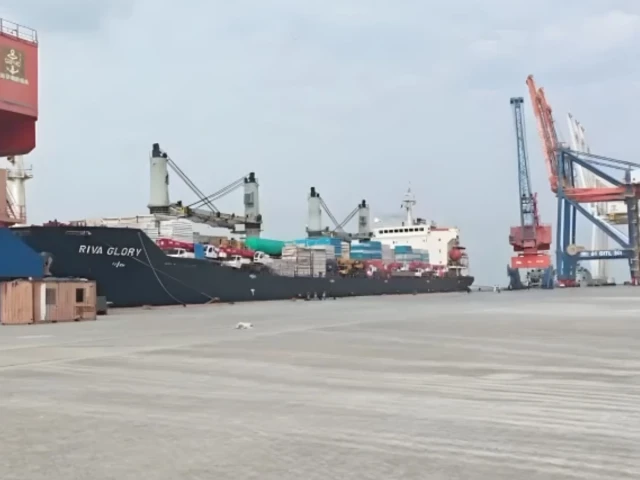
gwadar port received another cargo ship the mv reva glory carrying 11 629 metric tons of goods photo express


Gwadar Port received another cargo ship, the MV Reva Glory, carrying 11,629 metric tons of goods. PHOTO: EXPRESS

GWADAR: In what is being hailed as a significant milestone in economic and trade relations between Pakistan and Iran, a high-level, fully authorised delegation from the Chabahar Free Zone Organisation has arrived in Gwadar. The delegation, led by Chairman Muhammad Saeed Arbabi, crossed through the Pakistan-Iran Gabd-Rimzan border.

The delegation included prominent Iranian investors, logistics experts, and key figures associated with international trade. Upon arrival, they were warmly received at the border by the President of the Gwadar Chamber of Commerce and Industry, Jehand Hut.

Invited by the Gwadar Chamber of Commerce, the Iranian delegation will conduct a detailed tour of the Gwadar Free Zone, the port, and ongoing development projects. The team will assess investment opportunities, port facilities, and logistics infrastructure in Gwadar.

Significant progress is expected during the visit regarding the establishment of a joint logistics network, transit trade, and mutual cooperation between Gwadar and Chabahar.
 

PQA handles country’s largest-ever LNG cargo discharge


KARACHI: Port Qasim Authority (PQA) has etched its name in Pakistan’s maritime history by successfully handling the largest liquefied natural gas (LNG) cargo ever discharged in the country, marking a landmark moment for the nation’s energy and trade infrastructure.

According to the details, the record-breaking operation was carried out aboard the Q-Flex LNG carrier MV Al Kharaitiyat, which navigated Port Qasim’s 49-kilometre channel from the Arabian Sea before being secured at the Engro Elengy Terminal (EETL) by 10:00 AM.

The vessel operated at a draft of 12.10 metres, carrying a cargo volume of 210,250 m³ / 92,510 MT of LNG, the deepest and fullest Q-Flex operation ever recorded at PQA.


READ MORE: Second Qatari LNG tanker heads through Hormuz to Pakistan as Iran war continues, data shows

To maximise throughput efficiency while maintaining strict safety margins, the vessel’s two LNG parcels were discharged sequentially, a technically demanding approach that underscored the operational precision of all teams involved.

The achievement is particularly noteworthy given its timing. With the monsoon season setting in, a period when operational limitations on Pakistan’s waterways become considerably stricter, executing such a large-scale berthing required meticulous tidal window planning and draft management. Port Qasim’s navigation channel, spanning approximately 49 km, is recognised as one of the longest LNG channels in the world, and its complex hydrodynamics make large-vessel operations a significant logistical challenge under any conditions.

The milestone was the product of close coordination among multiple stakeholders across Pakistan’s energy supply chain. Qatar Energy served as the loading operator, Nakilat operated as the vessel owner, Engro Elengy Terminal received the cargo, and Pakistan State Oil (PSO) ensured supply chain integration. PQA’s Marine Operations team led tidal and draft planning in close collaboration with Qatar Energy and Nakilat, with the authority crediting the skill and professionalism of its personnel as central to the operation’s flawless execution.

While the LNG achievement stands as a flagship milestone, Port Qasim Authority emphasised that it continues to serve as Pakistan’s primary maritime gateway for a wide spectrum of cargo including containerised goods, dry bulk, liquid bulk, coal, rice, cement, steel, and petroleum products.

With ongoing investments in modernised systems, digitalisation, and round-the-clock operations, PQA remains committed to ensuring seamless cargo throughput across its specialised terminals, reinforcing Pakistan’s trade resilience and regional competitiveness.

Copyright Business Recorder, 2026
 
To view this content we will need your consent to set third party cookies.
For more detailed information, see our cookies page.


@Fatman17 - could you please stick this thread that will help us to update it everyday? Our economy is still important and should pay attention. Thank you
 

Marine academy to get degree status, funds​

Rs421m CSR support for training as Balochistan students to be included

Shazia Tasneem Farooqi
May 15, 2026

tribune


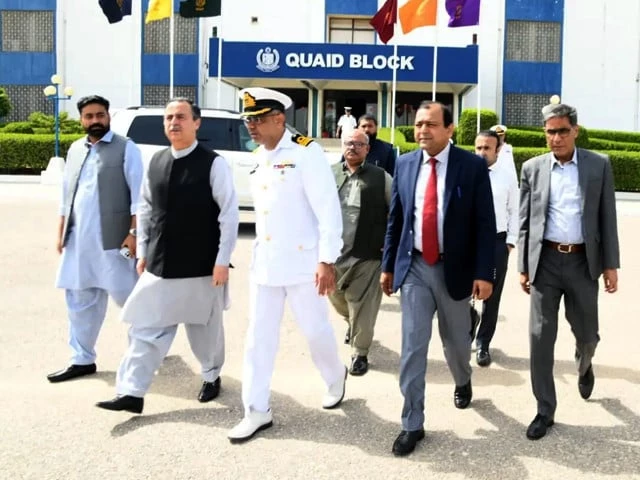
KARACHI: Federal Minister for Maritime Affairs Muhammad Junaid Anwar Chaudhry has said the government is taking concrete steps to strengthen marine education, promote ocean awareness and actively engage youth in sustainable ocean stewardship.

In a conversation with The Express Tribune during his visit to the Pakistan Marine Academy (PMA) in Karachi, the minister emphasised that understanding oceans is essential for climate resilience, sustainable development and the long?term health of maritime resources.

"Education empowers young people to make informed decisions and play an active role in marine conservation and the blue economy," Chaudhry said. He added that an informed and engaged youth population is essential for promoting sustainable use of marine resources, protecting fragile ocean ecosystems and contributing to long?term economic growth.

The minister highlighted the importance of aligning marine education with UN Sustainable Development Goal 4.7, which focuses on promoting education for sustainable development.

This includes integrating knowledge of marine ecosystems, conservation practices and human?ocean interactions into academic curricula and teacher training.
 
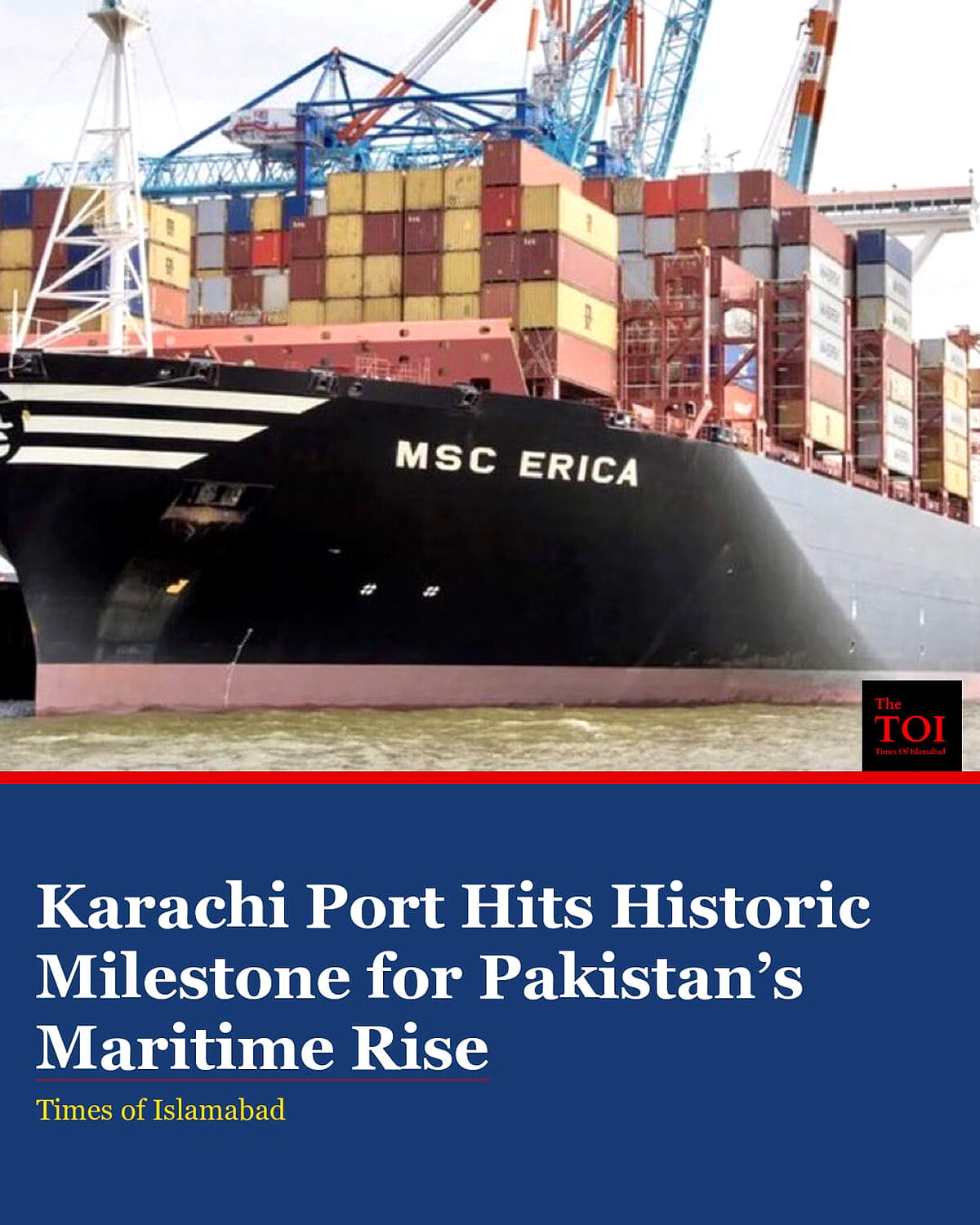
MSC Erica’s Arrival Signals Karachi Port’s Growing Stature as MSC Erica docks at Karachi Port, enhancing shipping capacity
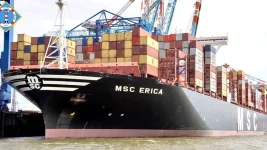
msc-erica-s-arrival-signals-karachi-port.webp

The 400-metre-long MSC Erica successfully berthed at South Asia Pakistan Terminals on 10 May 2026, marking another major landmark for Karachi Port Trust.

One of the world’s largest container vessels docked smoothly at the deep-water facility, underscoring Pakistan’s expanding capacity to handle ultra-large ships.

Officials described the berthing as a proud achievement that reflects years of infrastructure upgrades and strategic investment at Karachi Port.

The MSC Erica, with its 19,224 TEU capacity, arrived amid growing regional demand for reliable transshipment options. Its successful call highlights the terminal’s readiness for next-generation vessels.

South Asia Pakistan Terminals, operated under a partnership between Karachi Port Trust and Hutchison Ports, handled the vessel at its state-of-the-art deep draft berths. The terminal features advanced quay cranes and modern equipment capable of managing such massive ships efficiently.

Port sources confirmed the operation proceeded without any disruption, with cargo handling beginning shortly after berthing. This marks continued momentum following previous record-breaking calls at the facility.

Karachi Port Trust Chairman highlighted the significance during a briefing. He noted that such arrivals demonstrate Pakistan’s emergence as a competitive player in regional maritime logistics.

The vessel’s length of nearly 400 metres and advanced design place it among the largest container ships currently operating globally. Its presence at SAPT reflects the port’s deepening draught and upgraded infrastructure.

Recent years have seen Karachi Port handle increasing volumes of container traffic. Official figures show steady growth in TEU throughput, supported by targeted investments exceeding hundreds of millions of dollars.

Hutchison Ports Pakistan has played a key role through phased development at the terminal. The first phase alone involved substantial capital injection focused on two primary berths spanning 800 metres.

This latest arrival comes at a time when global shipping routes face multiple pressures. Disruptions in traditional corridors have prompted shipping lines to explore alternative hubs, positioning Karachi favourably due to its strategic location.

Analysts point to Pakistan’s proximity to key trade lanes as a natural advantage. The port’s ability to accommodate larger vessels opens doors for more efficient supply chains serving South Asia, Central Asia, and beyond.

Maritime experts believe consistent handling of mega-ships will attract additional lines and boost transshipment volumes. Early data already indicates rising interest from international operators.

The development aligns with broader government initiatives to strengthen Pakistan’s maritime sector. Recent policy measures approved by federal authorities aim to enhance transshipment capabilities and improve port efficiency.

These steps include streamlined procedures and incentives designed to make Pakistani ports more competitive. Officials expect such policies to yield measurable gains in cargo traffic over the coming years.

Karachi Port recorded notable cargo volumes in the previous fiscal year. Total throughput reached millions of tonnes, with container handling showing healthy year-on-year increases.

Such performance builds confidence among global shipping giants. Mediterranean Shipping Company’s decision to route the MSC Erica through Karachi sends a strong signal to the industry.

Beyond immediate cargo operations, the event carries wider economic implications. Enhanced port capabilities support Pakistan’s export ambitions and facilitate smoother import flows critical for industry and consumers.

Local businesses linked to maritime trade stand to benefit directly. From stevedoring to logistics and transport, multiple sectors experience positive spillover effects from increased vessel calls.

Employment generation remains another key dimension. Port-related activities already sustain thousands of direct and indirect jobs, with further growth expected as throughput rises.

Infrastructure upgrades continue across Karachi Port facilities. Ongoing dredging and berth strengthening projects aim to maintain and expand capacity for even larger vessels in future.

Collaboration between Karachi Port Trust and private operators like Hutchison has proven effective. This public-private model delivers operational excellence while attracting foreign investment.

Regional competitors continue investing heavily in their ports. Pakistan’s progress in handling mega-ships helps close the gap and establishes a stronger foothold in the competitive maritime landscape.

Strategic importance extends to national security and economic resilience. Reliable port operations ensure uninterrupted supply chains even during periods of regional volatility.

Looking ahead, officials envision Karachi evolving into a full-fledged regional transshipment hub. Ambitious plans for additional terminals and connectivity improvements support this vision.

Integration with road and rail networks will prove crucial. Enhanced hinterland linkages can multiply the economic impact of port growth across the country.

The MSC Erica’s call on 10 May adds to a series of positive developments. Each successful berthing of a large vessel reinforces Pakistan’s maritime credentials on the global stage.

Port authorities expressed gratitude to all teams involved in the smooth operation. Their coordinated efforts ensured safety and efficiency throughout the vessel’s stay.

Shipping industry observers will closely monitor future calls. Sustained arrivals of similar scale could accelerate Pakistan’s journey toward becoming a preferred logistics destination.

This milestone arrives as Pakistan pursues broader blue economy objectives. Maritime development forms an important pillar in long-term economic planning.

The successful docking of the MSC Erica thus represents more than a single ship movement. It symbolises tangible progress in Pakistan’s quest for maritime excellence and regional relevance.

As Karachi Port Trust continues investing in capacity and capability, the country positions itself to capture greater value from international trade flows.

The coming months are expected to bring further activity. Multiple shipping lines are reportedly evaluating expanded operations through Pakistani terminals.

With its deep waters, strategic geography, and improving facilities, Karachi Port stands ready for the next phase of growth. The MSC Erica’s visit provides clear evidence of this potential already materialising.

Pakistan’s maritime journey has entered an exciting chapter. Each record-setting arrival builds momentum toward a more robust and globally connected port sector.

 
Pakistan sets up NDMS to strengthen indigenous dredging capabilities

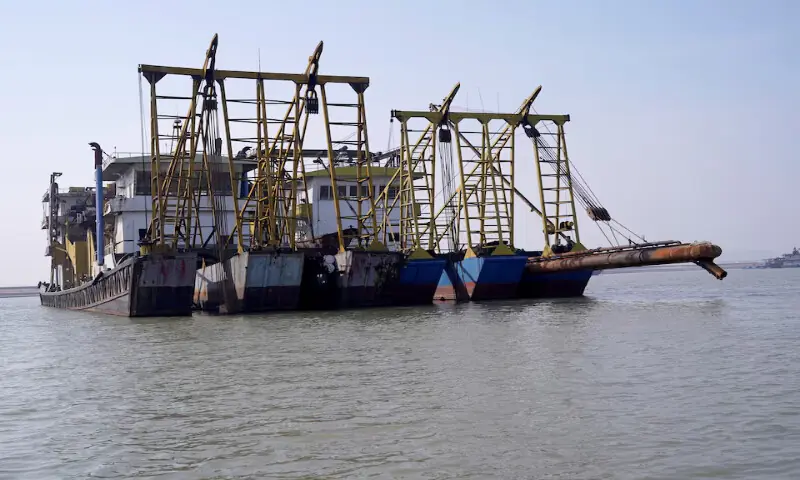
Pakistan has set up the National Dredging and Marine Services (NDMS) company to promote indigenous dredging capabilities in the country’s maritime sector.

The initiative is a joint venture of the National Logistics Corporation (NLC), Karachi Port Trust (KPT), Port Qasim Authority and Gwadar Port Authority.

 
Vietnam envoy sees Karachi emerging as regional trade hub

May 15, 2026

KARACHI: Vietnam’s Ambassador to Pakistan Pham Anh Tuan has said evolving geopolitical and trade dynamics in the region have created new opportunities for Pakistan, particularly Karachi, which has the potential to emerge rapidly as a regional trade and logistics hub due to the strategic importance of Karachi Port.

Speaking during a visit to the Karachi Chamber of Commerce and Industry (KCCI), the ambassador said disruptions in global supply chains caused by tensions in the Middle East and the wider US-Israel-Iran conflict had prompted businesses worldwide to explore alternative trade and transshipment routes. In this context, Karachi Port could play a key role in connecting regional markets, particularly the Middle East, through enhanced maritime and transshipment activities.

Pham Anh Tuan said this was his second visit to Karachi and his second interaction at the KCCI, reflecting the importance the Vietnamese Embassy attaches to strengthening engagement with Pakistan’s business community through the chamber.

Highlighting Vietnam’s economic progress, he said the country remains one of Asia’s fastest-growing economies. Pakistan and Vietnam, he added, enjoy longstanding friendly relations encompassing political, economic and cultural cooperation.

Referring to bilateral trade, the ambassador said trade volume between the two countries stood at around $850 million, which, despite remaining stable in recent years, remained well below its potential.

He said both countries had initiated discussions on a preferential trade agreement (PTA), which would benefit businesses on both sides. Under the proposed framework, tariffs on more than 100 product lines are expected to be reduced to zero, creating new opportunities for trade expansion and industrial collaboration.

He added that negotiations were progressing positively and both governments were actively pursuing the agreement.Emphasising the need for stronger business-to-business engagement, the ambassador invited KCCI to send a trade delegation to Vietnam to explore investment opportunities, joint ventures and commercial partnerships.

“Let us work together to further strengthen engagement between the business communities of both countries and take Pakistan-Vietnam relations to new heights through collective and collaborative efforts,” he said.

Earlier, KCCI President Muhammad Rehan Hanif said the chamber attached great importance to strengthening economic ties between Pakistan and Vietnam.

He said the KCCI, with more than 30,000 direct members and representation from seven industrial zones in Karachi, serves as the principal voice of Pakistan’s business and industrial community.

Karachi contributes more than 65 per cent of the country’s revenue and accounts for over 52 per cent of Pakistan’s exports, making it the country’s leading industrial and commercial hub, he added.

Muhammad Rehan Hanif said Pakistan and Vietnam enjoy cordial bilateral relations based on mutual respect, cooperation and shared aspirations for economic prosperity. However, despite progress in trade relations over the years, bilateral trade volume remained below the true potential of both economies.

He said Vietnam had emerged as a major success story in Asia through rapid industrialisation, export-led growth and economic reforms, while Pakistan offered opportunities in textiles, agriculture, pharmaceuticals, leather products, sports goods, surgical instruments, information technology and food processing.

The KCCI president said stronger engagement between the business communities of both countries could open new avenues for trade, investment, technology transfer, industrial collaboration and joint ventures. He also appreciated the efforts of the Vietnam Trade Mission in promoting closer business connectivity and reaffirmed the KCCI’s commitment to expanding international trade relations and exploring new global markets for Pakistani businesses.

 
Pakistan cuts Gwadar fees, eyes transit traffic from postwar Iran

Islamabad seeks to be a hub for foreign cargo going to and from Iran

ISLAMABAD -- Looking beyond the ongoing U.S.-Iran conflict, Pakistan has begun offering sizable incentives to foreign cargo carriers bringing goods between Iran and third countries as it repositions itself as a regional trade hub, partly by leveraging its proximity to the Middle East's second most populous nation.

Pakistan late last month issued an order permitting foreign cargo operators to transport goods through its territory to designated locations in Iran. The order specifies six routes involving three of Pakistan's main ports -- the Port of Karachi, Port Qasim and Gwadar Port -- and two border crossings with Iran in Pakistan's southwestern Balochistan province.

Junaid Anwar Chaudhry, Pakistan's maritime minister, on Monday announced a major tariff reduction at Gwadar Port aimed at attracting global cargo carriers.

"Berthing fees for container ships have been reduced by 25%," the minister said in a statement, "while port charges on international transshipment containers have been cut by 40%. [And] a one-month free storage facility has been introduced for general cargo."

These developments come with Islamabad mediating between the U.S. and Iran to end the U.S. war. Iran last weekend sent a proposal to end the war to Washington via Pakistan that U.S. President Donald Trump called "totally unacceptable."

eba8caf144427c1a7e293bf4f3989587cbf1ed9b.png

A Pakistani official told Nikkei Asia on condition of anonymity that Pakistani ports, especially Gwadar, are ready to facilitate the loading and unloading of cargo linked to trade with Iran. "There is capacity at Pakistani ports to handle transit cargoes for Iran and earn significant revenue," the official told Nikkei Asia.

Another official said that the arrangement mirrors the long-running Afghanistan transit trade framework, which was put aside in October after border clashes broke out between Pakistan and Afghanistan.

Experts say Pakistan can capitalize on its geographic position to gain from transit trade with Iran.

"Through TIR, Pakistan can facilitate transit trade not only into Iran but also onward to Turkey, Europe, Russia, and Central Asia," Ali Asad, a trade consultant in Karachi, told Nikkei Asia, referring to Transports Internationaux Routiers, a global agreement applied to the goods transport between customs offices of departure and destination countries, allowing cargo trucks to move across countries with simplified customs procedures.

"[Pakistan's permission of transit trade] has become particularly important because the Pakistan-Afghanistan border remains closed, disrupting Pakistan's traditional land route into Central Asia," Asad said.

Global cargo carriers could find Iranian ports useful for trade. But shipping companies, insurers and banks are likely to remain cautious about directly dealing with Iran, even after the current conflict ends, due to compliance risks and reputational concerns, Pakistani officials briefed Nikkei Asia on background.

Ikram ul Haq, who runs a legal and tax consultancy in Lahore, said that transit fees, warehousing, trucking, refining, re-export facilities, and border industrial zones could collectively generate billions of dollars over time. "Pakistan needs to replace the present extractive and over-taxed economic model with a facilitative one. Excessive customs duties, arbitrary regulatory controls and rent-seeking agencies [have destroyed] transit competitiveness," he said.

Experts added that by using its ports, Pakistan could emerge as a cheaper and faster alternative route for Iran compared to existing routes through Turkey and the Caucasus.

"This gives Pakistan an opportunity to position itself as a major eastern transit corridor for Iran and potentially capture regional trade flows that currently move through Turkey, Georgia and Russia," Asad said.

A major concern for Pakistan's transit trade plans is U.S. sanctions on Iran, which have continuously targeted Iran's oil sector, military-linked entities and parts of its banking system.

Still Pakistan appears enthusiastic about the plan. "A large category of commercial goods and transit activity remains outside direct sanctions restrictions," a Pakistani official said.

Experts, however, say Pakistan must tread carefully.

"Pakistan must therefore pursue a calibrated approach," Haq said, stressing that it is safer to begin with permissible border trade, humanitarian commerce, localized currency settlements and regional transit cooperation "without openly colliding with sanctions restrictions."

 
Very odd for Iran to have been using UAE given that it still required another port in Iran to receive from UAE ships of imports. Pakistani ports work so much better for Iran, given the road links, and now the land trade corridors.

I think Iran's footprint in the UAE was/is more than the ports. Huge investments and money movements were made via UAE to circumvent the sanctions on Iran. No blaming either UAE and Iran; essentially, UAE has been the Switzerland of the Middle East.
But once this war on Iran started, the US Sec. Bennet said there is close scrutiny of bank accounts in UAE to freeze Iran linked account.
 
He divulged that all these facilities are connected through a modern six-lane expressway linking the port and free zone with the Coastal Highway.
He said that due to the tense situation in the Strait of Hormuz, Gwadar could serve as a safe and alternative trade route in the event of any possible war or sanctions. According to him, access from Gwadar to eastern regions of Iran and Central Asia is several hundred kilometers shorter compared to other cities of Pakistan, significantly reducing logistics costs and transit time.

Pakistan's highway system is indeed very good. One of weak spots is Hyderabad to Sukkur motorway which needs to be fixed asap. But overall decades of Pakistani investments in road networks, lately helped by China's CPEC, has placed Pakistan well to not only promote internal trade and tourism but also for movement of foreign goods to/from Pakistan. Well done on that! The road network is like the arteries in a human body!
 
Pakistan's highway system is indeed very good. One of weak spots is Hyderabad to Sukkur motorway which needs to be fixed asap. But overall decades of Pakistani investments in road networks, lately helped by China's CPEC, has placed Pakistan well to not only promote internal trade and tourism but also for movement of foreign goods to/from Pakistan. Well done on that! The road network is like the arteries in a human body!

Railways is the future! Especially when its electrified. It will cost 4x less then to transport goods. Pakistan finally started work on ML-1 upgradation, starting from Karachi.

It will remove thousands of trucks from roads, saving billions in diesel consumption. Pakistan should have gone for ML1 upgrade in 2010s but our obsession with motorways delayed it.
 
Railways is the future! Especially when its electrified. It will cost 4x less then to transport goods. Pakistan finally started work on ML-1 upgradation, starting from Karachi.

It will remove thousands of trucks from roads, saving billions in diesel consumption. Pakistan should have gone for ML1 upgrade in 2010s but our obsession with motorways delayed it.

You will only see this happening when NLC start operating it's own trains.
 

ECC allows NLC to take over shipping corporation

Khaleeq Kiani
May 20, 2026

1779283446359.png

Finance Minister Muhammad Aurangzeb, chairs a meeting of the Economic Coordination Committee (ECC) at Finance division, Islamabad, om May 19. —PID

ISLAMABAD: The Economic Coordination Committee (ECC) of the Cabinet on Tuesday approved the transfer of management control, along with a 30 per cent shareholding, in Pakistan National Shipping Corporation (PNSC) to the National Logistics Corporation (NLC) for optimum and integrated freight transport through shipping and road networks.

The ECC meeting, presided over by Finance Minister Muhammad Aurangzeb, also approved more than a 70pc increase in the subsistence allowance for Kashmiri refugees of 1989 and seven supplementary grants worth around Rs8.634 billion.

An official statement said the ECC “granted in-principle approval for restructuring of PNSC of the Ministry of Maritime Affairs through sale of 30pc shareholding and transfer of management control to NLC” — an army-run logistics firm working under the Ministry of Planning, Development and Special Initiatives.

The summary for restructuring and divestment to NLC was moved by the Ministry of Maritime Affairs following an earlier approval by the prime minister in February this year.

The ECC directed the authorities concerned to expedite the restructuring and consolidation process to tap emerging maritime and transhipment opportunities.

PNSC is Pakistan’s national shipping carrier engaged in the transportation of dry bulk and liquid cargoes across the globe. It operates a fleet of 12 ships with a carrying capacity of 938,876 tonnes of deadweight. It also has a real estate business and a ship repair workshop.

According to official sources, the consolidation is aimed at expanding the national shipping fleet and reducing foreign freight costs. Under the prime minister’s approval, the vessel fleet is to be expanded from 12 to more than 50 in five years, with projected annual foreign exchange savings of $5bn to $6bn in freight costs by handling more sea-route cargo.
 

Users who are viewing this thread

Pakistan Defence Latest

Back
Top