Sea Port / Dry Port and Maritime Updates.

ECC allows NLC to take over shipping corporation

Khaleeq Kiani
May 20, 2026

View attachment 198012

Finance Minister Muhammad Aurangzeb, chairs a meeting of the Economic Coordination Committee (ECC) at Finance division, Islamabad, om May 19. —PID

ISLAMABAD: The Economic Coordination Committee (ECC) of the Cabinet on Tuesday approved the transfer of management control, along with a 30 per cent shareholding, in Pakistan National Shipping Corporation (PNSC) to the National Logistics Corporation (NLC) for optimum and integrated freight transport through shipping and road networks.

The ECC meeting, presided over by Finance Minister Muhammad Aurangzeb, also approved more than a 70pc increase in the subsistence allowance for Kashmiri refugees of 1989 and seven supplementary grants worth around Rs8.634 billion.

An official statement said the ECC “granted in-principle approval for restructuring of PNSC of the Ministry of Maritime Affairs through sale of 30pc shareholding and transfer of management control to NLC” — an army-run logistics firm working under the Ministry of Planning, Development and Special Initiatives.

The summary for restructuring and divestment to NLC was moved by the Ministry of Maritime Affairs following an earlier approval by the prime minister in February this year.

The ECC directed the authorities concerned to expedite the restructuring and consolidation process to tap emerging maritime and transhipment opportunities.

PNSC is Pakistan’s national shipping carrier engaged in the transportation of dry bulk and liquid cargoes across the globe. It operates a fleet of 12 ships with a carrying capacity of 938,876 tonnes of deadweight. It also has a real estate business and a ship repair workshop.

According to official sources, the consolidation is aimed at expanding the national shipping fleet and reducing foreign freight costs. Under the prime minister’s approval, the vessel fleet is to be expanded from 12 to more than 50 in five years, with projected annual foreign exchange savings of $5bn to $6bn in freight costs by handling more sea-route cargo.


Soon PM house and President House will also be handed over to PMA for better facility management.
 
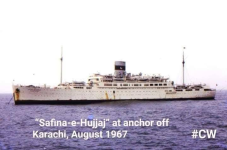
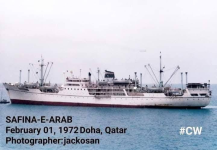
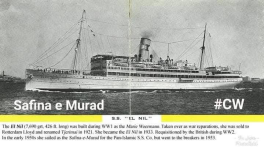
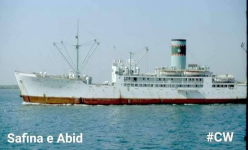
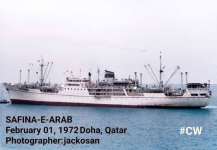
Some Pakistani passenger ships that used to take pilgrims to Jeddah are as follows:
The name of the ship is the owner.
Safina Arab (First) Pan Islamic Steamship Com. Ltd.
Safina Murad Pan-Islami Steamship Work. Ltd.
Safina-e-Haj Pan-Islami Steamship Work. Ltd.
Safina Abid Pan Islamic Steamship Work. Ltd.
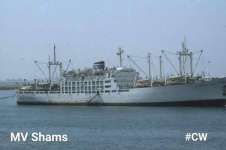
Ship of Arabia (Second) Pan Islamic Steamship Com. Ltd. Shams Crescent Shipping Lines Ltd. /PNSC
 
MV_Shams started cargo service from January 1960 with regular passengers between east and west Pakistan, who used to travel an average of 13 rounds per year on the Karachi/Chittagong/Karachi route.

This journey continued till the end of the fall of Dhaka.

After that, MVShams deployed at the service of pilgrimage. During the year 1972 and 1973, MV Shams was carrying pilgrims in the Hajj season before the gunpowder tunnels were laid in the Pasrur river.

Fortunately, ship was able to pull out the pilgrims with more than 3500 passengers in an emergency situation. and safely reached Karachi.

MV Shams, was scrapped in 1994.
 

Probe ordered after two ships collide near Karachi port

The Newspaper's Staff Reporter
May 30, 2026

1780156350833.png

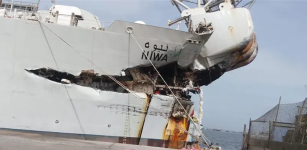
KARACHI: Two ships collided off Karachi Port on Thursday due to the alleged negligence of their captains, officials said on Friday.

They said that the federal government had ordered a probe into the collision between MV Niwa and MV Papu.

No casualties or injuries were reported in the accident, and port operations remained unaffected, they added.

Maritime Affairs Minister Junaid Anwar Chaudhry said in a statement that the accident occurred on the night of May 28 outside the operational limits of Karachi Port due to negligence on part of the masters of both vessels.

“The causes of the maritime accident are being investigated,” he stated.


Fleet to double under Blue Economy plan​

Cargo handling up 5% to 79m tonnes; seafood exports target $500m as offshore exploration continues


KARACHI:
The government has set out an expansive Blue Economy agenda for FY2026-27, including plans to more than double Pakistan's national shipping fleet, invest heavily in maritime infrastructure, expand fisheries development and continue offshore energy exploration, even as key indicators from the outgoing fiscal year point to modest growth across the sector.

According to the Annual Plan 2026-27 made public alongside the budget, shipping, fisheries, port infrastructure and offshore energy have been identified as central pillars of the government's strategy to increase the economic contribution of Pakistan's coastal and marine resources.

The roadmap comes at a time when the maritime sector is in a transitional stage, as cargo handling has also seen support from shifting regional trade routes amid the Iran conflict, which has diverted additional shipping activity towards Pakistani ports. The development has to some extent covered up the sector's relatively small contribution to economic activity despite Pakistan's strategic location and coastline stretching more than 1,000 kilometres along the Arabian Sea.

During July-March FY2025-26, total cargo handled at the country's three major ports – Karachi Port, Port Qasim and Gwadar Port – reached 79 million metric tonnes, reflecting a 5% increase over the corresponding period of the previous year, according to official documents.

While the increase points to some improvement in port activity, overall cargo volumes remained closely linked to broader trade and economic trends that have been subdued in recent years.

The Pakistan National Shipping Corporation (PNSC), the country's state-owned shipping company, added three vessels during the outgoing fiscal year, increasing its operational fleet to 14 ships.

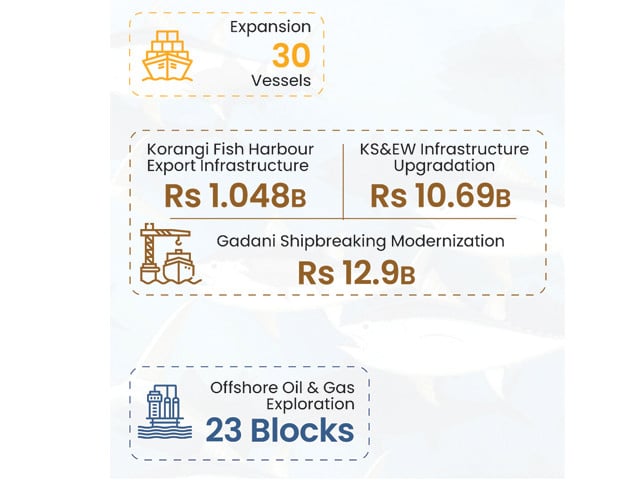
The government now plans to significantly expand that capacity through the PNSC Fleet Development Plan, under which the national fleet is expected to grow from 14 to 30 vessels over the coming years. The expansion is likely to increase Pakistan's share in the transportation of its own imports and exports, much of which is currently handled by foreign shipping companies.

The fisheries sector, another key component of the Blue Economy strategy, recorded seafood exports worth $405 million during July-March FY2025-26. The government expects exports to reach $500 million by the close of the fiscal year.

Pakistan's seafood exports continue to rely largely on markets in the European Union and Gulf Cooperation Council (GCC) countries. However, industry stakeholders have repeatedly highlighted infrastructure constraints, including inadequate cold storage facilities, limited processing capacity and deficiencies in fish handling systems, as factors restricting export growth and value addition.

The government has also earmarked substantial resources for upgrading maritime infrastructure under the Public Sector Development Programme (PSDP). Key projects include the Korangi Fish Harbour (KoFHA) Export Infrastructure Project costing Rs1.048 billion, the Karachi Shipyard & Engineering Works (KSEW) Infrastructure Upgradation project worth Rs10.69 billion, and the Gadani Shipbreaking Modernisation project estimated at Rs12.9 billion.

Questions were sent to relevant authorities; however, responses could not be obtained as officials were not reachable outside working hours.


The Gadani shipbreaking yard remains one of the largest ship recycling centres in the world and is an important source of scrap metal for domestic industries. Authorities expect the planned investment to improve infrastructure and operational standards within the sector.

The government's maritime strategy also places renewed emphasis on offshore energy exploration. Official documents show that 23 offshore oil and gas blocks covering a combined area of 53,510 square kilometres have been awarded for exploration activities. Planned investment in these blocks stands at approximately $80 million over a three-year licensing period.

Exploration activities in the awarded blocks are expected to continue during FY2026-27 as authorities seek to assess the commercial potential of offshore hydrocarbon resources.

Alongside oil and gas exploration, the government plans to undertake technical and feasibility studies for offshore wind energy projects in the Sindh Wind Corridor and the Hingol National Park Corridor. The studies form part of broader efforts to evaluate the potential of marine-based renewable energy resources as Pakistan looks to diversify its energy mix.

In addition to infrastructure projects and resource exploration, policymakers are preparing a series of regulatory initiatives aimed at providing a long-term framework for maritime development. The government plans to secure approval of the National Maritime Policy, National Shipping Policy and National Fisheries and Aquaculture Policy during the next fiscal year.

The proposed policies are expected to address issues related to governance, investment, sectoral development and resource management across different segments of the maritime economy.

Plans have also been outlined to expand inland and coastal aquaculture projects in Sindh, Balochistan and Punjab in an effort to increase fish production and support employment opportunities in rural communities. Another initiative included in the annual plan is the issuance of the country's first ferry service licence, which authorities hope will support marine tourism and improve maritime connectivity.

The government's targets for FY2026-27 represent one of the most comprehensive attempts in recent years to position the maritime sector as a driver of economic activity.

However, the scale of the planned expansion contrasts with the pace of growth recorded during the outgoing fiscal year. Cargo volumes, fisheries exports and fleet additions all registered incremental gains, while several long-standing challenges related to infrastructure, investment and competitiveness remain unresolved.

With major spending commitments now planned across shipping, fisheries, shipbuilding, shipbreaking and energy exploration, attention is likely to shift towards implementation and the extent to which the proposed investments translate into higher trade volumes, stronger exports and greater economic activity.

The annual plan suggests that the government sees considerable untapped potential in Pakistan's coastal economy. Whether that potential can be converted into measurable economic gains will depend on the execution of projects, the effectiveness of new policies and the ability of public institutions to deliver on the targets set for the coming years.

g31781300513-2.jpg
 

Deeper Waters, Bigger Ships: KGTL Dredging Completion Marks a New Chapter for Pakistan’s Trade​


Pakistan’s maritime industry has entered a deeper and more competitive era with the completion of dredging works at Karachi Gateway Terminal Limited (KGTL), a landmark development that strengthens Karachi Port’s ability to handle larger vessels, improve freight efficiency and support the country’s long-term trade competitiveness. At a time when export growth, lower logistics costs and foreign exchange optimization remain central to Pakistan’s economic priorities, the upgraded depth at Karachi Port’s East Wharf represents a strategic step forward for importers, exporters, shipping lines and the wider national supply chain.

The completed dredging works have achieved a navigational depth of minus 14 meters in the Upper and Lower Channel, including a 450-meters diameter turning circle at Karachi Port. At East Wharf, a depth of 15.5 meters has been achieved across berths 6 to 17, covering the container terminal operated by Karachi Gateway Terminal Limited (KGTL) and the multipurpose terminal operated by Karachi Gateway Terminal Multipurpose Limited (KGTML).

The dredging completion forms part of AD Ports Group’s ongoing investment program in Pakistan, reflecting a substantial investment exceeding USD 200 million currently under execution across its Karachi terminals. Led through Noatum Ports, its international ports operating arm, under the concession framework with Karachi Port Trust, the port authority responsible for overseeing port operations and facilitating infrastructure development at Karachi Port, the program brings together international port operating expertise, private-sector investment and public-sector facilitation to position Karachi Port among the region’s leading maritime hubs.


The achievement enhances the operational capability of East Wharf across both container and bulk cargo handling. It enables deeper-draft vessels to call at the berths managed by KGTL and KGTML, supporting improved vessel planning, more efficient cargo movement and stronger connectivity between Pakistan and key regional and international trade corridors.

For KGTL, the completion of dredging significantly enhances the container terminal’s handling capability. The terminal is now positioned to accommodate vessels of up to 350 meters in length and 15.5 meters draft, compared with its previous capability of approximately 305 meters in length and 13 meters draft. This upgrade will support improved berth utilization, greater operational flexibility and greater reliability for shipping lines calling at Karachi Port.

“Dredging underscores the government’s commitment to modernising port facilities and bolstering Pakistan’s role in regional and global trade. This will enable KPT to accommodate vessels up to 350 meters in length with a gross registered tonnage (GRT) of 100,000,” Muhammad Junaid Anwar Chaudhry – Federal Minister for Maritime Affairs


The impact of this development extends beyond the terminal. Larger vessels generally allow cargo to move more efficiently, reducing the cost of transportation on a per-unit basis and improving the overall economics of trade. For Pakistan, where sea freight forms a major component of import and export costs, such improvements can help strengthen the competitiveness of local businesses and support more efficient movement of goods through the country’s main maritime gateway.

The dredging milestone is part of a wider investment program by AD Ports Group through Noatum Ports to modernize terminal infrastructure and strengthen Pakistan’s maritime logistics ecosystem. Civil works are underway for the extension of the container terminal, and upon completion, KGTL’s container handling capacity is expected to increase from 750,000 TEUs to 1 million TEUs per annum. In parallel, AD Ports Group has placed orders for new ship and yard cranes for the container terminal, further reinforcing the long-term modernization of Pakistan’s container handling infrastructure.

For KGTML, the deeper draft creates a major advantage for Pakistan’s bulk cargo sector. The multipurpose terminal will be able to handle larger bulk vessels of approximately 120,000 metric tons (post-panamax vessels) compared with the previous vessel size of around 60,000 metric tons (handy-max vessels). This capability is expected to support exporters by improving freight efficiency, reducing freight costs and generating an estimated USD 130 million savings of forex reserves and enabling larger export volumes to move more competitively through Karachi Port.


The advantage for importers is equally important. Larger vessels and improved terminal capability can help reduce freight-related costs on imported commodities, raw materials and industrial inputs. Over time, these efficiencies can support more competitive landed costs, benefiting industries, traders and, ultimately, consumers.

The completion of dredging at KGTL and the wider East Wharf berths therefore carries strong economic relevance. It improves Pakistan’s port capacity, strengthens shipping efficiency and supports the country’s ability to handle growing trade volumes. It also enhances Karachi Port’s position in a competitive regional environment where shipping lines increasingly prefer ports that can handle larger vessels with greater reliability and faster turnaround.

The achievement also reflects AD Ports Group’s continued investment outlook in Pakistan. Since entering the Pakistani market through its Karachi terminal concessions, the Group has continued to invest in infrastructure, equipment, technology and operational systems across both KGTL and KGTML. These investments are aimed at modernising terminal operations, improving service delivery and creating long-term value for Pakistan’s trade ecosystem.


At KGTML, AD Ports Group is advancing the development of Pakistan’s first dedicated bulk export facility. The investment in bulk handling equipment will strengthen the country’s bulk and break-bulk export infrastructure, supporting faster, cleaner and more efficient cargo handling. This is particularly important for commodities such as clinker and other bulk exports, where vessel size, loading efficiency and storage capacity directly affect freight costs and market competitiveness.

The development of warehouses at KGTML has also commenced as part of a broader plan to build advanced civil infrastructure for automated and enclosed conveying, storage and handling systems for bulk cargo. The project is designed to support dust-free and environmentally responsible operations through specialised automated loaders capable of handling gearless vessels. Following completion of its first phase, the facility is expected to support export bulk cargo capacity of up to 8 million tonnes per annum, while also improving the handling of import cargo.

In addition, the development of silos and clean bulk storage infrastructure, supported by the long-term agreement between Karachi Gateway Terminal Multipurpose Limited and Louis Dreyfus Company Pakistan, will further strengthen Pakistan’s agri-bulk and commodity handling capability. The partnership is expected to support modern bulk storage and handling solutions, enhance the movement of agricultural commodities and reinforce Karachi Port’s role as a strategic gateway for regional and international agri-trade.


The value addition from the completion of the dredging works is therefore both immediate and long term. Immediately, it allows larger and deeper-draft vessels to call at East Wharf. Over the longer term, it supports terminal expansion, lower freight costs, stronger export competitiveness, improved import efficiency and better utilization of Pakistan’s maritime infrastructure.

For exporters, the benefit lies in the ability to move larger volumes more efficiently and at more competitive freight rates. For importers, it lies in improved shipping economics and stronger supply chain reliability. For shipping lines, it creates a more capable and dependable port call. For Pakistan’s economy, it strengthens a critical trade gateway at a time when logistics efficiency, export competitiveness and foreign exchange management are essential to sustainable growth.

Karachi Port has long served as Pakistan’s principal maritime gateway. With the completion of dredging at KGTL and across East Wharf berths 6 to 17, that gateway is being modernized for the next phase of national trade growth. The development signals a clear shift towards deeper, larger, cleaner and more efficient terminal operations.


The completion of dredging at KGTL is therefore more than a terminal milestone. It is a national trade milestone. Through deeper channels, upgraded berths, new equipment, terminal expansion and continued investment by AD Ports Group, Pakistan’s busiest maritime gateway is being repositioned to handle bigger ships, move cargo more efficiently and support the country’s long-term economic growth. The dredging project reflects the confidence of a leading global port operator in Pakistan’s economic future and supports the country’s efforts to attract further foreign investment.
 

Users who are viewing this thread

Pakistan Defence Latest

Country Watch Latest

Back
Top