Sea Port / Dry Port and Maritime Updates.

Karachi Port sets national record with 2.65mn TEUs handled in fiscal year

  • Highlights its vital role in Pakistan's economy and maritime trade growth
Published June 19, 2026

1781889189322.jpeg

By BR Web Desk

Pakistan’s Karachi Port set a new record by handling 2.651 million TEUs (Twenty-foot Equivalent Units) before the end of the current fiscal year, making it the highest container handling volume in the country’s history.

“The record reflects strong business confidence in the country’s maritime sector,” Federal Minister for Maritime Affairs Muhammad Junaid Anwar Chaudhry said.

He added that the historic performance is the result of the tireless efforts of officers and workers of the Karachi Port Trust.

He emphasised that Pakistan’s shipping and logistics capacity was steadily strengthening, and the government’s mission to develop the country as a regional transhipment and logistics hub will continue.

READ MORE: Government suspends KPT’s planned 5% tariff hike

Moreover, the Chairman of the Karachi Port Trust, Retired Admiral Shahid Ahmed, noted that recent port reforms and the modernisation of infrastructure had significantly increased cargo traffic, contributing to the record performance.

He said that Karachi Port continued to play a vital role in Pakistan’s national economy and maritime trade, reinforcing its strategic importance.

In April, the port set a new record by handling 111,300 (TEUs) in a single month.
 
 
Yeah the reforms are surely bearing fruits:
To view this content we will need your consent to set third party cookies.
For more detailed information, see our cookies page.
 
Last edited:

KGTL plans up to $100m more investment in Karachi port after cargo surge from Iran war

Reuters Published June 23, 2026 Updated about an hour ago

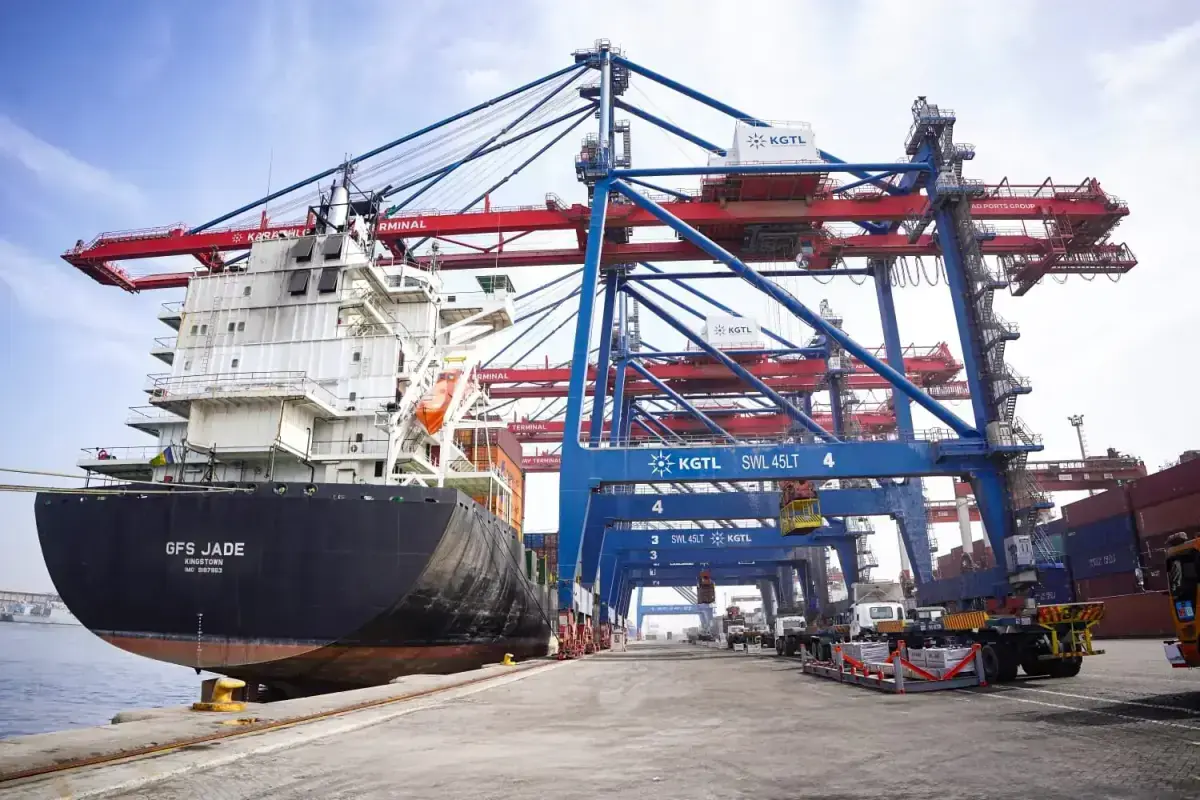
The Karachi Gateway Terminal Ltd (KGTL) is planning up to $100 million in new investment within five years as Pakistan tries to cut freight costs and turn a cargo surge triggered by the Iran war into longer-term regional shipping gains.

KGTL, backed by Abu Dhabi Ports Group, has already completed a $60m dredging project at Karachi Port and is expanding container and bulk-handling facilities, Chief Executive Officer (CEO) Khurram Aziz Khan told Reuters in an interview.

“We are targeting another $75 million to $100 million” within five years, Khan said, adding that the next phase would focus on expanding the container terminal, enhancing yard capacity, larger ship and yard cranes, dedicated bulk export infrastructure, silos, warehouses and automated conveying.

KGTL is also exploring investment in rail freight, including locomotives, rolling stock and storage hubs near agricultural areas, to link those areas to ports and help Pakistan export products such as corn and rice more competitively, he said.


“For transit as well, you need to provide a complete solution,” Khan said.

“We are ready to invest in that as well, to bring our own rolling stock and locomotive for the freight trains business.”

The disruption in maritime traffic due to the US-Israel war on Iran created a new opportunity for Pakistan to act as a transshipment hub, as cargo was rerouted through Karachi for onward shipment to other destinations during the conflict, Khan said.

“Pakistan has never really handled transshipment volume,” he said.

“This conflict has created this opportunity for Pakistan.”

The dredging project is expected to allow Karachi Port to handle bulk vessels of up to 120,000 metric tonnes, from about 60,000 tonnes previously, once Karachi Port Trust (KPT) issues revised handling parameters expected within days, Khan said.

KGTL is upgrading its bulk terminal to cut handling time for a 60,000-tonne vessel to about 2.5 to 3 days from 12 to 15 days, while building silos with annual capacity of 8.5m tonnes for clean bulk cargo to secure national food security, bulk-export warehouses and systems for fertiliser imports.

But sustaining the gains will depend on better road and rail links, the KGTL CEO said.
 
KGTL is also exploring investment in rail freight, including locomotives, rolling stock and storage hubs near agricultural areas, to link those areas to ports and help Pakistan export products such as corn and rice more competitively, he said.

“For transit as well, you need to provide a complete solution,” Khan said. “We are ready to invest in that as well, to bring our own rolling stock and locomotive for the freight trains business.”

Disruption into traffic

The Iran war created a new opportunity for Pakistan to act as a transshipment hub, as cargo was rerouted through Karachi for onward shipment to other destinations during the conflict, Khan said.
 
“Pakistan has never really handled transshipment volume,” he said. “This conflict has created this opportunity for Pakistan.”

The dredging project is expected to allow Karachi Port to handle bulk vessels of up to 120,000 metric tons, from about 60,000 tons previously, once Karachi Port Trust issues revised handling parameters expected within days, Khan said.

KGTL is upgrading its bulk terminal to cut handling time for a 60,000-ton vessel to about 2.5 to 3 days from 12 to 15 days, while building silos with annual capacity of 8.5 million tons for clean bulk cargo to secure national food security, bulk-export warehouses and systems for fertilizer imports.

But sustaining the gains will depend on better road and rail links, Khan said
 
The condition of logistics in Pakistan is piss poor to say the least.

From aging fleets to (practically) non existent rules, the list is very long.
 

Users who are viewing this thread

Pakistan Defence Latest

Country Watch Latest

Latest Posts

Back
Top