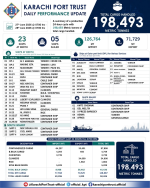
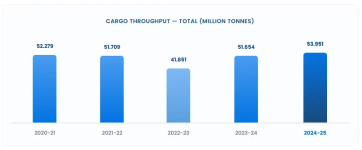
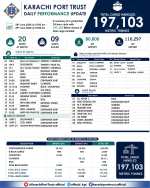
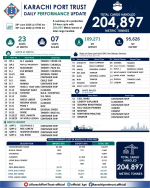
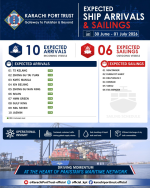
This figure shared on the KPTβs website shows cargo handling records from FY20-21 to FY24-25. β KPT
In his statement, the minister described the milestone as a reflection of the growing maritime sector and improved port efficiency. He attributed the achievement to effective management and increased port capacity.
He said the record marked significant progress for Pakistanβs maritime economy, port infrastructure and trade, adding that it reflected the success of his ministryβs reform agenda and the institutionβs professional capabilities.
Chaudhry said the government was continuing measures to modernise the ports, expand their capacity, strengthen logistics infrastructure and provide facilities in line with international standards to enhance Pakistanβs position as a regional maritime and trade hub.
In May, the first-ever fully transhipment cargo vessel arrived at KPT, marking Pakistanβs evolution into a premier regional transhipment hub.
Earlier this month, Pakistan, Saudi Arabia and local partners signed a memorandum of understanding (MoU) to explore the development of a maritime business district on 140βacre prime KPT waterfront land.
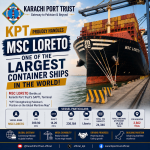
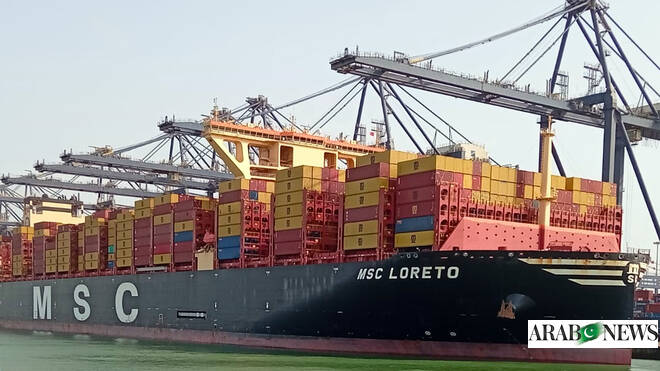
Karachi Port Welcomes a Global Maritime Giant.
Karachi Port Trust proudly welcomes MSC LORETO, one of the worldβs largest container ships, at the SAPTL Terminalβa testament to KPTβs growing capability to handle ultra-large container vessels.
With a 399.9-meter length, 24,346 TEU capacity and 3,802 TEUs designated for Karachi, this milestone reflects KPTβs world-class infrastructure, operational excellence, and commitment to strengthening Pakistanβs position on the global maritime map.
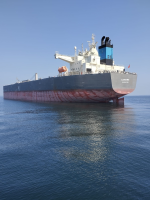
Pakistan National Shipping Corporation (PNSC) is pleased to announce the successful acquisition of a modern crude oil tanker/liquid bulk carrier, MT. NAFSIKA, which renamed MT. Lahore.
The vessel, constructed in 2022 by Sumitomo Heavy Industries, has a deadweight tonnage (DWT) of 112,051 tons. It is a state-of-the-art tanker designed and built in accordance with the highest international standards of safety, operational efficiency, and environmental compliance.