Sikh and their Holy Places

Sikhs are a forgetful bunch.

They forget how Modi tried his best to sabotage Kartarpur corridor opening back during Imran Khan's tenure.

They forget all of hindutva's malevolent activities after hardly a week or two.

There is little anyone can do to help forgetful people.
 

Preparations complete for Baba Guru Nanak’s 556th birth anniversary​


Pakistan High Commission in New Delhi issues 2,100 visas to Sikh pilgrims from India

Asif Mehmood
October 29, 2025

tribune


Preparations have been finalised across Pakistan for the 556th birth anniversary celebrations of Baba Guru Nanak Dev Ji, the revered founder of Sikhism.

The Pakistan High Commission in New Delhi has issued more than 2,100 visas to Sikh pilgrims from India to participate in the celebrations, which will be held in Pakistan from November 4 to 13, 2025.

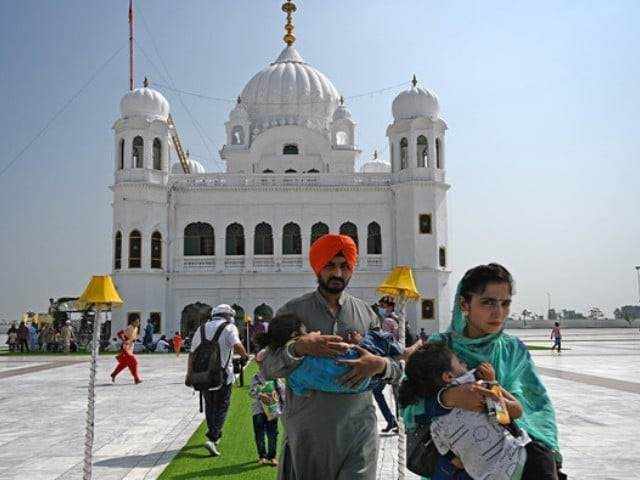
During their visit, the pilgrims will pay homage at Gurdwara Janam Asthan in Nankana Sahib, Gurdwara Panja Sahib in Hassan Abdal, and Gurdwara Darbar Sahib Kartarpur in Narowal.

Charge d’Affaires Saad Ahmad Warraich extended warm felicitations to the Sikh pilgrims and wished them a fulfilling and spiritually enriching journey. He emphasised that the Government of Pakistan remains committed to facilitating visits to sacred Sikh pilgrimage sites, in line with its enduring policy of promoting interfaith and intercultural harmony and understanding.

The issuance of these visas falls under the framework of the Bilateral Protocol on Visits to Religious Shrines (1974), which enables pilgrims from both countries to visit each other’s sacred religious sites.

According to the official schedule, the Indian pilgrims will arrive in Pakistan on November 4 via the Wagah Border and proceed to Nankana Sahib, where the main ceremony marking Baba Guru Nanak’s birth anniversary will take place on November 5 at Gurdwara Janam Asthan.

Religious rituals including Bhog Akhand Path Sahib, will be performed at Nankana Sahib and other nearby gurdwaras, marking a day of deep devotion and spiritual renewal for the Sikh community.

On November 6, the yatrees will travel to Hassan Abdal to stay at Gurdwara Panja Sahib, followed by visits to Gurdwara Darbar Sahib Kartarpur on November 8 and 9. They will then travel to Lahore on November 10 to visit Gurdwara Rori Sahib Eminabad in Gujranwala and Gurdwara Dera Sahib in Lahore.

The delegation will remain in Lahore on November 11 and 12 before returning to India through the Wagah Border on November 13.

The Evacuee Trust Property Board (ETPB) has confirmed that, apart from India, hundreds of Sikh pilgrims from Canada, the United Kingdom, the United States, and Australia will also join the celebrations.

All arrangements related to security, transport, accommodation, and food have been completed, with special teams from ETPB, local police, and district administrations deployed at key sites.

After the escalation of tensions in April this year, both India and Pakistan closed the Wagah/Attari border and expelled each other's citizens. Later, between May 6 and 10, the two countries engaged in a short but intense confrontation with each other.

In September, India denied permission to Sikh pilgrims to travel to Pakistan to attend Baba Guru Nanak Dev Ji's 486th death anniversary, which was on September 22.

The birth anniversary of Baba Guru Nanak Dev Ji serves not only as a sacred occasion for followers of the Sikh faith but also as a profound symbol of Pakistan’s continued efforts to foster peace, tolerance, and interfaith harmony in the region.
 
More than 2,100 pilgrims were granted visas to attend a 10-day festival marking 556th birth anniversary of Guru Nanak, founder of the Sikh faith, Pakistan's High Commission (embassy) in New Delhi said

Indian media reported around 1,700 were due to cross into Pakistan, although there was no immediate official confirmation from Indian authorities.

The pilgrims will gather on Wednesday at Nankana Sahib, Guru Nanak's birthplace about 80 kilometres (50 miles) west of Lahore by road, and later visit other sacred sites in Pakistan, including Kartarpur, where the guru is buried.

Pakistan's High Commission had said last week its decision was consistent with efforts to promote "inter-religious and inter-cultural harmony and understanding".

Indian newspapers reported on Saturday that the government would allow "selected" groups to travel to Pakistan.

The Kartarpur Corridor, a visa-free route that opened in 2019 that allows Indian Sikhs to visit the temple without crossing the main border, remains closed since the conflict.

Sikhism is a monotheistic religion born in the 15th century in Punjab, a region spanning parts of what is now India and Pakistan.

The frontier between the two countries was a colonial creation drawn at the violent end of British rule in 1947, which sliced the subcontinent into Hindu-majority India and Muslim-majority Pakistan.

While most Sikhs migrated to India during partition, some of their most revered places of worship ended up in Pakistan, including the shrines in Nankana Sahib and Kartarpur.


Related Topics
 

Sikhs perform rituals at Kartarpur​


APP
November 10, 2025


tribune


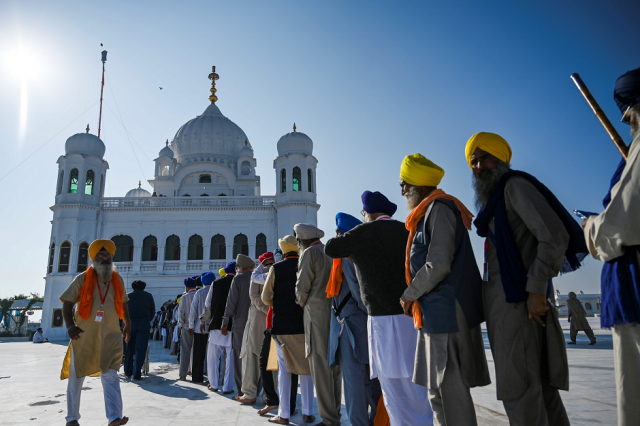
LAHORE: Sikh pilgrims from India participated in religious rituals at Gurdwara Darbar Sahib, Kartarpur, in connection with the birth anniversary celebrations of Baba Guru Nanak Dev Ji on Sunday.

On the occasion, the Pakistan Sikh Gurdwara Prabandhak Committee, in collaboration with the Kartarpur Project Management Unit, hosted a lively Kabaddi festival attended by Sardar Ramesh Singh Arora, President of the PSGPC and Punjab Minister for Minorities Affairs, as chief guest.

He said such events promote peace and strengthen goodwill. The yatrees, chanting "Pakistan Zindabad" and "Sri Akal", urged India to fully open the corridor to encourage cultural exchanges.
 
1767305104309.png

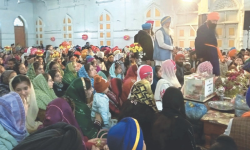
Sikh community of Peshawar: Unlike most Sikhs who immigrated en masse to India during partition of the subcontinent in 1947, majority of Sikhs in Khyber Pakhtunkhwa residing in areas such as Peshawar, Swat, Kurram, Orakzai and Khyber, chose to remain in Pakistan due to cultural reasons.

The Pashto language speaking Sikhs have a long-standing history in the region. They arrived here more than two centuries ago during the Sikh Period (1818 - 1849) and lived among the Muslim Pashtun tribes along the Afghan frontier.

They were integrated into the tribal system and accepted as part of the 'Ulas' (whole tribe with its clans and sub clans) on the condition that they adhered to Pashtunwali, the Pashtun code of conduct.

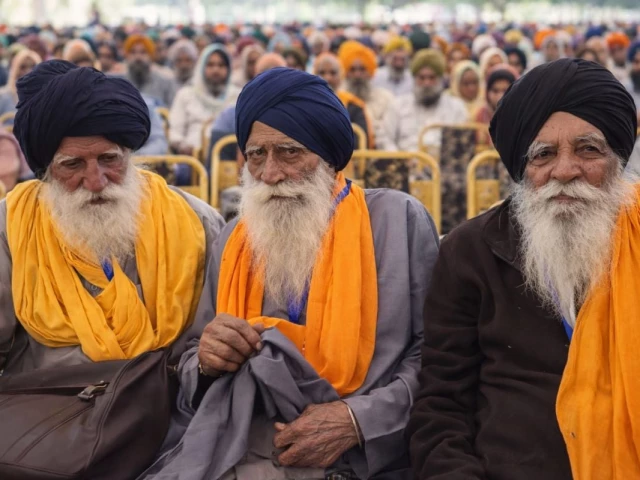
Among various other distinctions, their turban-wearing style is notably unique and different from mainstream Sikhs. In Peshawar and surrounds they have set up local businesses contributing to the economy.

Sikhs trade chiefly in the following professions: Cloth trade, Mobile Phone, Hikmat (Traditional medicine healers) and Cosmetics etc. They own many shops here. And Sikhs everywhere are generally known for their exceeding honesty and fairness in trade.
 

Spiritual fervour marks Guru Gobind Singh’s birth anniversary at Gurdwara Panja Sahib


Our Correspondent
January 6, 2026

1767701179426.png

Devotees offer rituals in connection with the birth anniversary of Guru Gobind Singh at Gurdwara Panja Sahib in Hassanabdal on Monday. — Dawn

TAXILA: The historic Gurdwara Panja Sahib reverberated with hymns, prayers and spiritual fervour on Monday as Sikh devotees gathered to celebrate the birth anniversary of Guru Gobind Singh Ji, the tenth and last Guru of the Sikh faith.

The 360th birth anniversary, known as Prakash Purab in the Sikh religion, was marked with special prayers, continuous recitation from the Guru Granth Sahib and devotional kirtan, creating an atmosphere of deep reverence and communal harmony.

Devotees paid homage to the Guru’s timeless teachings of courage, equality and justice, which continue to inspire generations across the world.

Rituals began early in the morning as worshippers assembled at the revered shrine to offer ardas, listen to recitations from the Guru Granth Sahib and participate in devotional kirtan.

A colourful procession was also taken out within the gurdwara premises to mark the birth celebrations. Langar was arranged for all visitors, reinforcing the Sikh tradition of equality and community service, as the celebrations concluded with prayers for peace and unity.

Gullbeer Singh, granthi (caretaker) of the Sikh temple, while shedding light on the life of the last Sikh Guru, said that Guru Gobind Singh Ji, born in 1666, played a pivotal role in shaping Sikh identity.

He said the historic establishment of the Khalsa Panth in 1699 transformed the Sikh community into a collective bound by faith, discipline and a commitment to stand against oppression.

“His message of fearless spirituality and selfless service remains relevant far beyond religious boundaries,” he added
 
“The birth anniversary of Sri Guru Gobind Singh Ji reminds us of his message of courage and equality. Coming to Panja Sahib on this sacred day strengthens our spiritual bond and pride in our heritage,” said local community leader Sardar Jaggi Singh. Another attendee, Balbir Kaur, described the celebration as a link between past and present. “Observing Prakash Purab at this historic gurdwara connects us with our ancestors and the values the Guru taught us to uphold,” she said.

Young participants also highlighted the broader message of harmony. “Panja Sahib is a symbol of unity. People from different faiths joining us today shows that Guru Ji’s teachings of peace and service are still alive,” said Sukhdev Singh.

Evacuee Trust Property Board (ETPB) official Asmat Ullah said the event reflected Pakistan’s commitment to preserving religious heritage and promoting interfaith harmony.

“The celebration at Gurdwara Panja Sahib carries deep historical resonance, not only as a reminder of Guru Gobind Singh Ji’s teachings but also as an expression of Sikh heritage in Pakistan, a country where Sikh historical sites are treasured by global pilgrims,” he added.

Such observances also enhance Pakistan’s image as a site of religious pluralism, particularly in Hasanabdal, where Sikh and other minority communities actively contribute to social cohesion. Officials and community representatives said events like these underscore shared values of peace, unity and mutual respect.
 

Partition memories resurface as 3 Sikh pilgrims revisit Pakistan after decades for Baisakhi festival​


During their 10-day stay, pilgrims will visit key sites including Nankana Sahib and Panja Sahib

Asif Mehmood
April 10, 2026

baba karnail singh baba sardar shobaik singh and sardar harbans singh were among the pilgrims who crossed into pakistan to attend the baisakhi festival photo asif mehmood


Baba Karnail Singh, Baba Sardar Shobaik Singh and Sardar Harbans Singh were among the pilgrims who crossed into Pakistan to attend the Baisakhi festival. PHOTO: ASIF MEHMOOD

LAHORE: Hundreds of Sikh pilgrims arriving from India at the Wagah border on Friday included three elderly men whose journey carried memories spanning more than eight decades, as they returned to their birthplace in Pakistan for the first time since the 1947 partition.

Baba Karnail Singh, Baba Sardar Shobaik Singh and Sardar Harbans Singh were among the pilgrims who crossed into Pakistan to attend the Baisakhi festival. For them, the visit was not merely a religious pilgrimage but a deeply personal return to their ancestral village after a lifetime of separation.

The three were born in Dogej Wahgariyan, a village on the outskirts of Lahore, but were displaced during Partition and later settled in Shahura, a border area in India’s Amritsar district. Despite the passage of time, they said memories of their village remained vivid.

Although Pakistan issued 2,840 visas, only 2,238 pilgrims arrived, with more than 600 not travelling despite receiving visas.PHOTO: ASIF MEHMOOD


Although Pakistan issued 2,840 visas, only 2,238 pilgrims arrived, with more than 600 not travelling despite receiving visas.PHOTO: ASIF MEHMOOD
 
During immigration at Wagah, the elderly pilgrims appeared emotional. Baba Karnail Singh recalled village streets, trees and a well where he spent his childhood. Baba Sardar Shobaik Singh said he still remembered the names of his Muslim friends but did not know where they were now, adding that not being able to return earlier had remained a lifelong regret.

For Sardar Harbans Singh, the visit fulfilled a long-held wish. He said his only desire in life had been to see his birthplace once again.

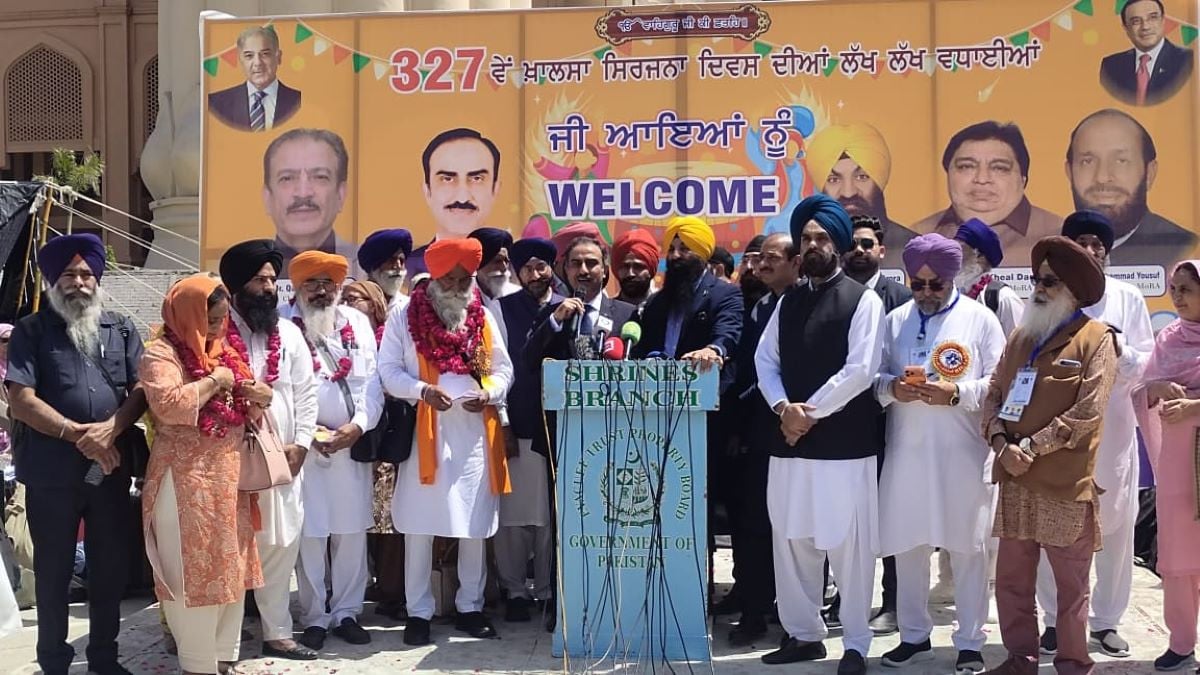
Their story stood out among a larger group of 2,238 Indian Sikh pilgrims who arrived in Pakistan to participate in Baisakhi and the 327th birth anniversary of the Khalsa.

The pilgrims were received at Wagah by officials, including Pakistan Sikh Gurdwara Parbandhak Committee President and Punjab Minister for Minority Affairs Sardar Ramesh Singh Arora, Additional Secretary Shrines Nasir Mushtaq and Lahore Commissioner Maryam Khan.

Mushtaq said comprehensive arrangements had been made for the pilgrims, including accommodation, langar, transport and medical facilities. He added that the main Baisakhi ceremony would be held on Tuesday at Gurdwara Panja Sahib in Hasan Abdal.

Arora said Pakistan was "not a second but the first home" for Sikhs, adding that the issuance of thousands of visas despite strained bilateral relations reflected the country’s commitment to peace. He said the doors of Pakistan would remain open for Sikh pilgrims.
 
17 gurdwaras in Pakistan would become functional this year, while restoration work on 34 more sites would be completed within the next two years.
India should fully open the Kartarpur Corridor to facilitate religious travel.
 
To view this content we will need your consent to set third party cookies.
For more detailed information, see our cookies page.
 
Vaisakhi Mela Celebrations in Pakistan, Arrival of 2200 Sikh Pilgrims!

The Vaisakhi Mela and Khalsa Birthday celebrations in Pakistan are underway with full religious fervor and enthusiasm, in which 2200 Sikh pilgrims from various countries, including India, are participating.

The pilgrims began their visit from Gurdwara Panja Sahib and later proceeded towards Kartarpur. Foolproof security and the best arrangements have been made for the Sikh pilgrims, which have been appreciated by the Indian Jatha leader Sardar Surjit Singh.

During the visit, the pilgrims will also tour the Gurdwaras in Eminabad and Lahore on April 17, while on April 19, they will depart back via the Wagah Border.
 

Sikh pilgrims proceed to Kartarpur

Our Correspondent
April 16, 2026

TAXILA: Around 2,200 Sikh pilgrims from India on Baisakhi celebration Wednesday departed for Gurdwara Darbar Sahib Kartarpur after participating in Baisakhi celebrations at Gurdwara Panja Sahib.

They were seen off by Additional Secretary Shrines of the Evacuee Trust Property Board, Nasir Mushtaq, who personally oversaw the security arrangements for the pilgrims’ safe departure.

Strong contingents of elite police commandos were deployed, while the pilgrims travelled in three well-organised convoys under strict security protocols.

Enhanced security measures were enforced along all routes, and designated rest areas were exclusively reserved for the pilgrims, temporarily restricting public access to maintain sanctity and safety.Prior to departure, Sardar Surjit Singh, Jatha leader of the Shiromani Gurdwara Parbandhak Committee, expressed heartfelt satisfaction over the arrangements.

Speaking to the media, he noted with appreciation that Sikh holy sites in Pakistan are safe, well-preserved, and maintained in their original sanctity.

He commended the authorities for providing exemplary facilities, including accommodation, healthcare, and transportation, enabling the pilgrims to perform their religious rituals with ease and devotion.

As per the pilgrimage schedule, pilgrims will visit Gurdwara Rori Sahib on April 17 before proceeding to Lahore, where they will stay at Gurdwara Dera Sahib.

The pilgrims are scheduled to return to India via the Wagah Border on April 19.
 

Users who are viewing this thread

Pakistan Defence Latest

Country Watch Latest

Latest Posts

Back
Top