Southeast Asia quarterly economic review: Holding up strongly, September 3, 2024 | Full Report by McKinsey


23 minutes ago - BREAKING NEWS

Chinese Foreign and Defence Ministers arrive for first Cambodia-China ‘2+2’ Strategic Dialogue​


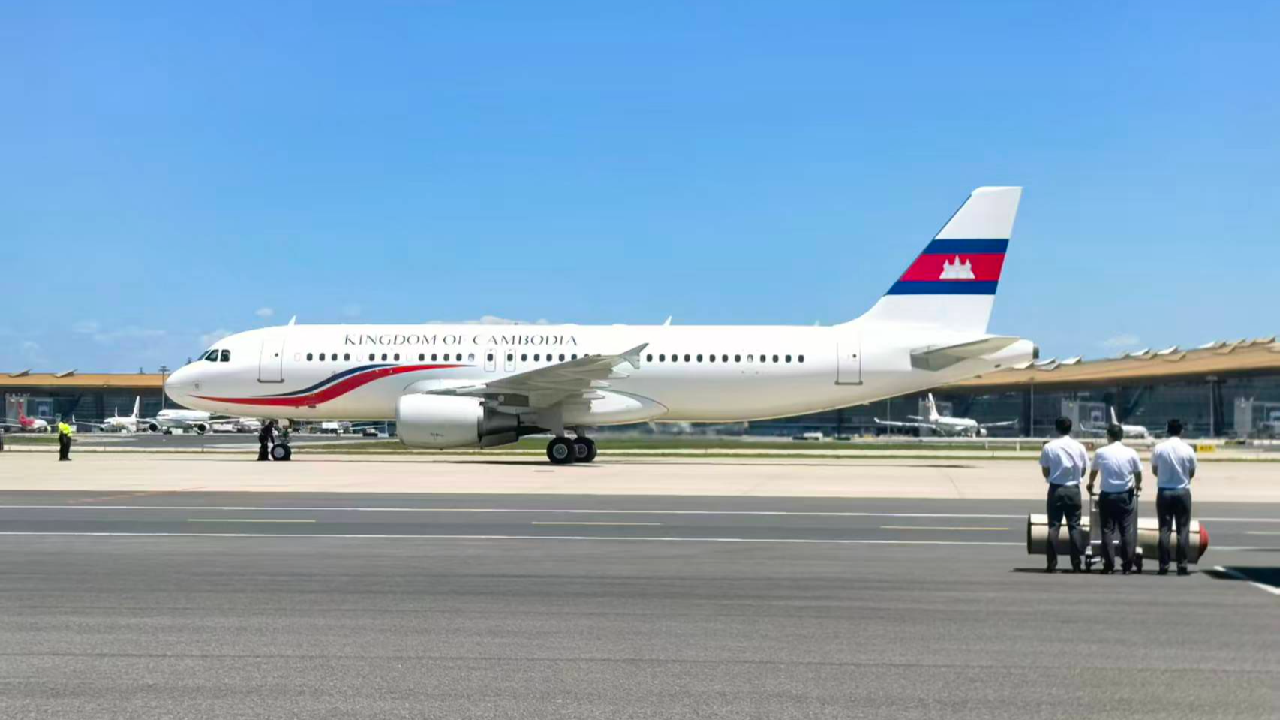
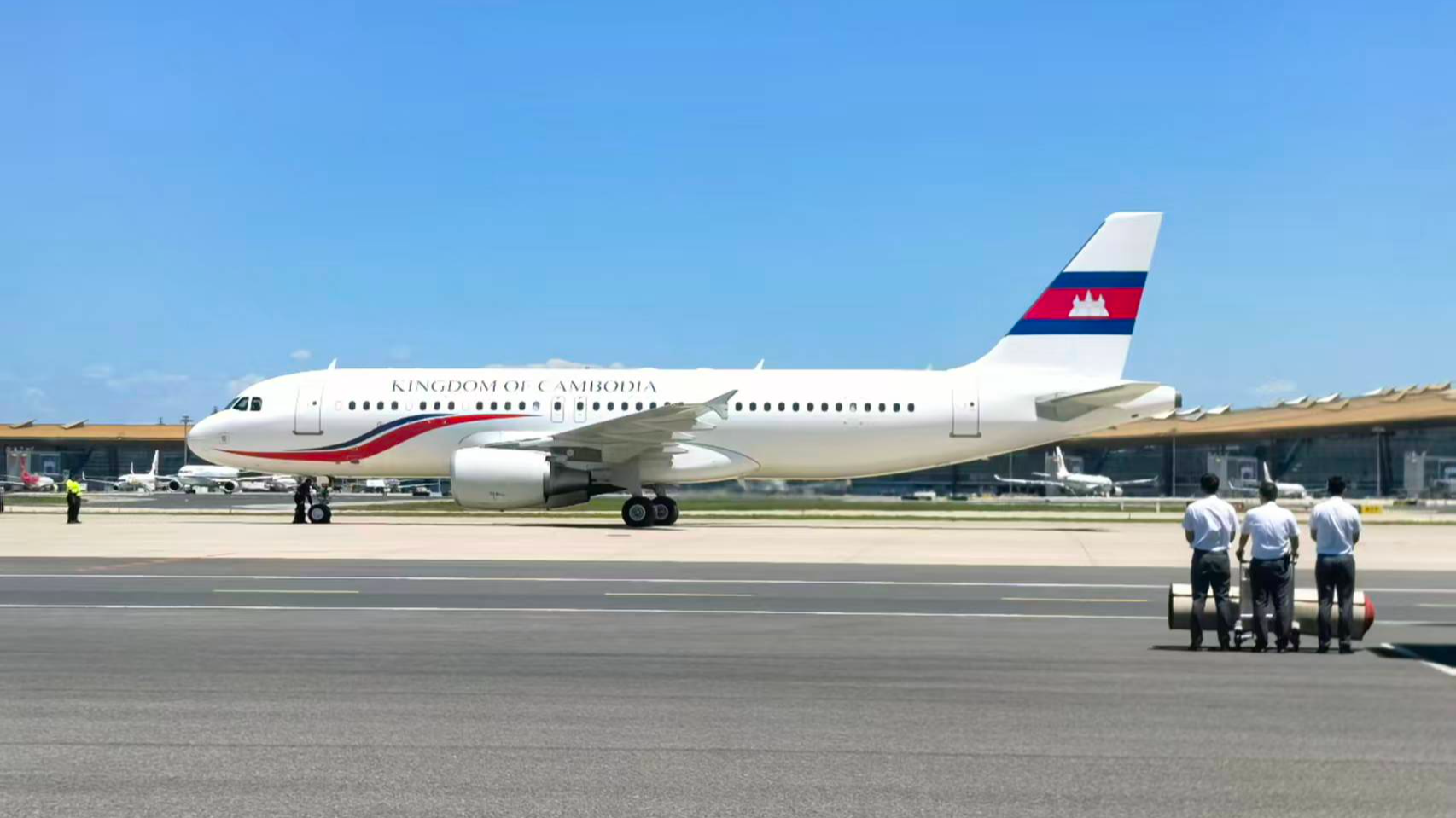
Wang Yi, Minister of Foreign Affairs, and Dong Jun, Minister of National Defence of the People’s Republic of China, arrived at the Techo International Airport this afternoon to co-chair the First Meeting of the “2+2” Strategic Dialogue Mechanism with their Cambodian counterparts.

According to the Cambodian Ministry of Foreign Affairs and International Cooperation, the First Meeting of the “2+2” Strategic Dialogue Mechanism between the Ministers of Foreign Affairs and Ministers of National Defence of Cambodia and the People’s Republic of China, will be held today in Phnom Penh.

The meeting will be co-chaired by Deputy Prime Minister Prak Sokhonn, Minister of Foreign Affairs and International Cooperation, and Deputy Prime Minister Tea Seiha, Minister of National Defence, with their Chinese counterparts.

22042614.jpg


Cambodia and China agreed to establish this dialogue during the state visit of President Xi Jinping to Cambodia in April last year, to promote high-level strategic communication, deepen mutual political and security trust and the Comprehensive Strategic Partnership between the two countries. This new mechanism will serve as a key platform for exchanging views on regional and international issues of common interest.

During their stay in Phnom Penh, the two visiting Chinese dignitaries will also pay separate courtesy calls on Mr Hun Sen, Acting Head of State and President of the Senate, and Prime Minister Hun Manet.

Following the “2+2” Dialogue, Wang tomorrow will hold in-depth discussions with Deputy Prime Minister Prak Sokhonn on advancing the implementation of existing cooperation frameworks and on contributing to peace, security, stability and development within and beyond the region. AKP


Beijing announces China FM Wang Yi to visit Cambodia, Thailand and Myanmar

Wednesday, 22 Apr 2026 | 3:44 PM MYT

BEIJING: Beijing said on Tuesday (April 21) that Chinese Foreign Minister Wang Yi (pic) will travel to Cambodia, Thailand and Myanmar from Wednesday through Sunday, with Cambodia expected to feature prominently on the trip through a new high-level security and diplomatic format.

In Cambodia, Wang will be joined by Defence Minister Dong Jun for the inaugural session of the China-Cambodia 2+2 strategic dialogue mechanism for foreign and defence ministers, according to Foreign Ministry spokesman Guo Jiakun.

Guo described Cambodia, Thailand and Myanmar as “friendly neighbours” of China and said Beijing hoped the visit would help turn the common understandings reached by the countries’ leaders into concrete progress.

He said China also aimed to deepen comprehensive strategic cooperation, bring greater benefits to the people of the three countries, and contribute more to regional peace, stability, development and prosperity.

He said the first 2+2 meeting with Cambodia would cover a broad agenda, including bilateral ties, political and security affairs, defence and security cooperation, and the wider international and regional situation.

Guo added that Wang would also hold meetings with other Cambodian leaders during the visit.

China, he said, is prepared to work with Cambodia to make full use of the strategic communication platform, improve coordination between high-quality development and high-level security, and promote prosperity, revitalisation and long-term stability in both countries. - China Daily/ANN
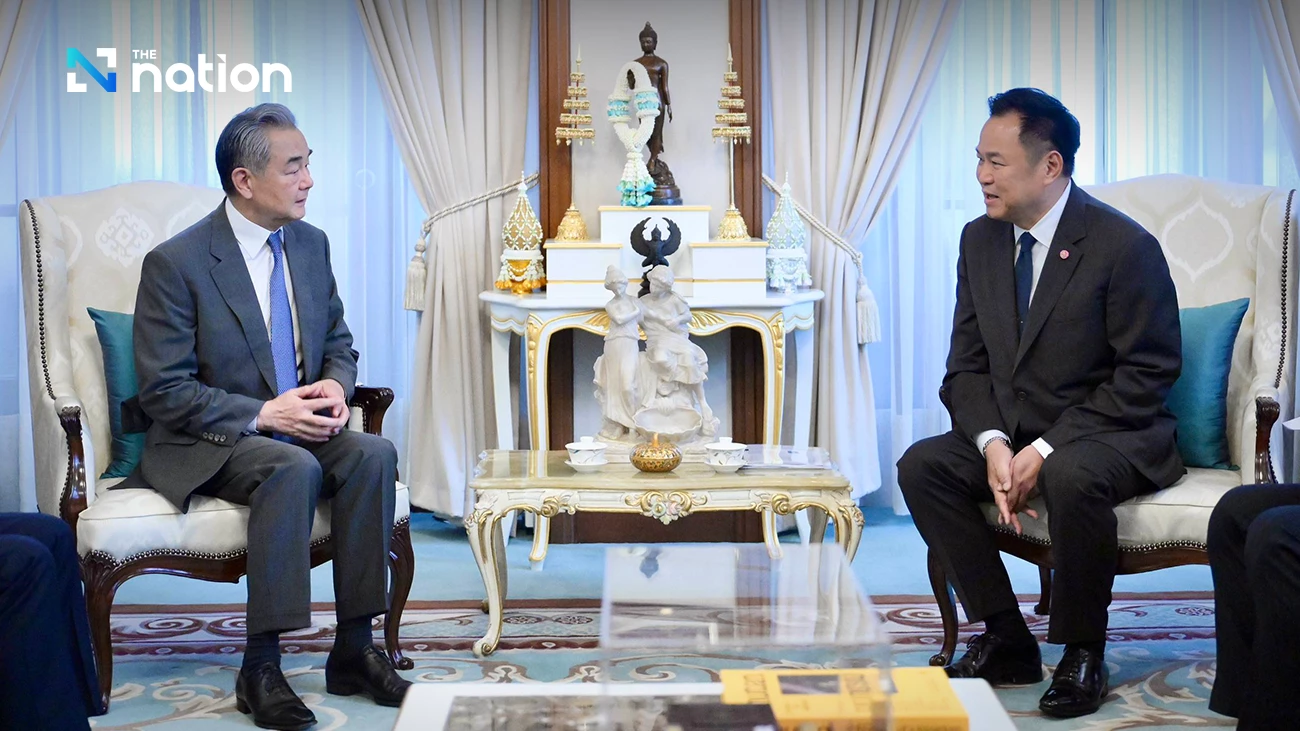
 

Thailand, China discuss ways to support energy and fertiliser supply​

FRIDAY, APRIL 24, 2026
  • Thailand's Prime Minister asked for China's support in supplying fertiliser to address high prices and potential shortages for Thai farmers.
  • Thailand requested China's backing in any international negotiations related to the Middle East crisis to help secure its supply of energy, crude oil, and gas.
  • In response to the requests for support, China's Foreign Minister Wang Yi reassured Thailand of their strong "sibling-like" relationship.
Prime Minister Anutin Charnvirakul revealed the outcome of his bilateral talks and discussions with Wang Yi, Minister of Foreign Affairs of the People’s Republic of China, saying both sides had discussed and reaffirmed Thai-Chinese relations and mutual support between the two countries across several issues, including efforts to address high fertiliser prices, the Landbridge project and the crackdown on call-centre gangs on April 24, 2026.

Anutin also asked China to support Thailand in any negotiations related to the Middle East crisis, the reopening of straits, or the management of energy, crude oil or gas shipments, and to keep Thailand in mind or include the country in the context of such talks.

Wang Yi, he said, asked Thailand not to worry, as Thai-Chinese relations were like those of siblings.

Anutin also discussed ways to deal with fertiliser shortages with Wang Yi.

He said Thailand had been able to manage the energy crisis fairly steadily, with no shortage expected during this period.

However, on the fertiliser issue, if Thailand received support from China in helping supply fertiliser, provided there were sufficient volumes, together with negotiations by Suriya Juangroongruangkit, Minister of Agriculture and Cooperatives, with Russia, this would greatly help Thai farmers and ease a major problem.

The Prime Minister also said the talks covered joint efforts to suppress scammers.

Thailand has cooperated with China on this issue, and offenders at every level, from major figures to lower-level operators, have faced decisive action from Thailand, enabling China to bring offenders back for prosecution.
 
To view this content we will need your consent to set third party cookies.
For more detailed information, see our cookies page.
 

Laos inks $1.45B clean energy deal with China: check key details​

Mar 24, 2025
  • Laos secures a $1.45 billion clean energy agreement with a Chinese power plant equipment manufacturer.
  • The agreement includes the development of a 1,800-megawatt clean energy power project in southern Laos.
  • Laos aims to expand its renewable energy mix further.
Laos has entered into a major clean energy agreement valued at $1.45 billion with a Chinese power plant equipment manufacturer.

This strategic partnership aligns with Laos’ ongoing commitment to expanding its clean power generation and transmission capabilities.

The deal is expected to facilitate the development of new clean energy infrastructure within the country, potentially including solar, wind, and hydropower projects.

By collaborating with a Chinese manufacturer, Laos aims to leverage China’s expertise and resources in the renewable energy sector.

Laos’ transition towards clean energy​

This agreement represents a significant step forward in Laos’ transition towards a cleaner and more sustainable energy future, while also strengthening economic ties between Laos and China.

A Sichuan-based company, China Western Power Industrial, and a Singapore-based construction company have partnered to design, supply, and construct a 1,800-megawatt clean energy power project in southern Laos.

The agreement was signed with the Xekong Thermal Power Plant in Laos and was announced in a stock exchange filing by China Western Power Industrial on Monday.

The initial designs are expected to be completed by the end of this year, and the project should be finished by early 2030.

The filing did not provide details on the energy source of the project.

Furthermore, a power transmission agreement, amounting to $228.8 million, was executed between the aforementioned Laotian entity and the Chinese corporation.

China Western Power’s presence in Laos​

In 2022, China Western Power solidified its presence in the Laotian energy market by securing a substantial supply and service contract.

The deal, valued at $409 million, was signed with another prominent power company in Laos, marking a significant step in the ongoing cooperation between the two countries in the energy sector.

This agreement encompassed not only the supply of electricity but also a comprehensive range of services, potentially including technical support, maintenance, and infrastructure development.

This strategic partnership aimed to bolster Laos’ power grid and support its growing energy demands, while also furthering China’s economic and political influence in the region.

Additionally, in 2024, a state-owned power company from China entered into a significant agreement with the government of Laos.

This agreement centered around the expansion of a renewable energy facility in northern Laos, focusing on the increased production of both wind and solar power.

Challenges in solar and wind power​

Laos, a landlocked country in Southeast Asia characterised by its mountainous terrain, has heavily relied on hydropower for its electricity generation.

Over the past decade, approximately 80% of the country’s electricity has been produced from hydropower plants, taking advantage of its abundant water resources and mountainous landscape.

However, despite the success of hydropower, Laos has faced challenges in expanding its renewable energy mix to include solar and wind power.

While the country has potential for both solar and wind energy, the development of these resources has been slower compared to hydropower.

This may be attributed to various factors, including the high initial investment costs for solar and wind projects, the need for grid infrastructure upgrades to accommodate these intermittent energy sources, and potential environmental and social impacts associated with large-scale solar and wind farms.

Laos has embraced a development strategy centered around electricity exports to its neighboring countries, including Thailand and Vietnam.

This strategy has earned Laos the nickname “the battery of Southeast Asia.”


Laos-China 500kV power link to be complete by 2026​

The initiative is set to expand bilateral power exchanges, enhancing co-operation between the two nations.

February 28, 2025

The Laos-China 500kV interconnection project has been officially launched in the Lao capital, Vientiane.

The launching ceremony saw the presence of several dignitaries, including Laos Prime Minister Sonexay Siphandone, Chinese Ambassador to Laos Fang Hong, Lao Minister of Energy and Mines Phoxay Sayasone and China Southern Power Grid (CSG) vice-president Liu Wei.

The initiative is set to expand bilateral power exchanges, enhancing co-operation between the two nations.

The project, to be operational by 2026, will facilitate a two-way electricity exchange capacity of 1.5 million kW, delivering 3 billion kilowatt hours (kWh) of clean electricity annually, advancing strategic energy cooperation.

The Laos section of the project is being developed by Electricité du Laos Transmission (EDL-T), while CSG will manage the Chinese section.

The project encompasses a new 500kV substation in Laos, a 183.5km cross-border transmission line linking Namor in Oudomxay, Laos, with Xishuangbanna in Yunnan, China, and two 230kV lines connecting the northern Laos power grid.

The project will position Laos as a regional hub for clean energy interconnection in the Lancang-Mekong area.

CSG has also donated power equipment and materials to EDL to enhance its operational and maintenance capabilities.

Chinese Ambassador Fang Hong stressed the importance of the project, noting that the Laos-China 500-kV interconnection project marks a major step forward in practical cooperation between the two countries.

She underscored the essential role of electricity in fostering economic and social progress, and regional growth.

Lao Minister Phoxay Sayasone noted the project’s strategic importance within Laos’s Five-Year Energy and Mines Development Plan 2021-25.

The interconnection project bolsters economic growth, expands grid interconnections and electricity exchanges between Laos and southern China, and supports Laos’ goal of becoming a regional hub for energy connectivity in ASEAN [the Association of Southeast Asian Nations].

CSG vice-president Liu Wei emphasised that the company will leverage cutting-edge technologies, equipment and standards to enhance regional power connectivity. He highlighted CSG’s dedication to advancing energy exchanges across regions and establishing a model for power collaboration.

POWERCHINA’s Monsoon Wind Power Project in Laos Completes Turbine Installation​


Recently, the final blade of turbine WA419 was successfully connected to its hub, completing the installation of all 133 wind turbines for the 600 MW Monsoon Wind Power Project in Laos, led by POWERCHINA. This achievement marks a significant milestone in the project, paving the way for the full-capacity grid connection and eventual handover.

Since construction commenced in March 2023, POWERCHINA has navigated various challenges through meticulous planning, effective coordination, and careful scheduling of equipment transport and installation. The use of BIM digital simulation technology allowed for risk prediction and workflow optimization. The successful, safe, and efficient installation of all turbines sets a new technical standard for mountain wind power projects in Southeast Asia.

Located in Sekong and Attapeu provinces in southern Laos, the Monsoon Wind Power Project is the country’s first wind farm and the largest single wind power project in Southeast Asia. It is also Asia’s first cross-border power transmission new energy initiative. The project, with a total installed capacity of 600 MW, comprises 133 wind turbines, each rated at 4.5 MW, a booster station, and a 500 kV transmission line.

The project is 96% complete, with Zones I and II, which contain 66 turbines, having already passed grid connection tests and 72-hour reliability operations with the Vietnamese grid as of April 2. The project not only supports Laos’ renewable energy goals but also creates numerous local jobs and contributes to the regional economy, highlighting POWERCHINA’s capabilities in executing large-scale international renewable energy projects.

Envision Energy Partners with Impact Electrons Siam to Develop Southeast Asia's Largest Future Energy System in Laos​


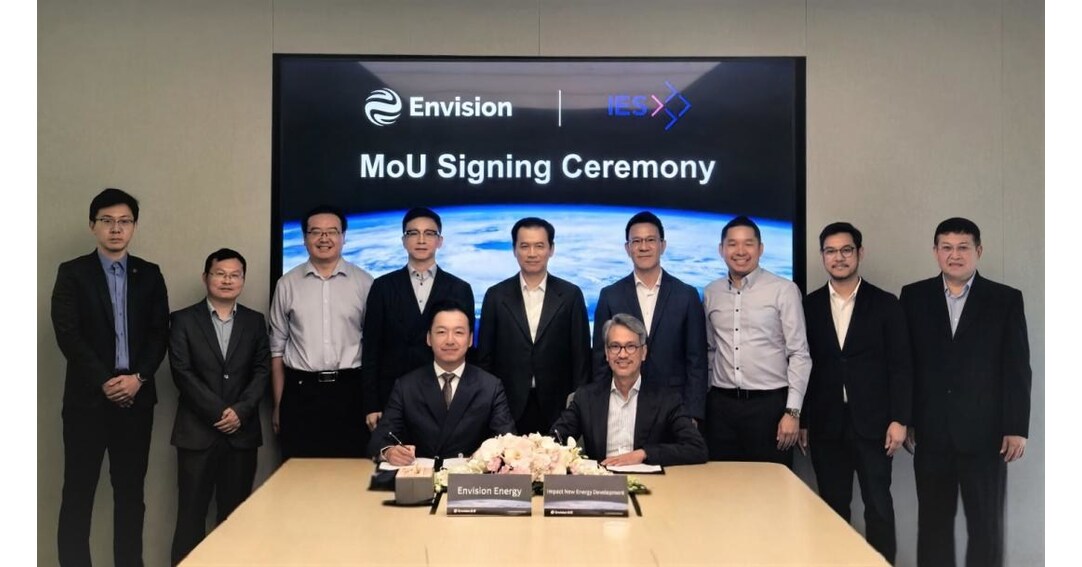
SHANGHAI, June 1, 2026 /PRNewswire/ -- Envision Energy, a global leader in green technology, has signed a strategic partnership with Impact Electrons Siam (IES), one of Southeast Asia's leading renewable energy developers, to jointly advance the landmark cross-border Monsoon Wind Power Project in Laos. The collaboration is expected to add significant wind power, solar, and energy storage capacity, creating Southeast Asia's largest Future Energy System, an AI-powered energy infrastructure that integrates energy systems with intelligent systems, and substantially expanding the region's integrated clean energy capacity.


The signing ceremony was attended by Malaythong Kommasith, Minister of Industry and Commerce (MOIC) of Lao PDR, Edward Hou, Senior Vice President & President of Asia-Pacific Region at Envision Energy; and Peck Khamkanist, Executive Chairman of Impact Electrons Siam. The project marks a significant step in Laos' transformation from a hydro-dominated power exporter toward a regional hub for diversified clean energy development, setting a benchmark for integrated renewable energy development across ASEAN.

Leveraging its global expertise in its pioneer future energy systems and net zero industrial parks, Envision Energy will provide advanced AI-powered future energy system to enable intelligent coordination and optimization across wind, solar, and storage operations. The green power generated will not only meet rapidly growing local electricity demand, but also provide critical support for next-generation sustainable infrastructure and industries such as smart cities, green data centers, green mining, and advanced manufacturing, accelerating Laos' energy transition. The parties will also study the potential role of green hydrogen in enhancing energy stability and supporting future green industrial park development in Laos. The project is expected to demonstrate how system-level integration and intelligent operations can improve renewable energy reliability, efficiency, and long-term resilience, creating a scalable model for clean energy development across Southeast Asia.

Edward Hou, Senior Vice President & President of Asia-Pacific Region at Envision Energy, said: "The future of renewable energy is shifting from competition among individual technologies to system-level integration and intelligent operations. By integrating wind, solar, and energy storage at scale, this project will further optimize Laos' energy mix, enhance grid stability and flexibility, and improve the cost competitiveness of clean electricity. It will further strengthen energy resilience across Southeast Asia and serve as a replicable model for building a more stable, efficient, and sustainable regional energy system."

"This collaboration represents an important milestone in Laos' ongoing energy transition and its ambition to evolve from a traditional power exporter into a diversified clean energy economy," added Peck Khamkanist, Executive Chairman of Impact Electrons Siam, "In partnership with Envision Energy, the project brings together global expertise in integrated energy systems to support more advanced and efficient clean power development in the region. Beyond its generation capacity, it is expected to create broader socio-economic value by supporting infrastructure modernization and enhancing Laos' role in regional energy cooperation."

Envision Energy has been gaining strong momentum across Southeast Asia. The company has partnered with Electricité du Cambodge (EDC) on a landmark 300MWh Battery Energy Storage System (BESS) project in Cambodia. Beyond enabling the efficient operation of the facility, Envision's AI-powered Future Energy System also acts as the "digital brain" of Cambodia's national grid under EDC. It supports the country's transition by delivering grid-level intelligence, enhanced stability, and seamless power management, helping to shape a more integrated and resilient energy landscape across ASEAN.


ASEAN Centre for Energy, Electricité du Cambodge, and Electricité du Laos Sign Joint Study Framework to Advance Cambodia-Lao PDR Power Interconnection​


blobid0_1M8tw3727DD10T4j52B7hyLCTiIhwhipmsTBGdqK.webp


Phnom Penh, 25 May 2026 – The ASEAN Centre for Energy (ACE), Electricité du Cambodge (EDC), and Electricité du Laos (EDL), have officially signed a joint study framework to advance cross-border interconnection between Cambodia and Lao PDR. The ceremony took place in Phnom Penh, Cambodia, on 25 May 2026, and was represented by Dr. Praing Chulasa, Managing Director of EDC, Viengthong Sackdara, PhD, Deputy Managing Director of EDL, and Dato’ Ir. Ts. Razib Dawood, Executive Director of ACE.

The ceremony was also attended by high-level representatives from ministries, including H.E. Victor Jona, Undersecretary of State of the Ministry of Mines and Energy (MME) and Senior Official on Energy (SOE) of Cambodia, and Dr. Santisouk Phimphachanh, Director General of the Department of Policy, Planning Development, and Evaluation, Ministry of Industry and Commerce (MOIC) of Lao PDR

Cambodia and Lao PDR possess strategic significance in ASEAN’s cross-border electricity exchanges. Cambodia, once heavily reliant on electricity imports to meet rising domestic demand, has reduced these imports through domestic resource development and is now advancing regional power trade, particularly in renewable energy. At the same time, Lao PDR has emerged as a key regional exporter of hydropower, positioning the country as an important contributor to ASEAN’s low-carbon energy transition.

Hence, this joint study framework (JSF) serves as a timely opportunity to leverage this potential. Through the JSF, ACE, EDL, and EDC will collaborate to develop a feasibility study and related studies for cross-border electricity interconnection between Cambodia and Lao PDR. The framework will cover a range of activities, including technical assessments, policy and regulatory reviews, economic and commercial analysis, preliminary environmental and social impact assessments, implementation planning, as well as training and capacity-building activities. It also formally establishes the Steering Committee and Working Committee to provide strategic oversight and technical coordination for the study.

This JSF is conducted under the ASEAN Power Grid Project Preparation Facility (APG-PPF), implemented through the collaboration between the World Bank (WB) and ACE within the Multi-Phase Programmatic Approach - Accelerating Sustainable Energy Transition (MPA-ASET) program. Since August 2025, the APG-PPF has been supporting the preparation of priority interconnection projects and strengthened technical capacity by scaling up the Feasibility Studies of Regional Power Trade of the Clean Energy and Power Trade Development in Southeast Asia Project, including the preparation of the ASEAN Interconnection Masterplan Study IV (AIMS IV).

"For EDC, we are implementing the government’s energy policies. Currently, renewable energy accounts for about 63% of our installed capacity with a target of at least 70% by 2030. In order to achieve this government target and to maintain reliability and stability in the power system, EDC has been developing a strong dispatching management system by using modern technologies to expedite integrate more variable renewable energy sources,” said H.E. Dr. Praing Chulasa, Managing Director of EDC.

“The signing of this Joint Study Framework is a significant step forward for Lao PDR and EDL. It provides a clear and structured path for us to work with Cambodia and ACE toward a dedicated cross-border power interconnection one that will allow Lao PDR to contribute its clean hydropower resources more effectively to the region. EDL is fully committed to this collaboration and looks forward to delivering a high-quality Feasibility Study that benefits both our countries and the broader ASEAN energy community,” said Vienthong Sackdara, PhD, Deputy Managing Director of EDL.

"This interconnection is not merely a national project. It sits at the heart of the broader ASEAN Power Grid, the region's collective ambition to link our electricity networks, enhance energy security for 670 million people, and accelerate the transition to clean energy. Cambodia and Lao PDR, through this agreement, are helping to build that grid, one interconnection at a time. ACE is privileged to stand at the centre of this effort. As the region's principal intergovernmental organisation on energy, ACE serves as the technical and analytical backbone of the APG initiative,” said Dato’ Ir. Ts. Razib Dawood, Executive Director of ACE.

Following the signing ceremony, a Trilateral Meeting between ACE-EDC-EDL, 1st Steering Committee Meeting, Technical Discussion with the World Bank, and 1st Working Committee Meeting for the development of the feasibility study were convened. The meetings discussed the objectives, general work plan, role and responsibilities, and expected outcomes of the JSF.

The signing of the JSF marks an important milestone in advancing the ASEAN Power Grid (APG), one of the region’s key strategic initiatives under the ASEAN Plan of Action for Energy Cooperation (APAEC) 2026–2030. By strengthening regional interconnection and enabling greater multilateral power trade, the initiative is expected to support ASEAN’s collective ambitions for a secure, affordable, resilient, and sustainable energy future.
 

Users who are viewing this thread

Pakistan Defence Latest

Back
Top