Syrian Civil War and The future of Syria after liberation

A Saudi technical delegation began implementing a memorandum of understanding to rehabilitate and develop the Adra Cement Factory, in preparation for the production of Bouzlin cement and training national cadres with the support of experts of the Northern Cement Group.

To view this content we will need your consent to set third party cookies.
For more detailed information, see our cookies page.
 
Removing a banner bearing the name "Almowahidin Muslims" from the entrance to the sect house in As -Suwayda after the Hijri decision to remove the adjective of Muslims from the Druze

To view this content we will need your consent to set third party cookies.
For more detailed information, see our cookies page.
 
Urgent ⚠️
Qasd conference in Raqqa, in the presence of Mazloum Abdi:

📌 SD weapon is a red line and we have no confidence in anyone.
📌 We will not accept return to centralization.
📌 We demand the amendment of the constitution to represent all components

To view this content we will need your consent to set third party cookies.
For more detailed information, see our cookies page.


SDL ⚠️
After a deep search from several sources regarding the file of the musion of SDF:

⚫️ SDF ⚫
📌 The internal decision in SDF rejects the delivery of the regions completely
📌 Attempts now focus on buying clans loyalty
📌 The most dangerous file is the intention of the SD
📌 The constitutional declaration will be the nucleus of a constitution for the Syrian island, which will make the island semi -independent state

⚫️ International Alliance ⚫
📌 The coalition demands a sodel to integrate, but it does not threaten SDF in the event that it does not merge
📌 SDF was hinting that the coalition may not be able to protect Qed

Türkiye ⚫
📌 The Turkish government sees the failure of the March agreement and demands the government to announce its failure
📌 Türkiye wants a military solution and ready for it

⚫️ The Syrian government ⚫
📌 Clap to contact with Qasd since the Hasaka conference
📌 The government raises the level of the army and security, but there is no real mobilization of a battle until the moment
📌 The words of the Sharia president yesterday that the agreement with Qasd will be implemented within months.

📣 What is the next? 📣
📌 The American deadline for Qasd is about to end, and the Turks are waving military action and SDF refuses to surrender.
📌 If SDF tries to issue the constitutional declaration, this will be an official war declaration and a fall for the March agreement
📌 If Qasd handed over Raqqa, even if the possibilities of this happen are weak, then this will greatly calm military jobs.

9:40 AM · Aug 17, 2025

@syrianFactCheck
 
To view this content we will need your consent to set third party cookies.
For more detailed information, see our cookies page.
 
We run the scene and you must monitor the results in the end.
President #Sharia: Israel interferes in #As -Suwayda directly to weaken the state

To view this content we will need your consent to set third party cookies.
For more detailed information, see our cookies page.
 
Syria receives offers from 70 entities to establish new banks

 
In continuation of the Saudi efforts to relief the Syrian people:

The King Salman Relief Center launches two voluntary medical projects in Damascus, in the fields of heart catheter for children and prostheses. Where the team carried out 10 successful operations and began to install industrial limbs, within the "Amal Volunteer" program, which targets 104 medical and humanitarian campaigns to serve the Syrian people.

To view this content we will need your consent to set third party cookies.
For more detailed information, see our cookies page.
 

Sharaa’s Islamist Army Fuels Syria’s Descent into Sectarian Slaughter

In Just Eight Months of Sunni Islamist Rule in Syria, Already Three Large-Scale Incidents of Sectarian Violence Have Taken Place

August 15, 2025
Jonathan Spyer
The Jerusalem Post

Ahmed al-Sharaa, leader of Hay’at Tahrir Al-Sham, is shown with Syria's new flag.

Ahmed al-Sharaa.
Footage has emerged this week showing the killing of a volunteer paramedic at a hospital in Sweida, Syria, by armed men affiliated with the Syrian government of interim President Ahmed al-Sharaa. The killing was recorded by CCTV at the hospital and released on Sunday by the local Suweida 24 outlet. The footage indicates that the killing took place during a rampage by the government-affiliated fighters through Sweida’s main hospital.
The entry of the government’s men into the medical facility took place in the context of the violence between Bedouin tribesmen and Druze Syrians, which erupted on July 13. The government fighters had been dispatched to the area to separate the clashing sides. Once there, however, they began to target the Druze.

The shared Sunni sectarian loyalties were the decisive element. Ninety bodies were later discovered on the hospital grounds. The Syrian Observatory for Human Rights (SOHR) reported that 1,400 people lost their lives during the July fighting, many of them Druze civilians.

The July incidents in Syria were the third instance of large-scale sectarian bloodletting in the country since the fall of the Assad regime in December 2024. The first major eruption was in March, when Islamist gunmen affiliated with the government descended on the western coastal area, after a government checkpoint was attacked by gunmen loyal to the old regime.

The coastal area and Latakia province are the heartland of the Alawi community, from which the Assads hail. Over 1,000 people were butchered in what followed. In the subsequent months, there have been a series of reports indicating that ongoing abductions of young Alawi women have been taking place. The authorities of the new government are slow to investigate these occurrences.


The July incidents in Syria were the third instance of large-scale sectarian bloodletting in the country since the fall of the Assad regime in December 2024. The first major eruption was in March, when Islamist gunmen affiliated with the government descended on the western coastal area, after a government checkpoint was attacked by gunmen loyal to the old regime.
The second series of incidents took place in April, after a forged message supposedly of a Druze cleric insulting Muhammed, the prophet of Islam, was circulated. Around 100 people lost their lives in the fighting that followed, as Sunni Islamist fighters affiliated with the government attacked the Druze-majority Damascus suburbs of Jaramana and Ashrafieh.
So, in just eight months of Sunni Islamist rule in Syria, already three large-scale incidents of sectarian violence have taken place. The three incidents have several factors in common: In all cases, the violence was directed by Sunni Islamists against one of Syria’s minority communities. And, perhaps yet more significantly, in all cases, the perpetrators were linked, directly or tangentially, to the current ruling authorities in Damascus.

Lessons learned from eight months of Sunni Islamist rule in SyriaCAN LESSONS and patterns be learned and discerned from these events? If so, what do these imply for the likely future direction of dam?

Most obviously, we can confidently lay to rest the assertion that Sharaa and Hay’at Tahrir al-Sham (HTS) represented something entirely new in the annals of Sunni political Islam.

Sharaa’s career has certainly been extraordinary. In less than two decades, he went from the Iraqi branch of al-Qaeda and an American prison cell, to the presidential palace in Damascus. He and his organization have demonstrated a tactical flexibility and shrewdness hitherto unseen in the ranks of the Salafi jihadi Islamism, from which they emerged.

Previously, Salafi jihadi efforts at governance – such as the short-lived ISIS caliphate of 2014 to 2019 – have tended to disappear in fire and smoke as a result of an inability to make tactical alliances.

HTS was different. Its ability to cut off and crush more extreme elements opposing its path, and then to form its crucial alliance with Turkey, made possible the slow buildup of forces that eventually led to the fateful march on Damascus in late November 2024.

But subsequent evidence suggests that the differences between the HTS regime in Damascus and earlier experiments in Salafi-jihadi governance may be more a matter of tactics than strategy. There are two separate elements to the picture that deserve closer consideration.

HTS has grown since entering Damascus

It’s important to remember that HTS was a relatively small organization when it entered Damascus in late 2024. At that time, it probably numbered around 45,000 fighters. This is obviously nowhere near enough to administer a large area containing over 15 million people.

HTS, inevitably, found itself reliant on other Sunni Islamist elements to help provide “security” in the area it controls (the 70% of Syria’s territory located west of the Euphrates River). Some of these elements, in particular groups associated with the Turkish-supported “Syrian National Army,” had a well-earned reputation for sectarian slaughter. These elements appear to have been disproportionately responsible for the massacre of Alawis in March.

Still, the Sunni Islamists only entered the area after there were calls in official channels for “popular participation” in government efforts against the Alawis.

Part of the picture of the sectarian atrocities since November 2024 can be attributed to the general commonality that exists between HTS and other less disciplined, and more murderous Sunni Islamist forces, and HTS’s own limited strength.

But it is clear that something more systematic is under way: the now well-ordered and long-term incorporation by HTS of a variety of these Islamist and Sunni jihadi forces into the new security forces and army that it is building.

Unsurprisingly, the Sunni Islamist rulers of Syria are building an army resting on Sunni Islamist and jihadi commanders. That army, again unsurprisingly, behaves in the way that would generally be associated with Sunni Islamists when faced with non-Muslim populations.

Part of the picture of the sectarian atrocities since November 2024 can be attributed to the general commonality that exists between HTS and other less disciplined, and more murderous Sunni Islamist forces, and HTS’s own limited strength.
The incorporation of jihadis with a long record of sectarian attacks on civilians has been apparent for a while. Muhammed al-Jassim, for example, a well-known Islamist commander from northern Syria, guilty of numerous well-documented crimes against the Kurdish population in northwest Syria (recorded by this newspaper), has now been appointed the commander of the 25th division in the new Syrian army.

His colleague, Saif Abu Bakr, with a similarly rich combat record against defenseless non-Arab or non-Muslim civilians, now heads the 76th division of the same new army.

A recent report by the Alma research center details the names of 22 officials with verified Sunni jihadi backgrounds who hold senior positions in the emergent military structures of the new regime. These include “the defense minister, deputy defense minister, army chief of staff, commander of the Republican guard, air force commander, 14 division commanders, a deputy division commander, a division chief of staff, and a brigade commander.”

Where may all this be heading? Last week, a conference was held in the city of Hasakah, east of the Euphrates, under the auspices of the Syrian Democratic Council. Hasakah is located in the 30% of Syria controlled by the Syrian Democratic Forces (SDF).

The conference was convened by Ilham Ahmed, SDC’s foreign minister, and was attended by Druze leader Hikmat al Hijri and Alawi council head Ghazal Ghazal. There is no indication that this dialogue has any security or self-defense component.

But if the emergent Sunni Islamist, jihadi army and regime in Damascus continues its practice of rebranding sectarian killers as “division commanders,” and engaging in periodic acts of slaughter against non-Muslim or non-Arab populations, it is very lik
ely that such a counter-arrangement will eventually emerge.
SyriaHayat Tahrir al-Sham (HTS)Druze
Jonathan Spyer
Jonathan Spyer
Jonathan Spyer oversees the Forum’s content and is editor of the Middle East Quarterly. Mr. Spyer, a journalist, reports for Janes Intelligence Review, writes a column for the Jerusalem Post, and is a contributor to the Wall Street Journal and The Australian. He frequently reports from Syria and Iraq. He has a B.A. from the London School of Economics, an M.A. from the School of Oriental and African Studies in London, and a Ph.D. from the London School of Economics. He is the author of two books: The Transforming Fire: The Rise of the Israel-Islamist Conflict (2010) and Days of the Fall: A Reporter’s Journey in the Syria and Iraq Wars (2017).
 

Syria’s top diplomat and an Israeli delegation meet in Paris as US pushes for normalizing ties


By ABBY SEWELL
Updated 7:12 PM EDT, August 19, 2025


BEIRUT (AP) — Syria’s foreign minister held a rare direct meeting with an Israeli delegation in Paris on Tuesday, talks that were brokered by the United States as part of a diplomatic push for Syria and Israel to normalize relations despite a recent surge in tensions between them.

Syria’s state-run SANA news agency said Foreign Minister Asaad al-Shibani met with Israeli officials to discuss de-escalating tensions and restoring a 1974 ceasefire agreement — a deal that established a demilitarized separation zone between Israeli and Syrian forces and stationed a U.N. peacekeeping force to maintain calm.

The statement gave no details on the outcome of the Paris meeting. But a senior Trump administration official, who was not authorized to comment publicly on the matter, confirmed the talks.

“The United States continues to support any efforts that will bring lasting stability and peace between Israel and its neighbors,” the official told The Associated Press, adding that the backing follows President Donald Trump’s outlined “vision of a prosperous Middle East” that includes a “stable Syria at peace with itself and its neighbors — including Israel.”

“We want to do everything we can to help achieve that,” the official added.

The long road to normalization​

In the past, Syrian officials have acknowledged holding indirect talks with Israel to defuse tensions, but this was the first time they acknowledged taking part in direct negotiations. There was no immediate confirmation of the meeting from Israel.

Tensions have soared between the two neighbors following the overthrow of Syrian President Bashar Assad in December in a lightning rebel offensive led by Islamist insurgents.

Shortly after Assad’s overthrow, Israeli forces seized control of the U.N.-patrolled buffer zone in Syria set up under the 1974 agreement and carried out airstrikes on military sites in what officials said was aimed at creating a demilitarized zone south of Damascus.


Israel has said it will not allow hostile forces to establish themselves along the frontier, as Iranian-backed groups did during Assad’s rule. It distrusts Syria’s new government, which is led by former Islamist insurgents.

Syrian President Ahmad al-Sharaa, a former al-Qaida commander who severed ties with the militant group years ago, has pledged to build a new country that respects the rights of minorities, but sectarian violence has erupted on a number of occasions, raising concerns about Syria’s fragile transition.

Sectarian clashes and Druze grievances​

Israel stepped up its intervention when violence erupted in Syria’s Sweida province last month between Bedouin clans and government forces on one side and armed groups from the Druze religious minority on the other.

During the fighting, some government forces allegedly killed Druze civilians, including a medical worker in a hospital in Sweida — an incident that was caught on video — and a U.S. citizen. Other videos circulating online have shown fighters forcibly shaving the mustaches off Druze sheikhs, or religious leaders, and stepping on Druze flags and photographs of religious clerics. The Syrian government has said it is investigating the allegations.


The conflict then prompted airstrikes against Syrian forces by Israel before a truce — mediated by the U.S., Turkey and Arab countries — halted most of the fighting.

Israel said it was acting to protect the Druze, who are seen as a loyal minority in Israel and often serve in the military. Israel launched dozens of airstrikes on convoys of Syrian forces around Sweida and struck the headquarters of the Syrian Ministry of Defense in the heart of Damascus, Syria’s capital.

Israel seized the Golan Heights from Syria in the 1967 Mideast war and later annexed the strategic plateau in a move that has only been recognized by the United States. The rest of the international community views the Golan as occupied Syrian territory.


A US envoy holds talks​

Earlier on Tuesday, U.S. envoy to Syria Tom Barrack posted on X that he had held a “warm and informative meeting” with Moafaq Tarif, the spiritual leader of Druze in Israel, and that the two discussed “how to bring together the interests of all parties, de-escalate tensions, and build understanding.”

Tarif described the meeting as “excellent” and said the Druze want American assistance with an end to the blockade of Sweida and humanitarian aid for the people there, the return of the Druze who were kidnapped during the fighting, as well as American assurances of Druze security.

Though the fighting has largely calmed down, Syrian government forces have surrounded the southern city of Sweida, named after the province, and the Druze have said that little aid is getting in, describing the situation as a siege.

While the Druze in Syria have historically been wary of Israel, an increasing number are now open to seeking Israeli assistance. Hundreds demonstrated in Sweida on Saturday to demand the right to self determination for the Druze minority, with some protesters waving Israeli flags.

Videos and photos of the spectacle circulating on social media sparked outrage from many other Syrians, who accused the protesters of being traitors.
___

Associated Press writers Joseph Krauss in Ottawa, Ontario; Aamer Madhani in Washington and Melanie Lidman in Tel Aviv, Israel, contributed to this report.

ABBY SEWELL
ABBY SEWELL
Sewell is the Associated Press news director for Lebanon, Syria and Iraq. She joined the AP in 2022 but has been based in the region since 2016, reporting and guiding coverage on some of its most significant news stories.


https://twitter.com/AP
 
Israeli settlers invade Syrian territory, claiming it is their "promised land."

According to them, "since the land was promised to their ancestors thousands of years ago, they have the right to live in it."

Recall that Prime Minister Benjamin Netanyahu recently expressed a clear desire to create a "Greater Israel," which would include territories from several Middle Eastern countries :

To view this content we will need your consent to set third party cookies.
For more detailed information, see our cookies page.
 

Syria’s top diplomat and an Israeli delegation meet in Paris as US pushes for normalizing ties


By ABBY SEWELL
Updated 7:12 PM EDT, August 19, 2025


BEIRUT (AP) — Syria’s foreign minister held a rare direct meeting with an Israeli delegation in Paris on Tuesday, talks that were brokered by the United States as part of a diplomatic push for Syria and Israel to normalize relations despite a recent surge in tensions between them.

Syria’s state-run SANA news agency said Foreign Minister Asaad al-Shibani met with Israeli officials to discuss de-escalating tensions and restoring a 1974 ceasefire agreement — a deal that established a demilitarized separation zone between Israeli and Syrian forces and stationed a U.N. peacekeeping force to maintain calm.

The statement gave no details on the outcome of the Paris meeting. But a senior Trump administration official, who was not authorized to comment publicly on the matter, confirmed the talks.

“The United States continues to support any efforts that will bring lasting stability and peace between Israel and its neighbors,” the official told The Associated Press, adding that the backing follows President Donald Trump’s outlined “vision of a prosperous Middle East” that includes a “stable Syria at peace with itself and its neighbors — including Israel.”

“We want to do everything we can to help achieve that,” the official added.

The long road to normalization​

In the past, Syrian officials have acknowledged holding indirect talks with Israel to defuse tensions, but this was the first time they acknowledged taking part in direct negotiations. There was no immediate confirmation of the meeting from Israel.

Tensions have soared between the two neighbors following the overthrow of Syrian President Bashar Assad in December in a lightning rebel offensive led by Islamist insurgents.

Shortly after Assad’s overthrow, Israeli forces seized control of the U.N.-patrolled buffer zone in Syria set up under the 1974 agreement and carried out airstrikes on military sites in what officials said was aimed at creating a demilitarized zone south of Damascus.


Israel has said it will not allow hostile forces to establish themselves along the frontier, as Iranian-backed groups did during Assad’s rule. It distrusts Syria’s new government, which is led by former Islamist insurgents.

Syrian President Ahmad al-Sharaa, a former al-Qaida commander who severed ties with the militant group years ago, has pledged to build a new country that respects the rights of minorities, but sectarian violence has erupted on a number of occasions, raising concerns about Syria’s fragile transition.

Sectarian clashes and Druze grievances​

Israel stepped up its intervention when violence erupted in Syria’s Sweida province last month between Bedouin clans and government forces on one side and armed groups from the Druze religious minority on the other.

During the fighting, some government forces allegedly killed Druze civilians, including a medical worker in a hospital in Sweida — an incident that was caught on video — and a U.S. citizen. Other videos circulating online have shown fighters forcibly shaving the mustaches off Druze sheikhs, or religious leaders, and stepping on Druze flags and photographs of religious clerics. The Syrian government has said it is investigating the allegations.


The conflict then prompted airstrikes against Syrian forces by Israel before a truce — mediated by the U.S., Turkey and Arab countries — halted most of the fighting.

Israel said it was acting to protect the Druze, who are seen as a loyal minority in Israel and often serve in the military. Israel launched dozens of airstrikes on convoys of Syrian forces around Sweida and struck the headquarters of the Syrian Ministry of Defense in the heart of Damascus, Syria’s capital.

Israel seized the Golan Heights from Syria in the 1967 Mideast war and later annexed the strategic plateau in a move that has only been recognized by the United States. The rest of the international community views the Golan as occupied Syrian territory.


A US envoy holds talks​

Earlier on Tuesday, U.S. envoy to Syria Tom Barrack posted on X that he had held a “warm and informative meeting” with Moafaq Tarif, the spiritual leader of Druze in Israel, and that the two discussed “how to bring together the interests of all parties, de-escalate tensions, and build understanding.”

Tarif described the meeting as “excellent” and said the Druze want American assistance with an end to the blockade of Sweida and humanitarian aid for the people there, the return of the Druze who were kidnapped during the fighting, as well as American assurances of Druze security.

Though the fighting has largely calmed down, Syrian government forces have surrounded the southern city of Sweida, named after the province, and the Druze have said that little aid is getting in, describing the situation as a siege.

While the Druze in Syria have historically been wary of Israel, an increasing number are now open to seeking Israeli assistance. Hundreds demonstrated in Sweida on Saturday to demand the right to self determination for the Druze minority, with some protesters waving Israeli flags.

Videos and photos of the spectacle circulating on social media sparked outrage from many other Syrians, who accused the protesters of being traitors.
___

Associated Press writers Joseph Krauss in Ottawa, Ontario; Aamer Madhani in Washington and Melanie Lidman in Tel Aviv, Israel, contributed to this report.
ABBY SEWELL
ABBY SEWELL
Sewell is the Associated Press news director for Lebanon, Syria and Iraq. She joined the AP in 2022 but has been based in the region since 2016, reporting and guiding coverage on some of its most significant news stories.


https://twitter.com/AP
If this guy is posting it I take back all my skepticism about jolani………I really love he posts about sides fueling sectarian conflict but leave out Israel arming Druze militias and committing acts of violence in their name jolani group and people allied with them may definitely have blood on their hands but many of these Druze folks are just as responsible if not more
 
To view this content we will need your consent to set third party cookies.
For more detailed information, see our cookies page.


Soon

Signing of a security agreement between Israel and Syria under American sponsorship.
 

Israeli forces keep raiding southern Syria amid HTS inaction​

[ Last Update: Thursday, 21 August 2025 7:43 PM ]


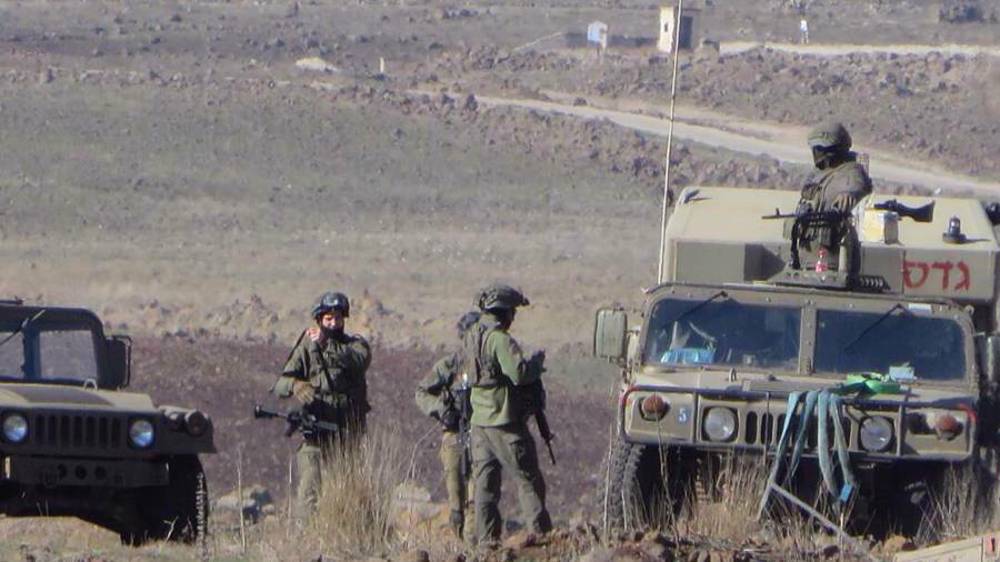
Israeli soldiers and military vehicles are seen in Dawaya al-Saghira village in Syria’s southwestern Quneitra province on December 25, 2024. (Photo via social media)

Israeli forces have escalated their offensives by launching fresh raids and arresting a number of activists in southern Syria.

The Syrian Observatory for Human Rights (SOHR), a UK-based monitor, reported that Israeli troops stormed Abdeen town in the Yarmouk Basin in southern Syria on Thursday.

Six military vehicles coming from Israeli bases in the occupied Golan Heights entered the town, located in the western countryside of Deraa.

This came after Israeli troops raided several military posts in the Mount Hermon area in southwest Syria the day before.

On August 18, Israeli forces infiltrated areas in the Quneitra countryside from Tel al-Ahmar al-Gharby towards Kodna and Ain Ziwan villages. The troops searched several houses, harassed and terrorized the local population in the area.

Israeli forces also entered the abandoned Qaws al-Nabaa area in Quneitra and carried out a series of combing raids.

Israeli troops regularly carry out raids across various parts of Syria since Western-backed Abu Mohammed al-Jolani, once affiliated with al-Qaeda and Daesh, was installed as president in Damascus.

Israel has occupied large additional swathes of territory in southwest Syria following the collapse of the government of former Syrian president Bashar al-Assad in December.

Israel also carried out hundreds of air strikes to destroy the heavy weapons and military capabilities of Damascus under the Western-backed, controversial rule of Hay'at Tahrir al-Sham (HTS) militant group over the Arab nation.

The latest incursions into Syrian territory come amid meetings in Paris this week between the HTS foreign minister, Asaad al-Shaibani and Israeli strategic affairs minister Ron Dermer.

According to Israel's Haaretz newspaper, the meetings focused on countering the growing power of Lebanon’s Hezbollah and other resistance groups across the region.

The two sides also discussed establishing a humanitarian crossing between Syria and Israeli-occupied territory to allow aid to reach the Druze in Suwayda.

Last month, Israel intervened in violent clashes between Syrian HTS-linked forces and Druze armed factions in the southern Suwayda governorate, carrying out heavy strikes on sites in Damascus.

Tel Aviv has used the massacre of hundreds of Druze civilians by the HTS-led forces in July as a pretext to open the corridor.

Observers maintain that the US and Israel are using the HTS-led rule over Syria to spread violence and further their expansionist agenda across the West Asia region.

SOHR earlier this month reported that it had documented the violent deaths of nearly 10,000 people in Syria since Western-backed HTS militants came into power in December.

The tragic report comes after several recent incidents of violence targeting religious minorities, including massacres of Alawites along the country's coast, clashes with the Druze community in the south and a bombing at an Orthodox church in Damascus.

After the collapse of the al-Assad government last December, Jolani was widely praised by the Western media. An article in the UK's Telegraph described his armed group, the former al-Qaeda affiliated HTS, as “diversity-friendly militants.”

Jolani has assured the US-led Western countries that Syria will “normalize relations” with Israel, recognize the regime, and exchange ambassadors by the end of 2026.

The HTS-led regime will reportedly hand over the occupied Golan Heights to Israel as part of a looming normalization deal with the illegal entity.
 
To view this content we will need your consent to set third party cookies.
For more detailed information, see our cookies page.
 
Reinforcing above news, with more details (Syria is officially a "balcanized" country):
To view this content we will need your consent to set third party cookies.
For more detailed information, see our cookies page.
 

Users who are viewing this thread

Pakistan Defence Latest

Latest Posts

Back
Top