Terrorism: Watch

27 cops martyred in 134 terrorist attacks in 2025, says Bannu DIG

Muhammad Waseem Khan
December 24, 2025

1766579642118.png

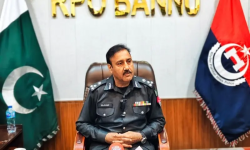
Bannu Deputy Inspector General (DIG) Sajjad Khan speaks to the media on Wednesday. — Photo provided by author

BANNU: Bannu Deputy Inspector General (DIG) Sajjad Khan said on Wednesday that 27 cops were martyred in 134 terrorist attacks targeting personnel in the district in 2025.

He made the remarks while addressing a press briefing at his office, where he gave a detailed breakdown of the overall law and order situation in the district and operations carried out against terrorist elements.

According to the DIG, Bannu police conducted comprehensive, well-organised and result-oriented operations against militants.

He said the data showed that during 2025, a total of 134 terrorist attacks targeted police stations, police posts, checkpoints, police mobiles and police parties.

In these attacks, 27 police personnel were martyred, while 79 sustained injuries. In retaliatory action by police, 53 terrorists were killed and 163 were injured, he said.

The DIG said that Bannu police carried out 168 intelligence-based operations across the district, resulting in the arrest of 105 terrorists and the elimination of 65 terrorists. Overall, successful action was taken against 170 terrorists, he said.

He further stated that police and security forces jointly conducted successful operations in the areas of Miryan, Haved, Daud Shah, Mamand Khel and Domel. During these joint operations, one police constable was martyred while 11 police personnel and five civilians were injured, he said.

As a result of these operations, 22 terrorists were killed and four were arrested, and several terrorist hideouts and houses were also demolished.

He also said that terrorists had carried out 20 drone attacks targeting police installations and civilian populations, in which 19 police personnel were injured. Further, nine civilians were martyred and 33 were injured, he said.

However, following the installation of an anti-drone system on July 18, a significant improvement was observed, with over 300 drone attacks thwarted and four drones neutralised.
 
DIG Khan said that despite limited resources, various security measures were implemented to protect police installations, including the installation of barriers, bunkers, double boundary walls, bullet-proof gates and CCTV cameras.

He said that work had also begun on the Safe City Project to further enhance the safety of both police personnel and the general public.

He added that for coordinated action against terrorists, jirgas were held with local elders in different areas, yielding positive results, and peace committees were formed.

With public cooperation, militant attacks on several police stations and checkposts were successfully thwarted, while effective operations were carried out in Kakki, Bharath, Khojri, Bargantu, Sheikh Landak, and other areas, he said.

According to the DIG, in order to align Bannu police with modern requirements, the force had been equipped with drones, anti-drone guns, sniper rifles, armoured personnel carriers (APCs), thermal imaging systems, tactical helmets and bullet-proof vehicles.

He reaffirmed his commitment that Bannu police would continue its struggle to maintain law and order in the district, efforts to eliminate terrorism, and ensure the protection of the lives and property of the public.
 

10 terrorists, including high-value target, eliminated in DI Khan, Balochistan operations: ISPR


News Desk
December 25, 2025

Security forces neutralised 10 terrorists, including a high-value target, in separate intelligence-based operations (IBO) in Khyber Pakhtunkhwa’s Dera Ismail Khan district and Balochistan‘s Kalat district, the military’s media affairs wing said in separate statements on Thursday.

On December 24, (yesterday) two khawarij were killed in an IBO in DI Khan‘s Kulachi area, the Inter-Services Public Relations (ISPR) said in Thursday’s statement, using the term designating members of the Tehreek-i-Taliban Pakistan.

“During the conduct of [the] operation, own troops effectively engaged the khawarij location. Resultantly, two khawarij, including kharji ring leader Dilawar, were sent to hell,” the statement read.

According to the ISPR, Dilawar was wanted by law enforcement agencies due to his involvement in terrorist activity and the government had put an Rs4 million bounty on him.

The statement added that weapons and ammunition were recovered from the dead terrorists, who remained actively involved in terrorist activities against the security forces and civilians.

In a separate statement, the ISPR said security forces conducted an IBO in Kalat on December 24 (yesterday) on the reported presence of terrorists belonging to Indian proxy Fitna al Hindustan.

The state has designated Balochistan-based terrorist groups as Fitna-al-Hindustan to highlight India’s alleged role in terrorism and destabilisation across Pakistan.
 

PICSS terms 2025 ‘deadliest’ for militants in Pakistan with 2,115 fatalities

News Desk
December 28, 2025

The year 2025 was found to be “deadliest” for terrorists in Pakistan, with 2,115 terrorist fatalities, while 664 security personnel and 580 civilians were slain, according to a report released by Pakistan Institute for Conflict and Security Studies (PICSS).

PICSS said that Pakistan saw a “marked escalation” in 2025, with violence intensifying in both “tempo and lethality”, pushing several security indicators to their highest levels in years.

As per the report, the year 2025 has not only delivered a steep rise in overall combat-related deaths, but also became the deadliest year for terrorists since 2015, the most lethal for security forces since 2011, and the worst for civilian casualties in a decade.

“Militant attacks climbed to their highest annual total since 2014, and the use of suicide bombings and small drones showed a clear upward trend,” said the report.

According to statistics released by PICSS, combat-related deaths in 2025 rose by 73 per cent to 3,387, compared to 1,950 in 2024. Fatalities included 2,115 terrorists, 664 security forces personnel, 580 civilians and 28 members of pro-government peace committees (combatants).

The report added that terrorists accounted for about 62pc of total combat-related deaths, and their 2,115 fatalities represented the highest annual terrorist death toll since 2015, when 2,322 militants were killed. Compared to 2024, terrorist deaths increased by 122pc, as 951 militants were killed in 2024.

PICSS also recorded 664 fatalities among security personnel in 2025, a 26pc rise from 528 in 2024 and the highest annual figure since 2011, when 677 personnel lost their lives.

Civilian deaths also increased by 24pc to 580 in 2025, compared to 468 in 2024, marking the highest annual civilian toll since 2015, when 642 civilians were killed.

Injuries also rose sharply, with the think tank recording that 2,263 were injured in 2025, including 1,025 security forces personnel, 982 civilians, 228 terrorists and 28 members of pro-government peace committees.

“This represents a 53pc increase over 2024 and was the highest annual number of injuries since 2014, when 3,829 people were injured,” said PICSS.

Compared with 2024, PICSS said that injuries among security forces increased by 62pc (1,025 compared to 631), civilian injuries rose by 40pc (982 compared to 701), and terrorist injuries increased by 61pc (228 compared to 142).

The Islamabad-based think tank also reported an 83pc rise in arrests of suspected terrorists, with 497 suspects held in 2025 compared to 272 in 2024. According to the report, the 2025 figure was the highest annual total since 2017, when 1,781 terrorists were either arrested or laid down their weapons.

The report further indicated that kidnappings rose even more sharply in 2025, with terrorists abducting 215 people compared to 82 in 2024; an increase of 162pc. PICSS said the 2025 kidnapping figure was the highest in a single year since 2012, based on its militancy database.
 
On the operational front, PICSS recorded at least 1,063 terrorist attacks in 2025, a 17pc increase compared with 908 in 2024 and the highest annual total since 2014, when 1,609 terrorist attacks were recorded.

It further reported that the suicide attacks increased by 53pc, with 26 such incidents reported in 2025 compared with 17 in 2024.

PICSS noted an expanding trend in the use of small drones, including quadcopters, with 33 such incidents recorded during 2025, alongside increased use of unmanned aerial vehicles by security forces.

The report stated that the most violence remained concentrated in Khyber Pakhtunkhwa, including the tribal districts, and Balochistan.

Bannu Deputy Inspector General (DIG) Sajjad Khan said on Wednesday that 27 cops were martyred in 134 terrorist attacks targeting personnel in the district in 2025.

He said the data showed that during 2025, a total of 134 terrorist attacks targeted police stations, police posts, checkpoints, police mobiles and police parties. In these attacks, 27 police personnel were martyred, while 79 sustained injuries. In retaliatory action by police, 53 terrorists were killed, and 163 were injured, he said.

The DIG said that Bannu police carried out 168 intelligence-based operations across the district, resulting in the arrest of 105 terrorists and the elimination of 65 terrorists. Overall, successful action was taken against 170 terrorists, he said.

Earlier this year, Pakistan ranked second in the Global Terrorism Index 2025, with the number of deaths in terrorist attacks rising by 45 per cent as compared to the previous year. The Global Terrorism Index 2025, published by the Institute for Economics and Peace (IEP), provides a comprehensive summary of the key trends and patterns in terrorism over the last 17 years.

Pakistan’s bilateral relations with Afghanistan have come under strain in recent times as the banned Tehreek-i-Taliban Pakistan (TTP) remains the main point of contention between the two countries.

Pakistan has demanded that the rulers in Kabul take action to stop cross-border terrorism and stop providing sanctuary to the TTP, but the Afghan Taliban deny Islamabad’s allegations of terrorists being allowed to use Afghan soil to carry out attacks in Pakistan.
 

Afghan border closure brings down terrorist violence in Pakistan


The Newspaper's Staff Reporter
January 1, 2026

1767268974223.png

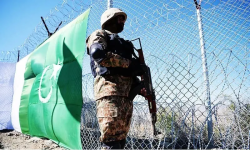
A Pakistani soldier keeps vigil next to a newly fenced border along Afghanistan. — AFP

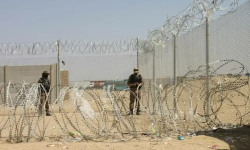
ISLAMABAD: Pakistan has recorded a significant drop in cross-border terrorist attacks and violence-linked fatalities after it closed down the border to Afghanistan on October 11.

Terrorist attacks went down by almost 17 per cent in December, preceded by 9pc decline in November. Terrorist violence-linked fatalities among civilians and security officials also fell in the last quarter of 2025, by nearly 4pc and 19pc each in November and December, shows data collected by the Centre for Research and Security Studies (CRSS) as part of its annual security report 2025.

With an almost 34pc surge in overall violence, the year 2025 went by as the most violent year for Pakistan in a decade, says the report. The country has suffered a sustained escalation in violence for five consecutive years since 2021, coinciding with the Taliban’s return to power in Afghanistan; with almost 38pc in 2021, over 15pc in 2022, 56pc in 2023, nearly 67pc in 2024, and 34pc in 2025.

The comparative data for 2024 and 2025 reveals a sharp escalation in terrorism and counter-terrorism linked violence nationwide, with fatalities rising from 2555 in 2024 to 3417 in 2025, marking an increase of 862 deaths, or a roughly 34pc year-on-year surge in violence.

CRSS report says most significant surge in violence recorded in KP

The most significant surge in violence was recorded in Khyber Pakhtunkhwa, where the fatalities rose from 1620 in 2024 to 2331 in 2025, an absolute increase of 711 deaths, accounting for over 82pc of the net national rise and marking almost a 44pc year-on-year surge in violence in the province.

Balochistan also had an upward trend, with fatalities increasing from 787 to 956; an additional 169 deaths, which are nearly 22pc higher than the previous year’s figures.
 
Regional impact of violence

Violence remained heavily concentrated in the country’s northwestern KP and southwestern Balochistan provinces, with both accounting for over 96pc of all fatalities and almost 93pc of violent incidents recorded during the entire 2025.

KP was the worst-hit region, suffering over 68pc (2331) of the total violence-linked fatalities, and around 63pc (795) of the incidents of violence, followed by Balochistan, accounting for 28pc (956) of the fatalities and over 30pc (386) of the incidents of violence.

In contrast, Punjab and Sindh experienced comparatively lower levels of violence. The former recorded 25 incidents of violence resulting in 40 fatalities and 24 injuries, representing just 1.15pc of total casualties, while the latter saw 51 incidents causing 56 fatalities and 40 injuries; 1.73pc of the total.

In Azad Jammu and Kashmir and the Islamabad Capital Territory though incidents numbers remained minimal, the injury figures were relatively high, with the former recording 103 injuries, and the latter registering 38, from just five incidents at each location.

Gilgit-Baltistan remained the least affected region. Compared to last year, though small in absolute numbers, the region recorded a four-fold increase from one to four fatalities.
 

by almost 17%: report

  • CRSS says 2025 was the most violent year for Pakistan in a decade
Baseer Ahmed P
January 1, 2026

1767301140163.png

A significant drop in cross-border terrorist attacks and violence-linked fatalities has been recorded in Pakistan since it closed down the border with Afghanistan, a Centre for Research and Security Studies (CRSS) annual security report revealed.

“Terrorist attacks went down by almost 17% in December, preceded by 9% decline in November. Terrorist violence-linked fatalities among civilians and security officials also fell in the last quarter of 2025, by nearly 4% and 19% each in November and December, respectively, as per the data collected by the CRSS.

The Pak-Afghan border was shut down for all kinds of trade and other activities on October 11, following the cross-border attacks by terrorists and Afghan forces which resulted in heavy casualties on both sides.

The border closure also brought trade activities and pedestrian movement to a standstill. Islamabad says closures curb militant movement; Kabul denies providing safe haven to the militants.

At least 23 Pakistan armed forces personnel were martyred and more than 200 Afghan Taliban members and terrorists killed in exchange of heavy cross-border firing on the night of October 11, the military’s media wing said on October 12.
 

Decade’s most violent year​

The CRSS report said with an almost 34% surge in overall violence, 2025 went by as the most violent year for Pakistan in a decade. “The country has suffered a sustained escalation in violence for five consecutive years since 2021, coinciding with the Taliban’s return to power in Afghanistan; with almost 38% in 2021, over 15% in 2022, 56% in 2023, nearly 67% in 2024, and 34% in 2025,” it said.

2025 marked another grim year for Pakistan’s security landscape, it said, adding that as many as 3417 violence-linked fatalities and 2134 injuries among civilians, security personnel, and outlaws resulted from 1272 incidents of violence — terrorist attacks and counter-terrorism operations.

The comparative data for 2024 and 2025 reveals a sharp escalation in terrorism and counter-terrorism linked violence nationwide, with fatalities rising from 2555 in 2024 to 3417 in 2025, marking an increase of 862 deaths, or a roughly 34% year-on-year surge in violence.
 

Khyber Pakhtunkhwa, Balochistan suffer the most​

The most significant surge in violence was recorded in Khyber Pakhtunkhwa, where the fatalities rose from 1620 in 2024 to 2331 in 2025, an absolute increase of 711 deaths, accounting for over 82% of the net national rise and marking almost a 44% year-on-year surge in violence in the province.

Balochistan also had an upward trend, with fatalities increasing from 787 to 956; an additional 169 deaths, which are nearly 22% higher than the previous year’s figures.

In contrast, the CRSS said, Punjab and Sindh experienced comparatively lower levels of violence. The former recorded 25 incidents of violence resulting in 40 fatalities and 24 injuries, representing just 1.15% of total casualties, while the latter saw 51 incidents causing 56 fatalities and 40 injuries; 1.73 percent of the total. These figures suggest relative containment of violence despite the provinces’ large populations, likely reflecting stronger policing and intelligence-led counter-terrorism efforts.
 
To view this content we will need your consent to set third party cookies.
For more detailed information, see our cookies page.
 
To view this content we will need your consent to set third party cookies.
For more detailed information, see our cookies page.
 
Despite record militant deaths, Pakistan saw a sharp escalation in militant violence in 2025, with terrorist attacks rising by 34 per cent and terrorism-related fatalities increasing by 21pc year on year, according to data released by the Islamabad-based Pak Institute for Peace Studies. As many as 699 terrorist attacks were recorded countrywide during the year.

This violence claimed at least 1,034 lives and left 1,366 injured, underscoring a rising trajectory of militancy that has persisted since the Taliban’s takeover of Afghanistan in 2021.
 

DG ISPR says Afghans involved in major terrorist incidents in Pakistan in 2025

News Desk
January 6, 2026

1767699230407.png


ISPR Director General (DG) Lieutenant General Ahmed Sharif Chaudhry speaks during a press conference on January 6. — DawnNewsTV

Inter-Services Public Relations (ISPR) Director General (DG) Lieutenant General Ahmed Sharif Chaudhry is currently addressing a press conference.

At the outset of the press conference, the military’s spokesperson said that the purpose of the briefing was to give a comprehensive overview of counter-terrorism measures taken in the past year.

This “is the only purpose of this press conference, and I would request that we remain focused on counterterrorism as terrorism is the biggest threat that is being faced by the state of Pakistan right now,” he added.

The DG ISPR said 2025 was a “landmark and consequential year in our fight against terrorism”, adding there were four reasons behind this conclusion.

Saying that the fight against terrorism was the entire nation’s and was being fought for more than two decades, the DG ISPR further stated that the past year witnessed “unprecedented intensity in counter-terrorism efforts”.
 

Users who are viewing this thread

Country Watch Latest

Latest Posts

Back
Top