Navigation
Install the app
How to install the app on iOS
Follow along with the video below to see how to install our site as a web app on your home screen.
Note: This feature may not be available in some browsers.
More options
Style variation
You are using an out of date browser. It may not display this or other websites correctly.
You should upgrade or use an alternative browser.
You should upgrade or use an alternative browser.
Terrorism: Watch
- Thread starter ghazi52
- Start date
More options
Who Replied?


ghazi52
THINK TANK: CONSULTANT
- Thread starter
- #318
Pakistan tops Global Terrorism Index with 6pc increase in terror-related deaths
News DeskMarch 22, 2026
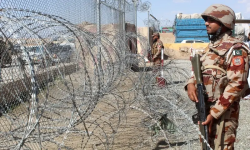
A soldier keeps watch at the Pakistan-Afghanistan border in Chaman, Balochistan on March 19. — AFP
https://whatsapp.com/channel/0029VaMc238IiRov8okfYy3n
Pakistan has ranked number one on the Global Terrorism Index for the first time, recording a six per cent increase in terrorism-related deaths, 1,139, in 2025, it emerged on Sunday.
The Global Terrorism Index 2026 published by the Institute for Economics and Peace (IEP) provides a comprehensive summary of the key trends and patterns in terrorism over the last two decades.
The report ranks 163 countries (99.7pc of the world’s population) according to the impact of terrorism. The indicators include the number of terrorist incidents, fatalities, injuries and hostages.
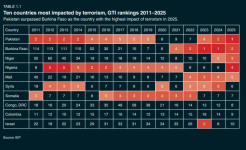
The Global Terrorism Index. — Screengrab via report
According to the report, Pakistan’s “strained” relationship with neighbouring countries, particularly Afghanistan, and rising violence from the banned Tehreek-i-Taliban Pakistan (TTP) and the banned Balochistan Liberation Army (BLA) have created “significant security” risks for the country.
“Deaths from terrorism in Pakistan are now at their highest level since 2013, with the country recording 1,139 terrorism deaths and 1,045 incidents in 2025,” the report said.
The report noted that the TTP had emerged as the “deadliest” terror group in Pakistan and the third deadliest globally.
Infographic
ghazi52
THINK TANK: CONSULTANT
- Thread starter
- #319
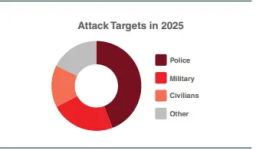
Infographic shows the targets of TTP’s attacks in 2025.— Screengrab via report.
“TTP attacks constitute over 67pc of total attacks in Pakistan since 2009, and it is responsible for five times as many attacks in Pakistan as the second most active group, the BLA,” the report said.
It added that the TTP emerged as the only group out of the four deadliest — Islamic State (IS), Jamaat Nusrat Al-Islam wal Muslimeen (JNIM), TTP, and al-Shabaab — to record an increase in the number of incidents orchestrated by in the last year.
“Incidents increased by 24pc in 2025, with 595 attacks compared to 481 attacks in 2024. All of the group’s attacks occurred in Pakistan, primarily within Khyber Pakhtunkhwa near the border with Afghanistan,” the report said.
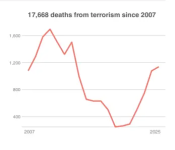
The total deaths Pakistan has witnessed due to TTP attacks. — Screengrab via report
At least 637 deaths were attributed to the group in 2025 — the highest since 2011 and amounting to 56pc of terrorism-related deaths in the country.
It added that the largest attack carried out by the group in 2025 “was an armed attack targeting military forces, resulting in the death of 21 people”.
ghazi52
THINK TANK: CONSULTANT
- Thread starter
- #320
According to the report, the Afghan Taliban’s rise to power in Afghanistan had “profoundly impacted Pakistan’s security and stability”.
“It provided the TTP with the means and motivation to significantly expand their geographic reach and operational efficiency, resulting in a considerable rise in violent extremism in the region.”
The report noted that this was the “sixth consecutive year” in which Pakistan witnessed a surge in terrorism deaths. It also observed a “slight decline” in the total number of terror attacks in 2025.
However, it noted that the country recorded a spike in hostages taken in Pakistan, from 101 in 2024 to 655 in 2025.
It attributed the rise to the Jaffar Express attack, where 442 people were taken hostage, also contributing to a surge in global numbers for hostage taking.
“If this incident had not occurred, the overall number of hostages would have decreased by 30 per cent from 2024 to 2025,” the report said.
The report noted that KP and Balochistan remained the most affected by terrorism in the country, accounting for “over 74pc of terrorist attacks and 67pc of deaths in Pakistan in 2025”.
“It provided the TTP with the means and motivation to significantly expand their geographic reach and operational efficiency, resulting in a considerable rise in violent extremism in the region.”
The report noted that this was the “sixth consecutive year” in which Pakistan witnessed a surge in terrorism deaths. It also observed a “slight decline” in the total number of terror attacks in 2025.
However, it noted that the country recorded a spike in hostages taken in Pakistan, from 101 in 2024 to 655 in 2025.
It attributed the rise to the Jaffar Express attack, where 442 people were taken hostage, also contributing to a surge in global numbers for hostage taking.
“If this incident had not occurred, the overall number of hostages would have decreased by 30 per cent from 2024 to 2025,” the report said.
The report noted that KP and Balochistan remained the most affected by terrorism in the country, accounting for “over 74pc of terrorist attacks and 67pc of deaths in Pakistan in 2025”.
ghazi52
THINK TANK: CONSULTANT
- Thread starter
- #321
Globally, the report noted a “substantial fall” in terrorism, with the deaths from terrorism falling by 28pc to 5,582, and the number of attacks decreasing by nearly 22pc.
The IS and its affiliates remained the deadliest terrorist organisation in 2025, followed closely by JNIM, TTP, and Al-Shabaab.
“They were collectively responsible for 3,869 deaths, or 70pc of all terrorism fatalities,” the report said.
It added that under 70pc of the deaths from terrorism occurred in only five countries, Pakistan, Burkina Faso, Nigeria, Niger, and the Democratic Republic of Congo (DRC), adding that Sub-Saharan Africa has now become the “global epicentre of terrorism”.
The report also observed a “significant increase” in terrorism incidents in Western countries, recording an increase of 280pc totalling up to 57 deaths.
“This increase was largely driven by several mass-casualty attacks, including the New Orleans truck attack in the United States in January, and the Bondi Beach shooting in Australia in December,” it said.
The report also observed that there were several “high-profile” attacks in the West, including the “assassination of US conservative political influencer Charlie Kirk and the killing of two Israeli Embassy staff members in Washington, DC”.
Last year, Pakistan ranked second in the Global Terrorism Index 2025, with the number of deaths in terrorist attacks rising by 45pc over the past year to 1,081.
The IS and its affiliates remained the deadliest terrorist organisation in 2025, followed closely by JNIM, TTP, and Al-Shabaab.
“They were collectively responsible for 3,869 deaths, or 70pc of all terrorism fatalities,” the report said.
It added that under 70pc of the deaths from terrorism occurred in only five countries, Pakistan, Burkina Faso, Nigeria, Niger, and the Democratic Republic of Congo (DRC), adding that Sub-Saharan Africa has now become the “global epicentre of terrorism”.
The report also observed a “significant increase” in terrorism incidents in Western countries, recording an increase of 280pc totalling up to 57 deaths.
“This increase was largely driven by several mass-casualty attacks, including the New Orleans truck attack in the United States in January, and the Bondi Beach shooting in Australia in December,” it said.
The report also observed that there were several “high-profile” attacks in the West, including the “assassination of US conservative political influencer Charlie Kirk and the killing of two Israeli Embassy staff members in Washington, DC”.
Last year, Pakistan ranked second in the Global Terrorism Index 2025, with the number of deaths in terrorist attacks rising by 45pc over the past year to 1,081.
ghazi52
THINK TANK: CONSULTANT
- Thread starter
- #322
Mohsin Naqvi discusses counter-terrorism and security cooperation with Chinese envoy in Islamabad
News DeskMarch 27, 2026

Interior Minister Mohsin Naqvi walks with Chinese Ambassador Jiang Zedong at the Chinese Embassy in Islamabad on March 27. — screengrab via MOIofficialGoP/X
Interior Minister Mohsin Naqvi met with Chinese Ambassador Jiang Zedong at the Chinese Embassy in Islamabad on Friday, where the two discussed matters pertaining to counter-terrorism, security cooperation and the Police Exchange Programme.
The interior ministry posted on social media that Naqvi arrived at the embassy in Islamabad’s Diplomatic Enclave earlier today, where he was welcomed by the ambassador. It also shared a video of him being received by Jiang at the entrance.
“Discussion on the overall situation of the region also took place in the meeting,” the ministry said.
The interior ministry said it was decided to hold a business conference to address security issues faced by Chinese investors in Pakistan, according to the ministry.
It elaborated that in the first phase, meetings will be held with the Chinese business community present in Pakistan; the second phase will involve meetings with those who are interested in investing in Pakistan.
The interior minister also said that a Special Protection Unit is being established for the protection of foreign citizens. The unit will ensure the security of Chinese citizens present in Islamabad, according to Mushtaq Cheema.
The Special Protection Unit officials will also be taught the Chinese language during their training, he added.
On Thursday, Ambassador Jiang had called on Prime Minister Shehbaz Sharif at the PM House for a meeting in which Deputy Prime Minister and Foreign Minister Ishaq Dar, Special Assistant to the Prime Minister Syed Tariq Fatemi, and the foreign secretary were also present.
ghazi52
THINK TANK: CONSULTANT
- Thread starter
- #323
Khyber Pakhtunkhwa
K-P has been battling terrorism since the United States' ouster from Afghanistan, with terrorists often crossing the border to target police convoys and vehicles, resulting in the deaths of several officials and personnel.
Last month, at least seven police personnel, including the station house officer of Shadi Khel Police Station, were martyred in an IED explosion near a police mobile in Lakki Marwat. A week before that, two policemen were killed and 15 people, including five police personnel, were injured in an IED blast in the Rustam Bazaar area of Wana in Lower South Waziristan.
The province has witnessed a surge in terrorist attacks, accounting for the highest number of incidents in the country. Out of a total of 5,397 reported incidents last year, K-P recorded 3,811, followed by Balochistan with 1,557 incidents. Only 29 incidents were reported from the rest of the country. A total of 2,597 terrorists were killed during the year.
K-P has been battling terrorism since the United States' ouster from Afghanistan, with terrorists often crossing the border to target police convoys and vehicles, resulting in the deaths of several officials and personnel.
Last month, at least seven police personnel, including the station house officer of Shadi Khel Police Station, were martyred in an IED explosion near a police mobile in Lakki Marwat. A week before that, two policemen were killed and 15 people, including five police personnel, were injured in an IED blast in the Rustam Bazaar area of Wana in Lower South Waziristan.
The province has witnessed a surge in terrorist attacks, accounting for the highest number of incidents in the country. Out of a total of 5,397 reported incidents last year, K-P recorded 3,811, followed by Balochistan with 1,557 incidents. Only 29 incidents were reported from the rest of the country. A total of 2,597 terrorists were killed during the year.

ghazi52
THINK TANK: CONSULTANT
- Thread starter
- #327
Despite record militant deaths, Pakistan saw a sharp escalation in militant violence in 2025, with terrorist attacks rising by 34 per cent and terrorism-related fatalities increasing by 21 per cent year on year, according to a report released by the Islamabad-based Pak Institute for Peace Studies.
KP in particular has seen a rise in terrorist attacks in the past year. According to the Annual Security Report 2025 from the Centre for Research and Security Studies (CRSS), the province recorded a significant surge in violence last year as “fatalities rose from 1,620 in 2024 to 2,331 in 2025”.
Due to a resurgence of militancy, especially in KP and Balochistan, where attacks often target security personnel and LEAs, the state has intensified counter-terrorism operations.
Last month, security forces killed 13 terrorists in five separate operations across KP.
These operations came after a lieutenant colonel and a sepoy were martyred in a suicide attack during an IBO in Bannu.
In January, ISPR Director General (DG) Lieutenant General Ahmed Sharif Chaudhry shared that law enforcement agencies of Pakistan — including the army, police, Federal Constabulary, and intelligence agencies — conducted a total of 75,175 IBOs in 2025.
KP in particular has seen a rise in terrorist attacks in the past year. According to the Annual Security Report 2025 from the Centre for Research and Security Studies (CRSS), the province recorded a significant surge in violence last year as “fatalities rose from 1,620 in 2024 to 2,331 in 2025”.
Due to a resurgence of militancy, especially in KP and Balochistan, where attacks often target security personnel and LEAs, the state has intensified counter-terrorism operations.
Last month, security forces killed 13 terrorists in five separate operations across KP.
These operations came after a lieutenant colonel and a sepoy were martyred in a suicide attack during an IBO in Bannu.
In January, ISPR Director General (DG) Lieutenant General Ahmed Sharif Chaudhry shared that law enforcement agencies of Pakistan — including the army, police, Federal Constabulary, and intelligence agencies — conducted a total of 75,175 IBOs in 2025.
ghazi52
THINK TANK: CONSULTANT
- Thread starter
- #328
On Sunday, a police head constable and his five-year-old daughter were injured when unidentified motorcyclists opened fire near Bannu’s Shahdev area. The same day, the bomb disposal squad defused an improvised explosive device (IED) in the jurisdiction of Kakki police station, averting a major tragedy.
Violence in Bannu has included attacks on police and jirga members, prompting targeted operations by police and security forces in various localities to disrupt militant networks.
On April 19, a terrorist and an alleged suicide bomber were killed by security forces during an intelligence-based operation (IBO) in Bannu. The Inter-Services Public Relations (ISPR) said the terrorist was the “main handler” of a suicide bomber who resulted in the martyrdom of Lt Col Gul Faraz during an IBO in Bannu on February 21.
Violence in Bannu has included attacks on police and jirga members, prompting targeted operations by police and security forces in various localities to disrupt militant networks.
On April 19, a terrorist and an alleged suicide bomber were killed by security forces during an intelligence-based operation (IBO) in Bannu. The Inter-Services Public Relations (ISPR) said the terrorist was the “main handler” of a suicide bomber who resulted in the martyrdom of Lt Col Gul Faraz during an IBO in Bannu on February 21.
ghazi52
THINK TANK: CONSULTANT
- Thread starter
- #329
 Unprovoked firing by Afghan Taliban across the border in Bajaur, 9 civilians martyred, 12 injured:
During March and April 2026, six tragic incidents of unprovoked firing and shelling from across the border by Afghan forces occurred in the Mamund and Slarzai areas of Bajaur District.
In these attacks, the civilian population was targeted, resulting in the martyrdom of 9 innocent individuals, including 3 women and 6 children, while 12 others were injured.
Shelling in the Lagri Mamund and Taria Shah Slarzai areas led to the complete destruction of 18 residential houses, causing severe damage to the local population and instilling widespread fear and panic.
The Bajaur District Administration and security forces responded swiftly and effectively to bring the situation under control. Immediate medical aid was provided to the injured, who were later transferred to Peshawar for better treatment.
Immediate relief was provided to the affected families, while efforts are underway for the restoration of destroyed homes and compensation payments to the heirs of the martyrs and the injured.
The District Administration and security forces are continuously monitoring the situation and taking all possible measures to protect the lives and property of the public.
ghazi52
THINK TANK: CONSULTANT
- Thread starter
- #330
During this one year, the Fitna al-Khawarij has targeted security forces, civilian populations, and the public through multiple quadcopter attacks, in which hundreds of ordinary people and security forces personnel have been martyred and injured.
The Fitna al-Khawarij uses quadcopters against the general public to achieve their nefarious objectives and to spread fear and terror among the people, for which several video evidences also exist.
Just recently, on April 27, 2026, in Spain Wam, the Kharijites attacked and targeted the house of Malik Liaquat Ali Khan with a quadcopter, in which three children of the house were injured.
On the same day, April 27, 2026, in Aka Khel Bara, the Kharijites carried out an attack with a quadcopter, in which one girl was martyred and 6 were injured.
In addition, on April 5, 2026, in Milwar Bara, the Kharijites attacked a civilian population with a quadcopter, but fortunately, there was no loss of life in it.
Furthermore, on March 10, 2026, in Lakki Marwat, three minor children were injured in a Kharijite quadcopter attack.
Similarly, on December 11, 2025, in the Sheikh Lindak area of Bannu, the Kharijites carried out a quadcopter attack near a school on a cricket ground, in which three innocent children were martyred.
But why doesn't the provincial government condemn these Kharijites or take action against them regarding these drone and quadcopter attacks by the Kharijites?
Why, despite dozens of quadcopter attacks by the Kharijites over the course of a year, has the government remained a silent spectator?
It should be remembered that the police works as a front-line force against terrorism, but no measures have been taken to enhance their capacity.
The question is: why hasn't the shortage of 15,306 police personnel been fulfilled yet?
Doesn't the provincial government realize that a weak police force cannot effectively defend against terrorism?
What is the reason that, instead of accepting responsibility after every failure, there is a tradition of blaming security institutions?
The people are asking: Does the government have any clear security policy, or is everything limited to mere statements?
Is the protection of citizens' lives and property a priority for the government or not?
The time has come for Chief Minister Suhail Afridi to provide clarification, because now the question is not just about performance, but also about the trust of the people.
The Fitna al-Khawarij uses quadcopters against the general public to achieve their nefarious objectives and to spread fear and terror among the people, for which several video evidences also exist.
Just recently, on April 27, 2026, in Spain Wam, the Kharijites attacked and targeted the house of Malik Liaquat Ali Khan with a quadcopter, in which three children of the house were injured.
On the same day, April 27, 2026, in Aka Khel Bara, the Kharijites carried out an attack with a quadcopter, in which one girl was martyred and 6 were injured.
In addition, on April 5, 2026, in Milwar Bara, the Kharijites attacked a civilian population with a quadcopter, but fortunately, there was no loss of life in it.
Furthermore, on March 10, 2026, in Lakki Marwat, three minor children were injured in a Kharijite quadcopter attack.
Similarly, on December 11, 2025, in the Sheikh Lindak area of Bannu, the Kharijites carried out a quadcopter attack near a school on a cricket ground, in which three innocent children were martyred.
But why doesn't the provincial government condemn these Kharijites or take action against them regarding these drone and quadcopter attacks by the Kharijites?
Why, despite dozens of quadcopter attacks by the Kharijites over the course of a year, has the government remained a silent spectator?
It should be remembered that the police works as a front-line force against terrorism, but no measures have been taken to enhance their capacity.
The question is: why hasn't the shortage of 15,306 police personnel been fulfilled yet?
Doesn't the provincial government realize that a weak police force cannot effectively defend against terrorism?
What is the reason that, instead of accepting responsibility after every failure, there is a tradition of blaming security institutions?
The people are asking: Does the government have any clear security policy, or is everything limited to mere statements?
Is the protection of citizens' lives and property a priority for the government or not?
The time has come for Chief Minister Suhail Afridi to provide clarification, because now the question is not just about performance, but also about the trust of the people.
Users who are viewing this thread
Total: 1 (members: 0, guests: 1)
Pakistan Defence Latest


Country Watch Latest
-
-
 TF-X / KAAN / Hürjet Turkish Fighter & Trainer Aircrafts News & Discussions (13 Viewers)
- Latest: MMM-E
-
-
-

Latest Posts
-

-
Kuwait Announces a Joint Defence Cooperation Agreement with Pakistan (28 Viewers)
- Latest: Pakistan First
-
-
-