David Moss has driven a Tesla Model 3 over 20,000 miles on Full Self-Driving without a single human takeover, verified by community telemetry tracking.…

www.mangodeveloper.com
Tesla FSD Logs 20,000 Continuous Miles Without Human Intervention
"David Moss has driven a Tesla Model 3 over 20,000 miles on Full Self-Driving without a single human takeover, verified by community telemetry tracking. The streak spans coast-to-coast U.S. runs, a cross-Canada journey, and a north-to-south border link, all on current production software."
David Moss
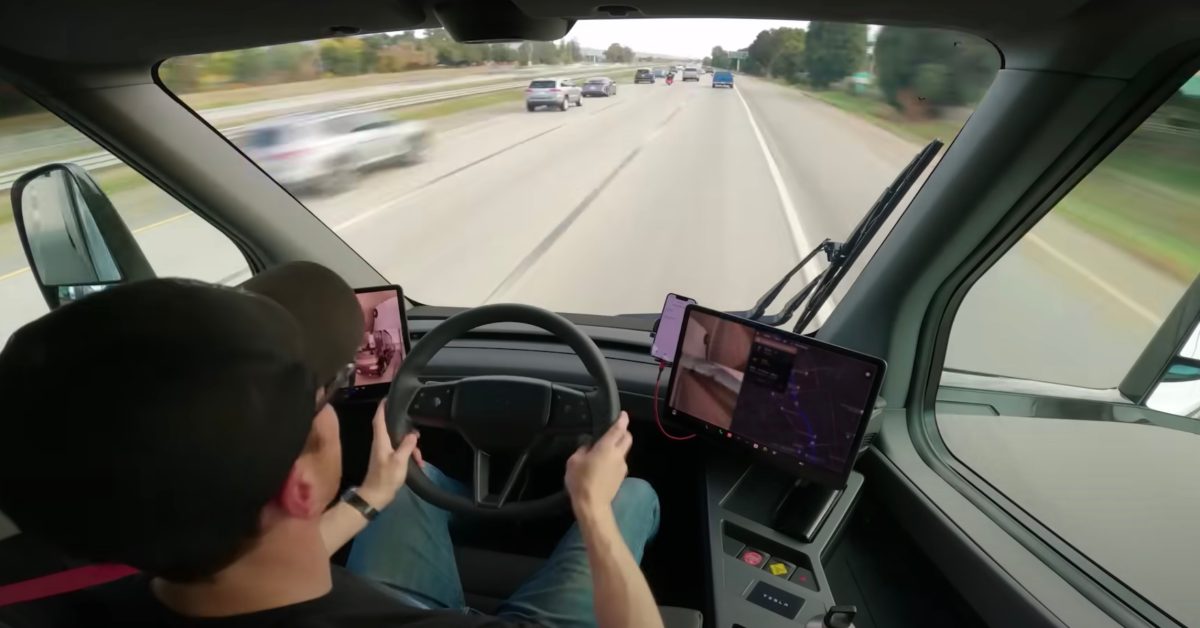
just did something that would have sounded like science fiction two years ago. He let his Tesla Model 3 drive itself for more than 20,000 miles, no hands on the wheel interventions, no pedal stabs, no "oops, let me take that" moments. Just the car, the software, and the road. The streak is still going.
If you follow Tesla's Full Self-Driving program at all, you've probably seen the clips. A Model 3 handling a chaotic construction zone. Handling a snow-covered rural intersection. Pulling into a Supercharger stall without drama. But those are highlights. What Moss has put together is the unedited version: 20,000-plus miles of continuous, verified autonomous driving across highways, city grids, mountain passes, border crossings, and weather that would make most human drivers nervous.
The numbers that matter
Let's start with what's verifiable, because in the FSD world, verification is everything. Every mile of Moss's streak lives in the FSD Database, a community-built tracker run by Omar Qazi, better known as @WholeMars on X. The tool pulls telemetry straight from the vehicle and logs disengagements down to a tenth of a mile. No honor system. No "I think I did 500 miles yesterday." Hard data.
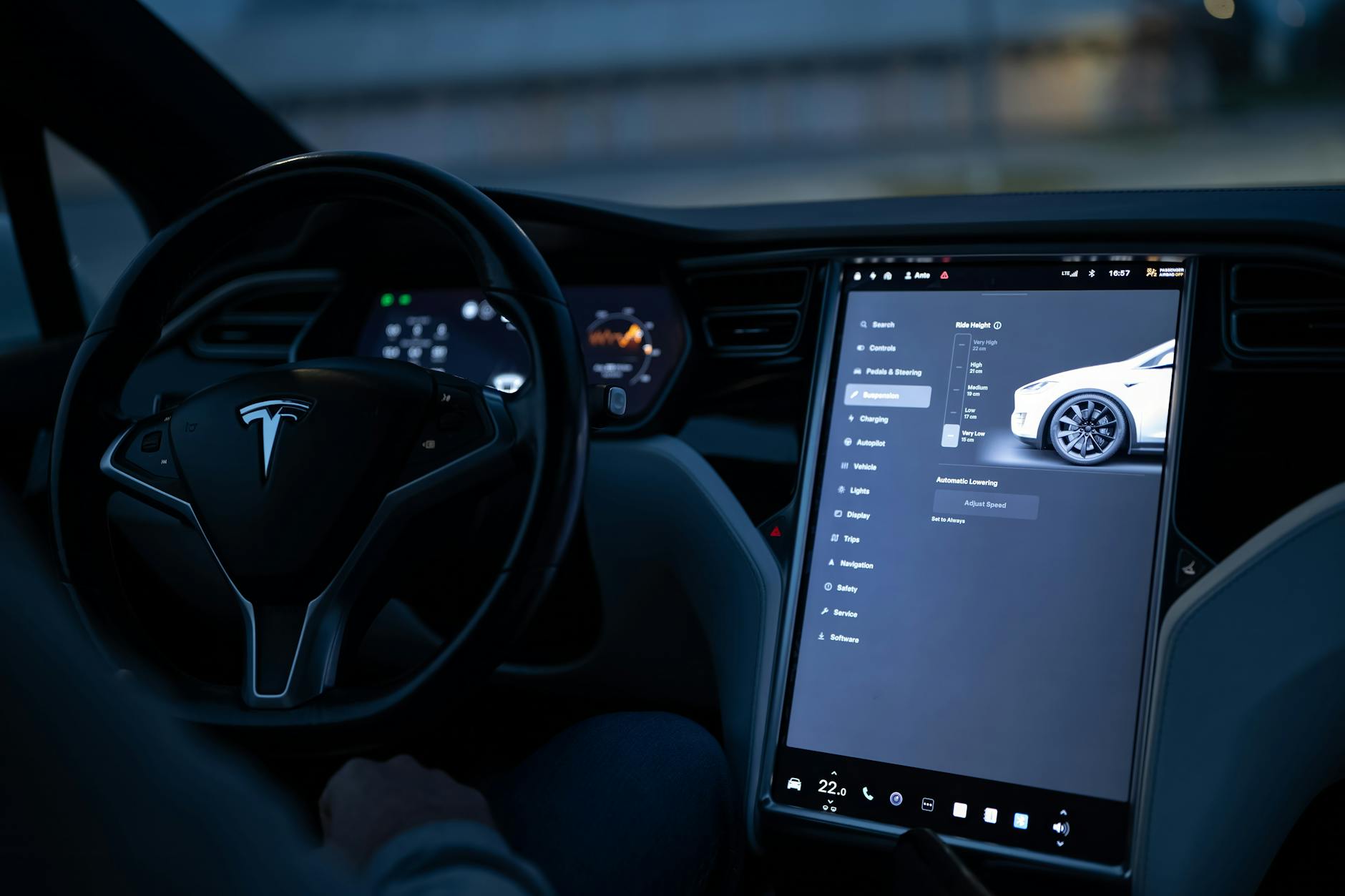
The streak counter itself is a relatively new addition to Tesla's software. FSD v14.2 introduced the Self Driving Stats panel showing the ratio of autonomous to manual miles. Then v14.3.4, rolled out in June 2026, added the live streak counter that resets the instant a driver brakes, yanks the wheel, or cancels navigation. Moss is the first person to push that counter past 10,000 miles, triggering Tesla's confetti animation, and then kept going to 20,000.
How we got here
Moss isn't some random owner who got lucky. He's a Tacoma, Washington resident who sells LiDAR scanning equipment for a living, which means he understands sensor suites, point clouds, and the gap between marketing claims and physical reality better than most. He started drawing attention in December 2025 when he logged 10,000 consecutive miles on FSD v14.2. Days later, he drove from the Tesla Diner in Los Angeles to Myrtle Beach, South Carolina: 2,732 miles in two days and twenty hours. Zero disengagements. That was the first verified coast-to-coast autonomous drive in Tesla's history, and Tesla featured it as an official customer story in March.
That original streak eventually hit 12,961 miles across 30 states before Wisconsin winter killed it in January. Snow and single-digit temperatures forced a takeover. Fair enough, nobody's claiming FSD is magic in a blizzard.
Moss restarted. In late May, he and two companions drove 3,760 miles across Canada from Horseshoe Bay in Vancouver to a Tesla showroom in Halifax. Again, zero interventions. Tesla AI software VP Ashok Elluswamy publicly congratulated him on X. Then in June, Moss turned south, chasing the Canadian border to the Mexican border. That leg pushed the in-car counter past 10,000 miles, the first time anyone had done it since the feature launched.
What this actually proves
Here's where it gets interesting. Moss has said repeatedly that the goal was never a record for its own sake. It was to demonstrate, mile by verified mile, what the shipping software can already do. Not what it might do next year. Not what the demo video shows. What it does right now, in a car you can buy today, on roads that exist today.
That distinction matters. The autonomous vehicle space is littered with geofenced robotaxis, safety drivers, and carefully curated routes. Moss's streak is none of those things. It's a production Model 3, running production FSD, on public roads, in normal traffic, through construction zones, Supercharger navigation, city centers, and rural two-lanes, across three countries and every climate zone the continent throws at it.
The verification layer is what makes this different from anecdote. The FSD Database doesn't care about your feelings on Elon Musk or Tesla's stock price. It reads the car's own telemetry. If the system disengaged, even for a split second, it shows up. At 20,000 miles, the log is clean.
The implications for developers and the industry
For anyone building on or competing with Tesla's approach, a few things stand out:
- End-to-end neural nets are scaling. The fact that a single software stack handles LA freeways, Wisconsin snow (until it didn't), Canadian highways, and Mexican border approaches without region-specific tuning suggests the architecture is generalizing far better than the modular, perception-planning-control pipelines most competitors still use.
- Data flywheel is real. Moss's drives feed the same training pipeline as every other FSD vehicle. Edge cases, weird intersections, unprotected lefts, construction hand signals, get logged, labeled, and fed back. 20,000 miles from one driver is a rounding error in fleet terms, but the type of miles matters: long, continuous, diverse, and verified.
- Supervised autonomy is the product today. Moss stays alert. He's ready to intervene. The system isn't Level 4 or 5. But the gap between "supervised" and "unsupervised" is shrinking in ways that matter commercially. A fleet operator who needs one remote supervisor per 50 vehicles instead of one safety driver per vehicle changes the unit economics entirely.
- Verification infrastructure matters more than people think. The FSD Database exists because the community built it. Tesla didn't ship an official API for this. Omar Qazi reverse-engineered the telemetry stream. That tells you something about where the transparency pressure comes from, and why third-party validation will remain essential even if Tesla opens its own dashboard.
What's still unresolved
A 20,000-mile streak is impressive. It's also one driver, one vehicle, one software version lineage. We don't know:
- How representative this is across the fleet. Moss is skilled, motivated, and driving a Model 3 with Hardware 4.0 (implied by the v14.x builds). The median owner experience likely includes more interventions.
- Whether the streak survives the next major architecture shift. FSD v13 (end-to-end on highway) and v14 (end-to-end everywhere) have been iterative. A fundamental rewrite could reset the learning curve.
- How Tesla handles the liability transition. Right now, every mile is "supervised." The moment Tesla claims unsupervised capability, the legal framework shifts. Moss's data helps make that case, but it doesn't settle it.
- What happens in the long tail. 20,000 miles is a lot. It's also 0.0002% of the billions of miles Tesla's fleet drives annually. Rare failure modes, the kind that trigger recalls, live in the long tail.
The bottom line
Moss didn't prove FSD is perfect. He proved it's
capable, consistently, verifiably, across the kind of varied driving that used to be the exclusive domain of human judgment. The streak is a data point. But it's a data point with weight, because it was earned in public, logged by an independent tracker, and survived the messy reality of North American roads in all four seasons.
The next milestone is already implicit: 50,000 miles. 100,000. The first million-mile intervention-free streak. At the current pace, someone's going to hit it. The question isn't whether the software can do it, it's whether the verification infrastructure keeps up, and whether the regulatory framework catches up to the reality on the ground.



 evwire.com


 stupiddope.com

 twitchy.com

 zecar.com
 electrek.co


