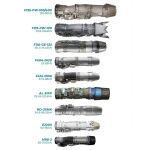
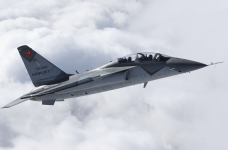
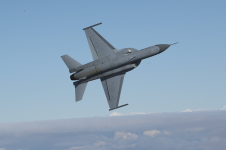
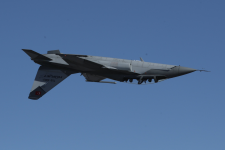
KF-21 will never be the same class off Kaan, it doesn't have IWB. They say they will have it later blocks, but that will need structurel change and what cost? Les fuel, 1 or 2 bombs? The engine off KF-21 will never be ready, before the TF35000.
KF-21 is not our challenge, we compare the Kaan with F-22.
In the manufacturing process of fifth-generation fighter jets, there is a key technological watershed: the integrally formed center fuselage section.
This manufacturing process requires large-scale, high-precision heavy-duty die-forging presses. To date, only China and the United States possess such specialized machinery. While Russia does have large heavy-duty die-forging presses, they lack the necessary precision. France purchased a unit during the Soviet era, but it faced similar limitations regarding precision.
Both Chinese and American fifth-generation fighter jets utilize these presses to manufacture their fuselage center sections as single-piece components. In contrast, the Russian Su-57 employs a segmented assembly method. This segmented approach necessitates additional structural reinforcement and fasteners, resulting in increased airframe weight and the consumption of more internal space; however, it offers the advantages of lower initial manufacturing costs and reduced long-term maintenance expenses. Should structural damage occur, a single-piece center section requires complete replacement, whereas a segmented center section allows for the replacement of only the damaged component.
Neither Turkey nor South Korea possesses the capability to manufacture such large, high-precision heavy machinery; consequently, both the KAAN and the KF-21 utilize a sectional assembly process. However, a key difference arises from the fact that the KAAN is a heavy fighter with a larger airframe and ample spatial margin, meaning the assembly method did not compromise the layout of the internal weapons bay (IWB). In contrast, the KF-21 is a medium fighter with a smaller airframe, and this constraint significantly impacted the positioning of its IWB.
Judging from publicly available videos and images, the original structural design of the KF-21 already reserved sufficient space for an internal weapons bay (IWB); however, that space is currently occupied by structural reinforcements.

South Korea adopted a development strategy similar to China's "small steps, rapid progress" approach: getting the aircraft airborne first, followed by rapid iteration.
Once they successfully develop their own large-scale, high-precision heavy-duty die-forging presses, they will be able to adopt the integrated mid-frame molding process. At that point, space within the IWB area will be freed up.
As for Türkiye... never mind; there are too many people there who are "high on drugs," so I won't go into a deep analysis.