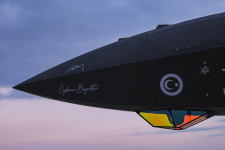
TF-X / KAAN / Hürjet Turkish Fighter & Trainer Aircrafts News & Discussions

The PL-15 missile is a good example. Before the India–Pakistan air conflict, most people believed its maximum range was around 150 km from internet data. But after the conflict, it became apparent to many observers that it could engage targets at ranges exceeding 200 km.

The examples I gave have nothing to do with it; I'm just providing technical information. Are you dim-witted ?

It's impossible for them to have technically lower RCS than KAAN.

read again
SU-57 design sucks .. ( without all-aspect stealth design )
KF-21 doesnt have internal weapon bays for stealth flight capability
RAFALE is old 4,5 gen technology with much bigger RCS ( minimum 1 m2 with missiles )

btw , Indian Pilots thought Pakistan had only export variant of the PL-15 Missile with range of 140-145 km

Internet data always gave 200 km range for the PL-15
 
It's impossible for the KF-21 to have technically lower RCS than KAAN.


BVR Capability Matrix KAAN vs KF-21
Tactical MetricKAAN (5th Generation)KF-21 Boramae (4.5+ Generation)
Weapon CarriageInternal Weapon Bays (Full Stealth)External / Semi-Recessed (Semi-Stealth)
Frontal RCS EstimateExtremely Low (0.003 – 0.01 m²)Moderate-Low ( 0.1 – 0.5 m²)
Radar TechnologyHeavy GaN AESA (MURAD-600A)Medium GaN AESA (APY-016K)
Head-to-Head Track DistanceSpots the KF-21 at 120–150 kmSpots the KAAN at 35–50 km
Primary BVR MissileGökhan (Ramjet) / GökdoğanMeteor (Ramjet)
Engagement InitiativeAbsolute "First-Shoot" ControlForced to defend before acquiring a target

In a pure head-to-head engagement, KAAN maintains a massive 150 km zone of absolute advantage, allowing it to spot, track, and fire upon the KF-21 before the S.Korean Fighter even realizes it is being targeted on its radar screen

Frontal Radar Cross-Section (RCS)
KAAN : 0.01 m²
KF-21 : 0.1 - 0,5 m²

Head to Head engagement ( approximately )
KAAN : 120-150 km
KF-21 : 35-50 km

The KF-21 is a 4.5+ gen semi-stealth platform that carries its weapons externally

And KAAN has better AESA Radar (2000+ GaN T/R modules vs 1.000+ GaN T/R modules)
 
You and me don't know the real RCS of each.
You forget that Rafale is fitted with a IR scan and track optronic system. Officially able to track a fighter at 100km, so the 38km....
True but IRST are often dependent on weather conditions and a stealth fighter has doesn't just reduces Rf signal but full spectrum though thermal reduction is not as good as rf.
 
True but IRST are often dependent on weather conditions and a stealth fighter has doesn't just reduces Rf signal but full spectrum though thermal reduction is not as good as rf.

The KAAN with powerfull MURAD-600A AESA Radar ( 2000+ GaN T/R modules ) can detect the RAFALE ( minimum 1 m2 RCS ) from 170-200 km away

because , RAFALE doesnt have stealth design and lack internal weapon bays for stealth flight capability

that doesnt matter , if RAFALE detect the KAAN even 100 km away by IRST
( despite it being technically impossible ) .... max 50 km

---------------------------------------------------------------------

still the KAAN maintains a massive 170 km zone of absolute advantage, allowing it to spot, track, and fire upon the RAFALE before the French Fighter even realizes it is being targeted on its radar screen

Thanks to Turkish BVR air to air Missile projects
-- 185+ km ramjet powered GOKBORA with AESA seeker
-- 200+ km ramjet powered GOKHAN with AESA seeker
 
Low-Observable EOTS in the World


USA : AN/AAQ-40 ( F-35 )
Turkiye : TOYGUN-100 ( KAAN and KIZILELMA )
China : EOTS-86 ( J-20 )


F-35 Lightning II (United States) — Features the Lockheed Martin EOTS embedded behind a multi-faceted sapphire glass window under the nose

Chengdu J-20 (China) — Utilizes the EOTS-86 system housed in an angular, radar-deflecting chin enclosure beneath the cockpit

TAI KAAN (Turkiye) — Employs a split system featuring an under-fuselage, faceted stealth targeting window alongside a flush nose-mounted IRST

Bayraktar KIZILELMA (Turkiye) — Integrates the indigenous TOYGUN Low-Observable EOTS, making it the first unmanned stealth fighter with this internal capability

1784887278608.png
 
5th-gen Fighters with GaN AESA Radar


F-35 Lightning II (USA)
— Upgrading to the AN/APG-85

Chengdu J-20 (China) — Features an advanced domestic GaN radar array, widely reported to be a variant of the Type 1475 (KLJ-5) series

TAI KAAN (Turkiye) — Equipped with the MURAD-600A AESA Radar


This lack of cutting-edge GaN AESA
F-22 : GaAS AESA Radar
SU-57 : GaAS AESA Radar

-----------------------------------------------------------------------

Bayraktar KIZILELMA (Turkiye) — Integrates the indigenous MURAD-200A AESA Radar, making it the first unmanned stealth fighter with this capability


... MURAD-600A GaN AESA Radar ... Turkiye

Number of Modules and Power:
Thanks to its wide nose design, the MURAD-600A has 2,000+ transmit/receive (T/R) modules. This density gives it a power-aperture performance that can rival the American AN/APG-85 Radar

Electronic Attack Capability: The MURAD-600A can perform directed electronic jamming against enemy air defense radars and air-to-air Missile seeker heads by focusing its immense electromagnetic power into a narrow beam.

Low Visibility (LPI) and Stealth Tracking: The radar operates in LPI (Low Probability of Intercept) mode by changing the frequency and modulation of the signals it emits at speeds of one millionth of a second. This prevents enemy aircraft's Radar Warning Receivers (RWRs) from detecting that KAAN has activated its radar and is tracking them.
 
Turkiye is more than you know

TAI had established world-class testing infrastructure to keep the KAAN entirely within Turkish borders, including

-- Europe’s second-largest subsonic wind tunnel for aerodynamic testing
-- Full-scale anechoic test facility to analyze electromagnetic interference across sensor and radar systems onboard the Aircraft

Nice, really !
 
100 km rating applies to large, non-stealth targets at high altitudes from behind, where massive engine heat is directly exposed

From the front aspect a Fighter Jet's hot exhaust plume is hidden by its own fuselage, reducing the infrared signature drastically.

RAFALE can detect the SU-27 from 100 km by IRST
but RAFALE can detect the stealth KAAN from 30-50 km by IRST

FactorNon-Stealth Target ( SU-27)Stealth Target ( TAI KAAN)
Frontal IR SignatureHigh (Unshielded inlets/engines)Low (S-duct inlets, cooled skin)
Expected IRST DetectionUp to 80–100 km (High altitude)Realistically 30–50 km
Sensor Tracking MethodDirect thermal point trackingAlgorithmic kinetic vectoring
A jet emitted IR even front front (aerodynamic friction).
 
The PL-15 missile is a good example. Before the India–Pakistan air conflict, most people believed its maximum range was around 150 km from internet data. But after the conflict, it became apparent to many observers that it could engage targets at ranges exceeding 200 km.
it's not the whole history.
Pak air force was intended to receive the export PL-15 variant, limited in range. In fact chinese saw the opportunity to test their full model, with a greater range, something the indian intelligence didn't know.
 
True but IRST are often dependent on weather conditions and a stealth fighter has doesn't just reduces Rf signal but full spectrum though thermal reduction is not as good as rf.
True.
But aerodynamic friction can't be eluded.
An any stealthy aircraft is more bulky (than a legacy fighter), as it has to carry load internally, so has more drag so more IR trace even empty.
 
SAMP/T will never be delivered in 2028 even if ordered now. So it's not the reason.

it is the reason we don't know when Block 3 or Block 4 will be ready only that it will be likely after 2028. The upper layer might take time till the 2030s to be mature.

Plus the SAMP-T deal offered is lucrative, they want to produce interceptors and system in Turkiye, due to the production advantage Turkiye holds..

The Israelis have David's sling and Arrow, but they still were operating Patriots for a long time, and now have THAAD deployed there. South Korea has THAADs and Patriots there, despite having an equivalent system that is indigenous.

The the hedging of bets, while a system matures and gets optimized.
 
A jet emitted IR even front front (aerodynamic friction).

KAAN has a highly stealthy design and technology from the front

From the front, the KAAN's massive engine exhaust is hidden
The only infrared signature comes from skin friction (aerodynamic heating of the nose and wing edges) and the cockpit canopy

but 5th gen stealth Fighter like the KAAN is specifically shaped and coated with special materials to suppress this heat. Without engine heat, the infrared signature drops drastically


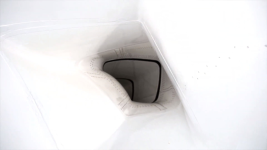
Also , KAAN has S routing duct to hide Engine comprassor blades from direct enemy radar signals .. also RAM coating on inner surface of duct
1784908986799.png

so RAFALE can not detect the KAAN from the front at a distance of 50 km using its IRST sensor and AESA Radar
 

Users who are viewing this thread

Pakistan Defence Latest

Country Watch Latest

Latest Posts

Back
Top