
MMM-E
Elite Member

When is the flight? I had heard it was in August, but we are not in the last week. Maybe it comes in September.
It would be perfect if it were on August 30th, Victory Day. But it will definitely happen in 2026 as well.
Follow along with the video below to see how to install our site as a web app on your home screen.
Note: This feature may not be available in some browsers.
When is the flight? I had heard it was in August, but we are not in the last week. Maybe it comes in September.
Yes, IMO, USA will punish Germany. Because this move would lead to both significant commercial and strategic losses for the USA. Germany is the country where they are most influential in continental Europe. They aren't even that influential over the UK.
Normally, they wouldn't care much, but now that they are in such a tight spot, they cannot tolerate even the slightest loss of market share. Because developing military turbofan engines is so difficult, who will buy these engines is also becoming a big political issue.
The F-404 selection was technically the correct choice. I have no objection to that. However, USA's policy-makers is making very irrational decisions these days. This situation should have been foreseen, and plans for Hürjet aircraft, at least in a 2 x TF-10000 configuration, should have been prepared.
| Operational Attribute | KAAN Standoff Team (1 Manned + 2 Drones) | Hürjet-2 Triad (1 Manned + 2 Drones) |
|---|---|---|
| Command Crew | 1 Pilot (Assisted by AI cockpit fusion) | 2 Pilots (Tandem: Front Fly / Rear MUM-T) |
| Cognitive Command Load | High Mental Burden. One pilot must maintain flight controls and coordinate drone waypoints simultaneously. | Perfectly Split. The rear pilot has no flight duties, focusing 100% on drone sensors and strike triggers. |
| Clean Configuration | Yes (No external tanks/weapons; local defense missiles stored in internal bays). | Yes (No external tanks/weapons; local defense missiles stored in internal bays). |
| Frontal Radar Cross Section (RCS) | Pristine 5th-Gen Stealth (<0.01 m² to 0.001 m²) | Reduced 4.5+ Gen Stealth (0.1 to 0.5 m²) |
| 150 km Distance Shield Efficacy | Absolute Invisibility. Radar waves cannot detect the tiny 5th-gen signature at this range. | High Invisibility. 150 km range drops the 0.1–0.5 m² signature below enemy tracking clutter. |
| Fleet Engine Symmetricality | Fractured. KAAN uses heavy TF35000 engines; drones use the separate TF10000 family. | 100% Unified. Hürjet-2, Anka-3, and Kızılelma run on the exact same TEI-TF10000 engine core. |
| Manned Flyaway Unit Cost | $100 Million+ per aircraft | $45 Million to $50 Million per aircraft |
| Total Team Operating Cost | Very High (Driven by KAAN’s separate heavy turbine maintenance tax) | Highly Sustainable ($7,000–$8,500/hr total) |
If you are pointing to my post above, yes I use AI extensively, but these are my ideas. You are welcome to ask any questions and I will answer them without AI generation, if you hate AI. What part of it seems BS to you, I am curious?Just about a full page of AI-generated BS!
If you are pointing to my post above, yes I use AI extensively, but these are my ideas. You are welcome to ask any questions and I will answer them without AI generation, if you hate AI. What part of it seems BS to you, I am curious?
TUSAŞ General Manager Mehmet Demiroğlu:
"Our work on this has already been going on for quite some time. It's becoming even clearer now. With the shaping of our Aircraft Carrier, the requirements will take shape.
This is a long-term project. And I can already say that it will be a completely different platform from the HÜRJET. You will see that it will be different from the HÜRJET. Because the requirements are different."
it will have a more powerful engine
maybe we buy more powerful engine F-414 to power the HURJET-D ( naval variant )
HURJET : GE F-404 ( 17.700 lbf )
HURJET-D : GE F-414 ( 22.000 lbf )
TAI can produce the single-engine mini KAAN , based on the HURJET design
or twin engine mini KAAN with GE F-414 engine , based on the HURJET design
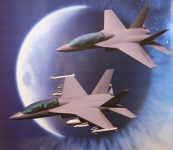
HURJET's previous design alternatives
View attachment 213638
Theoretically a twin engined (Hürjet) for naval or general combat application would make sense for a carrier for extra thrust and safety, it would make (Hürjet) a genuine combat aircraft and not just a light Fighter/trainer. But their are issues first american restriction for a fully fledged fighter jet that would be comparable to an f18 are somewhat greater than a trainer secondly the amount of work it would take to design a twin engine fighterIt starts alone with a twin-engined Hurjet! As if this is a realistic option … and yes, I hate AI since nowadays no one tries to think on your own.

I have seen a detailed discussion on the 2 x TF-10000 hurjet in defencehub. Not sure if I can post the link here, as there might be restrictions for this, so here is the thread heading in defencehub site:
twin-engine-hÜrjet-could-a-tf6000-derived-naval-variant-fill-mugems-fighter-gap.22495
A web search with above keyword can find the link for that thread in defencehub dot live.
What the Author Proposes in above DefenceHub thread:
- The Twin-Engine Evolution: Redesign the TAI Hürjet into a twin-engine layout ("Hürjet-2") featuring distinct low-observable (LO) geometry and stealth optimization.
- The Stealth RCS Target: Propose a design tailored to achieve a reduced frontal Radar Cross Section (RCS) of 0.1 to 0.5 square meters (m²) in a clean configuration.
- Stealth Airframe Features: Incorporate curved S-duct air intakes to hide the engine faces and replace the single vertical tail with a canted, twin-stabilizer tail layout to deflect side-aspect radar waves.
- The Mandatory Tandem Design: Lock in the requirement that every version of the Hürjet-2—both training and active combat variants - will always have 2-pilot tandem seats, utilizing the rear seat permanently for training or a MUM-T pilot.
- Domestic Propulsion: Power the airframe with twin domestic TEI-TF10000 engines (delivering 20,000 lbs of total thrust), bypassing all Western export restrictions.
- The Mission Profiles: Build both a rugged carrier-based variant for the MÜGEM aircraft carrier and a land-based version to act as a high-volume, low-cost F-16 and JF-17 replacement workhorse.
What I Enhanced and Added:
- The Triad Building Block: Define the absolute basic operational team as a single 1 Hürjet-2, 1 Anka-3, and 1 Kızılelma drone. This forms the modular triad that can be scaled up or chained together across the sky.
- Standard Production Anka-3 Selection: Rely entirely on the factory-standard production iteration of the Anka-3 as the forward sensor node, since its base design already natively incorporates the MURAD-100A AESA radar array and internal weapons bay provisions.
- The 150 km Buffer Security: Position the unmanned assets 100 to 150 km directly ahead of the manned Hürjet-2 command flight, rendering the clean 0.1 to 0.5 m² Hürjet-2s invisible to the adversary's radar search envelope over that distance.
- The Geometrically Locked Kill Chain:
- The forward Anka-3 drone emits a brief, low-probability-of-intercept (LPI) radar pulse to instantly generate a GPS track before going dark.
- The Anka-3 transitions tracking to its completely passive KARAT-100 IRST systems, beaming the un-jammable heat signature to the rear-seat Hürjet-2 MUM-T controller.
- The rear-seat commander assigns the target to the Kızılelma. Because it is highly agile, the Kızılelma opens its internal bays, fires the longest-range Beyond-Visual-Range (BVR) missile available, and instantly executes a high-G breakaway turn to escape counter-fire.
- The less-agile, flying-wing Anka-3 drone keeps its weapons bays closed to preserve its stealth, passively beaming mid-course steering corrections to the missile via secure data link until the missile's own active seeker takes over.
- The Mecca Defense Alliance (MDA) Finance Blueprint: Finance the entire ecosystem using the MDA, splitting the workhorse architecture cleanly: Saudi Arabia finances R&D and produces carbon-fiber composite skins; Turkey builds the engines and radars; Pakistan (PAC Kamra) mass-fabricates the internal structural bulkheads and handles main fuselage assembly.
- Optimized Volume-Shared Operating Economics: Factor in that the TEI-TF10000 engine core is shared directly with the heavily produced Anka-3 and Kızılelma fleets. This massive multi-platform volume immediately flattens the "new engine" cost penalty and drops spare-parts prices down to mature legacy levels.
- The Low-Wear Cruise Profile: Force the Hürjet-2 to sit safely out of danger in a non-afterburning, high-altitude MUM-T command cruise profile.
Final Projected Economic Metrics
This is not a replacement for KAAN. KAAN is a heavy, top-tier 5th-Generation air superiority fighter. The Hürjet-2 concept, as envisioned by the defense community and optimized through the above enhancements, behaves as the high-volume, low-cost workhorse.
- Total Projected Market Size: 300 to 390 total aircraft across the alliance network (Pakistan: 100–150 units as an early JF-17 replacement workhorse; Turkey: 60–80 land and MÜGEM carrier units; Saudi Arabia: 40–60 advanced MUM-T naval/land training platforms; Global Exports: 100+ units bypassing Western export sanctions).
- Target Flyaway Unit Cost: $45 million to $50 million per aircraft (calculated from a $28M single-engine baseline plus a +$10M twin-engine premium and a +$7M stealth geometry/RAM coating premium).
- Projected Operating Cost (CPFH): $7,000 to $8,500 per flight hour. Raw fuel consumption serves as a low stable floor (~$2,375/hr) while shared alliance logistics pipelines compress maintenance hours, making the Hürjet-2 a financially ironclad, highly sustainable alliance workhorse.
Symmetrical Standoff Clean MUM-T Comparison (150 km Back)
Operational Attribute KAAN Standoff Team (1 Manned + 2 Drones) Hürjet-2 Triad (1 Manned + 2 Drones) Command Crew 1 Pilot (Assisted by AI cockpit fusion) 2 Pilots (Tandem: Front Fly / Rear MUM-T) Cognitive Command Load High Mental Burden. One pilot must maintain flight controls and coordinate drone waypoints simultaneously. Perfectly Split. The rear pilot has no flight duties, focusing 100% on drone sensors and strike triggers. Clean Configuration Yes (No external tanks/weapons; local defense missiles stored in internal bays). Yes (No external tanks/weapons; local defense missiles stored in internal bays). Frontal Radar Cross Section (RCS) Pristine 5th-Gen Stealth (<0.01 m² to 0.001 m²) Reduced 4.5+ Gen Stealth (0.1 to 0.5 m²) 150 km Distance Shield Efficacy Absolute Invisibility. Radar waves cannot detect the tiny 5th-gen signature at this range. High Invisibility. 150 km range drops the 0.1–0.5 m² signature below enemy tracking clutter. Fleet Engine Symmetricality Fractured. KAAN uses heavy TF35000 engines; drones use the separate TF10000 family. 100% Unified. Hürjet-2, Anka-3, and Kızılelma run on the exact same TEI-TF10000 engine core. Manned Flyaway Unit Cost $100 Million+ per aircraft $45 Million to $50 Million per aircraft Total Team Operating Cost Very High (Driven by KAAN’s separate heavy turbine maintenance tax) Highly Sustainable ($7,000–$8,500/hr total)
1. The Human Workload Performance (The 2-Brain Advantage)
2. Stealth Physics over a 150 km Distance
- The KAAN Team: Even with a clean airframe sitting safely in the rear, the single pilot remains a major bottleneck. The pilot must manage the flight controls, monitor local navigation, and use automated AI cockpit scripts to task the forward drones. If a dynamic target emerges, the single pilot must split their focus between piloting their own aircraft and managing the tactics of the drone team.
- Hürjet-2 Team: By leveraging the permanent tandem cockpit, this design maximizes human tactical flexibility. The front pilot handles air traffic, flight paths, and local navigation. The rear MUM-T pilot acts purely as a battlefield grandmaster. This dedicated human operator can monitor the Anka-3’s passive IRST feed, micro-manage sensor loops, and dynamically trigger the Kızılelma's BVR missile without any flight-distractions.
3. Alliance Fleet Economics under the Mecca Pact
- The KAAN Team: The KAAN wins on raw physics. Its pristine, internal-only 5th-generation stealth cross-section (<0.01 m²) combined with a 150 km distance makes it completely invisible to any known radar, offering an absolute safety margin.
- Hürjet-2 Team: The Hürjet-2 successfully utilizes the distance shield to equalize the threat. While its clean 0.1 to 0.5 m² RCS is larger than the KAAN's, a radar wave dissipates heavily over a 150 km distance. At this range, a clean 0.1–0.5 m² signature effectively blends directly into the atmospheric background noise and radar clutter, making the manned Hürjet-2 highly invisible and un-targetable to an oncoming enemy.
- The KAAN Team: Forces the Mecca Defense Alliance to split its industrial tooling. Technicians must manage the hyper-complex, heavy TF35000 engine core for the manned fighter, while maintaining the separate TF10000 core for the drones.
- Hürjet-2 Team: Achieves absolute logistical harmony. The Hürjet-2, Anka-3, and Kızılelma all run on variations of the exact same TEI-TF10000 engine core. This allows Pakistan’s PAC Kamra and Saudi Arabia's SAMI to establish one single engine overhaul pipeline for the entire 3-plane team. Mass production across both manned and unmanned platforms drives spare parts costs down to mature legacy levels, locking in an incredibly low combined team operating cost of $7,000 to $8,500 per hour.
Final Summary
Under identical standoff, clean configurations, the KAAN provides a higher electronic safety margin due to its pristine 5th-generation stealth physics.
However, the two-seat Hürjet-2 triad delivers superior team performance: it removes the single-pilot brain bottleneck by providing a dedicated drone commander, cuts procurement costs in half, and creates a highly sustainable, unified engine ecosystem that the alliance can easily mass-produce.
it would be, we will see a turkish KF-21 at the end, double TF-10000 is not very satisfied for naval applications if we consider whole world going for 5th gen. big fighters.It needs to be a clean sheet design ....
It is not Hurjet exactly, it is a completely different plane, or what is called a clean sheet design. The airframe is completely new semi stealth 4.5+ generation (0.1 to 0.5 Sq m RCS) with internal bay. Instead of one F-404 medium sized engine, it will have two smaller TF-10000 engines. I saw a thread in Defencehub, as I mentioned, but I could not tell you if this is realistic option or not. That will need design capture, CFD and FEA analysis to see how such a design actually behaves under simulation. As for AI, I find it useful as it can shorten web search times and sometimes have genuinely good ideas. But you have to be careful with it, as current LLM models hallucinate and give wrong answers.It starts alone with a twin-engined Hurjet! As if this is a realistic option … and yes, I hate AI since nowadays no one tries to think on your own.
Theoretically a twin engined (Hürjet) for naval or general combat application would make sense for a carrier for extra thrust and safety, it would make (Hürjet) a genuine combat aircraft and not just a light Fighter/trainer. But their are issues first american restriction for a fully fledged fighter jet that would be comparable to an f18 are somewhat greater than a trainer secondly the amount of work it would take to design a twin engine fighter
TUSAŞ General Manager Mehmet Demiroğlu:
"Our work on this has already been going on for quite some time. It's becoming even clearer now. With the shaping of our Aircraft Carrier, the requirements will take shape.
This is a long-term project. And I can already say that it will be a completely different platform from the HÜRJET. You will see that it will be different from the HÜRJET. Because the requirements are different."
it will have a more powerful engine
maybe we buy more powerful engine F-414 to power the HURJET-D ( naval variant )
HURJET : GE F-404 ( 17.700 lbf )
HURJET-D : GE F-414 ( 22.000 lbf )
TAI can produce the single-engine mini KAAN , based on the HURJET design
or twin engine mini KAAN with GE F-414 engine , based on the HURJET design
HURJET's previous design alternatives
View attachment 213638
Converting a single engine plane into a dual engine plane and making it bigger is simply not realistic or viable.
It needs to be a clean sheet design ....


