TF-X / KAAN / Hürjet Turkish Fighter & Trainer Aircrafts News & Discussions

Turkiye learned many things from license production of American Engines
( GE F-110 turbofan and T700-TEI-701D Turboshaft Engine )

Turkiye produced 323 F-110 turbofan Engines under license
Also Turkiye produced 316 F-16 Fighter Jets under license

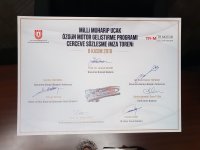
USA gave F-110 Engines to develop KAAN prototypes
on the other hand what China did for Pakistan ?
can China give WS-10B engine and J-10C Fighter to Pakistan for under license production ?

------------------------------------------

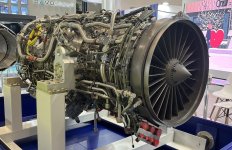
TEI TS-1400 domestic and national turboshaft engine will power the T625 GÖKBEY 6 Ton Utility Helicopter for mass production in 2027

Utility Helicopter with Turboshaft Engine Technology in the World
USA :
S-70 Black Hawk ( General Electric T700-GE-701D )
UK : AW159 Wildcat - Rolls-Royce Turbomeca RTM322
France : EC-725 ( Turboméca ( SAFRAN ) Makila 2A1 )
Russia : MI-38 ( Klimov TV7-117V )
China : Z-18 ( WZ-6C )
Turkiye : T-625 Gökbey ( TEI TS-1400 )

Turkiye has started developing the TS-1400 turboshaft Engine in 2017 and in 10 years ( 2017-2027 ) turboshaft engine enter mass production phase
View attachment 151592


Sooner or later Turkiye will join the elite club in 5th gen turbofan Engine technology

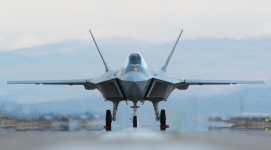
Just the fact that KAAN was produced and flown domestically with all its systems is a great success.

With the localization of the ejection seat and engine , KAAN will be completely indigenous
View attachment 151591

To develop the indigenous jet engine for heavy fighter will be an arduous task.

For example, China did complete the ground test for the 30,000 lbs class WS-10A back in Nov 2025, and the ground test for the 40,000 lbs class WS-15 started in Feb 2006.

It took China 2011-2012 for its air force to equip the WS-10A, and the 35,000 lbs WS-10C took the maiden flight in 2017 and equipped in 2022.

The 40,000 lbs class WS-15 started it maiden flight in 2023, and entering into production in 2025.

I would say that the indigenous engine for KAAN to enter into production by 2040 will be a generous claim.

If you want to meet the schedule by 2030, then China's TOT will be indispensable.

However, it is impossible for China to offer the TOT if Turkiye is clinging to NATO.
 
Impossible. We don’t care about the relationship between Türkiye and NATO. That is something the Russians need to worry about. WS-10B cannot be easily exported. We have spent countless efforts to develop this engine.We can't give him to a country that has close ties with the East Turkestan rebels.

NATO recently has considered China as its number one threat, even Russia is their proximity neighbor.

If NATO can be humiliated and later dismantled, and I think that China will do something to advance its relationship with Turkiye as long as they promise to not meddling China's internal affair in Xinjiang.
 
Dude, just sell them dozens and take money before their own engine matures, political conditioning is western tool of subjugation, it would be better if you just say our advanced engines are not for sale and move on some other mutual beneficial projects if any such exists.

What the PDF Chinese members have said won't count because the Chinese senior leaders won't take any risk because the NATO right now is a hostile military organization to China.
 
I would say that the indigenous engine for KAAN to enter into production by 2040 will be a generous claim.

If you want to meet the schedule by 2030, then China's TOT will be indispensable.

However, it is impossible for China to offer the TOT if Turkiye is clinging to NATO.


Turkiye doesnt need any TOT from China
And Turkiye is not China .... Turkiye is working with American GE since 1985

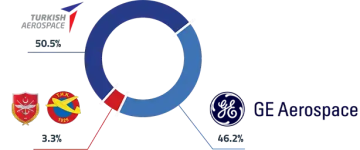
TUSAS Engine Industries (TEI) is an incorporated company established in 1985 as a joint venture of Turkish Aerospace Industries and American GE Aerospace
1759706415052.png


Türkiye is not starting engine development from scratch
Türkiye has experience in producing parts and modules for gas turbine engines since 1987

TEI has been manufacturing approximately 1500 parts across a wide range of products for the aviation industry in line with the principles of sensitivity and innovation since 1987 .... ( for 50 different types of military and commercial engine programs )

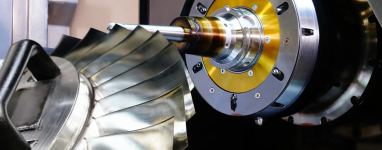
Turkiye has blisks and spools manufacturing also single crystal blade technologies which are currently produced by only a few Countries in the world
1759706115789.png

--------------------------------------------------

Turkiye has started developing Engine for KAAN in 2018
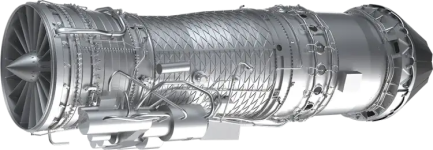
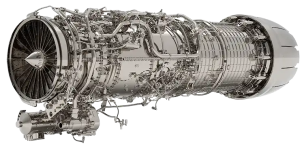
According to TEI , The TF-35.000 Engine first flight with KAAN by 2029 and integration-mass production by 2032-2035 period
1759704479761.jpeg
The TF35000 utilize high-temperature resistant super alloys, advanced coating, and cooling technologies with its unique design
1759707741852.png


Turkiye develops also turbofan Engines to power the KIZILELMA and ANKA-3 unmanned stealth Fighter Jets

TF-6000 turbofan Engine
To view this content we will need your consent to set third party cookies.
For more detailed information, see our cookies page.

1759707179976.jpeg

TF-10.000 turbofan Engine

  • Thurst (SLS, ISA): 6.000 (Dry) / 10.000 (Wet) lbf
  • Dimensions (WidthxHeightxLength): 870x1150x3150mm
  • By-pass Ratio (SLS, ISA): 1
    • Fan: 2 Stage Axial
    • Compressor: 6 Stage Axial
    • Turbine: 1 Stage HPT - 1 Stage LPT
    • Combustion Chamber: Through Flow
    • Afterburner
    • 1759708168583.png
 
Last edited:
Lol, people love to compare and use it as a argument. Did wrote and shall wrote it againg. The world off 20 years and now are different. Technology have evolved faster and better. Our knowledge off engine have evolved to. So please fak off woth China did it 20 years, so we should do it to? :)
 
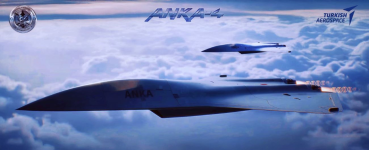
Turkiye should focus on ANKA-4 unmanned stealth Fighter Jet


Unmanned stealth Fighter Jets ANKA-3/4 and KIZILELMA can fill the gap until the domestic engine comes into inventory for the KAAN Fighter Jet

There is no other way out ..... USA is not selling F-35s to Türkiye.
and It appears that the US Congress will not approve the F-110 Engines.


---------------------------------

Until 2030 , TF-6.000/TF-10.000 Engines can be ready to power the ANKA-3/4 unmanned stealth Fighter Jets

-- MURAD-100A AESA Radar is almost ready
-- 185+ km GOKBORA ramjet powered air to air missile will be ready in a few years


4,5th gen Fighters like F-15EX , F-16V , RAFALE can detect the ANKA-3 from 25-30 km away and GAME OVER in BVR combat

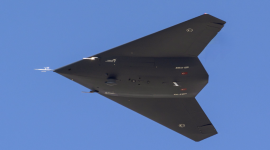
-- ANKA-3/4 dont not have horizontal and vertical stabilisation to reduce RCS
-- The exhaust will be inside the body to reduce its RCS
-- Full of composite material
-- Radar-absorbent materials (RAM) to reduce RCS
-- Internal weapon bay

1759730556060.png
1759730202265.png

TAI has enough technology and experience to produce ANKA-4 unmanned stealth Fighter Jet

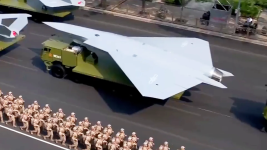
China unveils large unmanned Stealth Fighter design during military Parade
1759755159419.png


BVR Combat
Even ANKA-3 to carry MURAD-100 AESA Radar and 185+ km GOKBORA air to air Missiles to shoot down the F-15EX , F-16V , RAFALE , etc in BVR combat before they see the ANKA-3 on their Radars

SEAD-DEAD Role
ANKA-3 to carry 150+ km cost effective KUZGUN-TJ and CAKIR Missiles to hit AD Systems like PATRIOT , S400 , S300 , SAMP-T , HQ-9 , DAVID SLINGS
even to carry 280 km SOM-J stealth Cruise Missile in internal weapon bay

-----------------------------------------

According to Prof.Dr Feridun TASDAN
Radars, which can detect the F-15 from 200 km, can only see the ANKA-3 when it approaches as close as 26 km.

Let's say 30 km ... You fly around it, gather intelligence, and then you go back, and They don't even know it.

To view this content we will need your consent to set third party cookies.
For more detailed information, see our cookies page.


Some People still don't understand what's coming and They're making fun of the KIZILELMA , ANKA-3/4

DOG Fight is over
Now, there is a concept of detecting and shooting the enemy Fighter Jets from very far away with advanced AESA Radars and long range air to air Missiles

Stealth Platforms are another advantage

I have been explaining this here for the last 4 years over network centric warfare capability
 
I would say that the indigenous engine for KAAN to enter into production by 2040 will be a generous claim.

If you want to meet the schedule by 2030, then China's TOT will be indispensable.
Few points I want to make. bear with me.

China's development of indigenous engines for fighter jets has been a decades long effort
The process began in the 1980s amid technical challenges like materials science, reliability, and manufacturing precision. Key examples include the WS-10 (interim power for 4th-gen fighters) and WS-15 (advanced engine for 5th-gen J-20). These engines faced delays but progressed through testing, with serial production marking maturity.
China's engines took 20–30+ years due to starting from near-zero indigenous capability(which is very impressive lets not deny) in the 1980s, involving reverse-engineering and trial-and-error

Turkey's TF35000, starting in 2018 with modern tools and partnerships, projects a shorter ~14-year cycle to integration—faster but unproven, as it builds on recent gains like the TF10000 for drones.
TEI (TUSAŞ Engine Industries) uses digital twins to optimize designs, reducing trial-and-error cycles. Unlike China's early efforts lacked such tools, relying heavily on physical testing
3D printing and advanced machining enable rapid prototyping of complex components like turbine blades. Turkey, with access to global supply chains and partnerships (e.g., with Rolls-Royce for tech transfer), can produce high-precision parts faster than China could in the 1990s, when it struggled with single-crystal blade production for WS-15.
The TF35000 leverages modern alloys and composites (e.g., nickel-based superalloys, ceramic matrix composites) developed globally since the 2000s. China faced sanctions and export controls, forcing it to develop indigenous materials from scratch, delaying WS-15 until breakthroughs in the 2010s.

Turkey's collaboration with Rolls-Royce (via Kale Arge and later TRMotor) includes technology transfers for high-thrust turbofan components. Rolls-Royce’s experience with engines like the EJ200 (for Eurofighter Typhoon) provides Turkey with insights into supercruise-capable designs, bypassing decades of foundational research. For instance, TRMotor’s hybrid engine tests planned for 2029 leverage these inputs. While China was sanctioned by west and didn't have same opportunities as TF35000.

Turkey’s partnerships shave years off R&D by providing proven subsystems (e.g., control systems, combustors). China’s need to independently develop every component alloys to FADEC (Full Authority Digital Engine Control), extended WS-15’s timeline by a decade or more.

TEI’s work on smaller engines like the TS1400 (for T625 Gökbey helicopter, first run 2021) and TF6000/TF10000 (for drones like Bayraktar Kızılelma) provides practical experience in turbofan design, testing, and production. These projects, though smaller, refined Turkey’s supply chain and workforce skills, enabling a faster scale-up to TF35000’s 35,000 lbf thrust.
Turkey benefits from open-source data, industry publications, and lessons from programs like the F135 (F-35) or EJ200. While proprietary details remain restricted, Turkey can study declassified or commercialized advancements, unlike China, which faced a knowledge embargo.

My conclusion China has down well for itself. But please lets not compare with Turkiye.
I will add that 2032 timeframe is a little too optimistic, I am thinking more 2035-ish
 
There is no any technology transfer from Rolls Royce or GE


Turkiye itself has developed everything after 2000s
but Turkiye learned many things from under license production

Embargoes don't disrupt but help Turkiye nationalize defense products

1 -- Single crystal blade casting, considered a critical technological step in turbine engines, began in 2016 with the CRYSTAL Project supported by the Presidency of Defense Industries R&D and Technology Management Department, in collaboration with TEI and TÜBİTAK MAM

2 -- Turkiye has blisks and spools manufacturing technologies which are currently produced by only a few Countries in the world

Materials and progress technologies also have an importance in the development and sustainability of Turkish Engine Projects , especially in the TF-35.000 Engine

( the fields of high temperature applications, super alloys, precision casting, coating technologies , ceramics and porous structures. )

TEI had to produce even the first Pure Nickel and the first Pure Cobalt in Turkiye
because they were also coming from abroad. while producing Engines


--------------------------------

3 -- Again, for the first time in the world, TEI produced an engine combustion chamber using the layered import method.

4 -- TEI has developed precision titanium casting and nickel superalloy casting technologies for the first time in Turkiye


There are two companies in the world that can process aircraft engine turbine blades with the additive manufacturing Nickel Superalloy method

one is General Electric from USA , the other is TEI from Turkiye

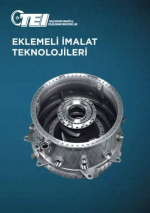
Additive manufacturing technologies
1759764762564.png

therefor , TEI produces parts for one in every two Planes in the world
TEI is the largest supplier company in the world ........ Producing parts for massive Engines like the GENX-GE90 is not for every Country
 
My conclusion China has down well for itself. But please lets not compare with Turkiye.
I will add that 2032 timeframe is a little too optimistic, I am thinking more 2035-ish
Well said bro. I am fully agree with you.
 
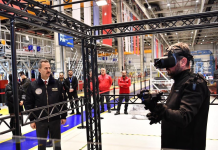
Artificial reality technology was developed for KAAN's production.

The system, equipped with specialized software and hardware, provides a live demonstration of how each part is assembled, using a synthetic image that mirrors the reality seen by the technician wearing the glasses.

1760869229837.png
To view this content we will need your consent to set third party cookies.
For more detailed information, see our cookies page.
 
KAAN with advanced magnetic coating , S routing Air inlet ducts , Internal weapon Bays and RAM panel layer it could RCS value for X band 10GHz as 0.0030 m2 [ -25dbsqm ]

1761476639660.png

Turkish engineer and businessman Ergün Kırlıkovalı is the producer of the special coating material that provides stealth capability to American B-2 and F-35

Now, as a Turkish company in USA is the sole supplier for these two aircraft, the B-2 and F-35. We've been the sole supplier for the B-2 for over 30 years, and for the F-35 since 2006, that is, for 19 years

Turkish inventor, engineer, and businessman Ergün Kırlıkovalı, creator of the polymers that make American F-35 jets invisible
 
What are the expected serial production timelines for block 1
 
What are the expected serial production timelines for block 1
Not Block 1, but Block 10.

If the USA sells us the F110 engine, Kaan Block 10 deliveries could begin in the first quarter of 2029 and a maximum of 20 units could be produced. We requested 48 F110s from the USA. Therefore, if four pairs of engines are kept as spares, 20 pairs of Kaans can be produced with 40 engines, which means 20 Kaans will be produced.

If the USA does not sell F110 engines, I see three possible scenarios:

i) Wait for mass production of the full-power TF35000 engine.

ii) Attempt to purchase engines with similar power to the F110 from Russia or China.

iii) Integrate the lower-powered "early induction" TF35000 engine into the aircraft. The target dry thrust for the full-power TF35000 engine is 24,000 lbf, compared to the GE F110's dry thrust of around 18,000 lbf.
 
Last edited:
There can be European engine options as well . .. as alternative
 

Users who are viewing this thread

Country Watch Latest

Latest Posts

Back
Top