The Coming Food Crisis in South Asia

MNZGamerX

Registered Member
Joined
Dec 12, 2023
Messages
1,873
Reaction score
2,047
Reputation
1,287.5
Country of Origin
Country of Residence
Oil disruptions are cascading into fertilizer markets, weakening agriculture and putting South Asia’s food security at risk. We’ve seen this pattern before.

By Santosh Nepal
May 12, 2026

thediplomat_2024-05-20-094057.jpg

Disrupted oil flows through the Strait of Hormuz may appear, at first glance, to be another episode of energy market instability. But the implications, especially for South Asia, run much deeper. Disruptions in oil supply are not only causing a surge in fuel prices; they are a clear warning of an impending food crisis driven by fertilizer shortages, rising production costs, and increasingly fragile agri-food systems. A similar pattern was evident during the 2007-2008 global crisis, when fertilizer prices nearly tripled, and global food prices surged by more than 50 percent.

Modern agri-food systems depend heavily on energy, not only for transport and irrigation but also for fertilizer production. Nitrogen fertilizers, in particular, rely on natural gas. When energy supplies tighten, production slows and prices increase. What begins as an energy shock can quickly move into the agricultural system.

South Asian countries in particular heavily depend on fertilizer and natural gas from the Persian Gulf. In 2024, India imported more than half of its total fertilizer from the Gulf.

The problem deepens as fertilizers move through supply chains. South Asia’s imported fertilizers travel long distances across borders. Higher fuel costs and logistical disruptions delay delivery and reduce availability even more.

These impacts are not evenly distributed. Higher-income countries often buffer such shocks through subsidies or stronger purchasing power. In contrast, lower-income, import-dependent countries face immediate constraints.

Across South Asia, the scale of dependency is massive. India uses roughly 60 million tonnes of fertilizer nutrients annually, while Pakistan and Bangladesh use about 10 million and 6 million tonnes, respectively. Countries like Nepal, which have very limited domestic production, illustrate another level of vulnerability.

With the South Asian countries relying heavily on imports, timely access to fertilizer has become the most pressing constraint in agriculture production. Agriculture is extremely time-sensitive and does not respond well to delays. Crops require nutrients at specific growth stages. If fertilizer arrives late, farmers cannot fully recover the lost productivity. This means that even modest disruptions in supply can have wide-ranging consequences on crop production.

Disruptions linked to current tensions are affecting up to one-third of the global fertilizer trade, creating supply shortages and higher costs. Even at the lower end, the implications are serious. Staple crops such as rice and wheat are highly sensitive to fertilizer application. Evidence shows that removing nitrogen can reduce wheat yields by more than half, while inadequate phosphorus can lower rice yields by around 30 percent. In general, reduced fertilizer application leads to significant yield declines globally. In already stressed food systems, such reductions can quickly shift conditions from stability to shortage.

Lower yields push prices upward, reducing food access for low-income households. In countries like Nepal, where a large share of household income is spent on food, even small price increases can have significant effects. Imports may offset some shortages, but during global disruptions they become more expensive and less reliable.

This pattern is not new. During the 2007-2008 global food crisis, rising oil prices sharply increased fertilizer costs. Within a short period, global fertilizer prices nearly tripled, and food prices followed. The U.N. Food and Agriculture Organization’s Food Price Index rose by about 57 percent between 2006 and mid-2008.

The impact varied by country. Bangladesh experienced much sharper increases, with rice prices rising by over 60 percent and in some cases exceeding 70-80 percent. In India, domestic cereal prices increased more moderately, often estimated at around 20-30 percent due to strong policy interventions such as export restrictions.

Overall, though, countries across Asia and Africa experienced substantial increases in staple food prices, and more than 100 million people were pushed into extreme poverty. The crisis demonstrated how quickly energy shocks can cascade into food insecurity.

The current situation shows similar warning signs. Energy, water, and food systems are tightly interconnected. Disruptions in one sector rapidly affect the others. Policy responses therefore need to move beyond treating energy shocks as isolated events. Stabilizing the fertilizer supply should be an immediate priority. This includes building strategic reserves, diversifying import sources, and strengthening regional cooperation in procurement and distribution.

Beyond immediate stabilization measures, South Asia also needs longer-term strategies to reduce structural vulnerability. These include improving fertilizer use efficiency, investing in alternative nutrient sources, and strengthening domestic supply systems where feasible. This can be operationalized by expanding domestic production capacity for key fertilizers such as urea, alongside upgrading storage and distribution infrastructure to reduce supply bottlenecks.


In parallel, strengthening procurement systems, buffer stock mechanisms and regional logistics coordination can help stabilize availability during external supply shocks. Without such measures, South Asia will remain exposed to external shocks that it cannot control.

The risks are already visible. If current disruptions continue, the next crisis in the region may not be defined by fuel shortages alone, but by declining food availability. The lesson is clear: energy shocks do not remain confined to energy systems. They move quickly across sectors, and when they reach food systems, the consequences are far more difficult to contain.
 
indians in their hate for Pakistan did not understand this and still are not willing to understand this. Instead helping and supporting Pakistan's efforts for negotiations and mediation these retards, out of their hatred are willing for the peace process to fail and hormuz to remain blocked.


Diverting water from Pakistani rivers is the priority for saffron chaddiz .. oh well.
 
This year will be the worst then. The monsoon will be short this year. The strongest el nino in 140 years.
@RescueRanger

Not just Pakistan this is a global food crisis. Pakistan has always been one of the most vulnerable nations exposed to climate change and food insecurity resulting from this.

This has been compounded by the crisis in Iran.
 
Diverting water from Pakistani rivers is the priority for saffron chaddiz .. oh well.
It was our shortcoming, mainly. A good politician should have negotiated for a minimum flow of water, as people have been dependent on these rivers for centuries.
Ayub miscalculated that the flow could be sustained from the other rivers. It was mainly due to the binary mindset, and the cabinet or ministers couldn't speak up or challenge in such a hierarchy.
Speaking on that, PPP era was devastating when we lost nearly all cases in international arbitration.
The only gain we obtained due to the Indus River was in 2015 by God when the EEZ was expanded due to the Indus deposit.
Otherwise, we have mistreated and destroyed this God-given blessing.
 
Not just Pakistan this is a global food crisis. Pakistan has always been one of the most vulnerable nations exposed to climate change and food insecurity resulting from this.
Does Pakistan also have a problem with fertilizer shortages? We haven't heard about this situation. If it is true, you need to come to China to talk.
 
just saying that Pak pop can reach 390 million by 2050.
Pakistan needs at least 6.8% growth rate
 

India’s protectionist policies squeeze Nepali markets and raise food security fears​

Repeated export curbs on sugar, rice and other essentials expose Nepal’s heavy dependence on India as officials and experts warn of inflation, shortages and rising pressure on foreign currency reserves.
India’s protectionist policies squeeze Nepali markets and raise food security fears
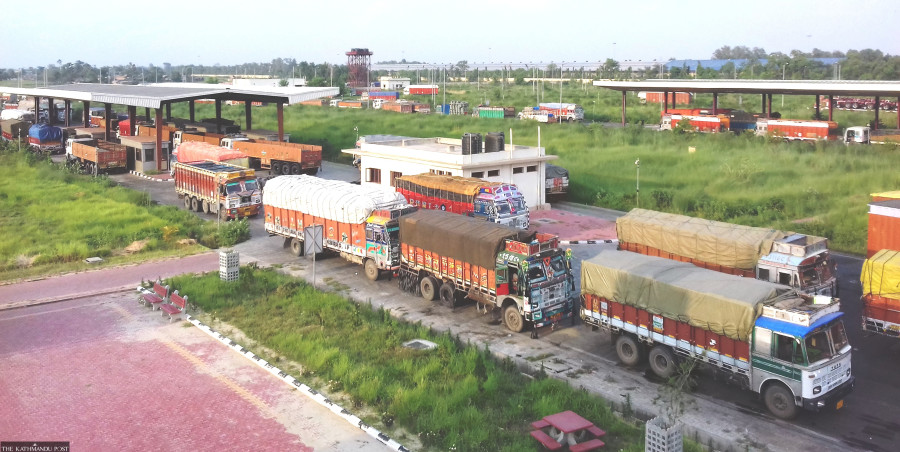
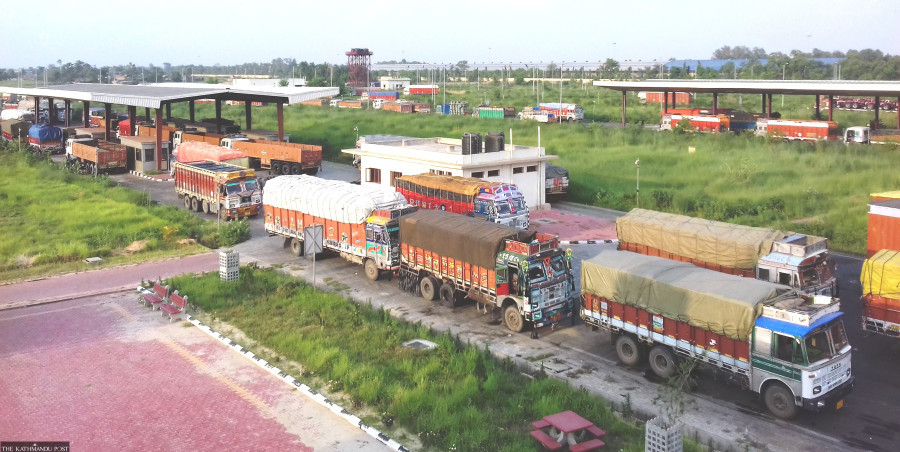
India is Nepal’s largest trade partner, accounting for over 60 percent of its total trade, with bilateral trade reaching over $8 billion in the fiscal year 2023-24. Post file photo

Published at : May 15, 2026
Updated at : May 15, 2026 06:31
Kathmandu

India on Wednesday again banned sugar exports, including to Nepal, with immediate effect, reviving concerns over how New Delhi’s growing protectionist policies are disrupting Nepali markets and threatening food security.

The ban, first imposed in 2023, had been partially lifted nearly a year and a half ago.

According to Indian media reports, the latest restriction is aimed at containing domestic prices amid fears that El Nino conditions could trigger drought, hurt agricultural production and reduce next season’s output.

El Nino, a warming of the central and eastern Pacific, alters atmospheric circulation and weakens monsoon winds over the Indian subcontinent. It also adds heat to a planet already warmed from burning fossil fuels. The last El Nino helped make 2023 and 2024 the top two hottest years on record.

India’s Directorate General of Foreign Trade under the Ministry of Commerce and Industry amended the export policy for sugar—including raw, white and refined varieties—from “restricted” to “prohibited”.

The prohibition, however, does not apply to sugar exports to the European Union and the United States under a specific quota arrangement.

According to the notification, the ban will remain in force until September 30, 2026, or until further notice.

India, the world’s second largest sugar exporter, had earlier allowed mills to export 1.59 million tonnes of sugar. Indian traders had already signed contracts for around 800,000 tonnes, of which more than 600,000 tonnes had been shipped.

Nepali officials say the decision is another reminder of the country’s vulnerability to India’s trade restrictions.

“We were just discussing new rules imposed by India on tea exports, and now the sugar ban has come,” said Netra Prasad Subedi, joint secretary at the Ministry of Industry, Commerce and Supplies.

“We will discuss the issue with the concerned stakeholders and clarify Nepal’s requirements.”

Officials say sugar, unlike rice, can still be sourced from alternative markets if necessary.

When India imposed a sugar export ban in 2023, Nepal even considered importing the sweetener from Pakistan to meet festive demand.

“If there are no alternatives, we can approach India through a government-to-government arrangement,” Subedi said.

Nepal has already requested India to supply 80,000 tonnes of chemical fertiliser through a government-to-government mechanism after global shortages emerged amid ongoing tensions in West Asia.

Traders and experts say India’s increasingly protectionist trade policies are having a direct impact on Nepal, despite the latter importing only a fraction of India’s total exports.

In September 2023, India halted sugar shipments to Nepal for the first time in seven years, citing lower sugarcane yields caused by insufficient rainfall. The restriction was later extended beyond October 31, coinciding with Nepal’s peak festive season when sugar prices soared.

Ahead of Dashain that year, sugar prices rose sharply. The commodity, which had been available for around Rs88 per kg a few weeks earlier, shot up to as high as Rs160 per kg in the black market amid shortages.

Nepal then sought to import 60,000 tonnes of sugar to meet anticipated festive demand, but India approved only 25,000 tonnes through the National Cooperative Exports Limited.

On January 20, 2025, India announced that it would allow sugar mills to export 1 million tonnes of sugar, partially easing earlier restrictions. The decision was intended to support domestic sugar prices, which had fallen below production costs.

India’s protectionist measures have not been limited to sugar.

On July 20, 2023, India imposed a ban on non-basmati white rice exports to ensure domestic food security amid concerns over El Nino-related disruptions. The move severely affected Nepal, one of the major importers of Indian rice, and triggered price spikes in the domestic market.

Later in 2023, India allowed quota-based exports of 95,000 tonnes of non-basmati rice to Nepal to ease shortages.

In 2024, rice prices in Nepal climbed to record levels, increasing by as much as Rs800 per 25-kg bag, according to a market analysis report by the National Consumer Forum.

The forum attributed the sharp rise largely to India’s export restrictions on non-basmati rice. It warned that food inflation in Nepal continued to rise mainly because of higher prices of rice and other essential commodities.

Before the ban, varieties such as pearl jeera masino rice sold for around Rs1,600 per 25-kg bag. Prices later jumped to Rs2,400, according to retailers.

India again tightened restrictions in August by imposing a 20 percent duty on parboiled rice exports.

Trade expert Rabi Shankar Sainju said any export restriction imposed by India—particularly on food products—immediately affects Nepal because of its heavy dependence on the southern neighbour.

“Importing food and goods from other countries is expensive because of high logistics costs. It also puts pressure on Nepal’s foreign currency reserves,” he said.

“That’s why Nepal needs to remain cautious and negotiate separately on issues related to food security.”

According to Sainju, India’s latest sugar ban may signal possible restrictions on other food exports in the coming months.

India is Nepal's largest trade partner, accounting for over 60 percent of its total trade, with bilateral trade reaching over $8 billion in the fiscal year 2023-24.

Most South Asian countries, including Nepal, are expected to witness below-normal monsoon rainfall this year after three consecutive years of above-average rain, according to a regional consensus among South Asian meteorologists. While El Nino is strongly linked to weaker monsoons, India has still seen average or above-average rains in at least five of 17 such events over the past seven decades, according to Reuters.

Analysts say that if dry conditions worsen, India may tighten exports of more agricultural commodities to secure domestic supplies.

Experts have already warned of a looming food security challenge in Nepal arising from weak monsoon rains, fertiliser shortages and rising fuel prices.

“The combination of low rainfall, shortages of chemical fertiliser and high fuel costs may spell disaster for the farming sector,” Devendra Gauchan, a leading agriculture and food systems expert in Nepal, said in a recent interview with the Post.

“We need an urgent coping mechanism. The government has to plan,” said Gauchan, who is also a member of the National Planning Commission.

Monsoon rainfall is critical for Nepal’s Rs6.6 trillion economy, supplying nearly 80 percent of the water required for agriculture and replenishing reservoirs and groundwater aquifers.

Kumar Rajbhandari, deputy chief executive officer of the state-owned Salt Trading Corporation, said the company currently has around 2,000 tonnes of sugar in stock.

According to the corporation, Nepal’s monthly sugar demand ranges between 20,000 and 25,000 tonnes, rising to around 30,000 tonnes during major festivals such as Dashain, Tihar and Chhath.

Annual demand stands at nearly 300,000 tonnes.

Rajbhandari said Nepal faces an annual sugar deficit of around 100,000 tonnes, which is met through imports.

As India has imposed a quota system, imports amounted to 17,185 tonnes worth Rs1.13 billion during the first nine months of the current fiscal year. In the last fiscal year, the country imported 25,862 tonnes of sugar worth Rs1.83 billion.

The Salt Trading Corporation had previously imported sugar under subsidised customs duty arrangements. However, after the government reduced subsidies, the corporation started purchasing sugar from domestic producers and selling it in the market, he said.

The corporation is currently selling sugar at Rs98 per kg in retail markets after purchasing it from private producers at Rs89 to Rs95 per kg.

Nepal used to produce around 155,000 tonnes of sugar annually until a few years ago. Production has since declined to around 120,000 tonnes as sugar mill owners failed to pay farmers on time, discouraging sugarcane cultivation.


https://kathmandupost.com/money/202...-nepali-markets-and-raise-food-security-fears
 
indians in their hate for Pakistan did not understand this and still are not willing to understand this. Instead helping and supporting Pakistan's efforts for negotiations and mediation these retards, out of their hatred are willing for the peace process to fail and hormuz to remain blocked.


Diverting water from Pakistani rivers is the priority for saffron chaddiz .. oh well.
Geographically it is almost impossible to divert the waters away from Pakistan. India can store it temporarily. Eventually it has to be released
 
Geographically it is almost impossible to divert the waters away from Pakistan. India can store it temporarily. Eventually it has to be released

Whether possible or not, but indian government has threatened Pakistan with that and majority of indians want this to hurt Pakistan. What is the purpose of storing that water if it will still flow to Pakistan?
 

India’s protectionist policies squeeze Nepali markets and raise food security fears​

Repeated export curbs on sugar, rice and other essentials expose Nepal’s heavy dependence on India as officials and experts warn of inflation, shortages and rising pressure on foreign currency reserves.
India’s protectionist policies squeeze Nepali markets and raise food security fears
India is Nepal’s largest trade partner, accounting for over 60 percent of its total trade, with bilateral trade reaching over $8 billion in the fiscal year 2023-24. Post file photo

Published at : May 15, 2026
Updated at : May 15, 2026 06:31
Kathmandu

India on Wednesday again banned sugar exports, including to Nepal, with immediate effect, reviving concerns over how New Delhi’s growing protectionist policies are disrupting Nepali markets and threatening food security.

The ban, first imposed in 2023, had been partially lifted nearly a year and a half ago.

According to Indian media reports, the latest restriction is aimed at containing domestic prices amid fears that El Nino conditions could trigger drought, hurt agricultural production and reduce next season’s output.

El Nino, a warming of the central and eastern Pacific, alters atmospheric circulation and weakens monsoon winds over the Indian subcontinent. It also adds heat to a planet already warmed from burning fossil fuels. The last El Nino helped make 2023 and 2024 the top two hottest years on record.

India’s Directorate General of Foreign Trade under the Ministry of Commerce and Industry amended the export policy for sugar—including raw, white and refined varieties—from “restricted” to “prohibited”.

The prohibition, however, does not apply to sugar exports to the European Union and the United States under a specific quota arrangement.

According to the notification, the ban will remain in force until September 30, 2026, or until further notice.

India, the world’s second largest sugar exporter, had earlier allowed mills to export 1.59 million tonnes of sugar. Indian traders had already signed contracts for around 800,000 tonnes, of which more than 600,000 tonnes had been shipped.

Nepali officials say the decision is another reminder of the country’s vulnerability to India’s trade restrictions.

“We were just discussing new rules imposed by India on tea exports, and now the sugar ban has come,” said Netra Prasad Subedi, joint secretary at the Ministry of Industry, Commerce and Supplies.

“We will discuss the issue with the concerned stakeholders and clarify Nepal’s requirements.”

Officials say sugar, unlike rice, can still be sourced from alternative markets if necessary.

When India imposed a sugar export ban in 2023, Nepal even considered importing the sweetener from Pakistan to meet festive demand.

“If there are no alternatives, we can approach India through a government-to-government arrangement,” Subedi said.

Nepal has already requested India to supply 80,000 tonnes of chemical fertiliser through a government-to-government mechanism after global shortages emerged amid ongoing tensions in West Asia.

Traders and experts say India’s increasingly protectionist trade policies are having a direct impact on Nepal, despite the latter importing only a fraction of India’s total exports.

In September 2023, India halted sugar shipments to Nepal for the first time in seven years, citing lower sugarcane yields caused by insufficient rainfall. The restriction was later extended beyond October 31, coinciding with Nepal’s peak festive season when sugar prices soared.

Ahead of Dashain that year, sugar prices rose sharply. The commodity, which had been available for around Rs88 per kg a few weeks earlier, shot up to as high as Rs160 per kg in the black market amid shortages.

Nepal then sought to import 60,000 tonnes of sugar to meet anticipated festive demand, but India approved only 25,000 tonnes through the National Cooperative Exports Limited.

On January 20, 2025, India announced that it would allow sugar mills to export 1 million tonnes of sugar, partially easing earlier restrictions. The decision was intended to support domestic sugar prices, which had fallen below production costs.

India’s protectionist measures have not been limited to sugar.

On July 20, 2023, India imposed a ban on non-basmati white rice exports to ensure domestic food security amid concerns over El Nino-related disruptions. The move severely affected Nepal, one of the major importers of Indian rice, and triggered price spikes in the domestic market.

Later in 2023, India allowed quota-based exports of 95,000 tonnes of non-basmati rice to Nepal to ease shortages.

In 2024, rice prices in Nepal climbed to record levels, increasing by as much as Rs800 per 25-kg bag, according to a market analysis report by the National Consumer Forum.

The forum attributed the sharp rise largely to India’s export restrictions on non-basmati rice. It warned that food inflation in Nepal continued to rise mainly because of higher prices of rice and other essential commodities.

Before the ban, varieties such as pearl jeera masino rice sold for around Rs1,600 per 25-kg bag. Prices later jumped to Rs2,400, according to retailers.

India again tightened restrictions in August by imposing a 20 percent duty on parboiled rice exports.

Trade expert Rabi Shankar Sainju said any export restriction imposed by India—particularly on food products—immediately affects Nepal because of its heavy dependence on the southern neighbour.

“Importing food and goods from other countries is expensive because of high logistics costs. It also puts pressure on Nepal’s foreign currency reserves,” he said.

“That’s why Nepal needs to remain cautious and negotiate separately on issues related to food security.”

According to Sainju, India’s latest sugar ban may signal possible restrictions on other food exports in the coming months.

India is Nepal's largest trade partner, accounting for over 60 percent of its total trade, with bilateral trade reaching over $8 billion in the fiscal year 2023-24.

Most South Asian countries, including Nepal, are expected to witness below-normal monsoon rainfall this year after three consecutive years of above-average rain, according to a regional consensus among South Asian meteorologists. While El Nino is strongly linked to weaker monsoons, India has still seen average or above-average rains in at least five of 17 such events over the past seven decades, according to Reuters.

Analysts say that if dry conditions worsen, India may tighten exports of more agricultural commodities to secure domestic supplies.

Experts have already warned of a looming food security challenge in Nepal arising from weak monsoon rains, fertiliser shortages and rising fuel prices.

“The combination of low rainfall, shortages of chemical fertiliser and high fuel costs may spell disaster for the farming sector,” Devendra Gauchan, a leading agriculture and food systems expert in Nepal, said in a recent interview with the Post.

“We need an urgent coping mechanism. The government has to plan,” said Gauchan, who is also a member of the National Planning Commission.

Monsoon rainfall is critical for Nepal’s Rs6.6 trillion economy, supplying nearly 80 percent of the water required for agriculture and replenishing reservoirs and groundwater aquifers.

Kumar Rajbhandari, deputy chief executive officer of the state-owned Salt Trading Corporation, said the company currently has around 2,000 tonnes of sugar in stock.

According to the corporation, Nepal’s monthly sugar demand ranges between 20,000 and 25,000 tonnes, rising to around 30,000 tonnes during major festivals such as Dashain, Tihar and Chhath.

Annual demand stands at nearly 300,000 tonnes.

Rajbhandari said Nepal faces an annual sugar deficit of around 100,000 tonnes, which is met through imports.

As India has imposed a quota system, imports amounted to 17,185 tonnes worth Rs1.13 billion during the first nine months of the current fiscal year. In the last fiscal year, the country imported 25,862 tonnes of sugar worth Rs1.83 billion.

The Salt Trading Corporation had previously imported sugar under subsidised customs duty arrangements. However, after the government reduced subsidies, the corporation started purchasing sugar from domestic producers and selling it in the market, he said.

The corporation is currently selling sugar at Rs98 per kg in retail markets after purchasing it from private producers at Rs89 to Rs95 per kg.

Nepal used to produce around 155,000 tonnes of sugar annually until a few years ago. Production has since declined to around 120,000 tonnes as sugar mill owners failed to pay farmers on time, discouraging sugarcane cultivation.


https://kathmandupost.com/money/202...-nepali-markets-and-raise-food-security-fears
They can give credit to their Gen Z PM for this. He is the one imposing import duty on Nepalis buying their goods from india.
 
No fertilizer, no crude, no rain. Time to restrict food exports
 
Whether possible or not, but indian government has threatened Pakistan with that and majority of indians want this to hurt Pakistan. What is the purpose of storing that water if it will still flow to Pakistan?
it is not possible. look at the map.
Why would India store it? Generate electricity
 
No fertilizer, no crude, no rain. Time to restrict food exports
India should have at least 1 year of grain reserves. So, it can handle that. In fact, it can earn hefty price now.
 

Users who are viewing this thread

Country Watch Latest

Latest Posts

Back
Top