Navigation
Install the app
How to install the app on iOS
Follow along with the video below to see how to install our site as a web app on your home screen.
Note: This feature may not be available in some browsers.
More options
Style variation
You are using an out of date browser. It may not display this or other websites correctly.
You should upgrade or use an alternative browser.
You should upgrade or use an alternative browser.
The Egyptian missile program... Time-line
- Thread starter The SC
- Start date
More options
Who Replied?

The SC
INT'L MOD
- Thread starter
- #19
Egyptian ballistic missiles .. What you do not know about the Egyptian deterrence weapon
Unofficial reports talked about Egypt's success in developing a homemade Ballistic missile with a range of more than 2000 km, which was tested in complete secrecy within remote desert areas. The state also expanded in training its engineering and scientific cadres, which enabled it to develop a missile system independently.
Modern Egyptian missiles
During the late 1980s and early 1990s, Egypt obtained the "Scud C" and "Scud D" missile manufacturing equipment from North Korea, and with its engineering capabilities, it managed to reach technology that allows the production of missiles of up to 1500 km range like "Nudong", and perhaps much more. Some sources talked about having missiles that may reach a range of 6000 km, in an unprecedented precedent at the level of the countries of the region.
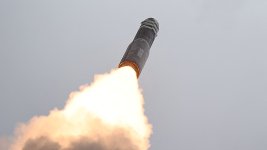
Egypt did not stop at the ground missiles, but also developed marine missiles capable of destroying targets from long distances, which enhances its strategic presence in the Red and Mediterranean seas. It also began to develop anti-satellite capabilities, and to update guidance technology and warheads to enhance accuracy and destructive ability.
These developments did not pass without Tel Aviv's concern. Israeli reports confirmed the monitoring of ballistic missile launchers in mountainous areas inside Egypt, some of which are dug underground, which makes it difficult for Israel to launch any effective pre-emptive blow.
Other reports also indicated that Cairo is seeking to obtain PL-15 missiles and anti-aircraft missiles from China, which increases the ability of the Egyptian army to impose its control in the air and land.
In addition to the offensive capabilities, Egypt has invested widely in air defense, through systems such as S-300 and S-400, in addition to modern anti-ballistic missile systems, which makes the perspective of any possible air attack on Egypt an almost impossible task.
Egypt is quietly working to develop Hypersonic missiles, capable of flying at a speed of more than five times the speed of sound, and difficult to intercept even by the most advanced systems. Work is also underway to develop electronic jamming systems that hinder the enemy's capabilities to track missiles or make accurate strikes against them.
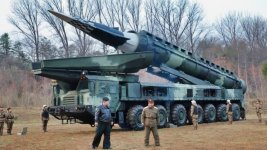
In light of these data, it appears that Cairo is planning to build a real strategy deterrence capacity, fortifying its national security and putting it in the ranks of the major regional powers. As it entered into technological partnerships with countries such as Russia and China, and its direction towards possible cooperation with European and Asian parties, the Egyptian missile program is about to begin a completely new phase.
The SC
INT'L MOD
- Thread starter
- #20
Egyptian missile power: Does Cairo have the ability to turn the scales of the war?
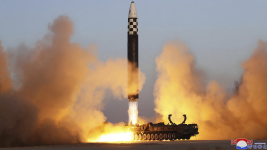
The mountainous areas in Egypt recently are witnessing unusual moves, which significantly raised the concern of the Israeli security services. Intelligence reports indicate the possibility of these movements to confidential activities to develop or test advanced ballistic missiles. These developments raise serious questions about the development of the Egyptian missile program, and whether Cairo has already gained capabilities that enable it to target distant sites, and perhaps reshape the balance of power in the region.
August 17, 2025:
In modern wars, planes and tanks alone are no longer the tools of decisiveness, but rather the missiles are the long arm of any army, capable of one button to change the path of a battle or destroy a base or paralyze a full fleet, and even erase an entire city from the map. And Egypt, with its cautious nature in revealing its military papers, has a deliberate and varied missile arsenal, from which little was announced, while the most important part remained away from the eyes. Since the sixties of the last century, Cairo began its missile project, and has succeeded through decades of secret work and military partnerships in building a missile force capable of deterrence, and to send a clear message that approaching Egyptian lands is not an easy option.
Since the sixties of the last century, Egypt has begun building an integrated local missile system, which started during the era of President Gamal Abdel Nasser, with technical support from German and Chinese experts and Sofit. The goal at the time was clear: the creation of a deterrent force capable of facing Israeli military superiority, especially after the experience of the tripartite aggression in 1956.
Cairo has focused its efforts on developing medium -range missiles, most notably the "Al -Dhafir" missile by approximately 376 km to target distant military bases, and the "Al -Qaher" missile, which amounted to about 600 km, in addition to the ambitious "pioneer" project, which was scheduled to exceed 1,000 km, but stopped at the time as a result of technological restrictions at that time.
Beginnings: From "Al -Dhafir" to "Al -Qaher"
After the July 1952 revolution, the Egyptian leadership saw that the western -backed Israeli military superiority requires a different strategic response. Then the idea of missiles emerged as a weapon capable of hitting long targets without relying on aircraft. Egypt used a group of German scientists who previously worked in missile programs during the two world wars, and began developing the first Egyptian missiles.
The "Al -Dhafir" missile appeared with a range of 350 km, able to target Tel Aviv from the Egyptian depth, and was followed by the "Al -Qaher" missile with a range of 450 km and a heavier warhead, but it is less accurate. Attempts to the third "pioneer" missile were launched, but the project was not completed. Experiments took place in the Cairo desert and Sinai, and the first official show of these missiles appeared in a military parade in 1962.
But the Israeli "Mossad" launched a campaign of threats and kidnappings of German scientists, as well as American and Western pressure that stopped the supply of basic equipment. Nevertheless, Egypt continued to develop its programs locally and secretly. Although the accuracy of these missiles was not high, they formed an important psychological and strategic deterrent.
The defeat in the 1967 war prompted the Egyptian army to consider the shortest tactical missiles to support land operations, in parallel with the construction of an integrated missile air defense network. And the experiences of the sixties, despite its stumbling, laid a solid basis for the projects of the nineties and its subsequent, and also established a network of military relations with the Soviet Union, China and North Korea, played a pivotal role in the subsequent development.
Ballistic missiles: deterrence and preemptive blow
Cairo believes that ballistic missiles are a strategic deterrent tool capable of directing a prior blow to paralyzing the enemy's capabilities. The most prominent of these projects was "Badr 2000", which is a joint program between Egypt, Iraq and Argentina in the eighties, aiming to produce a missile of approximately 1000 km, and the speed of more than 5 Mach, with a warhead weighing between 500 and 750 kg. The project was officially stopped with American and German pressure, but many indicators indicate that Egypt retained advanced technologies from this program and continued to work on it secretly.
In the 1970s, Egypt obtained a 300 km Scud-B missiles, which were made by local adjustments to increase accuracy and range. Then she later owned the "Scud-C" copies of 500 km, with reports of the transfer of North Korean technology to develop the Egyptian version. The name of Egypt was also associated with the Hwasong-6 (Scud-D) missile with a range of 700 km and a speed of more than 5 Mach.
As for the tactical missiles, Egypt has the Toshka system with a range of 120 km, and a accuracy of only 10 meters, used to strike specific targets with high accuracy, including behind the enemy lines, which makes it a direct support weapon for the ground forces.
Air Defense: a multi -layer network
Egypt deals with the air defense as the first protection line against any threat, through an integrated network of short, medium and long -term systems, all of which are linked to driving and control rooms operating around the clock.
The Egyptian arsenal includes Russian S-300 systems with a range of 250 km against aircraft and 40 km against ballistic missiles, at a speed exceeding 7 Mach. Despite the absence of the official announcement, reports of the presence of the Chinese system HQ-9B in the Egyptian army arsenal.
The defensive system also includes Bok-M2E missiles with a range of 50 km, capable of engaging with 24 targets at the same time, American Hook missiles developed 40 km, in addition to the Russian Tor systems to shoot down drones and mobile missiles, and the American Avenger system based on "Stinger" missiles.
This network integrates with a radar system that covers the atmosphere of the state until a range of more than 500 km, which makes any air penetration a high -cost adventure.
On the sea side, Egypt has a variety of missiles such as the Russian P-800 by 300 km and 2.5 Mach, flying low above sea level to avoid monitoring. The arsenal also includes the American Harbon-2 rockets with a range of 278 km, and the French Ocost-3, with a range of 200 km, along with the Swedish RBS-15 missile with a range of up to 250 km. These systems give the Egyptian navy a high ability to protect its coasts and deter any maritime threat.
Egypt believes that real deterrence is not only in planes or air defense, but also in the ability to hit the hostile depth if things reach a comprehensive war. That is why Cairo maintains an announced arsenal and unannounced from the missiles, which are described by former military leaders as a surprise to any party that may threaten national security.
Modern Egyptian missiles
During the late 1980s and early 1990s, Egypt obtained the Scud-C and Skod-D-Di missile manufacturing equipment from North Korea. With the development of its engineering expertise, Cairo was able to reach an advanced level that allows the production of missiles up to 1500 km, similar to the Noudong missile, and perhaps more than that. Some sources talked about having missiles that could reach a range of 6000 km, which represents an unprecedented step at the level of the countries of the region.
Egypt's efforts were not limited to ground missiles, but also developed marine missiles capable of hitting targets from long distances, which enhances its strategic presence in the Red and Mediterranean Bahrain. Cairo has also started developing satellite capabilities, and improving guidance technology and warheads to enhance accuracy and destructive ability.
These developments clearly sparked Tel Aviv. Israeli reports monitored the platforms of ballistic missiles in mountainous areas, some of which are underground engraved, which makes it difficult to carry out any effective proactive blow. Other reports also indicated Cairo's endeavor to obtain PL-15 missiles and anti-aircraft missiles from China, which enhances the ability of the Egyptian army to control the air and land.
In light of these data, it appears that Cairo appears to build the ability to deter a real strategy that fortifies its national security and places it in the ranks of major regional powers. As its technological partnerships are strengthened with countries such as Russia and China, and a potential trend towards cooperation with European parties, the Egyptian missile program is about to fully new, with which it carries clear effects on the regional powers balance.
The SC
INT'L MOD
- Thread starter
- #21
Egypt obtained the rights to transfer the technology to manufacture the Chinese DF-15 ballistic missile, nicknamed “The Terrifying”, from which Egypt owns more than 150 missiles of various classes, and it was recently developed in Egypt in 2015 at the Abu Zaabal missile factories to the latest CSS-6 Mod 2 version.
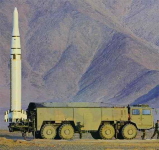
Several Western sources reported that Egypt obtained the technology to manufacture the latest class of the DF-15 missile, known as DF-15C (CSS-6 Mod 2) after President Abdel Fattah El-Sisi’s visit to Beijing in December 2014.
China first revealed the DF-15C developed missile in 2013, and the most important feature of this developed missile is that it has a warhead that has the ability to penetrate the ground to a distance of 25 meters of reinforced concrete, and Chinese media also reported that the DF-15C developed missile has a greater range of 850 kilometers, the warhead of the missile now includes a terminal guidance system for the radar in order to maneuver to evade ground defenses, and the accuracy of the missile in the probability of error rate became only 25 meters after it was 150-300 meters. Egypt owns all copies of the missile A, B and C, and each version has advantages that are unique compared to the other versions.
Specifications of the DF-15 (CSS-6) missile
- A single-stage solid-fuel ballistic missile.
- The missile is 9.1 m long and 1 m in diameter
- Weighs about 6200 kg
- The warhead can carry from 500 kg to 750 kg - the missile has a range of 600 km.
- The missile is guided by an inertial navigation system, and its warhead features a “miniature detection system” for trajectory corrections.
- The warhead can be armed with a variety of payloads (conventional high-explosive munitions, cluster munitions, “bunker-busting” munitions.. the DF-15 can carry a nuclear warhead capacity of 50-350kt ).
- The estimated accuracy of the DF-15 is 150-200 meters, and the probability of circular error has been improved in the upgraded versions.
Also, Egypt developed its own version of the missile with the help of Chinese experts at the end of 2014 and continued until the beginning of 2017. Some reports say that the probability of error has become 25: 50 m, which means that the missile has a terrible accuracy in hitting its target with precision.
The DF-15 is a tactical missile designed to strike adversary weapons, combat aircraft hangars, command and control facilities, and other critical infrastructure.
The DF-15B missiles for the same purpose in the dense layers of the atmosphere used aerodynamic handlebars on the body. Greater flight speed and a detachable warhead make the task of intercepting DF-15 extremely difficult by any of the existing anti-missile technology.
The DF-15B is equipped with strap-down inertial fully digital control system with on-board computer. First variants DF-15A had a circular error probable of 150-600m. Further improvement of the system has allowed the reduction in CEP. According to the developers.. they conducted work on equipping the DF-15 missiles with satellite guidance system and a new inertial control system for ring laser gyroscopes allowed to increase the pointing accuracy of the CWE to 35-50m..The re-entry vehicle matches the American "Pershing" II almost exactly.
The DF-15C short-range ballistic missile, equipped with a deep-penetration warhead, would be able to damage or destroy underground command facilities
The missiles are launched from a carrier-erected launcher (TEL) produced by Wanshan, allowing the system to move quickly after firing.. The estimated system launch time is 15 minutes.
The factory was built in 2015 at the Abu Zaabal Missile Factory for the Chinese missile industry, which was developed between 2014 and 2017. The factory now owns the latest technologies for manufacturing ballistic missiles.. It has recently owned a very modern missile test platform that allows testing of large ranges, as it appeared on Google maps.
Source: different sources
https://www.globalsecurity.org/wmd/world/china/df-15.htm
* Apparently..Egypt made the DF-15A and B too.. and it has made its own version of the C version with a range of 850 km and a CEP of 25 m..
Several Western sources reported that Egypt obtained the technology to manufacture the latest class of the DF-15 missile, known as DF-15C (CSS-6 Mod 2) after President Abdel Fattah El-Sisi’s visit to Beijing in December 2014.
China first revealed the DF-15C developed missile in 2013, and the most important feature of this developed missile is that it has a warhead that has the ability to penetrate the ground to a distance of 25 meters of reinforced concrete, and Chinese media also reported that the DF-15C developed missile has a greater range of 850 kilometers, the warhead of the missile now includes a terminal guidance system for the radar in order to maneuver to evade ground defenses, and the accuracy of the missile in the probability of error rate became only 25 meters after it was 150-300 meters. Egypt owns all copies of the missile A, B and C, and each version has advantages that are unique compared to the other versions.
Specifications of the DF-15 (CSS-6) missile
- A single-stage solid-fuel ballistic missile.
- The missile is 9.1 m long and 1 m in diameter
- Weighs about 6200 kg
- The warhead can carry from 500 kg to 750 kg - the missile has a range of 600 km.
- The missile is guided by an inertial navigation system, and its warhead features a “miniature detection system” for trajectory corrections.
- The warhead can be armed with a variety of payloads (conventional high-explosive munitions, cluster munitions, “bunker-busting” munitions.. the DF-15 can carry a nuclear warhead capacity of 50-350kt ).
- The estimated accuracy of the DF-15 is 150-200 meters, and the probability of circular error has been improved in the upgraded versions.
Also, Egypt developed its own version of the missile with the help of Chinese experts at the end of 2014 and continued until the beginning of 2017. Some reports say that the probability of error has become 25: 50 m, which means that the missile has a terrible accuracy in hitting its target with precision.
The DF-15 is a tactical missile designed to strike adversary weapons, combat aircraft hangars, command and control facilities, and other critical infrastructure.
The DF-15B missiles for the same purpose in the dense layers of the atmosphere used aerodynamic handlebars on the body. Greater flight speed and a detachable warhead make the task of intercepting DF-15 extremely difficult by any of the existing anti-missile technology.
The DF-15B is equipped with strap-down inertial fully digital control system with on-board computer. First variants DF-15A had a circular error probable of 150-600m. Further improvement of the system has allowed the reduction in CEP. According to the developers.. they conducted work on equipping the DF-15 missiles with satellite guidance system and a new inertial control system for ring laser gyroscopes allowed to increase the pointing accuracy of the CWE to 35-50m..The re-entry vehicle matches the American "Pershing" II almost exactly.
The DF-15C short-range ballistic missile, equipped with a deep-penetration warhead, would be able to damage or destroy underground command facilities
The missiles are launched from a carrier-erected launcher (TEL) produced by Wanshan, allowing the system to move quickly after firing.. The estimated system launch time is 15 minutes.
The factory was built in 2015 at the Abu Zaabal Missile Factory for the Chinese missile industry, which was developed between 2014 and 2017. The factory now owns the latest technologies for manufacturing ballistic missiles.. It has recently owned a very modern missile test platform that allows testing of large ranges, as it appeared on Google maps.
Source: different sources
https://www.globalsecurity.org/wmd/world/china/df-15.htm
* Apparently..Egypt made the DF-15A and B too.. and it has made its own version of the C version with a range of 850 km and a CEP of 25 m..
The SC
INT'L MOD
- Thread starter
- #22
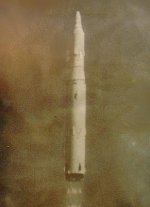
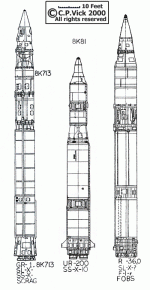
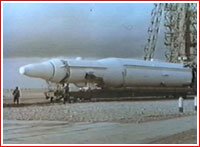
SS-10, also called the UR-200, is an intercontinental ballistic missile with a range of 12-14,000 km, the first missile of its kind in the Soviet Union carrying 3 nuclear warheads. During the American investigation with Abdelkader Helmi, he confirmed that Egypt got the project of this missile and it is trying to revive it and develop it..noting it did not enter service in the Soviet Union it was only tested.. and the Americans in more than once indicated that Egypt has brought in missile experts from Ukraine to assist in its development, and thus have asked Egypt to sign a control treaty on ballistic missiles limited to 300 kilometers. The head of the Ministery of Defense was then Marshal Tantawi in the late 1990s, he rejected this agreement saying that it should be signed only after Israel's nuclear disarmament and the signing of the same agreement..
https://www.nbcnews.com/id/wbna7206187
UR-200 (SS-10, Scrag) ICBM
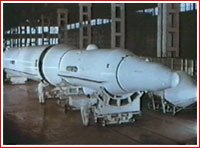
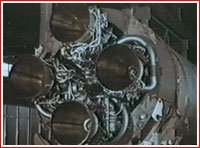
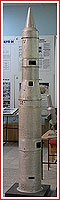
https://www.russianspaceweb.com/ur200.html
* Egypt is very secretive even about its SRBM let alone strategic assets.. I think, the least is that it has the full design and blueprints and thus can produce An ICBM in a short time if need be.. and that is already quite good..
https://www.nbcnews.com/id/wbna7206187
UR-200 (SS-10, Scrag) ICBM
https://www.russianspaceweb.com/ur200.html
* Egypt is very secretive even about its SRBM let alone strategic assets.. I think, the least is that it has the full design and blueprints and thus can produce An ICBM in a short time if need be.. and that is already quite good..
The SC
INT'L MOD
- Thread starter
- #23
Israeli intelligence reports claimed that Egypt was building underground facilities in the Sinai Peninsula, raising Tel Aviv's fears of a potential threat and violation of peace agreements.
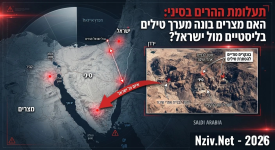
The Israeli platform "Natsiv Net" reported that intelligence reports and open-source satellite analysis revealed that Egypt has been constructing extensive underground facilities in the foothills of the Sinai Peninsula in recent years. Israeli security officials suspect these facilities are intended for missile storage, although there is no conclusive evidence yet that ballistic missiles have actually been deployed there. Egypt's main ballistic missile arsenal remains located deep within its territory west of the Suez Canal.
The Hebrew-language platform added that these new facilities in Sinai include fortified underground bunkers and complexes carved into the mountain slopes of northern and central Sinai. They are built near extensive military infrastructure, including three airfields whose runways have been upgraded to accommodate fighter jets.
The report indicated that Egypt's known ballistic missile sites are located in western Sinai, specifically at the historic Jabal Hamza site, which has undergone renovation and expansion, and a large underground complex 70 kilometers east of Cairo, near the Egyptian Ministry of Defense.
She pointed out that this Egyptian military escalation in Sinai, which includes the deployment of advanced Chinese HQ-9P air defense systems and a doubling of troop numbers to approximately 40,000 soldiers, significantly reduces the Israeli army's early warning time in the event of a security deterioration.
She emphasized that Egypt's possession of an older but effective Scud missile arsenal, and the possibility of its acquiring long-range missile technology from North Korea, gives it the capability to target any point in Israel, even from bases deep within Egypt. This constitutes a violation of the security annex to the Camp David Accords, which outlines the restrictions imposed on Egypt.
In assessing intentions, the platform explained that Tel Aviv expressed grave concern to Egypt and the United States regarding the construction of these facilities and the military expansion in Sinai. Cairo rejected these claims, asserting that these are defensive and sovereign measures to secure the borders, combat terrorism, and prevent the spillover of fighting from Gaza or attempts to displace Palestinians into Sinai. The Israeli strategic assessment remains that the likelihood of a direct military confrontation or an Egyptian offensive initiative is very low, and that this infrastructure is primarily intended for deterrence and is part of Egypt's broader national security concept.
These reports come at a time when the Sinai Peninsula is witnessing an increasing Egyptian security and military presence, which Israel is closely monitoring for fear of any violation of the 1979 peace treaty, particularly the security annex that defines the size and type of forces permitted in different areas of Sinai.
Cairo consistently affirms that its security reinforcements are within the framework of combating terrorism and maintaining internal stability, rejecting any characterization of its activities as a threat to Israel's security, given the sensitivity of the security issue and its entanglement with regional developments in Gaza and along the eastern border.
The Israeli platform "Natsiv Net" reported that intelligence reports and open-source satellite analysis revealed that Egypt has been constructing extensive underground facilities in the foothills of the Sinai Peninsula in recent years. Israeli security officials suspect these facilities are intended for missile storage, although there is no conclusive evidence yet that ballistic missiles have actually been deployed there. Egypt's main ballistic missile arsenal remains located deep within its territory west of the Suez Canal.
The Hebrew-language platform added that these new facilities in Sinai include fortified underground bunkers and complexes carved into the mountain slopes of northern and central Sinai. They are built near extensive military infrastructure, including three airfields whose runways have been upgraded to accommodate fighter jets.
The report indicated that Egypt's known ballistic missile sites are located in western Sinai, specifically at the historic Jabal Hamza site, which has undergone renovation and expansion, and a large underground complex 70 kilometers east of Cairo, near the Egyptian Ministry of Defense.
She pointed out that this Egyptian military escalation in Sinai, which includes the deployment of advanced Chinese HQ-9P air defense systems and a doubling of troop numbers to approximately 40,000 soldiers, significantly reduces the Israeli army's early warning time in the event of a security deterioration.
She emphasized that Egypt's possession of an older but effective Scud missile arsenal, and the possibility of its acquiring long-range missile technology from North Korea, gives it the capability to target any point in Israel, even from bases deep within Egypt. This constitutes a violation of the security annex to the Camp David Accords, which outlines the restrictions imposed on Egypt.
In assessing intentions, the platform explained that Tel Aviv expressed grave concern to Egypt and the United States regarding the construction of these facilities and the military expansion in Sinai. Cairo rejected these claims, asserting that these are defensive and sovereign measures to secure the borders, combat terrorism, and prevent the spillover of fighting from Gaza or attempts to displace Palestinians into Sinai. The Israeli strategic assessment remains that the likelihood of a direct military confrontation or an Egyptian offensive initiative is very low, and that this infrastructure is primarily intended for deterrence and is part of Egypt's broader national security concept.
These reports come at a time when the Sinai Peninsula is witnessing an increasing Egyptian security and military presence, which Israel is closely monitoring for fear of any violation of the 1979 peace treaty, particularly the security annex that defines the size and type of forces permitted in different areas of Sinai.
Cairo consistently affirms that its security reinforcements are within the framework of combating terrorism and maintaining internal stability, rejecting any characterization of its activities as a threat to Israel's security, given the sensitivity of the security issue and its entanglement with regional developments in Gaza and along the eastern border.
Users who are viewing this thread
Total: 1 (members: 0, guests: 1)
Pakistan Defence Latest
-

-
Al - Haider VT-4 MBT - The Premier PA Ground Asset [Developments] (90 Viewers)
- Latest: RandomThoughts7
-

-
-

Country Watch Latest
-

-
Bangladesh Keen To Join Saudi-Pak-Turkey Defence Alliance, Says PM's Top Aide (16 Viewers)
- Latest: Jaeger
-

-
-


