
Solomon2
Elite Member

The Murders of Female Social Media Influencers: Pakistan's War Against Women
Uzay Bulut | 3:12 PM on August 24, 2026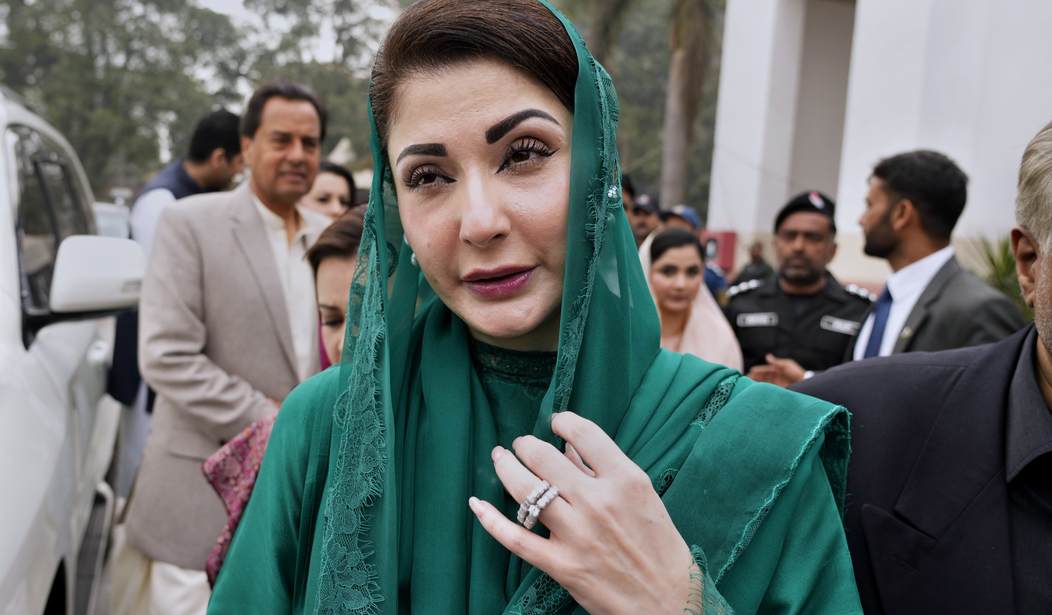
AP Photo/K.M. Chaudary
In recent years, targeted killings of social media influencers have sparked grave concerns over women’s safety in Pakistan.
On August 14, TikToker Shamso Bibi, also known as Ayesha Gilamana, was shot dead in Taxila city near the capital Islamabad. Bibi had more than 1.3 million TikTok followers.
The 28-year-old social media influencer was killed on Pakistan's Independence Day over alleged financial disputes, her brother Niamatullah said, calling for Punjab’s chief minister Maryam Nawaz Sharif's intervention.
According to Pakistani media reports, two unidentified men on a motorcycle opened fire while Bibi was traveling with her younger siblings. Bibi's murder is the latest in a wave of gender-based killings in Pakistan.
Each year, hundreds of women and girls are killed in Pakistan, often by relatives who say they are protecting the family's honor. Deadly violence and physical abuse against women and girls by their family members are widely underreported and often treated by local authorities as private family matters rather than crimes.
These abuses are mainly rooted [censored] Pakistani women and girls face severe, systemic human rights violations such as domestic abuse, sexual abuse, honor killings, abductions, forced conversions, and harassment, which remain widespread and largely unpunished.
Bibi's murder follows several other cases involving female TikTok creators, highlighting growing concerns around harassment, violence, and other risks faced by women in Pakistan.
Another TikTok creator, Sana Javed, best known by her TikTok alias Outlofara, was shot dead by her husband, Muhammad Sadiq, in Islamabad on March 21. Investigators reported that the couple frequently argued and that the killing occurred due to domestic disputes.
Another victim was Sana Yousaf, a 17-year-old social media influencer from Pakistan’s Khyber Pakhtunkhwa province, who was shot and murdered in her home on June 2, 2025. By mid-2025, she had a half-million followers on Instagram and had become especially popular among Pakistani youth. The perpetrator was a man named Umar Hayat whose advances Yousaf had previously rejected.
Yousaf’s murder went viral online, with some men praising the act, calling it “excellent” and “very good news.”
In protest, Dr. Fatima Anwar from Pakistan wrote on X: “A 17-year-old girl was murdered brutally and the people with sick mentality are writing [censored] for murderers and supporting hypocritical notions of ‘honor.’ What a disgraceful society we’re living in!”
In another murder case, Hira Anwar, a U.S.-born teenager, was shot in Quetta, Pakistan, in January of 2025 by her father, who was displeased with her TikTok account.
Prior to the murder, Hira's father, Anwar ul-Haq, had moved his family back to Pakistan from the United States. He confessed to shooting dead his 15-year-old daughter, motivated by his disapproval of her TikTok content, Pakistani police said.
Another teenage girl was shot and killed by her own father in Pakistan after she reportedly refused to delete her TikTok account. The victim was the 17-year-old Mehak Shahzadi. According to police, her father, Akhlaq Ahmed, had repeatedly demanded she remove her social media profile. When she refused to comply, he murdered her in July of last year. The murder was described by authorities as a so-called "honor killing."“Our investigation so far has found that the family had an objection to her dressing, lifestyle, and social gathering,” a police investigator, Zohaib Mohsin, said. “We have her phone. It is locked,” he told Reuters. “We are probing all aspects, including honor killing.”
Meanwhile, young girls from religious minority communities, particularly Hindu and Christian, continue to face targeted abductions, forced [censored] rapes, and forced marriages.
Maria Shahbaz, a 13-year-old [censored] girl, for instance, was subjected to forced [censored]. On July 26, 2025, Shahbaz was abducted by a 30-year-old man near her home, forcibly [censored] and married to her abductor. Police in Lahore delayed the filing of the family's first information report (FIR) and influenced the judge to dismiss their abduction complaint. On July 31, 2025, the Model Town court of Judicial Magistrate Hassan Sarfaraz Cheema awarded custody of Shahbaz to her captor after accepting falsified documents claiming she was 18 years old.
In March 2026, the Federal Constitutional Court upheld the decision.
In April of this year, a 14-year-old Pakistani [censored] girl died in a hospital in Karachi after she was abducted along with her younger sister from their hometown in Punjab, Pakistan. Muqadas Masih and her sister Zarish, eight, were taken from the Christian Town near the city of Sadiqabad while out shopping for groceries on April 15. The girls were found unconscious by police in Karachi, more than 300 miles away, four days later. Muqadas died just hours after being admitted. Barnabas Aid project partners reported that she was likely a victim of rape. According to Pakistani media outlets, the cause of death appeared to be an overdose of alcohol and drugs administered by the kidnappers.
These are not isolated incidents. As the political scientist Gianna Francesca Catolico writes:
A major reason these abuses against women and young girls are widespread in the country is [censored].More than four decades since the introduction of the Convention on the Elimination of All Forms of Discrimination Against Women (CEDAW) and less than five years before the final curtain on the 2030 Agenda for Sustainable Development’s spectacle, Global South countries have barely integrated the core principles of women’s rights into their laws and policies. To add salt to the wound, governments continue to pour their misogynist vitriol on women human rights defenders (WHRDs) who tirelessly work and advocate for women’s rights…
Pakistan, a state party to the CEDAW, has an exhaustive list of abuses against women and girls, more so against WHRDs, from reports of sexual violence, incest, forced conversions and forced marriages of girls under 18, to a despicable series of honor killings, some even carried out by diaspora families in developed countries. Hurling acid at young girls for rejecting marriage proposals or non-payment of dowry is still commonplace, with over 80 percent of the acid attacks taking place in the northern province of Punjab. Acid is readily available as it is used in delinting cotton seeds, and Punjab is a cotton exporter.
The 1973 Constitution names the country the Islamic Republic of Pakistan [censored]
[censored] women's rights violations are naturally commonplace and normalized in the country. [censored]
[censored]
Pakistan needs tremendous legal, social, economic, educational, and political reforms to meaningfully combat women's rights abuses. Until this happens, female foreign travelers must be extremely cautious while in Pakistan. There is a possibility that they might face a blasphemy accusation, physical violence, or sexual assault. More importantly, Western governments must come to the realization that by financially and militarily supporting Pakistan, they are enabling a severely misogynistic culture that violently targets and abuses women and children.

Uzay Bulut is a Turkey-born journalist formerly based in Ankara.
Read more by Uzay


