The ‘myth’ of Western-style democracy is losing its appeal even in the West (China Global Times editorial)

Another approach: learn to read the original Chinese-language edition of the *People’s Daily*. (Do not read the official English/French versions.)

This is an exceptionally difficult task. Even for native-born Chinese, unless they have undergone extensive training in political work, it is very hard to fully grasp the meaning of these articles...

China is, in fact, a one-party system. The so-called "eight minor democratic parties" that participate in the political process possess only an advisory role.

However, the CCP itself is vast, with a membership exceeding 100 million. Within the CCP, there are multiple factions, and these factions engage in competition with one another. While they may project an image of harmony in public, their internal deliberations—behind closed doors—often involve intense, sharp criticism of one another.

What if you were to view these distinct factions as separate political parties?
Correct, my Chinese friend. We wish the best for China.

May China prosper.
 
Another approach: learn to read the original Chinese-language edition of the *People’s Daily*. (Do not read the official English/French versions.)

This is an exceptionally difficult task. Even for native-born Chinese, unless they have undergone extensive training in political work, it is very hard to fully grasp the meaning of these articles...

China is, in fact, a one-party system. The so-called "eight minor democratic parties" that participate in the political process possess only an advisory role.

However, the CCP itself is vast, with a membership exceeding 100 million. Within the CCP, there are multiple factions, and these factions engage in competition with one another. While they may project an image of harmony in public, their internal deliberations—behind closed doors—often involve intense, sharp criticism of one another.

What if you were to view these distinct factions as separate political parties?
How come there are factions? All communist parties banned factions since Lenin banned them in 1921 (the Decree on Party Unity at the 10th Party Congress).
 
At the end of the day, it all comes down to what you "used to." If you are comfortable with one way over the other, then change may not be the best course of action, even if that might benefit the country in the long term.

We can get 'used to' by circumstances: India and Pakistan were born around the same time as China and were 'democracies' modeled after the UK colonizers. Both countries formed as a result of 'democracy' and both are a dump. The modern China was formed as a result of a large civil war and after the trauma of foreign occupations. The Chinese chose a rigid control path and didn't fall for some Jeffersonian model of 'democracy' probably out of the need to first secure the homeland as a 'security state'.

And we can see which of the two groups has come out ahead. Secure the homeland first, raise educational level, have continuity of policies for a long time. Even in a 'totalitarian' system, wrong policies over the decades can get corrected.
 
Any organization composed of human beings contains different factions. The only difference is whether or not they openly acknowledge them.
Yes, that's the case but they must operate informally then, not as official platforms.
 
If you mean China's Five Year Plans, they don't work like the old Soviet ones used to, the Chinese ones now are much more flexible.
Mike Tyson famously said, "Everybody has plans until they get hit in the face"

Plan and flexibility do not go together. A plan is a series of steps that one follows based on the action and the reaction to such a plan; there are only 2 ways any plan can be flexible: you either plan nothing and organically react to the action, or you try to plan everything, anyone had any sort of experience planning will tell you: you just can't plan everything.

At some point and at some time, there are actions you can't react based on your planning; that is the time you know what the quality of your planner is. Now, whether or not that is the strength or weakness, that completely depends on the planner. Hence going back to the original point. It depends on the leadership quality.
 
We can get 'used to' by circumstances: India and Pakistan were born around the same time as China and were 'democracies' modeled after the UK colonizers. Both countries formed as a result of 'democracy' and both are a dump. The modern China was formed as a result of a large civil war and after the trauma of foreign occupations. The Chinese chose a rigid control path and didn't fall for some Jeffersonian model of 'democracy' probably out of the need to first secure the homeland as a 'security state'.

And we can see which of the two groups has come out ahead. Secure the homeland first, raise educational level, have continuity of policies for a long time. Even in a 'totalitarian' system, wrong policies over the decades can get corrected.
Agreed with you, Pakistan can learn from China on one party state system, Mixed economy, poverty reduction schemes, making job opportunities, industrialization, and manufacturing.

This Jeffersonian democracy is all bullshit. Both Pakistan and India have not developed very well with democracy.

Next time I will buy a Chinese smartphone like a Honor smartphone. Samsung Galaxy 25+ is okay as well.

But I will never buy American shit iphone or Xbox shit.
 
The Chinese system is a trial and error system, when a multi-year plan goes wrong, it went spectacularly wrong, read Mao's 5-year plan that led to general femine. When things work, it would work perfectly.
The issue is based on the quality of leadership; the Chinese system is more like a top-down chain of command military structure. When all the subordinates are looking at the command structure above them, that command structure has to be perfect; otherwise, one slight error or deviation and you are going to be miles off goal.
At the end of the day, it's basically a fight between whether you want to place your trust completely on the leader. Or you want to have the leader try it out before we go into business?

I am aware of Mao's missteps and the resultant catastrophic consequences just as I am aware of Stalin's purges and repression. But both China and Russia still looked better in 2026 and 1980 than they did in 1949 and 1917, respectively. If they had chosen some wrong model like many countries then I don't think they would have advanced that much.

And I believe @Michael has already said that there is enough consultive/inclusive process in China so 'the leader' label is probably unfair.
 
We can get 'used to' by circumstances: India and Pakistan were born around the same time as China and were 'democracies' modeled after the UK colonizers. Both countries formed as a result of 'democracy' and both are a dump. The modern China was formed as a result of a large civil war and after the trauma of foreign occupations. The Chinese chose a rigid control path and didn't fall for some Jeffersonian model of 'democracy' probably out of the need to first secure the homeland as a 'security state'.

And we can see which of the two groups has come out ahead. Secure the homeland first, raise educational level, have continuity of policies for a long time. Even in a 'totalitarian' system, wrong policies over the decades can get corrected.
I think in the case of India and Pakistan, it's more about "Adapting" than being "Used to" the Westminster System; you can adapt any policy by directly copying it from another. Common Law is the prime example. But even within Common Law, the British version of Common Law is different than the American version and is different than the Australian version.

Any adaptation will undoubtedly lead to revision and modification; while it works at one place but since you are not in that place, it won't work in yours. Which means when you adapt to something, either you have to change, or the system has to change, and more likely than not, it's the system.

Jeffersonianism was born out of the mistrust for the ruling elite; hence the anti-establishment movement. It's different than China's unitary socialist states. I don't think the two could co-exist together, because Jeffersonianism would have seen the leadership level of the Unitarian Socialist class as elite.....
 
We can get 'used to' by circumstances: India and Pakistan were born around the same time as China and were 'democracies' modeled after the UK colonizers. Both countries formed as a result of 'democracy' and both are a dump. The modern China was formed as a result of a large civil war and after the trauma of foreign occupations. The Chinese chose a rigid control path and didn't fall for some Jeffersonian model of 'democracy' probably out of the need to first secure the homeland as a 'security state'.
In our view, terms like "democracy" or "centralization of power" are relative, not absolute, concepts.

If a U.S. President gains total control over Congress and other institutions designed to provide checks and balances, they have effectively established a "centralization of power." Conversely, if a single party holds power but its internal structure incorporates robust mechanisms for checks, balances, and constraints, then it has effectively established a "democracy."

Ultimately, it all comes down to whether power can be effectively checked and constrained. That's the crux of the problem.
Yes, that's the case but they must operate informally then, not as official platforms.
To the West, Chinese politics is indeed "opaque." This presents a significant challenge.

The international public sphere is overwhelmingly dominated by the English language, leaving the Chinese with little voice within it. Moreover, we have no desire to expend excessive energy on the battleground of public opinion. For China, the core priority is to focus on our own national development; As for public opinion, we'll talk about that later.

Consequently, it is difficult for the average person in the Western world to gain a true, accurate picture of China.

The Beidaihe meeting mechanism, established during the Mao Zedong era, has remained in operation ever since. Whether it is classified as an official or unofficial platform is of little consequence.
 
In our view, terms like "democracy" or "centralization of power" are relative, not absolute, concepts.

If a U.S. President gains total control over Congress and other institutions designed to provide checks and balances, they have effectively established a "centralization of power." Conversely, if a single party holds power but its internal structure incorporates robust mechanisms for checks, balances, and constraints, then it has effectively established a "democracy."

Ultimately, it all comes down to whether power can be effectively checked and constrained. That's the crux of the problem.

To the West, Chinese politics is indeed "opaque." This presents a significant challenge.

The international public sphere is overwhelmingly dominated by the English language, leaving the Chinese with little voice within it. Moreover, we have no desire to expend excessive energy on the battleground of public opinion. For China, the core priority is to focus on our own national development; As for public opinion, we'll talk about that later.

Consequently, it is difficult for the average person in the Western world to gain a true, accurate picture of China.

The Beidaihe meeting mechanism, established during the Mao Zedong era, has remained in operation ever since. Whether it is classified as an official or unofficial platform is of little consequence.
Mao Zedong's Great Leap Forward was a disaster.

Good thing Deng Xiaoping showed up to fix China.
 
I am aware of Mao's missteps and the resultant catastrophic consequences just as I am aware of Stalin's purges and repression. But both China and Russia still looked better in 2026 and 1980 than they did in 1949 and 1917, respectively. If they had chosen some wrong model like many countries then I don't think they would have advanced that much.
Many people—including the Chinese official establishment—regard Mao Zedong’s “Cultural Revolution” as a disaster.

But, if you examine politics at a deeper level, you might arrive at the exact opposite conclusion—provided, of course, that your research is sufficiently profound.
 
Old article, but worth reading:

The Chinese Brands Latin Americans Love​

By Fernanda Uriegas | April 15, 2019
Chinese consumer goods, from drones to bike shares, are gaining ground in Latin America.
huawei

Reading Time: 4 minutes
Manuel Velazquez/LatinContent/Getty Images

FacebookXLinkedInThreadsEmailShare
Reading Time: 4 minutes
This article is adapted from AQ’s latest issue on China and Latin America | Leer en español

Chinese companies are gaining a foothold in the consumer goods and services industry in Latin America, especially in the past five years. Below, 10 brands that have found a welcoming market for their products, from smartphones and computers to cars and bike-sharing.


carthumb_final.jpg


CARS
Chery

According to JATO Dynamics, Chery was the top-selling Chinese automobile brand in Argentina, Brazil and Chile in 2018, outselling brands like Suzuki in Brazil, Kia and Hyundai in Argentina, and Fiat and Honda in Chile. Its sales volume in these three markets represented a 39 percent increase to 23,400 vehicles in 2018.

compthumb.jpg
COMPUTERS AND CELL PHONES
​

The world’s largest retailer of personal computers ranked second in Latin America in 2018, with a 19% share of the regional market for desktops and laptops. In the cell phone market, Lenovo’s Motorola brand grew in 2018 to capture 12.8% of the regional smartphone market, driven by sales in Argentina and Brazil.

dronethumb_final.jpg
DRONES
​

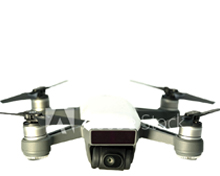
DJI, which in 2018 had a 74% share of the global drone market, is expanding in Latin America. The firm is targeting non-recreational consumers, a group Manuel Martínez, DJI’s regional director, called the future of the drone industry. In Mexico, which constitutes 5% of the global drone market, companies are starting to use DJI drones for aerial video and photo, industrial inspection, topographic mapping and 3D model generation.

china_thumb.jpg
AIR TRAVEL
​

In 2017, after arrivals of Chinese tourists in Mexico increased 233% in five years, China Southern Airlines inaugurated its first flight to Mexico City from Guangzhou, via Vancouver. The airline’s vice president presented the flight as part of a strategy to increase tourism and trade between Mexico and China. From its inauguration through October of that year, the airline transported 94,000 passengers on that route, 70% of which were Mexican. The airline’s CEO has stated they intend to expand their network to the rest of Latin America, particularly Brazil and Argentina, within the next three years.

bike_thumb.jpg
​

BIKE SHARING​

Mobike entered Mexico and Chile in 2018. Between mid-February and June, subscriptions grew 70% per week in Mexico, where more recently regulations have forced the company to reduce the number of its units by 73%. Regardless, Mobike has a usage rate of 96% in the capital and operates successfully in other two major cities in Mexico. In Chile’s capital Santiago, Mobike dominates the bike-sharing market, with 330,000 users and plans to expand to other cities.

​

Gree Electric is the largest manufacturer of air conditioners in the world. Besides China, the company also has factories in Pakistan and Brazil, where it has operated for more than 16 years. In 2016, sales in Brazil grew 60% despite the country’s recession. Growth continued over the next two years, and in 2018 the company announced it would build a new plant in Manaus to double production capacity from its current output of 500,000 units per year.

TELEVISIONS​

In 2016, Hisense more than doubled its investment in a factory in northern Mexico, its largest outside China, spending some $25 million. By the end of 2017, only six years after arriving in Mexico, Hisense ranked third in the country’s TV market, according to the company’s regional director. Last year the CEO announced another investment of $50 million in its Mexican factory.

CAR SHARING​

The car service company, which in early 2018 surpassed Uber as the most valuable start-up in the world with a valuation of $56 billion, entered the Latin American market in 2017 by acquiring 99, a Brazilian taxi and ride-sharing app. In Mexico, Didi adapted its own app to the local market, launching a specialized service. To address the country’s security challenges, they included safety features such as an emergency alert button to call the police. The company currently operates in two cities and plans to expand across Mexico. It has also begun efforts to expand to Chile, Peru and Colombia.

ONLINE SHOPPING​

Alibaba is the world’s largest online retailer and in mid-2018 ranked fourth in Latin America in monthly users. AliExpress, a platform offering international customers direct access to Chinese products, has driven Alibaba’s growth in Brazil, Chile and Mexico. The company has also established partnerships in the region, including in Mexico and Argentina, to give Chinese consumers access to Latin American products.

CELL PHONES​

Even as overall smartphone sales declined in Latin America in 2018, Huawei had a record-breaking year. Shipments of its smartphones to the region grew 51% by volume. With a market share of 11.6%, the company ranked third in sales among its competitors, besting brands like Apple and LG. By the end of the year, Huawei was the leading smartphone in the Peruvian market and second in Chile and Colombia.

—

Uriegas is an editorial intern for AQ

ABOUT THE AUTHOR​

Fernanda Uriegas is an editorial intern for Americas Quarterly. A Mexican-Cuban journalist, she graduated from the Columbia University Graduate School of Journalism in 2017.

 
I am aware of Mao's missteps and the resultant catastrophic consequences just as I am aware of Stalin's purges and repression. But both China and Russia still looked better in 2026 and 1980 than they did in 1949 and 1917, respectively. If they had chosen some wrong model like many countries then I don't think they would have advanced that much.

And I believe @Michael has already said that there is enough consultive/inclusive process in China so 'the leader' label is probably unfair.
leader is basically anyone with power; it does not matter whether you are a democratically elected head of state or a unitarian socialist premier.

Being consultative and inclusive is not the same as being "discussed" (That's the best word I can use) I can have a full board consultation, but that would mean nothing if I am the one that make that final decision. Because the power is in me, I have the final say. Yes, I could be informed, but that does not mean my decision is sound; it really depends on what kind of person I am as the decision maker. A very common example is Hitler; he was surrounded by very capable generals, and all the decisions he made is thru many consultation from their chief of staff. The issue is, Hitler has zero strategic knowledge. Yes, while there are some brilliant decisions being made by him, by not knowing the strategic importance of the decision he is making, he also made a lot of mistakes.

Would that happen in the Western world when a decision was made by a complex deliberation process? Yes, but that would mean the entire group of consultants had to be incompetent instead of just the leader. That is the difference between the Chinese system and the Western system.
 
In our view, terms like "democracy" or "centralization of power" are relative, not absolute, concepts.
Exactly this.

It can very easily be argued that China is "democratic" and that USA exerts "centralised power".

They are meaningless terms designed for propaganda purposes only.

Political systems should be judged on their actual constituents, merits, and outcomes.

I'm averse to the "right wing" vs "left wing" ecosystem that we are spoonfed here in the west also. The dichotomy simply does not exist in reality, nor is it reasonable to define western political parties as existing "somewhere along a right-left linear spectrum".
 

Users who are viewing this thread

  • Back
    Top