MNZGamerX
Registered Member

- Thread starter
- #16
3 Governments, 1 China Policy? Dhaka’s Evolving Engagement With Beijing
While Bangladesh’s domestic politics have undergone huge change over the past two years, its relations with China have displayed greater continuity than rupture.
By Saqlain Rizve
June 29, 2026
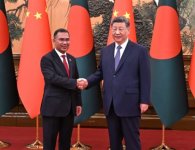
Bangladeshi Prime Minister Tarique Rahman’s first overseas tour since taking office in February did not begin in Beijing or New Delhi. Instead, it began in Kuala Lumpur, where discussions centered on labor migration, trade, investment and economic cooperation.
Rahman then travelled to China for the second leg of his tour, which combined participation in the Summer Davos forum with an official bilateral visit.
The sequencing was noteworthy as China is Bangladesh’s largest trade partner and one of its most important development partners. Yet, Beijing was not chosen as Rahman’s inaugural foreign destination. Equally notable was the absence of an early visit to India, Bangladesh’s closest neighbor.
Whether this reflected diplomatic scheduling, economic priorities, or the political environment inherited by the new government, the sequence shows the balancing act facing Dhaka’s new administration.
But more important than which capital came first on Rahman’s agenda is a deeper question: Has Bangladesh’s China policy fundamentally changed under successive governments, or has engagement with Beijing become one of the few areas of continuity in Bangladesh’s foreign policy?
A comparison of the joint statements issued during Prime Minister Sheikh Hasina’s visit to Beijing in July 2024, Chief Adviser Muhammad Yunus’ visit in March 2025, and Rahman’s visit in June 2026 suggests that while the emphasis of the relationship has evolved, its overall trajectory has remained remarkably consistent.
At first glance, the three visits appear to represent three different political moments. Hasina’s China visit came months after her Awami League secured another term in office in a general election that was widely criticized as flawed.
Yunus visited Beijing after the dramatic political transition of August 2024, when Hasina was ousted from power. He was leading an interim administration whose foreign policy direction was uncertain. His administration’s relations with India were fraught with tension. Rahman’s visit last week came months after his Bangladesh Nationalist Party swept to power in the 2026 general election. Unlike the Hasina and Yunus administrations, Rahman’s government enjoys democratic credibility.
Despite these different political contexts, the official documents reveal considerable continuity.
Hasina’s 2024 visit maintained diplomatic engagement with China without producing major shifts in bilateral relations. The two countries elevated their relationship from a Strategic Partnership to a Comprehensive Strategic Cooperative Partnership, laying out an expansive agenda covering Belt and Road cooperation, infrastructure, trade, digital economy, finance, agriculture, maritime cooperation, defense exchanges, education, health, and climate cooperation. The document reflected China’s continued commitment to Bangladesh’s infrastructure-led development model, while Bangladesh sought larger financial commitments and deeper economic integration.
Yet the immediate outcomes of that visit were viewed in Dhaka with mixed feelings. Bangladesh reportedly sought substantially greater financial support than Beijing ultimately offered, leading many to question whether the diplomatic upgrade had been matched by economic deliverables.
The political transition that followed only a few weeks later created uncertainty about whether Bangladesh’s approach toward China would change.
Instead, Yunus’ March 2025 visit demonstrated the resilience of the bilateral relationship. Rather than introducing a new framework, the joint press release largely reaffirmed the Comprehensive Strategic Cooperative Partnership established under Hasina. Cooperation on the Belt and Road Initiative, Mongla Port, the Chinese Economic and Industrial Zone in Chittagong, trade negotiations, investment, water management, and the Teesta River Comprehensive Management and Restoration Project all remained on the agenda.
Despite one of the most significant political transitions in Bangladesh’s recent history, the country’s approach toward China changed far less than many had anticipated. Beijing welcomed the interim government and emphasized support for Bangladesh’s reform process without seeking to redefine the bilateral relationship.
Rahman’s visit appears to represent a different phase not because it abandoned previous priorities, but because it sought to deepen them institutionally.
Many of the economic themes remain familiar. Trade, investment, industrial cooperation, Mongla Port modernization, the Chinese Economic and Industrial Zone, green energy, and connectivity all reappear in the latest joint statement. Teesta also remains central.
But the 2026 communiqué introduces elements that were either absent or far less developed in the previous documents.
One development that deserves close attention is China’s proposal for a China-Myanmar-Bangladesh Economic Corridor. According to the Bangladesh Prime Minister’s Office, the proposal was discussed during the meeting between Xi and Rahman as a way to strengthen regional connectivity, trade and economic cooperation. However, it does not appear in the official joint communiqué, making it difficult to determine whether it represents a formal bilateral commitment or remains an idea under discussion.
The proposal also comes after a debate in Bangladesh in 2025 over a UN-supported humanitarian corridor into Myanmar’s Rakhine State.
More broadly, regional connectivity corridors are not new to Bangladesh-China relations. China had previously promoted the Bangladesh-China-India-Myanmar (BCIM) Economic Corridor, which ultimately stalled. The latest proposal appears to revive the connectivity concept in a different form by excluding India.
China and Bangladesh also agreed to establish a strategic dialogue between the two foreign ministers, explore a “2+2” dialogue mechanism involving diplomacy and defense officials, strengthen exchanges between governments, legislatures and political parties, and jointly build a “China-Bangladesh community with a shared future in the new era.”
The emphasis on stronger political ties was also reflected outside the joint communiqué. During the visit, the BNP and the Communist Party of China signed their first memorandum of understanding, creating a formal framework for exchanges between the two parties. While separate from government-to-government diplomacy, the agreement complements the communiqué’s broader emphasis on expanding engagement across governments, legislatures and political parties. Taken together, these developments indicate that Bangladesh-China relations are evolving beyond project-based cooperation toward more structured political and institutional engagement.
The Teesta project offers perhaps the clearest example of how the relationship has developed over the past three years. Under Hasina, cooperation focused largely on water management, hydrological forecasting and river management. During Yunus’ visit, Bangladesh welcomed Chinese companies to participate in the Teesta River Comprehensive Management and Restoration Project. Under Rahman, the language became more concrete, with China expressing support for the project, agreeing to assist with the feasibility study, and pledging support within its capacity.
The same gradual evolution is visible in Bangladesh’s engagement with Chinese-led multilateral initiatives. During Hasina’s visit, China welcomed Bangladesh’s interest in BRICS membership and closer association with the Shanghai Cooperation Organization (SCO). The issue received little attention during Yunus’ visit but reappeared more prominently in the 2026 communiqué, where Beijing explicitly supported Bangladesh’s participation in BRICS and its application to become an SCO partner.
Perhaps the most important shift across the three visits is not geopolitical but economic. The language of the joint statements reveals Bangladesh’s changing expectations from China.
The 2024 statement focused heavily on infrastructure — bridges, railways, power networks, ICT, and large Belt and Road projects. The 2025 document placed greater emphasis on industrialization, manufacturing, investment, and economic recovery. In 2026, the agenda has expanded further to include supply chains, e-commerce, scientific innovation, photovoltaic technology, export upgrading, green energy, and industrial modernization.
This reflects Bangladesh’s own economic transition. As the country prepares for graduation from least developed country (LDC) status — currently set for 2026, though negotiations to defer it until 2029 are ongoing—its priorities are shifting from infrastructure development to strengthening industrial competitiveness, attracting higher-quality investment, integrating into regional supply chains, and diversifying exports beyond ready-made garments.
For Bangladesh, therefore, the significance of Rahman’s visit lies less in the number of agreements signed than in what they reveal about the evolution of the bilateral relationship. Hasina upgraded the partnership. Yunus preserved it through the political transition. Rahman has begun to institutionalize it.
At the same time, it would be an overstatement to describe the visit as a diplomatic breakthrough. Such a breakthrough would normally involve a major investment or financing package, a completely new strategic direction, a formal defense alliance, the resolution of a long-standing dispute, Bangladesh joining a major geopolitical bloc, or a landmark infrastructure commitment. The 2026 visit did not fundamentally reshape Bangladesh-China relations in those ways. Instead, it strengthened and formalized an existing partnership.
Whether this institutional deepening ultimately produces greater investment, stronger exports, or more effective development cooperation remains uncertain.
Viewed together, these three visits show how the relationship has evolved.
While Bangladesh’s domestic politics have undergone extraordinary change over the past two years, its engagement with China has displayed far greater continuity than rupture.

While Bangladesh’s domestic politics have undergone huge change over the past two years, its relations with China have displayed greater continuity than rupture.
By Saqlain Rizve
June 29, 2026
Bangladeshi Prime Minister Tarique Rahman’s first overseas tour since taking office in February did not begin in Beijing or New Delhi. Instead, it began in Kuala Lumpur, where discussions centered on labor migration, trade, investment and economic cooperation.
Rahman then travelled to China for the second leg of his tour, which combined participation in the Summer Davos forum with an official bilateral visit.
The sequencing was noteworthy as China is Bangladesh’s largest trade partner and one of its most important development partners. Yet, Beijing was not chosen as Rahman’s inaugural foreign destination. Equally notable was the absence of an early visit to India, Bangladesh’s closest neighbor.
Whether this reflected diplomatic scheduling, economic priorities, or the political environment inherited by the new government, the sequence shows the balancing act facing Dhaka’s new administration.
But more important than which capital came first on Rahman’s agenda is a deeper question: Has Bangladesh’s China policy fundamentally changed under successive governments, or has engagement with Beijing become one of the few areas of continuity in Bangladesh’s foreign policy?
A comparison of the joint statements issued during Prime Minister Sheikh Hasina’s visit to Beijing in July 2024, Chief Adviser Muhammad Yunus’ visit in March 2025, and Rahman’s visit in June 2026 suggests that while the emphasis of the relationship has evolved, its overall trajectory has remained remarkably consistent.
At first glance, the three visits appear to represent three different political moments. Hasina’s China visit came months after her Awami League secured another term in office in a general election that was widely criticized as flawed.
Yunus visited Beijing after the dramatic political transition of August 2024, when Hasina was ousted from power. He was leading an interim administration whose foreign policy direction was uncertain. His administration’s relations with India were fraught with tension. Rahman’s visit last week came months after his Bangladesh Nationalist Party swept to power in the 2026 general election. Unlike the Hasina and Yunus administrations, Rahman’s government enjoys democratic credibility.
Despite these different political contexts, the official documents reveal considerable continuity.
Hasina’s 2024 visit maintained diplomatic engagement with China without producing major shifts in bilateral relations. The two countries elevated their relationship from a Strategic Partnership to a Comprehensive Strategic Cooperative Partnership, laying out an expansive agenda covering Belt and Road cooperation, infrastructure, trade, digital economy, finance, agriculture, maritime cooperation, defense exchanges, education, health, and climate cooperation. The document reflected China’s continued commitment to Bangladesh’s infrastructure-led development model, while Bangladesh sought larger financial commitments and deeper economic integration.
Yet the immediate outcomes of that visit were viewed in Dhaka with mixed feelings. Bangladesh reportedly sought substantially greater financial support than Beijing ultimately offered, leading many to question whether the diplomatic upgrade had been matched by economic deliverables.
The political transition that followed only a few weeks later created uncertainty about whether Bangladesh’s approach toward China would change.
Instead, Yunus’ March 2025 visit demonstrated the resilience of the bilateral relationship. Rather than introducing a new framework, the joint press release largely reaffirmed the Comprehensive Strategic Cooperative Partnership established under Hasina. Cooperation on the Belt and Road Initiative, Mongla Port, the Chinese Economic and Industrial Zone in Chittagong, trade negotiations, investment, water management, and the Teesta River Comprehensive Management and Restoration Project all remained on the agenda.
Despite one of the most significant political transitions in Bangladesh’s recent history, the country’s approach toward China changed far less than many had anticipated. Beijing welcomed the interim government and emphasized support for Bangladesh’s reform process without seeking to redefine the bilateral relationship.
Rahman’s visit appears to represent a different phase not because it abandoned previous priorities, but because it sought to deepen them institutionally.
Many of the economic themes remain familiar. Trade, investment, industrial cooperation, Mongla Port modernization, the Chinese Economic and Industrial Zone, green energy, and connectivity all reappear in the latest joint statement. Teesta also remains central.
But the 2026 communiqué introduces elements that were either absent or far less developed in the previous documents.
One development that deserves close attention is China’s proposal for a China-Myanmar-Bangladesh Economic Corridor. According to the Bangladesh Prime Minister’s Office, the proposal was discussed during the meeting between Xi and Rahman as a way to strengthen regional connectivity, trade and economic cooperation. However, it does not appear in the official joint communiqué, making it difficult to determine whether it represents a formal bilateral commitment or remains an idea under discussion.
The proposal also comes after a debate in Bangladesh in 2025 over a UN-supported humanitarian corridor into Myanmar’s Rakhine State.
More broadly, regional connectivity corridors are not new to Bangladesh-China relations. China had previously promoted the Bangladesh-China-India-Myanmar (BCIM) Economic Corridor, which ultimately stalled. The latest proposal appears to revive the connectivity concept in a different form by excluding India.
China and Bangladesh also agreed to establish a strategic dialogue between the two foreign ministers, explore a “2+2” dialogue mechanism involving diplomacy and defense officials, strengthen exchanges between governments, legislatures and political parties, and jointly build a “China-Bangladesh community with a shared future in the new era.”
The emphasis on stronger political ties was also reflected outside the joint communiqué. During the visit, the BNP and the Communist Party of China signed their first memorandum of understanding, creating a formal framework for exchanges between the two parties. While separate from government-to-government diplomacy, the agreement complements the communiqué’s broader emphasis on expanding engagement across governments, legislatures and political parties. Taken together, these developments indicate that Bangladesh-China relations are evolving beyond project-based cooperation toward more structured political and institutional engagement.
The Teesta project offers perhaps the clearest example of how the relationship has developed over the past three years. Under Hasina, cooperation focused largely on water management, hydrological forecasting and river management. During Yunus’ visit, Bangladesh welcomed Chinese companies to participate in the Teesta River Comprehensive Management and Restoration Project. Under Rahman, the language became more concrete, with China expressing support for the project, agreeing to assist with the feasibility study, and pledging support within its capacity.
The same gradual evolution is visible in Bangladesh’s engagement with Chinese-led multilateral initiatives. During Hasina’s visit, China welcomed Bangladesh’s interest in BRICS membership and closer association with the Shanghai Cooperation Organization (SCO). The issue received little attention during Yunus’ visit but reappeared more prominently in the 2026 communiqué, where Beijing explicitly supported Bangladesh’s participation in BRICS and its application to become an SCO partner.
Perhaps the most important shift across the three visits is not geopolitical but economic. The language of the joint statements reveals Bangladesh’s changing expectations from China.
The 2024 statement focused heavily on infrastructure — bridges, railways, power networks, ICT, and large Belt and Road projects. The 2025 document placed greater emphasis on industrialization, manufacturing, investment, and economic recovery. In 2026, the agenda has expanded further to include supply chains, e-commerce, scientific innovation, photovoltaic technology, export upgrading, green energy, and industrial modernization.
This reflects Bangladesh’s own economic transition. As the country prepares for graduation from least developed country (LDC) status — currently set for 2026, though negotiations to defer it until 2029 are ongoing—its priorities are shifting from infrastructure development to strengthening industrial competitiveness, attracting higher-quality investment, integrating into regional supply chains, and diversifying exports beyond ready-made garments.
For Bangladesh, therefore, the significance of Rahman’s visit lies less in the number of agreements signed than in what they reveal about the evolution of the bilateral relationship. Hasina upgraded the partnership. Yunus preserved it through the political transition. Rahman has begun to institutionalize it.
At the same time, it would be an overstatement to describe the visit as a diplomatic breakthrough. Such a breakthrough would normally involve a major investment or financing package, a completely new strategic direction, a formal defense alliance, the resolution of a long-standing dispute, Bangladesh joining a major geopolitical bloc, or a landmark infrastructure commitment. The 2026 visit did not fundamentally reshape Bangladesh-China relations in those ways. Instead, it strengthened and formalized an existing partnership.
Whether this institutional deepening ultimately produces greater investment, stronger exports, or more effective development cooperation remains uncertain.
Viewed together, these three visits show how the relationship has evolved.
While Bangladesh’s domestic politics have undergone extraordinary change over the past two years, its engagement with China has displayed far greater continuity than rupture.
3 Governments, 1 China Policy? Dhaka’s Evolving Engagement With Beijing
While Bangladesh’s domestic politics have undergone huge change over the past two years, its relations with China have displayed greater continuity than rupture.
thediplomat.com