F-22Raptor
Elite Member

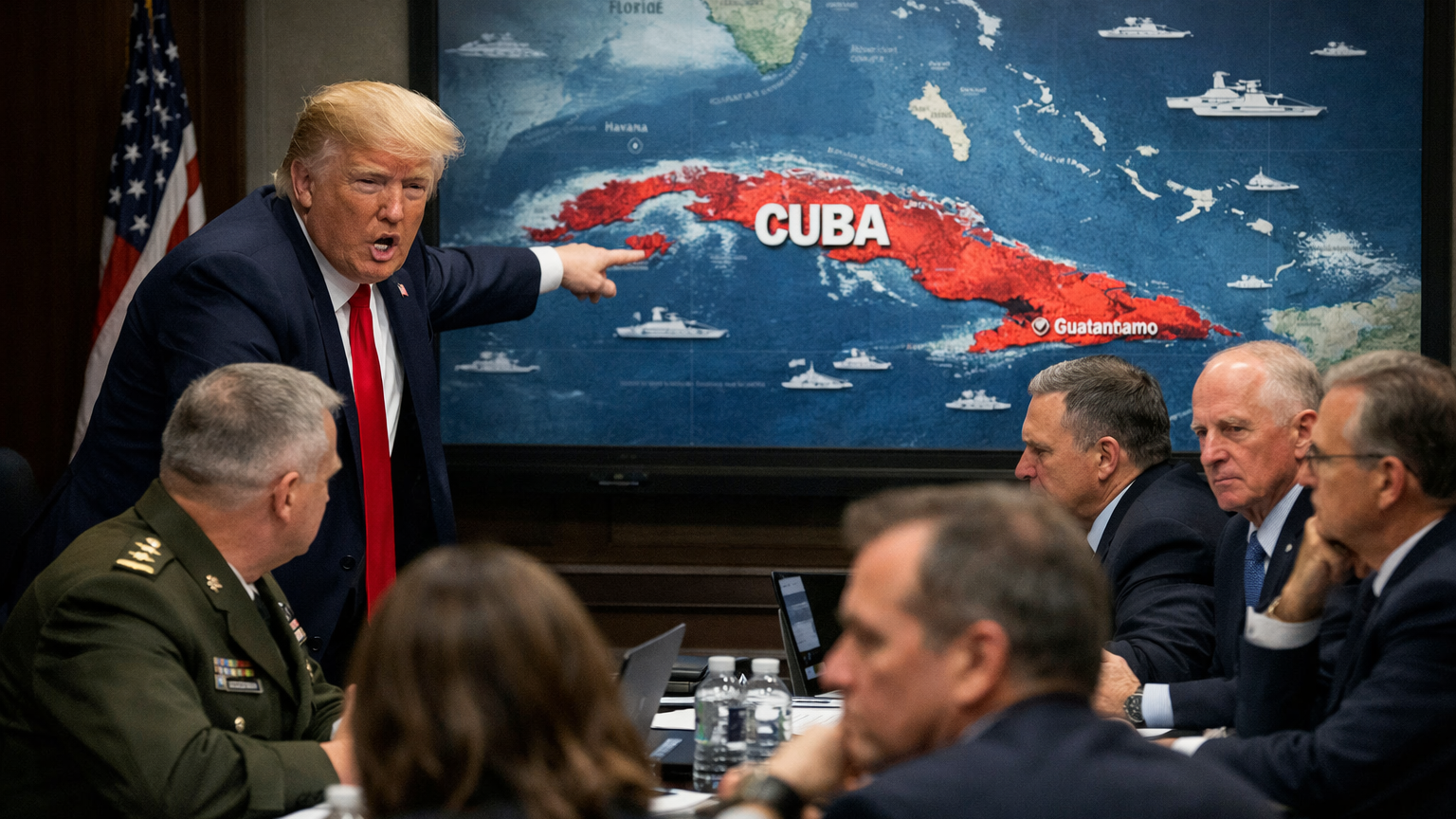
Emboldened by the U.S. ouster of Venezuelan President Nicolás Maduro, the Trump administration is searching for Cuban government insiders who can help cut a deal to push out the Communist regime by the end of the year, people familiar with the matter said.
The Trump administration has assessed Cuba’s economy as being close to collapse and that the government has never been this fragile after losing a vital benefactor in Maduro, these people said. Officials don’t have a concrete plan to end the Communist government that has held power on the Caribbean island for almost seven decades, but they see Maduro’s capture and subsequent concessions from his allies left behind as a blueprint and a warning for Cuba, senior U.S. officials said.
“I strongly suggest they make a deal. BEFORE IT IS TOO LATE,” President Trump stated in a Jan. 11 social-media post in which he said “NO MORE OIL OR MONEY” would be going to Cuba.
In meetings with Cuban exiles and civic groups in Miami and Washington, they have focused on identifying somebody inside the current government who will see the writing on the wall and want to cut a deal, one U.S. official said.
The Jan. 3 raid to capture Maduro was helped by an asset within the Venezuelan leader’s inner circle, administration officials have said. The U.S. military operation in Caracas killed 32 Cuban soldiers and intelligence operatives in Maduro’s security detail.
While the U.S. hasn’t publicly threatened to use military force in Cuba, Trump officials privately say the brazen raid that extracted Maduro should serve as an implicit threat to Havana.
U.S. intelligence assessments have painted a grim picture of the island’s economy, plagued by chronic shortages of basic goods, medicines and frequent blackouts, according to people familiar with the analysis.
Cuba’s fate has long been entwined with Venezuela: subsidized Venezuelan oil has been a mainstay of its economy since shortly after Hugo Chávez took power in Venezuela in 1999. Washington intends to weaken the regime by choking off that oil, which has kept Cuba’s lights on, senior U.S. officials said. Cuba could run out of oil within weeks, bringing the economy to a grinding halt, according to economists.
The administration is also taking aim at Cuba’s overseas medical missions, Havana’s most important source of hard currency, including through visa bans targeting Cuban and foreign officials accused of facilitating the program.
Trump and his inner circle, many of whom have Florida ties, see toppling Cuba’s Communist regime as the defining test of his national-security strategy to remake the hemisphere, according to officials. Trump sees the U.S. arrangement with Venezuela as a success, citing the cooperation of acting President Delcy Rodríguez as evidence that the U.S. can dictate terms.
“Cuba’s rulers are incompetent Marxists who have destroyed their country, and they have had a major setback with the Maduro regime that they are responsible for propping up,” a White House official said, reiterating that Cuba should “make a deal before it’s too late.”
In a statement, the State Department said that it is in America’s national security interests for Cuba “to be competently run by a democratic government and to refuse to host our adversaries’ military and intelligence services.”
Some Trump officials said the president rejects regime-change strategies of the past. Instead, he looks to make deals where possible and to take advantage of opportunities as they come up, a senior Trump official said. As in Venezuela, this could look like escalating pressure while indicating the White House is open to negotiating an off-ramp, the official said.
Many Trump allies expect no less than the end of Communist rule in Cuba. But the ouster of the cash-strapped government could lead to the kind of turbulence and humanitarian crisis that Trump was eager to avoid in Venezuela, where he opted to keep top loyalists in place.
The regime has withstood years of intense U.S. pressure, from the Central Intelligence Agency-backed Bay of Pigs invasion in 1961 to a punishing embargo imposed in 1962 that became more stringent over time. The two countries became adversaries shortly after the Castro brothers descended from Cuba’s Sierra Maestra mountains with a bearded crew of guerrillas in 1959.
This leaves the U.S. searching for a clear plan for what comes next and who could replace the current regime, these people said. The Venezuela model may be harder to replicate in Cuba. Cuba is a single-party Stalinist state that bans political opposition, and where a civil society barely exists, while Venezuela has an opposition movement, once-frequent protests and elections.
“These guys are a much tougher nut to crack,” says Ricardo Zúñiga, a former Obama administration official who helped negotiate the short-lived detente between the U.S. and Cuba from 2014 to 2017. “There’s nobody who would be tempted to work on the U.S. side.”
Over its nearly 70-year history, the Cuban regime has never been willing to negotiate regarding changes to its political system, and only implemented fitful and minor economic changes.
Trump believes that ending the Castro era would cement his legacy and do what President John F. Kennedy failed to do in the 1960s, said a U.S. official who worked on the issue in Trump’s first term. It has long been a stated goal for Secretary of State Marco Rubio, the son of Cuban immigrants who came to Florida in 1956.
In Miami, where politicians have long argued that the road to regime change in Havana leads through a change in government in Caracas, Maduro’s ouster has set off jubilation and the ardent expectations that Cuba is next. Prominent Trump allies and U.S. lawmakers have shared AI-generated videos showing a post-Communist utopia, with boats arriving from Miami, family reunions, and Trump and Rubio driving a 1950s convertible past the gleaming hotels of a liberated Cuba.
“The regime has to make a choice to step down or to better provide for its people,” Jeremy Lewin, the State Department’s acting undersecretary for foreign assistance, said last week as he highlighted $3 million of hurricane relief supplies sent to Cuba through the Catholic Church in boxes stamped with a U.S. flag.
Havana has publicly rejected that premise. Cuba’s government is still dominated by Raúl Castro, 94 years old, the younger brother of Fidel, while President Miguel Díaz-Canel, 65, an unpopular apparatchik, runs day-to-day affairs.
“There is no surrender or capitulation possible nor any kind of understanding based on coercion or intimidation,” Díaz-Canel, dressed in green military fatigues, said at a recent memorial for the Cuban security forces personnel killed in Caracas while protecting Maduro.
The Cuban government has been masterful at repressing dissent in an impoverished population. It has faced only two widespread protests: in 1994 in Havana, and in 2021 when tens of thousands of Cubans took to the streetsacross the island. Human-rights groups estimate that the government holds more than 1,000 political prisoners.
As tensions with the U.S. rise, Cuba held a national day of defense Sunday. Cubans practiced for a “war of all the people” to repel invaders.
Television broadcasts showed elderly people firing worn AK-47 rifles, and others planting mines. “It’s theater,” said Joe García, a Cuban-American and former Democratic congressman from Florida with contacts to the Cuban leadership. “This is a country that can’t pick up its garbage and is making believe it’s getting ready for a conflict with the superpower next door.”
Some nights, with no electricity and little gasoline to get around, the streets of Havana are dark and quiet, except for the occasional din of wooden spoons clanging against pots—an anonymous form of protest that comes from open windows, balconies and rooftops late at night, when the power has been out all day and desperation mounts.
“You can’t tell who it is. They don’t yell or anything. It’s just that—banging on pots,” said Rodolfo Jiménez, a retiree who has lived on the same street in Havana his entire life. “They only do it at night. People are afraid of being snitched on.”
The Trump administration has assessed Cuba’s economy as being close to collapse and that the government has never been this fragile after losing a vital benefactor in Maduro, these people said. Officials don’t have a concrete plan to end the Communist government that has held power on the Caribbean island for almost seven decades, but they see Maduro’s capture and subsequent concessions from his allies left behind as a blueprint and a warning for Cuba, senior U.S. officials said.
“I strongly suggest they make a deal. BEFORE IT IS TOO LATE,” President Trump stated in a Jan. 11 social-media post in which he said “NO MORE OIL OR MONEY” would be going to Cuba.
In meetings with Cuban exiles and civic groups in Miami and Washington, they have focused on identifying somebody inside the current government who will see the writing on the wall and want to cut a deal, one U.S. official said.
The Jan. 3 raid to capture Maduro was helped by an asset within the Venezuelan leader’s inner circle, administration officials have said. The U.S. military operation in Caracas killed 32 Cuban soldiers and intelligence operatives in Maduro’s security detail.
While the U.S. hasn’t publicly threatened to use military force in Cuba, Trump officials privately say the brazen raid that extracted Maduro should serve as an implicit threat to Havana.
U.S. intelligence assessments have painted a grim picture of the island’s economy, plagued by chronic shortages of basic goods, medicines and frequent blackouts, according to people familiar with the analysis.
Cuba’s fate has long been entwined with Venezuela: subsidized Venezuelan oil has been a mainstay of its economy since shortly after Hugo Chávez took power in Venezuela in 1999. Washington intends to weaken the regime by choking off that oil, which has kept Cuba’s lights on, senior U.S. officials said. Cuba could run out of oil within weeks, bringing the economy to a grinding halt, according to economists.
The administration is also taking aim at Cuba’s overseas medical missions, Havana’s most important source of hard currency, including through visa bans targeting Cuban and foreign officials accused of facilitating the program.
Trump and his inner circle, many of whom have Florida ties, see toppling Cuba’s Communist regime as the defining test of his national-security strategy to remake the hemisphere, according to officials. Trump sees the U.S. arrangement with Venezuela as a success, citing the cooperation of acting President Delcy Rodríguez as evidence that the U.S. can dictate terms.
“Cuba’s rulers are incompetent Marxists who have destroyed their country, and they have had a major setback with the Maduro regime that they are responsible for propping up,” a White House official said, reiterating that Cuba should “make a deal before it’s too late.”
In a statement, the State Department said that it is in America’s national security interests for Cuba “to be competently run by a democratic government and to refuse to host our adversaries’ military and intelligence services.”
Some Trump officials said the president rejects regime-change strategies of the past. Instead, he looks to make deals where possible and to take advantage of opportunities as they come up, a senior Trump official said. As in Venezuela, this could look like escalating pressure while indicating the White House is open to negotiating an off-ramp, the official said.
Many Trump allies expect no less than the end of Communist rule in Cuba. But the ouster of the cash-strapped government could lead to the kind of turbulence and humanitarian crisis that Trump was eager to avoid in Venezuela, where he opted to keep top loyalists in place.
The regime has withstood years of intense U.S. pressure, from the Central Intelligence Agency-backed Bay of Pigs invasion in 1961 to a punishing embargo imposed in 1962 that became more stringent over time. The two countries became adversaries shortly after the Castro brothers descended from Cuba’s Sierra Maestra mountains with a bearded crew of guerrillas in 1959.
This leaves the U.S. searching for a clear plan for what comes next and who could replace the current regime, these people said. The Venezuela model may be harder to replicate in Cuba. Cuba is a single-party Stalinist state that bans political opposition, and where a civil society barely exists, while Venezuela has an opposition movement, once-frequent protests and elections.
“These guys are a much tougher nut to crack,” says Ricardo Zúñiga, a former Obama administration official who helped negotiate the short-lived detente between the U.S. and Cuba from 2014 to 2017. “There’s nobody who would be tempted to work on the U.S. side.”
Over its nearly 70-year history, the Cuban regime has never been willing to negotiate regarding changes to its political system, and only implemented fitful and minor economic changes.
Trump believes that ending the Castro era would cement his legacy and do what President John F. Kennedy failed to do in the 1960s, said a U.S. official who worked on the issue in Trump’s first term. It has long been a stated goal for Secretary of State Marco Rubio, the son of Cuban immigrants who came to Florida in 1956.
In Miami, where politicians have long argued that the road to regime change in Havana leads through a change in government in Caracas, Maduro’s ouster has set off jubilation and the ardent expectations that Cuba is next. Prominent Trump allies and U.S. lawmakers have shared AI-generated videos showing a post-Communist utopia, with boats arriving from Miami, family reunions, and Trump and Rubio driving a 1950s convertible past the gleaming hotels of a liberated Cuba.
“The regime has to make a choice to step down or to better provide for its people,” Jeremy Lewin, the State Department’s acting undersecretary for foreign assistance, said last week as he highlighted $3 million of hurricane relief supplies sent to Cuba through the Catholic Church in boxes stamped with a U.S. flag.
Havana has publicly rejected that premise. Cuba’s government is still dominated by Raúl Castro, 94 years old, the younger brother of Fidel, while President Miguel Díaz-Canel, 65, an unpopular apparatchik, runs day-to-day affairs.
“There is no surrender or capitulation possible nor any kind of understanding based on coercion or intimidation,” Díaz-Canel, dressed in green military fatigues, said at a recent memorial for the Cuban security forces personnel killed in Caracas while protecting Maduro.
The Cuban government has been masterful at repressing dissent in an impoverished population. It has faced only two widespread protests: in 1994 in Havana, and in 2021 when tens of thousands of Cubans took to the streetsacross the island. Human-rights groups estimate that the government holds more than 1,000 political prisoners.
As tensions with the U.S. rise, Cuba held a national day of defense Sunday. Cubans practiced for a “war of all the people” to repel invaders.
Television broadcasts showed elderly people firing worn AK-47 rifles, and others planting mines. “It’s theater,” said Joe García, a Cuban-American and former Democratic congressman from Florida with contacts to the Cuban leadership. “This is a country that can’t pick up its garbage and is making believe it’s getting ready for a conflict with the superpower next door.”
Some nights, with no electricity and little gasoline to get around, the streets of Havana are dark and quiet, except for the occasional din of wooden spoons clanging against pots—an anonymous form of protest that comes from open windows, balconies and rooftops late at night, when the power has been out all day and desperation mounts.
“You can’t tell who it is. They don’t yell or anything. It’s just that—banging on pots,” said Rodolfo Jiménez, a retiree who has lived on the same street in Havana his entire life. “They only do it at night. People are afraid of being snitched on.”