ChatGPT says....
Here’s a breakdown of the
root causes of the current conflict in Sudan and the
role played by the United Arab Emirates (UAE).
Root causes of the conflict
Here are the main drivers behind the conflict:
- Power struggle between the main armed forces
- The conflict erupted in April 2023 when the Sudanese Armed Forces (SAF) and the Rapid Support Forces (RSF) — a powerful paramilitary force — turned on each other, vying for control and influence in the post-revolution (2019) and post-coup environment. (Wikipedia)
- The RSF has roots in the Janjaweed militias which operated especially in the Darfur region under former President Omar al‑Bashir, and has grown into a major military power in its own right. (Foreign Affairs)
- The SAF and RSF both claim legitimacy and have contested roles in the transitional government, leading to a breakdown in trust and institutions.
- Weak governance, stalled transition and institutional overlap
- After Bashir’s removal, Sudan has been attempting a democratic transition, but military actors held significant power. The coexistence of parallel forces (SAF, RSF) and lack of effective civilian control created a fragile security environment. (Reddit)
- The RSF had been integrated into the state apparatus but kept autonomy and distinct command — creating a dual-power situation.
- Resource interests, economic pressures and local grievances
- Sudan is rich in resources (gold, agricultural land, access to Red Sea). Control over those resources has become part of the conflict dynamics. (Foreign Affairs)
- The economy was badly weakened by sanctions, mismanagement and the legacy of conflict; many groups saw the conflict as a way to secure access to wealth or protect economic interests.
- Long-standing regional, ethnic and tribal divisions (especially in places like Darfur) added fuel: the RSF originated in one region, other groups felt marginalized, and old grievances resurfaced.
- Geostrategic and regional dynamics
- Sudan’s location (Red Sea, Horn of Africa) makes it strategically important for regional powers. Control of ports, shipping lanes, and significant trade/investment opportunities increased external interest. (The Washington Post)
- Foreign actors (countries, private military companies) have become involved, which has escalated and prolonged the conflict rather than allowing it to stay purely domestic.
- Escalation into open armed conflict with humanitarian consequences
- With the breakdown of negotiation and institutions, the rivalry turned kinetic. Urban and rural fighting, drone strikes, heavy weapons, mass displacement, humanitarian crisis all followed. (Le Monde.fr)
In short: the conflict is not just the result of one trigger, but a mix of institutional breakdown, power rivalry, resource competition, long-standing social divides, and external actors amplifying the situation.
Role of the UAE in the conflict
The UAE’s involvement is multi-faceted and controversial. Below are the main roles and allegations:
- Economic and strategic interests in Sudan
- The UAE has major investments in Sudan’s gold, agriculture, land, and intended infrastructure (for example a Red Sea port and economic zone). (Global Sa)
- Gold: Sudan exported large amounts of gold to the UAE (officially and via more opaque channels). Some reports say in 2022 Sudan exported 39 tons of gold valued at over $2 billion to the UAE. (Foreign Affairs)
- Agriculture and land: UAE-linked companies farming large tracts of land in Sudan. (Global Sa)
- Strategic location: Sudan’s Red Sea coastline and ports are of interest for the UAE’s maritime/trade ambitions. (European Council on Foreign Relations)
- Alleged support to one side of the conflict (RSF) and arms/logistics involvement
- The Sudanese government (especially the SAF side) has accused the UAE of providing arms, drones, logistics to the RSF (via transit through countries like Chad, Libya, etc). (Middle East Monitor)
- For example: weapons and drones routed through Chad’s Amdjarass airport were reportedly supplied to RSF. (The Washington Post)
- Some reports say the UAE has at times supplied arms to both SAF and RSF (or at least across the conflict lines) in earlier years. (Military Africa)
- The UAE denies supplying arms and says its engagement is humanitarian or economic. Sudan contests this, calling it complicity in war crimes/atrocities. (Middle East Monitor)
- How this role affects the conflict
- By allegedly backing one side (RSF) and providing them logistical/supply advantage, the UAE may have prolonged the conflict, increased its intensity, made a negotiated settlement harder. (Foreign Affairs)
- The UAE’s interests (resources, ports) mean that they are not neutral — their aim appears to be securing economic and strategic footholds rather than purely stabilising Sudan. (almanassa.com)
- The conflict thereby becomes partially a proxy battleground: Sudan’s collapse or fragmentation would benefit external players (like the UAE) in securing land, sea routes, trade advantages. (The Washington Post)
- Diplomatic fallout and legal/ethical challenges
- In 2025, Sudan announced it would cut diplomatic ties with the UAE, accusing it of violating its sovereignty and supporting the RSF. (The Guardian)
- Sudan also filed a case at the International Court of Justice (ICJ) accusing the UAE of complicity in genocide (specifically in Darfur), though the ICJ found it lacked jurisdiction on those claims. (Wikipedia)
Why it matters / implications
- Because the UAE is a major external actor, its involvement raises the stakes of the conflict: resources and regional geopolitics become intertwined with the fighting.
- For Sudan, the influence of external actors like the UAE complicates any peace deal: the patron-client ties (e.g., RSF to UAE) make compromising harder.
- For the region: Sudan’s instability threatens neighbouring countries, Red Sea trade routes, refugee flows, and can be a template for external powers leveraging weak states for economic/strategic gain.
- For humanitarian concerns: The conflict has caused massive displacement, civilian casualties, disruptions of aid. External backing that prolongs conflict worsens the humanitarian crisis.
In summary
- The root cause of the current conflict in Sudan is primarily the internal power struggle between the SAF and RSF, set against a backdrop of weak institutions, stalled democratic transition, resource competition, and regional strategic importance.
- The UAE’s role is significant: economically (gold, land, ports), strategically (Red Sea access), and militarily/logistically (alleged support to RSF) — while the UAE officially denies arm-supply claims and emphasises humanitarian / investment roles.
- The interplay of internal dysfunction and external intervention (such as by the UAE) means the conflict is not easily resolvable without tackling both domestic reforms and external stakeholder dynamics.
Yes — multiple credible reports and analyses suggest that
the UAE’s support for the RSF (Rapid Support Forces) was at least partly motivated by
political and strategic disagreements with Sudan’s central government (the SAF-led faction).
Let’s unpack that clearly:
 1. Background: Why UAE was invested in Sudan
The UAE had
deep economic and strategic interests in Sudan even before the war:
- Gold trade: Sudan was one of the world’s top gold producers; much of its gold (both legal and smuggled) went to Dubai for refining and trade.
- Agricultural land and food security: UAE firms had leased large tracts of fertile Sudanese land for crops and livestock exports.
- Red Sea access: The UAE wanted control or partnerships over Port Sudan and coastal infrastructure to expand its maritime and logistics network along the Red Sea.
For these reasons, Abu Dhabi wanted
a stable but pliant government in Khartoum — one that aligned with its commercial and security interests.
 2. The falling-out with Sudan’s leadership (SAF)
After the fall of Omar al-Bashir in 2019:
- The Sudanese Armed Forces (SAF) under Gen. Abdel Fattah al-Burhan gradually aligned more with Egypt and showed reluctance to give UAE (and Saudi) free rein in Sudanese affairs.
- The SAF leadership began questioning the unregulated gold exports to the UAE and sought to bring the RSF under full army command, threatening the autonomy of Gen. Mohamed Hamdan Dagalo (“Hemedti”) — the RSF leader.
- Abu Dhabi reportedly viewed Burhan’s alignment with Egypt (a rival regional power to the UAE in Red Sea and Libyan affairs) as a strategic setback.
By contrast,
Hemedti was personally close to the UAE’s leadership, having:
- Supplied thousands of RSF fighters to the UAE- and Saudi-led coalition in Yemen between 2015–2020.
- Conducted gold sales through UAE channels, enriching both the RSF and Emirati buyers.
 3. The alleged shift — UAE backs the RSF
When tensions escalated between SAF and RSF in 2022-23:
- The UAE reportedly viewed Hemedti as “their man” — a pragmatic, business-minded partner who could safeguard Emirati economic interests and maintain Sudan’s openness to Gulf investment.
- Several Western and African intelligence assessments (reported by The Washington Post, Foreign Affairs, and Middle East Monitor) found evidence of arms shipments and drone deliveries routed through Chad and Libya to RSF-controlled areas — allegedly organized by UAE networks.
- The Sudanese government (SAF) publicly accused the UAE of “using RSF as a proxy” to topple Burhan’s government and install a more cooperative regime.
While the UAE officially denies arming anyone, humanitarian “aid flights” to RSF-held zones (like Amdjarass, Chad) were suspected of doubling as
logistics cover for material support.
 4. The strategic logic
From the UAE’s point of view (based on analyst consensus):
- Counter Egypt’s dominance: Supporting RSF undermines Egypt’s ally, Burhan.
- Secure gold and trade routes: RSF controls the gold-rich Darfur region and smuggling routes into Libya and Chad.
- Ensure a favorable post-war government: If the RSF won or forced a negotiated settlement, Abu Dhabi would retain strong leverage in Khartoum.
- Expand influence on the Red Sea corridor: By shaping Sudan’s future leadership, the UAE could ensure long-term access to coastal projects.
 5. Consequences
- The move backfired diplomatically: in May 2025, Sudan formally cut ties with the UAE, accusing it of “funding and arming a rebellion.”
- The UAE has lost credibility as a neutral mediator in the Horn of Africa.
- The RSF’s brutality in Darfur has also damaged Abu Dhabi’s image internationally — with some NGOs calling for sanctions on UAE entities involved in the conflict.
 Summary
| Aspect | Description |
|---|
| Core issue | Disagreement between UAE and Sudan’s government (SAF) over power alignment, gold trade control, and Egypt’s influence. |
| Proxy used | RSF (Rapid Support Forces) led by Hemedti — a long-time UAE ally. |
| UAE objective | Maintain influence in Sudan’s post-Bashir landscape, secure access to resources and the Red Sea. |
| Outcome so far | Sudan-UAE diplomatic break, prolonged war, worsening humanitarian crisis. |
The death toll in the Sudanese civil war (2023–present) (between the Sudanese Armed Forces (SAF) and the Rapid Support Forces (RSF)) is
highly uncertain, but here's what current estimates suggest:
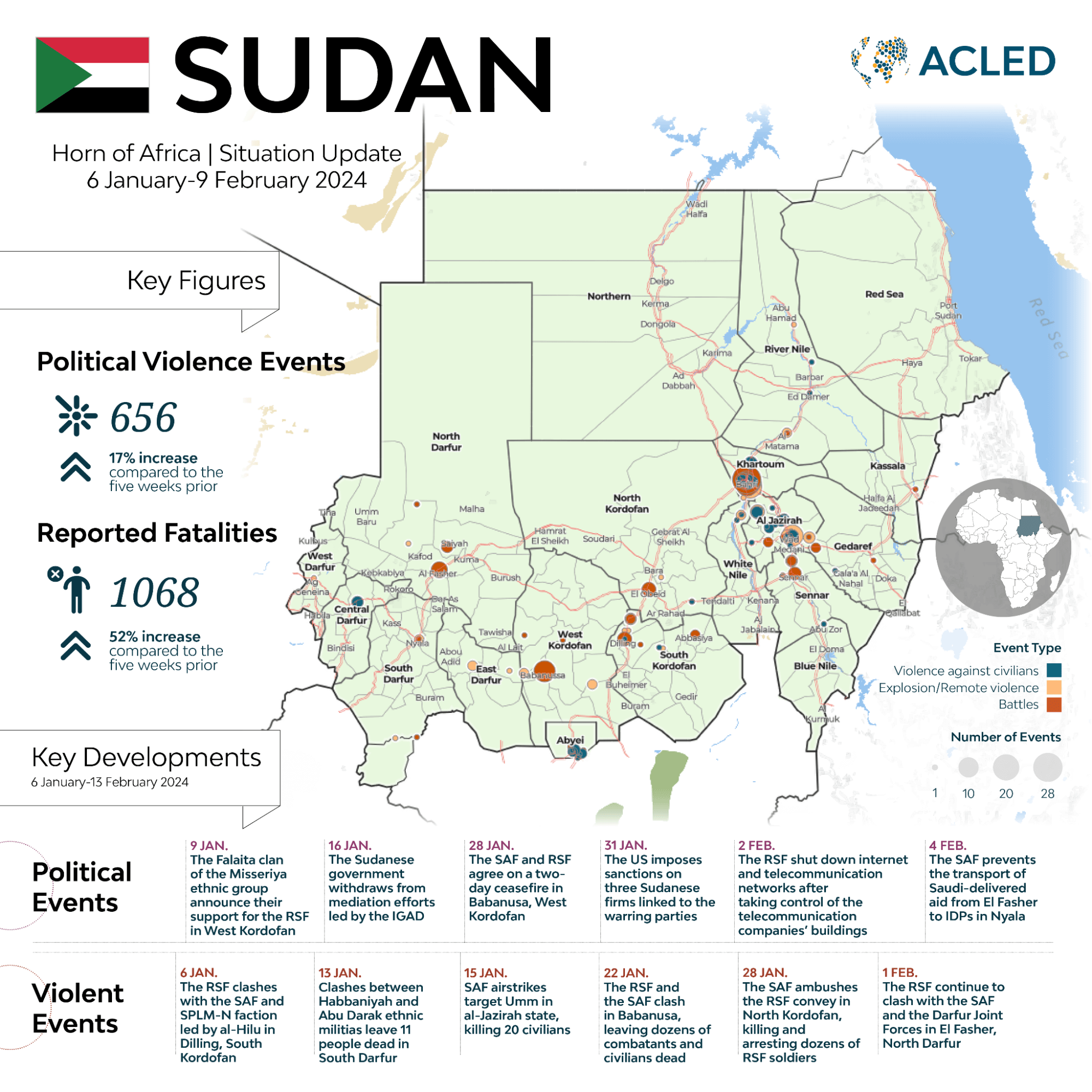
- According to the conflict-monitoring group Armed Conflict Location & Event Data Project (ACLED), by end-November 2024 there were “over 28,700 reported fatalities” (including more than 7,500 civilians). (ACLED)
- Other analyses believe the total death toll (including from violence, starvation, disease and other indirect causes) could be as high as around 150,000. (Council on Foreign Relations)
- A specific study estimates that just in Khartoum State, “over 61,000 people” died (of whom ~26,000 were from direct violence) in the first 14 months of war — indicating that official counts substantially under-report the true number. (Reuters)
Given the ongoing war, mass displacement, infrastructure collapse, limited access and communication black-outs, the
true number is almost certainly higher than any reported figure.