Think video games are bad? New research says otherwise

Feroze

Trusted Member
Joined
Apr 18, 2023
Messages
6,887
Reaction score
5,463
Reputation
1,783.0
Country of Origin
Country of Residence

Think video games are bad? New research says otherwise


Researchers at the University of Oxford point out that playing video games does not inherently harm children and may even carry benefits.
ANNThe Daily Star Published February 14, 2026
Listen to article1x1.2x1.5x
Video games are deeply woven into the daily routines of many young people, especially boys and young men. They are social spaces, entertainment, and in some cases, competitive arenas. But they are also divisive.

Parents, educators, and policymakers often worry about screen time, violence, addiction, and social withdrawal. Yet, recent research suggests the story isn’t as simple as “good” or “bad.”


A growing body of scientific evidence, including work cited by researchers at the University of Oxford, points out that playing video games does not inherently harm children and may even carry benefits.

Traditional concerns like aggression and poor academic performance are not consistently supported by solid data when other factors are accounted for. Instead, outcomes vary widely depending on how, why, and how much games are played.

One area researchers highlight is cognitive development. Many games require sustained attention, quick decision-making, pattern recognition and strategic thinking. Some studies show improvements in visual processing and hand-eye coordination among regular players. These aren’t fringe findings — controlled experiments have demonstrated that even short bouts of gaming can enhance certain visual and attentional skills.

A kid holding a joystick. — Kelly Sikkema / Unsplash
This does not mean every game will boost intelligence, but it does challenge the assumption that gaming is always a waste of time.

Social interaction is another misunderstood aspect. Online games often involve teamwork, communication and problem-solving with others. For some kids, especially those who struggle socially in school, games provide a context to build friendships.

Critics point to “isolation,” but the Oxford research notes that many players maintain real-world relationships through gaming communities. This doesn’t replace in-person interaction, but it does add another layer to social development rather than subtracting from it.

Mental health impacts are more nuanced. Heavy use can correlate with anxiety or depression, but research suggests this is more likely when gaming displaces other aspects of life — sleep, schoolwork, physical activity — rather than because of gaming itself. In other words, it’s the pattern of use that matters more than the games.

Image showing a kid playing a game. — Sunrise/ Pixabay
The New York Times analysis of national data on boys and young men echoes this complexity. Gaming correlates with better self-reported enjoyment and leisure satisfaction, but it also intersects with real-world issues like education and employment.

For some boys, gaming becomes a refuge from stress or social challenges. That can be adaptive in the short term, but problematic if it becomes avoidance rather than engagement with life responsibilities.

So, what should parents take away from this?

First, context matters. A child who plays games for an hour a day and balances hobbies, school, and sleep is likely to experience very different effects than one who plays compulsively for many hours at the expense of everything else.

Second, not all games are the same. Puzzle, strategy, adventure, and simulation games engage different cognitive skills than fast-paced shooters. What a child plays — and why they choose to play — matters more than simply how much.

A kid playing a video game on a device. — Tyler Lagalo/ Unsplash
Third, gaming isn’t inherently harmful. When monitored and balanced with other activities, it can be a source of enjoyment, social connection, and even cognitive stimulation.

Research is continuing, and there are legitimate concerns around extremes of use. But the evidence suggests that video games are not inherently bad for kids.

Like many activities, they carry potential benefits and risks, and understanding which is which depends on paying attention to patterns of use, not assumptions about screens.

1782000758386.png
1782000778292.png
1782000777908.png


This article was originally published on The Daily Star, an ANN partner of Dawn.


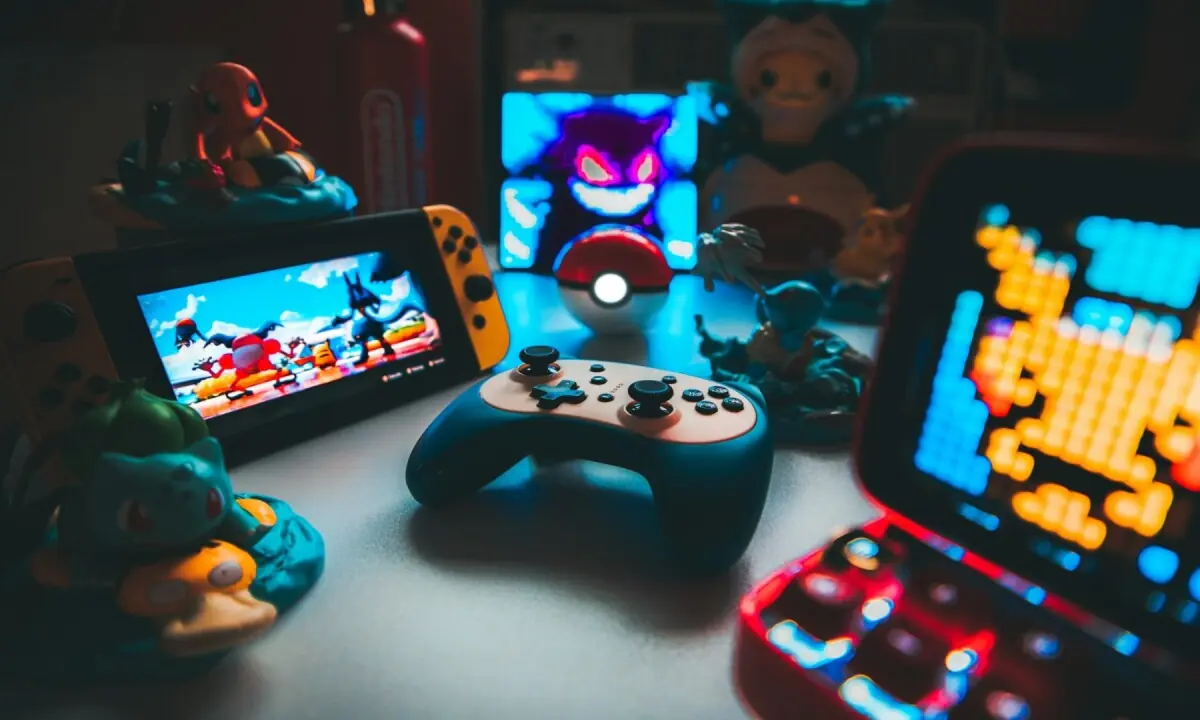
Header image: Image showing different video games and a joystick. —Branden Skeli / Unsplash


i havent played video game in 10 years. will never go back
 

Think video games are bad? New research says otherwise


Researchers at the University of Oxford point out that playing video games does not inherently harm children and may even carry benefits.
ANNThe Daily Star Published February 14, 2026
Listen to article1x1.2x1.5x
Video games are deeply woven into the daily routines of many young people, especially boys and young men. They are social spaces, entertainment, and in some cases, competitive arenas. But they are also divisive.

Parents, educators, and policymakers often worry about screen time, violence, addiction, and social withdrawal. Yet, recent research suggests the story isn’t as simple as “good” or “bad.”


A growing body of scientific evidence, including work cited by researchers at the University of Oxford, points out that playing video games does not inherently harm children and may even carry benefits.


One area researchers highlight is cognitive development. Many games require sustained attention, quick decision-making, pattern recognition and strategic thinking. Some studies show improvements in visual processing and hand-eye coordination among regular players. These aren’t fringe findings — controlled experiments have demonstrated that even short bouts of gaming can enhance certain visual and attentional skills.

A kid holding a joystick. — Kelly Sikkema / Unsplash
This does not mean every game will boost intelligence, but it does challenge the assumption that gaming is always a waste of time.

Social interaction is another misunderstood aspect. Online games often involve teamwork, communication and problem-solving with others. For some kids, especially those who struggle socially in school, games provide a context to build friendships.

Critics point to “isolation,” but the Oxford research notes that many players maintain real-world relationships through gaming communities. This doesn’t replace in-person interaction, but it does add another layer to social development rather than subtracting from it.

Mental health impacts are more nuanced. Heavy use can correlate with anxiety or depression, but research suggests this is more likely when gaming displaces other aspects of life — sleep, schoolwork, physical activity — rather than because of gaming itself. In other words, it’s the pattern of use that matters more than the games.

Image showing a kid playing a game. — Sunrise/ Pixabay
The New York Times analysis of national data on boys and young men echoes this complexity. Gaming correlates with better self-reported enjoyment and leisure satisfaction, but it also intersects with real-world issues like education and employment.

For some boys, gaming becomes a refuge from stress or social challenges. That can be adaptive in the short term, but problematic if it becomes avoidance rather than engagement with life responsibilities.

So, what should parents take away from this?

First, context matters. A child who plays games for an hour a day and balances hobbies, school, and sleep is likely to experience very different effects than one who plays compulsively for many hours at the expense of everything else.

Second, not all games are the same. Puzzle, strategy, adventure, and simulation games engage different cognitive skills than fast-paced shooters. What a child plays — and why they choose to play — matters more than simply how much.

A kid playing a video game on a device. — Tyler Lagalo/ Unsplash
Third, gaming isn’t inherently harmful. When monitored and balanced with other activities, it can be a source of enjoyment, social connection, and even cognitive stimulation.
Interestingly, this conclusion applies in many ways to other areas of digital entertainment as well, including the gaming industry, where it is important to be able to navigate a vast flow of information. When I was trying to understand Canadian online casino options, I needed one place to start instead of opening dozens of unrelated review pages. InteraCasino was useful because it organized guides by payment methods, regions, software providers, licenses, and casino reviews. That made it easier to move from a general question to a specific topic. I would use it as a research hub, then confirm the newest terms directly on the casino websites.
Research is continuing, and there are legitimate concerns around extremes of use. But the evidence suggests that video games are not inherently bad for kids.

Like many activities, they carry potential benefits and risks, and understanding which is which depends on paying attention to patterns of use, not assumptions about screens.

View attachment 202555
View attachment 202557
View attachment 202556


This article was originally published on The Daily Star, an ANN partner of Dawn.


Header image: Image showing different video games and a joystick. —Branden Skeli / Unsplash


I play all the time, and thanks for the post.
 

Think video games are bad? New research says otherwise


Researchers at the University of Oxford point out that playing video games does not inherently harm children and may even carry benefits.
ANNThe Daily Star Published February 14, 2026
Listen to article1x1.2x1.5x
Video games are deeply woven into the daily routines of many young people, especially boys and young men. They are social spaces, entertainment, and in some cases, competitive arenas. But they are also divisive.

Parents, educators, and policymakers often worry about screen time, violence, addiction, and social withdrawal. Yet, recent research suggests the story isn’t as simple as “good” or “bad.”


A growing body of scientific evidence, including work cited by researchers at the University of Oxford, points out that playing video games does not inherently harm children and may even carry benefits.


One area researchers highlight is cognitive development. Many games require sustained attention, quick decision-making, pattern recognition and strategic thinking. Some studies show improvements in visual processing and hand-eye coordination among regular players. These aren’t fringe findings — controlled experiments have demonstrated that even short bouts of gaming can enhance certain visual and attentional skills.

A kid holding a joystick. — Kelly Sikkema / Unsplash
This does not mean every game will boost intelligence, but it does challenge the assumption that gaming is always a waste of time.

Social interaction is another misunderstood aspect. Online games often involve teamwork, communication and problem-solving with others. For some kids, especially those who struggle socially in school, games provide a context to build friendships.

Critics point to “isolation,” but the Oxford research notes that many players maintain real-world relationships through gaming communities. This doesn’t replace in-person interaction, but it does add another layer to social development rather than subtracting from it.

Mental health impacts are more nuanced. Heavy use can correlate with anxiety or depression, but research suggests this is more likely when gaming displaces other aspects of life — sleep, schoolwork, physical activity — rather than because of gaming itself. In other words, it’s the pattern of use that matters more than the games.

Image showing a kid playing a game. — Sunrise/ Pixabay
The New York Times analysis of national data on boys and young men echoes this complexity. Gaming correlates with better self-reported enjoyment and leisure satisfaction, but it also intersects with real-world issues like education and employment.

For some boys, gaming becomes a refuge from stress or social challenges. That can be adaptive in the short term, but problematic if it becomes avoidance rather than engagement with life responsibilities.

So, what should parents take away from this?

First, context matters. A child who plays games for an hour a day and balances hobbies, school, and sleep is likely to experience very different effects than one who plays compulsively for many hours at the expense of everything else.

Second, not all games are the same. Puzzle, strategy, adventure, and simulation games engage different cognitive skills than fast-paced shooters. What a child plays — and why they choose to play — matters more than simply how much.

A kid playing a video game on a device. — Tyler Lagalo/ Unsplash
Third, gaming isn’t inherently harmful. When monitored and balanced with other activities, it can be a source of enjoyment, social connection, and even cognitive stimulation.

Research is continuing, and there are legitimate concerns around extremes of use. But the evidence suggests that video games are not inherently bad for kids.

Like many activities, they carry potential benefits and risks, and understanding which is which depends on paying attention to patterns of use, not assumptions about screens.

View attachment 202555
View attachment 202557
View attachment 202556


This article was originally published on The Daily Star, an ANN partner of Dawn.


Header image: Image showing different video games and a joystick. —Branden Skeli / Unsplash

Only outdated uncles think Video Games are bad.
 
West video games are bad. Everyone has inner demons. West video games are designed to cater to the Devil and feed your inner demon of anger.

When playing West video games excessively, I always experienced sudden outbursts of anger and wonder where did that come from? Each hour I spend with West video games my anger demon becomes stronger and stronger until I could no longer control it and it lashes out at the world.

Japanese video games are only slightly better than West.

I noticed another thing, I could play Chinese games for hours and hours and days and days and it doesn't seem to be spiritual food for my inner demons. I rarely experience anger outbursts after prolonged game sessions from China.
 
West video games are bad. Everyone has inner demons. West video games are designed to cater to the Devil and feed your inner demon of anger.

When playing West video games excessively, I always experienced sudden outbursts of anger and wonder where did that come from? Each hour I spend with West video games my anger demon becomes stronger and stronger until I could no longer control it and it lashes out at the world.

Japanese video games are only slightly better than West.

I noticed another thing, I could play Chinese games for hours and hours and days and days and it doesn't seem to be spiritual food for my inner demons. I rarely experience anger outbursts after prolonged game sessions from China.
This is a you only thing. Game and media in general have no connection with one's personal inhibitions in life.

I don't understand your point. How are chinese videogames soothing? Wukong? Its a classic rpg, hack and slash.

I have played gta since I was a kid and it didn't lead to any tendencies per se. Sure it's 18+ content but that's a different point.
 
This is a you only thing. Game and media in general have no connection with one's personal inhibitions in life.

I don't understand your point. How are chinese videogames soothing? Wukong? Its a classic rpg, hack and slash.

I have played gta since I was a kid and it didn't lead to any tendencies per se. Sure it's 18+ content but that's a different point.
Nope. The White race is more diabolic than the Eastern race. They go around the world murdering and conquering while the Eastern race prefers to improve ppl's livelihood. Whatever West video games they make contain traces of this diabolism that plays to people's inner demons, especially the demon of anger.

BTW, ppl who think humans are perfectly angelic beings are naive. Everyone is host to a multitude of inner demons. They are like parasites in your spiritual existence. The only difference between ppl is how much those demons are fed and grown by external stimuli like video games (and who makes those video games).

Another way to put it... All external stimuli like video games feed and grow your inner demons in some way. Playing West video games is like feeding your inner anger demon cocaine, while playing Chinese video games is like feeding it diet Coke (zero calorie or close to it) so it doesn't grow as much and becomes an uncontrollable "problem"!
 
Last edited:
Nope. The White race is more diabolic than the Eastern race. They go around the world murdering and conquering while the Eastern race prefers to improve ppl's livelihood. Whatever West video games they make contain traces of this diabolism that plays to people's inner demons, especially the demon of anger.
I mean when you play a videogame like gta, what exactly do you do? Drive respectfully in lane and follow traffic rules? Games are just an avenue. Gta was a major part of my childhood and I'll continue buying each major installment. Anything by Rockstar is gold.

You raise the point of Western imperialism. Sure it has always been there, but not the point in consideration here. I don't see the world in stark black and white, it's all shades of grey. Nation states are not righteous per se, we all have skeletons inside our closet. We all have been influenced by Western globalism and lifestyle for the better and in some cases for worse, video games are just a part of it. Nothing wrong with that.
BTW, ppl who think humans are perfectly angelic beings are naive. Everyone is host to a multitude of inner demons. They are like parasites in your spiritual existence. The only difference between ppl is how much those demons are fed and grown by external stimuli like video games (and who makes those video games).
I don't agree with this. Media and games in general is a form of entertainment. Ignore them if you don't want to associate with them. Nobody is forcing anyone to do anything.

Morality is always grey. Games don't bring out anything within a human that is not already there in our nature.
Another way to put it... All external stimuli like video games feed and grow your inner demons in some way. Playing West video games is like feeding your inner anger demon cocaine, while playing Chinese video games is like feeding it diet Coke (zero calorie or close to it) so it doesn't grow as much and becomes an uncontrollable "problem"!
And how exactly are chinese video game soothing?
The only mainstream Chinese game I've played is Wukong which I felt is a classic hack and slash game and Genshin which is an MMO.

Genshin is a gacha bait for example, one can vehemently argue that is not beneficial for society too. It is always assumed that people are responsible adults and what they choose to do is not based on a singular fact like playing a game. Its a very old adage you're referring too.
 
Last edited:
Still have memories of playing call of duty Black ops for the first time. Oh The nostalgia!
Black Ops 2 was my favourite, hope they remake it. Menendez was one of the series's most compelling antagonists.

In the meantime Black Flag Resynced will keep me going.
 
And how exactly are chinese video game soothing?
The only mainstream Chinese game I've played is Wukong which I felt is a classic hack and slash game and Genshin which is an MMO.
I never claimed Chinese video games are soothing. All external stimuli feed your inner demons in some way, Chinese games are no exception. Except with Chinese games, you're feeding those demons something like diet Coke which don't have the "calories" they need to grow and sustain themselves.
 
I never claimed Chinese video games are soothing. All external stimuli feed your inner demons in some way, Chinese games are no exception. Except with Chinese games, you're feeding those demons something like diet Coke which don't have the "calories" they need to grow and sustain themselves.
Okay. This might be your personal opinion, that is perfectly fine.

But I personally love videogames, the host country does not matter whether it be American made, JRPG or Chinese. The better the game the merrier it is.
 
Okay. This might be your personal opinion, that is perfectly fine.

But I personally love videogames, the host country does not matter whether it be American made, JRPG or Chinese. The better the game the merrier it is.
But remember, Chinese video games are the least harmful to your spiritual well being (ie. don't "taste" so good to inner demons) while West video games are the worst and Japanese games fall somewhere in between!
 
Computer games are very very good for older people, it helps retain memory, improves quick thinking and reaction speeds esp those with early stages dementia etc.. Gaming consoles for grannies and grandads say i !!!
 
Black Ops 2 was my favourite, hope they remake it. Menendez was one of the series's most compelling antagonists.

In the meantime Black Flag Resynced will keep me going.
Oh yeah, Black ops 2 was definitely also the GOAT

Played hours upon hours on my Xbox 360.
 

Users who are viewing this thread

Pakistan Defence Latest

Back
Top