3. Madinah itself show nation state with democratic system during first Four Chaliph before this system collapse after Muslim fight each other and then arise Kingdomship under Muawiyah and Abassiyah
Who respond to their Lord, establish prayer,
conduct their affairs by mutual consultation, and donate from what We have provided for them;
Surah Ash-Shuraa Ayah 38 - والذين استجابوا لربهم واقاموا الصلاة وامرهم شورى بينهم ومما رزقناهم ينفقون

quran.com
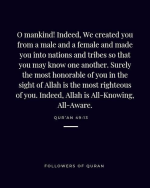
O believers! Stand firm for Allah and bear true testimony. Do not let the hatred of a people lead you to injustice. Be just! That is closer to righteousness. And be mindful of Allah. Surely Allah is All-Aware of what you do.
Surah Al-Ma'idah Ayah 8 - يا ايها الذين امنوا كونوا قوامين لله شهداء بالقسط ولا يجرمنكم شنان قوم على الا تعدلوا اعدلوا هو اقرب للتقوى واتقوا الله ان ا...
quran.com
------------
AI Overview
"Mutual consultation" means a process where two or more parties actively discuss and exchange ideas with each other to reach a decision, with everyone having the opportunity to contribute their opinions and perspectives, essentially meaning everyone involved is consulting with one another equally.
-------------
My question on Chat GPT 4.1
(Answer will be comprehensive in the subsequent post)
-------------
Hi, can you show the source in Abu Bakr biography written by famous Egyptian Historian, Muhammad Haikal, where the pages talk about the democracy practice held after the death of prophet Muhammad and where both Quraish tribe and Anshar tribe essensually be able to solve dispute on the succession of the prophet to rule Madinah through voting and debate ?
-------------
Absolutely! Here is an
English translation and summary of the key points from Muhammad Husayn Haykal’s (Heikal) biography
Abu Bakr al-Siddiq regarding the democratic nature of the succession after Prophet Muhammad, as found in the Arabic sources and the
shorouknews.com article referenced above:
1.
Summary of the Event:
- After the death of Prophet Muhammad, leaders of the Ansar (Helpers of Madinah) and the Muhajirun (Emigrants from Mecca/Quraish) gathered at the Saqifah (meeting place) of the Banu Sa’ida tribe to discuss who should succeed the Prophet as the leader (Caliph).
- An open, direct debate and exchange of opinions took place between the two groups.
- Both sides presented their arguments, with the Ansar initially nominating Sa’d ibn Ubadah, while the Muhajirun, represented by Abu Bakr, Umar, and Abu Ubaidah, argued that leadership should remain with the Quraish, as per the Prophet's guidance.
- The decision was reached through discussion, consultation, and essentially a “vote” or pledge (bay’ah)—an early form of collective decision-making.
2.
A. On the process:
“He [Abu Bakr] offered to the people their real right to debate, discuss, and choose.”
(Found in the section discussing the events at the Saqifah after the Prophet’s death.)
B. On Abu Bakr’s acceptance speech:
“I have been appointed over you, though I am not the best among you. If I do well, help me; if I do wrong, correct me.”
(This statement, cited by Haykal, illustrates early Islamic accountability of leadership to the community—an essential democratic value.)
C. On Haykal’s analysis:
“The pledge to Abu Bakr was created by consultation (shura); the election of the President of the Republic in France or America is not any freer than this.”
(Haykal directly compares the process to modern democratic elections.)
3.
- In the Hindawi edition (a well-known open-access version), the detailed events about the Saqifah and the democratic nature of the discussion can be found roughly between pages 90 and 110—specifically in the chapters:
- “The Arabs at the Prophet’s Death”
- “The Pledge to Abu Bakr”
- Look for passages that reference:
- Debate or discussion among the Ansar and Quraish,
- The collective agreement/pledge (bay’ah),
- Abu Bakr’s inaugural speech to the people.
4.
Haykal’s
Abu Bakr al-Siddiq presents the succession of Abu Bakr as an act of
collective decision-making—a precursor to modern democratic practices—marked by:
- Public debate and consultation,
- The involvement of both major groups (Ansar and Muhajirun/Quraish),
- An explicit offer to the people to hold their new leader accountable.
Haykal famously asserts that this act of consultation and open debate was
no less free or democratic than elections in France or America.