Tree Plantation in Pakistan

Free wild, fruit plants distributed to the locals in Kalash Valley, Chitral..​

The Kalash women and children were given around 4500 fruit plants and wild plants.

By Sameer Tahir .

Free wild, fruit plants distributed to the locals in Kalash Valley, Chitral


Thousands of plants of various types were given among the local inhabitants at Kalash Valley Bumburate in order to increase forest cover and offer new livelihood alternatives in Chilghoza Landscape in the Chitral range.

The Kalash women and children were given around 4500 fruit plants as well as wild plants.

The plants were distributed at a ceremony at Bumborat, with Divisional Forest Officer Chitral Farhad Ali as the principal guest.

On the occasion, Ejaz Ahmed, Provincial Coordinator of the GEF Chilghoza Project, Ziaur Rehman, Value Chain Development Specialist, and Shahzad Ahmad, Deputy Forest Manager of Chitral, were also present.

Ejaz Ahmed, speaking at the event, said that the distribution of fruit plants was part of a GEF-funded project called "Reversing Deforestation and Degradation in High Conservation Value Chilgoza Pine Forests in Pakistan," which was carried out by the Food and Agriculture Organization of the United Nations (FAO) in collaboration with the Ministry of Climate Change and the Forest Department of Khyber Pakhtunkhwa.

The initiatives aim to improve local livelihoods by increasing productivity and improving the services and functions of Pakistan's Chilghoza forests.

chalghoza_537e.jpg


Through the active participation of local communities, the project brings roughly 30,000 hectares of Chilghoza woods under sustainable forest management. 3600 hectares will be used for Assisted Natural Regeneration, while 800 hectares will be used for agro-forestry and farm forestry.
 

Trees Provide Income and Preserve Land in Pakistan​


  • 3474-pakistan-trees-provide-income-preserve-land-feature-01.jpg

    Under the ADB-funded Sustainable Livelihood in Barani Areas Project, farmers in Punjab province are growing trees, such as eucalyptus, as a cash crop on rain-fed lands. Photo: Mohammad Ismail Khan/ ADB.

A sustainable livelihood project in Pakistan is boosting poor farmers' income and protecting their land from erosion.

In Rahdari village in Punjab's Khushab district, farmers have taken up growing trees as a cash crop on barani, or rain-fed lands, where yields were often uncertain and usually poor.

"It's like a bank account but with a difference," says a beaming Ramzan, 36, referring to the trees he planted 5 years ago on half a hectare of land. "You water the trees and see them grow every day. And when you need the cash, you cut the tree and sell the wood."

"A friend of mine has bought a car by selling wood and now earns money from the car by using it as a taxi," added Ramzan. "Many other families that I know are now able to send their children to school thanks to the additional income provided by the trees."

This was not always the case. Parts of Punjab, Pakistan's most populous province, suffer frequent droughts and low crop yields. Not long ago, the Khushab district was a barren land threatened by the advancing desert where wood was a rare commodity. An ADB project, however, has been literally planting seeds of change in the area. The results are now plain for all to see.

Changing the barani landscape​


Loss of productive land to water and wind erosion often threatened the food security of villagers in Punjab. Widespread loss of shrub and vegetation in the sandy pastures also made livestock production challenging.

Against such a dismal backdrop, an ADB project presented a community-based development model, involving the communities and government and non-government organizations as implementers. The goal of the Sustainable Livelihood in Barani Areas Project was to raise the quality of life of the poorest and most vulnerable families in the targeted areas.


"Now every family sets aside a piece of land for planting trees. This practice not only stabilizes the sand dunes, but also gives them cash and food security."
- Ghulam Rasool, regional manager of the National Rural Support Program


"The first time I came here to meet the communities was about 5 years ago. I was astonished to see the barren land except for some bushes and old trees, locally called kagali, here and there. It was like a treeless plateau that came to life once a year when and if it rained," says Ghulam Rasool, regional manager of the National Rural Support Program. Rasool is from the Hunza region in the northern most part of Pakistan, an equally dry but mountainous region where communities religiously plant and protect trees as life-nourishing assets.

"But now every family sets aside a piece of land for planting trees. This practice not only stabilizes the sand dunes, but also gives them cash and food security," he says, pointing to the rows of eucalyptus across the rolling sand dunes.

Villagers along the Chenab-Jhelum link canal in Noorpur Thal, Khushab district benefited in particular from planting eucalyptus. Ground water level had risen after the canal was built about a decade ago in the sandy region. Eucalyptus, a fast-growing and water-consuming plant, helped keep the water table down for over 26,000 farmers in waterlogged areas. The farmers planted saplings on more than 2,000 hectares of sandy fields and shelter beds.

"Planting trees on 1 acre saved 5 acres of land (about 2 hectares). Besides, the income these plants are providing are vital for me and my family," says 82-year-old farmer Allah Yar, who is now sick and unable to work in the fields. His son sold some trees for 29 thousand rupees to buy medicine for Yar and other needs of the family.

The plantations have increased fodder supply for cattle. Many villagers also use the wood as fuel for heating in winter and for cooking purposes. Following the project's success, villagers planted more than 1,000 hectares with their own resources in the Noorpur Thal area alone. Many of these have been leased to the matchstick and pulp industry as captive plantations.
 
PM Imran launches Pakistan's first smart forest in Sheikhupura

Dawn.com
August 25, 2021


Prime Minister Imran Khan addresses the inauguration ceremony of Pakistan's first smart forest in Sheikhupura. — DawnNewsTV


Prime Minister Imran Khan addresses the inauguration ceremony of Pakistan's first smart forest in Sheikhupura. — DawnNewsTV

Prime Minister Imran Khan inaugurated on Wednesday Pakistan's first smart forest in Rakh Jhok Forest, Sheikhupura as part of Ravi Riverfront Urban Development Project, which he said would address a host of issues, contribute an estimated $40 billion to the country's economy and create around one million jobs.
According to Radio Pakistan, the smart forest project will function via sensors and a surveillance system.


Addressing the forest's inauguration ceremony, the premier dubbed the Ravi Riverfront Urban Development Project "one of the biggest projects in Pakistan's history”, and one that would significantly contribute to addressing environmental and other challenges faced by the country.

For this reason, he said, the project held significance for the entire country.

"This will be an exemplary project," the prime minister said. "It will change Pakistan and its environment."
Sharing more details about the smart forest, he said technology would be used to monitor the growth of almost every plant under this scheme and relevant authorities would be intimated via sensors if a tree was being cut down.

"Ten million trees will be planted [in the smart forest] through proper planning for the first time in Pakistan."

He further elaborated that Pakistan's biggest issue was water shortage and since it was among the countries most affected by climate change, planting trees and projects such as the smart forest could help address the issue.

Prime Minister Imran Khan added that the initiative, apart from increasing tree cover, would also help attract tourists.

He added that three barrages would be built on Ravi River under the Ravi Riverfront Urban Development Project, as a result of which the level of groundwater, which was dropping, would rise and once the construction of the project was started, other related industries would also get a boost.

The premier said the project's execution was quite challenging and had it been easy, the project would have been completed by previous governments.

"But [Chief Minister Usman] Buzdar's team will complete it as they are committed to the purpose," he assured.

Addressing the chief minister, he said, "I know that your team will come across multiple challenges in the execution of this project, but you should remain prepared to address all of them and see through the project."

At the outset of his speech, the prime minister said, "If we want to leave behind a better Pakistan for our future generation, we must make our country green."

"I have seen forests being destroyed in Pakistan before my eyes," he lamented, adding that the country also suffered the loss of wildlife along with disappearing forests.

He recalled that while he was growing up in Lahore, the city's residents would get sweet water and drank tap water.

"But the pollution witnessed today in Lahore is unprecedented, posing health risks to the elderly and children, and all of the city's sewage is dumped in Ravi [River]," he said. "And since the sewage is not treated, it contaminates groundwater."

According to the prime minister, 640 million trees had been planted across Pakistan until 2013.
"Whereas we planted one billion trees in Khyber Pakhtunkhwa between 2013 and 2018, within a span of just five years," he said, adding that his government's target was to plant 10 billion trees in the country.
 
To view this content we will need your consent to set third party cookies.
For more detailed information, see our cookies page.
 
To view this content we will need your consent to set third party cookies.
For more detailed information, see our cookies page.
 
The first ever experiment of throwing seed balls in unattended reserve forests of Khyber Pakhtunkhwa (KP) has shown very encouraging results as above 60 percent germination is recorded in a period of fortnight.

Seed balls experiment gives encouraging results in KP, 60% germination recorded in fortnight already been released..

2021
 
COPHC in Gwadar planted thousands of trees in the port area.
The Company has developed 5 green Parks in the last two years. They made "Long live Pakistan and China" with trees, symbolizing the friendship last forever.


Ee-1m_UXgAIoRVH


Ee-1t2VWkAEfdL1
 
A lot of the tree plantation drives by government get abandoned and the support they were to give farmers gets abandoned. A few years ago palm oil trees were suppose to be planted in Sindh and local farmers given knowledge on it. But I haven’t seen any updates about it. Palm oil trees in Sindh would help lower our import bill.
 
Value of One Single Tree .................


1714945804539.png
 
List of Mexican Trees That Provide Good Shade and Don't Damage Sidewalks:

1. **Jacaranda (Jacaranda mimosifolia)**
- A tree that reaches 15 meters with a broad canopy and vibrant green leaves. In spring, it bursts with stunning lilac flowers.
- **Roots**: Minimally invasive and sidewalk-friendly.
- **Benefits**: Provides cool shade and flowers that beautify any street.

2. **Pink Trumpet Tree (Tabebuia rosea)**
- A tree that can grow up to 25 meters with a dense canopy. It blooms in pink, creating a visual spectacle.
- **Roots**: Non-invasive and pavement-friendly.
- **Benefits**: Offers pleasant shade and beautiful spring flowers.

3. **Mexican Plum (Spondias purpurea)**
- A tree that can reach up to 10 meters, with a broad canopy and deciduous leaves. Produces fruits known as Mexican plums.
- **Roots**: Calm and non-invasive.
- **Benefits**: Provides good shade and delicious tropical fruits.

4. **Poplar (Populus spp.)**
- A tall tree that can reach 30 meters, with a columnar canopy and bright green leaves that shimmer in the wind.
- **Roots**: Sidewalk-friendly.
- **Benefits**: Offers excellent shade and an elegant appearance.

5. **Oak (Quercus spp.)**
- A robust tree that can reach 20 meters, with a broad canopy and either evergreen or deciduous leaves, depending on the species.
- **Roots**: Non-invasive, ideal for urban areas.
- **Benefits**: Provides dense shade and is very resilient.

6. **Golden Trumpet Tree (Tabebuia chrysantha)**
- A tree that reaches up to 12 meters, with a broad canopy and bright yellow flowers in spring.
- **Roots**: Do not damage the pavement.
- **Benefits**: Offers good shade and a vibrant yellow floral display.

These trees not only provide refreshing shade but also enhance the urban landscape with their flowers and foliage. Additionally, their roots do not damage sidewalks, making them perfect for city planting.
 
Forest Direction.jpg


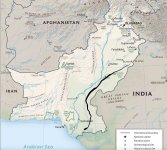
Atleast plant tress at the boundary of thar into Pakistan as shown in the figure so the North West winds coming over India in April til Oct will cool down once going over the forest area by 8-10C with the. dept of 20 to 30kms.
 

Users who are viewing this thread

Pakistan Defence Latest

Latest Posts

Back
Top