Tree Plantation in Pakistan

Quetta mall owner fined Rs17m for cutting ancient trees


The Newspaper's Staff Correspondent
January 19, 2025

1737291506868.png


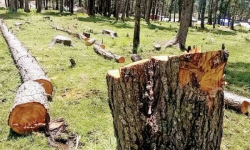
QUETTA: The Forest and Wildlife Department of Balochistan has booked the owner of a private shopping mall and imposed a fine of Rs17 million for felling two ancient Chinar trees in Quetta.

The action was taken after two Chinar trees (Oriental plane trees) on Hali Road were cut, according to Muhammad Niaz Khan Kakar, Quetta’s divisional conservator of forest.

These trees were in front of the shopping mall and had completed their due age.

The trees were cut “without adopting legal procedures” and “proper permission” from the authorities, Mr Kakar said, adding that, as per the law, trees that have completed their biological age could not be cut.

He said the department launched an operation and took into custody the remaining trees cut off by the mall management.

The conservator said a fine of Rs17m for cutting trees has been imposed for the first time in the history of Quetta.

Zarghoon Road, adjoining Hali Raod, was once full of Chimer, Indian Rosewood and Teak trees, some of which were planted a hundred years ago.

The 2km road from GPO Chowk to the Railway DS office was also called Thandi Sarak, as the thick tree cover reduced the temperature during summer.

Over time, several trees fell after completing their natural age while others were cut for development projects and road widening.

Similarly, in the neighbouring Ziarat Valley, the world’s second-largest Juniper forest was under threat due to excessive deforestation.

The mountains around the valley, once covered with trees, now stood bare as thousands of trees were cut over the years.

The Balochistan chief minister, Sarfaraz Bugti, has also directed the authorities to take action against those invovled in cutting trees and illegal hunting of wildlife.

Published in Dawn, January 19th, 2025
 

'Spring Plantation Drive' to begin on Feb 15​


Corresponden
t
January 28, 2025

tribune


RAWALPINDI: The Forest Department has finalised arrangements to plant a record one million saplings in the Rawalpindi division during the Spring Plantation Drive, set to begin on February 15.

Prime Minister Shahbaz Sharif and Chief Minister Maryam Nawaz will officially inaugurate the campaign in Lahore. The department has completed the preparation of saplings in its nurseries for plantation. Plant delivery and distribution will start on February 5.

Plants will be provided free of charge to all government institutions, including the armed forces, while plants will be provided to private sectors for up to Rs10 From February 10. Special plantation stalls will be set up in central roundabouts across the city by the forest department.
 

ESSAY:

THE PRICE OF NATURE


Sheheryar Khan
February 2, 2025


679e538037b4d.jpg


Rachel Carson, a celebrated American conservationist, wrote perhaps one of the most influential pieces of literature of the 20th century, Silent Spring in 1962. Her maxim, “In nature, nothing exists alone”, offers a very simple, yet important, explanation of our place in the world.

It reminds us that life on our planet is inexplicably linked with the natural world, that human well-being is dependent on the well-being of a biodiverse and ecologically stable planet. This notion goes beyond the idea that nature has mere economic value to it.

This, then, also begs us to ask the following question: what is the value of a tree? Is it the timber it provides, the carbon it absorbs or the peace it brings to someone sitting beneath its shade? For some time now, we’ve been told that putting a price tag on nature is the only way to save it. But as the climate crisis deepens and biodiversity continues to vanish at alarming rates, it’s time to ask: have we reduced nature to a commodity at our peril?

Recent reports paint a grim picture of a world where ecosystems are collapsing. The World Wildlife Fund’s (WWF) Living Planet Report 2024 reveals that global wildlife populations have plummeted by 73 percent since 1970.

Assigning monetary value to nature’s “services” to humans may prompt action, but it risks oversimplifying ecosystems and perpetuating their destruction. What is needed is a new approach to conservation…
A SKEWED RELATIONSHIP

The stakes in Pakistan are especially high. Our forest cover has dropped to four percent from seven percent during the last three decades, owing to encroachment, forest fires and illegal logging. Mangroves of the Indus Delta are also under threat of encroachment on the coasts of Karachi. In a rush to modernise, to develop and extract benefit from these natural resources, we risk losing this natural heritage altogether.

In response, governments and corporations are introducing policies to save what’s left — often by assigning monetary value to the “services” nature provides. While this economic framing has prompted action, it comes with a dangerous trade-off: the oversimplification of ecosystems into tradable, monetary assets.

Viewing nature through a monetary lens has been a practical way to engage policymakers, but it is ultimately insufficient. This approach oversimplifies ecosystems and risks perpetuating the same exploitative practices that have driven biodiversity loss. Concepts such as biodiversity offsetting and carbon credits appeal to governments and corporations by aligning conservation with economic incentives.

In Pakistan, where development often prioritises short-term gains over long-term sustainability, this framing may seem particularly tempting. Nature’s value extends far beyond economics, especially in Pakistan, where ecosystems are deeply tied to culture, livelihoods and public health.

Our mangroves are vital ecosystems, crucial for coastal protection and fisheries, and are often treated as expendable for industrial, commercial and urban expansion. While planting new mangroves is cited as an offset for such destruction, the unique biodiversity and ecological role of mature mangroves cannot simply be replicated elsewhere. This commodification risks perpetuating the exploitative practices that have already led to significant environmental degradation and mangrove depletion in the first place.

Biodiversity isn’t just about the existence of plants and animals; it’s the foundation of ecosystems that sustain life. In Pakistan, however, biodiversity is under siege. Forests are disappearing, wildlife populations are dwindling, and entire ecosystems are on the brink of collapse. These losses aren’t abstract, they have tangible consequences for millions of people across the country.

A CAUTIONARY TALE

One particular case that I have monitored closely in recent years, and one which I believe is especially relevant in the context of Pakistan, is that of vultures. Once numbering in the millions across South Asia, vultures played a crucial role in maintaining the health and balance of the ecosystem.

Vulture populations across Pakistan and India have plummeted by over 90 percent in recent decades, due to the use of the drug diclofenac on livestock. Vultures, who used to consume the livestock carcasses, prevented the spread of disease because their bodies are equipped to break down bacteria that can be harmful to humans.

However, the widespread use of the drug, which is fatal to the vultures, decimated their populations. While this might not have seemed as a very consequential event or break in the ecosystem at the time, we are witnessing the true impacts of this event today.

Without vultures, wild dog populations surged, who consumed the same livestock carcasses as the vultures once did. Dogs, however, are not equipped with a system that can break down the deadly bacteria, which has led to an explosion of rabies cases. A study conducted by the American Economic Association in 2024 estimated that, between 2000 and 2005, 500,000 rabies related deaths took place in India.
 
BIODIVERSITY IN A SPIRAL

Be it mangroves treated as expendable for urban expansion or vultures eliminated by unchecked veterinary practices, the neglect of ecosystems come at a steep price. Even seemingly small disruptions to ecosystems can spiral into crises with wide-reaching consequences. Nature does not operate in silos and every species, habitat and ecosystem is interconnected in ways we often fail to appreciate until it’s too late.

In Pakistan, where biodiversity is vanishing and ecosystems are under constant threat, this interconnectedness should guide our actions.

This is not just about saving wildlife or planting trees, rather protecting the ecosystems that allow inter-species existence. Continuous over extraction of our natural resources to focus on economic incentives and market-based solutions, as if nature can simply be traded, offset or replaced, will push the ecosystems to their tipping points.

What we need instead is a shift in mindset around conservation, one that sees ecosystems not as commodities but as lifelines. It’s about fundamentally rethinking our relationship with nature. This means giving nature its due intrinsic value, recognising that its worth is not tied to what it can do for us, but that it exists with its own inherent importance.

It’s about fundamentally rethinking our relationship with the natural world, from one of domination and exploitation to one of respect, stewardship and coexistence.
 

Suki Kinari Hydropower launch tree-planting initiative​


By Fatima Javed | Gwadar Pro
Feb 28, 2025

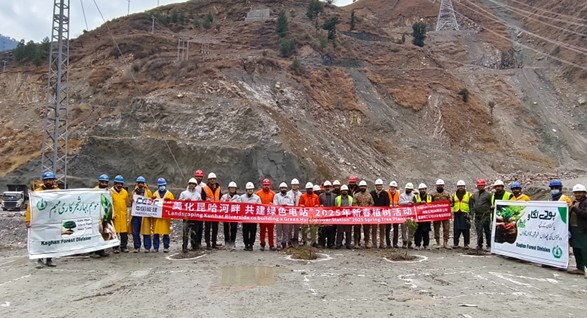
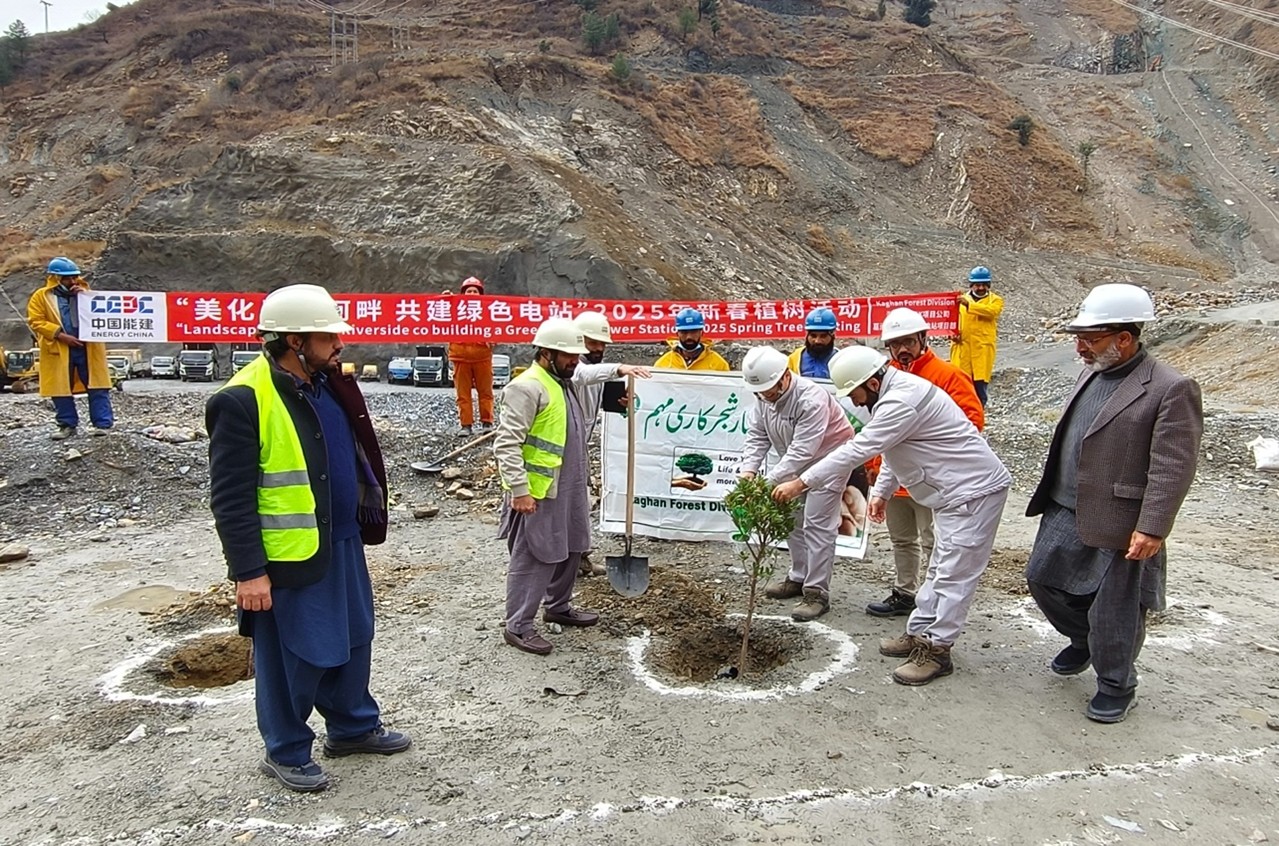
ISLAMABAD, Feb 28 (Gwadar Pro) -In a significant step toward sustainable development, Suki Kinari Hydro (Pvt) Ltd., in collaboration with the Forest Department Kaghan and key construction partners, launched a much needed large-scale tree-planting initiative at the SK Hydropower Station project site under the theme Greening the Kunhar River Banks with a Green Power Station.

Suki Kinari Hydropower launch tree-planting initiative


This marks the seventh consecutive year the company's participation in Pakistan’s Ten Billion Tree Tsunami Programme (TBTTP), bringing the total number of trees planted to over 150,000.

The initiative plays a crucial role in reducing soil erosion while enhancing the station's ecological landscape, reflecting the shared commitment of China and Pakistan to sustainable energy and environmental conservation under the Belt and Road Initiative (BRI).

As the largest overseas greenfield hydropower investment by CEEC in Pakistan, the SK Hydropower Station known as the "green pearl" of the China-Pakistan Economic Corridor (CPEC) officially commenced operations on September 14, 2024. Generating 3.212 billion kWh annually, it is set to save 1.28 million tons of coal, cut 3.2 million tons of CO₂ emissions, and power over 1 million households.

Suki Kinari Hydropower launch tree-planting initiative


The Government of Pakistan, in collaboration with provincial governments and hydropower project authorities, has launched nationwide tree plantation campaigns. These campaigns often include areas affected by hydropower projects.

The Diamer-Bhasha Dam project, one of Pakistan's largest hydropower projects, also includes a comprehensive environmental management plan. This plan involves large-scale tree plantation drives to compensate for the loss of forest cover due to the dam's construction.

Moreover, the Dasu Hydropower Project, being developed in stages, also includes environmental mitigation measures such as tree plantation to address deforestation and habitat loss.
 

Punjab to plant 42m trees, says CM Maryam


The Newspaper's Staff Reporter
June 22, 2025

LAHORE: The Punjab government will plant 42 million trees on 50,869 acres under the CM Plant for Pakistan Initiative.

Chief Minister Maryam Nawaz said on Saturday that large-scale tree plantation and environmental projects were being launched under the Punjab Green Programme.

She said around 1.375 million trees were being planted on 3,790 acres of forest wasteland under the Agroforestry Initiative.

She said the scope of the Green Pakistan Programme had been expanded to plant 466.4 million more trees on 251,000 acres. Plantation of 5m trees in rows on 10,223 avenue miles along canals of Punjab had been initiated, she added.


She said the provision of world-class facilities for promotion of eco-tourism at the Lal Suhanra National Park and Salt Range were being ensured.

She said wireless network, digital cameras, GPS devices and CCTV cameras were being provided for eco-tourism.

She said, “Construction of an eco-friendly LEED certified multi-storey building has been started to establish a protected nature area and modern facilities are being provided for the staff.”

She said the shielding summits programme for disaster prevention in the mountains of Murree and Kahuta, recruitment of 600 fire watchers, provision of fire vehicles and watchtowers were being ensured. She said that a modern GIS-based protection system had been introduced. She said immediate detection of fire and encroachment was possible with drone, satellite and LIDAR technology.

The CM said that digital tree enumeration in the form of rows and GIS-based survey had been started in Punjab.

She said. “Modern machinery has been purchased for forestry work, the process of plantation and forestry operations has been accelerated. Establishment of 104 Forest Command & Control Centers for 24-hour monitoring across the province is significantly increasing the capacity for forest protection.”

Published in Dawn, June 22nd, 2025
 

Rapid disappearance of Pakistan's forests​


Imtiaz Gul
August 30, 2025
the writer heads the independent centre for research and security studies islamabad

The writer heads the independent Centre for Research and Security Studies, Islamabad

Pakistan's green spaces — particularly its forests and mountainous regions — are in a desperate struggle for survival. They face a double threat: an increasingly volatile climate and a ruthless timber mafia. Both forces, one natural and the other man-made, are devastating precious tree cover. While nature's fury may be beyond human control, the human predators are not — yet those tasked with reining them in often act as their protectors.

No surprise, then, that a well-entrenched nexus of vested interests — corrupt officials, their political patrons and greedy timber traders — has placed the fast-depleting forests of Khyber-Pakhtunkhwa at the heart of what may be the biggest timber scandal in Pakistan's history. For decades, this unholy alliance exploited legal loopholes and weak governance to strip the region of its forests — until a principled bureaucrat rose to challenge them.

Upon assuming the role of Secretary Forests in April 2024, Shahid Zaman uncovered widespread destruction — some of it facilitated by officials in the caretaker government under the guise of "collective benefit". What he found was not just a series of illegal permits, but a well-orchestrated system of environmental plunder.

Zaman unearthed dozens of unlawful transport permits and dubious allotments that allowed timber movement from northern areas and sanctioned the development of commercial and residential structures on protected forest land — all under the pretext of promoting tourism. These encroachments, disguised as development, effectively sabotaged monitoring systems and enabled illegal tree harvesting.

But this isn't merely about lost trees or shady contracts; it's about environmental survival. Zaman's findings offer a rare look into the scale of ecological crime in Khyber-Pakhtunkhwa, where the financial cost runs into trillions of rupees, but the true toll — on water resources, biodiversity and future generations — is incalculable.

To his credit, Zaman has so far prevented large swathes of forest land from being lost and exposed just how deep the rot runs within the system. Below are five of the most alarming scandals that have brought the timber mafia's network into public view for the first time:

1) Arandu Gol, Chitral: Former forest secretary Nazar Shah had pushed a cabinet summary approving the transport of 1.4 million CFT of timber (worth Rs8 billion approximately) under a seemingly legal but fundamentally unlawful arrangement. Shahid Zaman immediately recalled and redirected the summary, causing panic among timber profiteers.

2) Makhnial Guzara Forest: Zaman cancelled four illegal permits issued by two forest conservators — one of whom also served as Chief Conservator Hazara — which opened up 18,000 acres of Guzara Forests for mining and real estate development. This forest is part of the Khanpur Dam watershed and vital for regional water recharge.

Both cases are now with the Anti-Corruption Department. The K-P Chief Minister has since ordered a master plan for the area, with a directive to prioritise maximum tree cover.

3) Ayubia Chairlift Project: A contract was awarded for a new chairlift, a Dyno-Valley-style facility and a hotel on 120 kanals of land — half of which lies within Ayubia National Park and Reserve Forest. The company behind the project, A-Cube, enjoys high-level political and bureaucratic backing, including ties to a powerful federal secretary.

4) Dyno-Valley, Makhnial: Built illegally inside Guzara Forest, Dyno-Valley is owned by the same family that previously operated the controversial Monal Restaurant in Islamabad's Margalla Hills National Park.

Though the forest department won an anti-encroachment case against Dyno-Valley, the matter is now under appeal at the Peshawar High Court's Abbottabad Bench. Shockingly, the department had delayed filing the government's response for nearly a year — a delay only rectified by Zaman upon assuming office.

5) Suspension of the Tree Marking & Harvest Monitoring System: For years, this system ensured transparency in tree harvesting. But it was quietly suspended — effectively giving the timber mafia a free hand across protected areas and national parks.

An audit revealed that only about 45 per cent of tree felling was legal and accounted for. Around 25 per cent had procedural errors, while a staggering 30 per cent was outright illegal. Regions most affected include Kohistan, Allai, Battagram, Galiyat and Hazara, where trees were cut well outside approved zones — and much of it went unreported.

All this points to a staggering, orchestrated environmental crime — a battle not just for forests, but for the soul of governance in Pakistan.

After sustained resistance and whistleblowing, Shahid Zaman was eventually targeted by the same powerful nexus he exposed. In July 2025, the Establishment Division ordered his transfer out of K-P. But the provincial government has, so far, resisted the move — arguing that his services remain crucial.

At its heart, this is a struggle between the guardians of Pakistan's natural heritage and the vultures circling above it — a tug of war between Islamabad and Peshawar, between public duty and private greed.
 
To view this content we will need your consent to set third party cookies.
For more detailed information, see our cookies page.
 

Users who are viewing this thread

Pakistan Defence Latest

Back
Top