The US Navy Aircraft Carrier Catapult Question: Why Steam Can’t Fight Tomorrow’s War
Retired Marine Lt. Gen. Wallace “Chip” Gregson warns that the U.S. Navy is clinging to steam catapult doctrine while the problem set has moved. From gunpowder launches to the A-3 “Whale” to Ukraine’s 8 million drones, the lesson is the same: launch and recovery systems must keep pace with the aircraft they serve — and with China putting electromagnetic catapults on carriers and amphibious ships, only modern, adaptable systems can meet the next 50 years.
August 20 2026
To Launch an Airplane from a US Navy Aircraft Carrier: Steam or Electromagnetic Energy? “Fighting the last war” is a charge often levied at our armed services. There are reasons for that. The main culprit is “doctrine”, a structured response to a perceived set of problems.
Doctrine is necessary across large, complex organizations. Without doctrine – and training in the actions anticipated by doctrine – the most likely responses are to debate and do nothing or to deteriorate to primitive, reactive chaos.
When required responses are within the problem set anticipated with doctrinal responses, the challenge is recognizing the problem and executing the response.
When required responses fall outside the problem set anticipated by doctrinal responses, one or more elements (training, organization, command, equipment, procedures) must be modified through improvisation, usually very quickly.
When established doctrine precludes questions, it becomes outdated and often fatal. Adherence to the aggressive maneuver doctrine by the French in WWI resulted in casualties of 60 percent of the army and 35 percent of the population.
Our
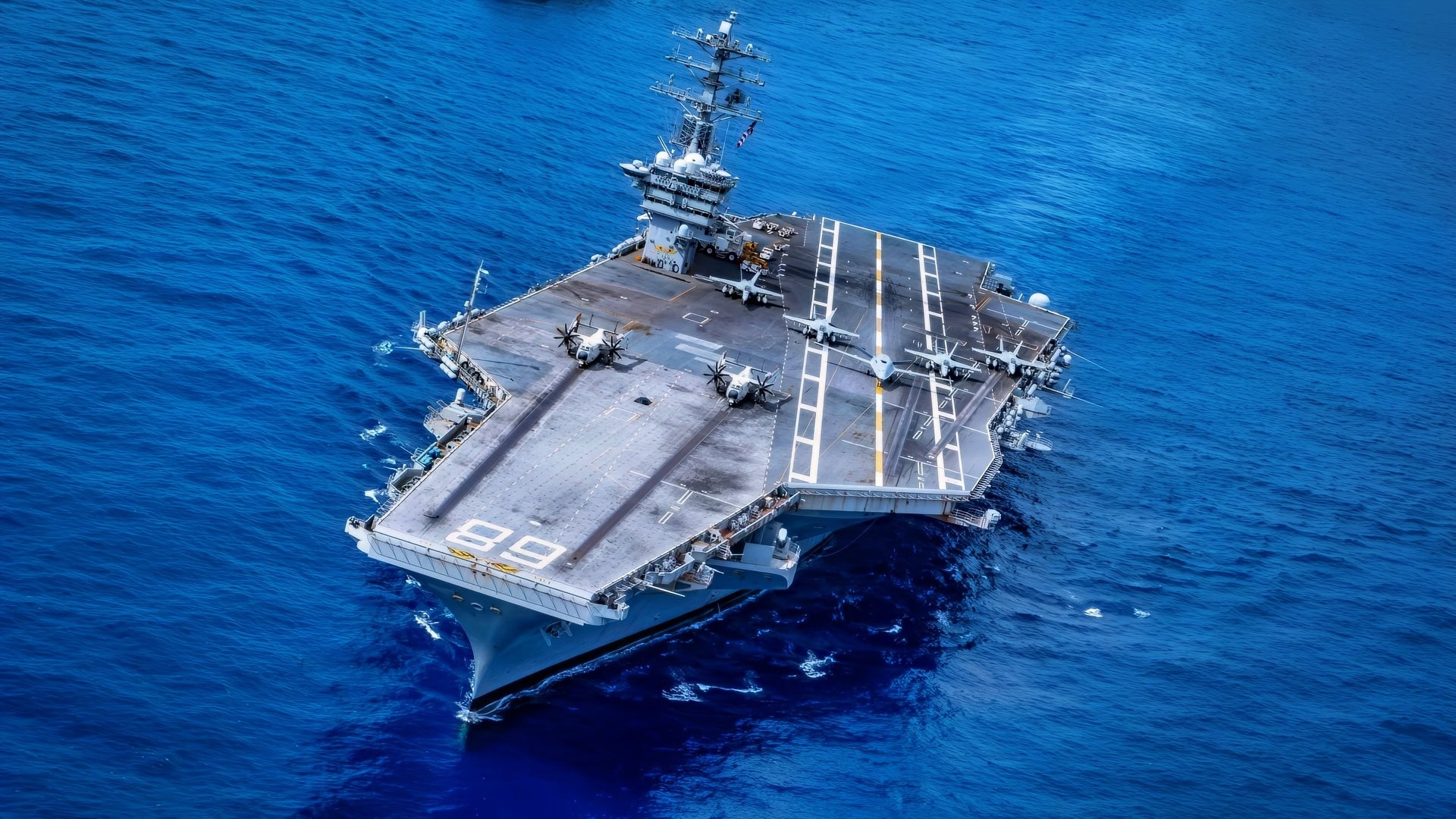
doctrine for aircraft carrier operations with steam catapults is well established and resistant to challenge. Our challenge is that the problem set that steam catapults solved has changed. Changes now come at an ever-increasing pace. Today’s aircraft carriers routinely remain in service for 40-50 years. Launch and recovery capabilities must accommodate and leverage new technologies in flying machines while operating under fire. The launch and recovery systems must keep pace.
https://playwire.com/?utm_source=pw_ad_container
Yesterday’s systems are no longer suited to today’s challenges, and certainly not to tomorrow’s.
From Gunpowder to Steam
We have been through this launch method search before.
Our first attempts at launching from ships involved gunpowder. It had its drawbacks. Ships’ captains and crews typically loathe adding more flammable material to their ships. Explosive material was not at all welcome. Another disadvantage was that the immediate acceleration of the literally “explosive” launch put damaging pressure on both the airframe and the human pilot’s frame.
Steam catapults came next. Inspired by British designs, the
U.S. Navy began using steam catapults for launching aircraft after WW II, significantly enhancing the operational capabilities of aircraft carriers. Successful deployment of this technology allowed heavier jets – with greater capability – to be launched efficiently from carriers. Lighter, shorter-legged aircraft, often propeller-driven, faded quickly, but not quietly. Dated doctrine hung on.
The larger Forrestal-class carriers were specifically designed to operate jet aircraft, incorporating steam catapults and angled flight decks.
The Era of Power and Mass
Our airplanes gained size and weight to exploit the launch technology. The 1950s in the U.S. were an era dominated by power and mass production. Size mattered. We had the Chevy 409, the Pontiac GTO, the Corvette 427, and the powerful Phantom II fighter-attack aircraft. More power was the answer to any question.
We built more “super carriers”. We also introduced the first nuclear submarines. Carrier aviation fielded the
A-3 Skywarrior, a large (by carrier standards) two-engine airplane specifically built to provide a seaborne nuclear attack capability. It served in many roles from the mid-1950s forward, withdrawn from use only in 1991. Throughout its service, the
Skywarrior was the heaviest operational aircraft to operate from an aircraft carrier, which contributed to its nickname “Whale”.
The Hidden Costs of Steam
Steam catapults have been the U.S. Navy’s standard for decades, but they are not without significant drawbacks. The systems are complex and manpower intensive. Seals, valves, and piping require a dedicated workforce. The launch system was designed to launch the heaviest aircraft, like the A-3 Skywarrior Whale. It had
difficulties launching lighter aircraft without serious risk.
Individual steam launches
consume a large amount of steam and water produced on board, increasing the ship’s logistical challenges. The necessary large cylinders and accumulators occupy a significant amount of deck and hangar space, limiting the number of aircraft the ship can carry and support. Any complex system that involves managing incompatible elements (steam, pressure, metal, etc.) is inherently maintenance-intensive. The unavoidable powerful jolt at the inception of launch, while less than that of the gunpowder launches of yore, makes the aircrew and any passengers helpless hostages pinned to seats until after clearing the deck. It also
stresses the airframe and shortens its service life.
Seeds of Change We Almost Missed
The 50s era and beyond also sowed seeds of change amid our focus on power and size that escaped widespread notice. In 1956 Nikita Khrushchev said, “we will bury you”. We noticed that but missed the interesting fact that in 1956, white-collar and service workers exceeded blue-collar workers in the United States for the first time. In the next year, the USSR launched Sputnik, assigning many of us of a certain age to science and engineering courses and curriculum because “we had to catch up”. “Missile gap” became a thing and affected elections. Jack Kennedy exploited this alleged gap. Defense realized increased budgets.
In the 50s, computers were new, novel, mysterious, and suspicious. They even used stacks of paper cards that would cycle through the machine. Slide rules were in vogue, as were typewriters. Schools even taught “typing” and something called “shorthand”. Business could not survive without these skills. We adapted and now carry in our hands remarkable “computing power” considered fantastical in the early space age. Now we all “type” without stenographers and bless or curse spellcheck. But we did not allow established doctrine to stymie progress in those days. We developed new doctrine.
The Lessons of Ukraine and Iran
Today we see clear examples of change wrought by advances in warfighting technology in Ukraine – and Iran.
“Change” is continuous and constant. Pervasive all-domain surveillance, uncrewed systems, precision at distance, real-time algorithmic modifications by “geeks” in the rear talking directly to operators of uncrewed systems in contact with the enemy. We see impressive production runs.
Ukraine vastly increased its drone production while under fire. Ukraine is on track to
produce 8 million drones this year, while still under fire.
Constant modifications of fielded weapons and other factors determine winners and losers.
Collaborative Combat Aircraft now in development are likely only part of the first wave populated by an ever-increasing variety of uncrewed systems. We will need to launch and recover these aircraft of many types with the high precision and speed available only with modern technology. Software dominates hardware.
Other Nations Have Noticed
Other nations have noticed. China
adopted the electromagnetic launch system for their newest aircraft carrier and its amphibious ship the
Sichuan. This is a
first for an amphibious assault ship. The Indian Navy is also on this track. More ships from more nations will surely follow. Chinese fighter and attack aircraft will gain from the availability of many platforms other than the “big decks”. That promises more aircraft being launched and recovered faster, a wider operational area, and an increasing sortie rate.
The Problem Set Has Moved
On current trends, our operational ships and our ships in the builders’ yards, the carrier decks and newer amphibious ships of the future, are likely to see an ever-increasing variety of crewed and uncrewed aircraft.
Launch and recovery systems will have to adapt to significant changes from one aircraft to another, and within a single aircraft type, at a launch-by-launch pace.
From a campaign perspective, carriers will not – and cannot- be the only aviation platform. Crewed and uncrewed systems will likely operate from short expeditionary sites, movable as needed, and ashore, assisted by modern electromagnetic catapult launch and arrested recovery systems. The First Island Chain is well suited for such operations. Once we fully appreciate the potential of change, we can dominate.
The problem set moved. We need
modern, adaptable systems to meet the new problem set,
now and for the next 50 years.
Retired Lt. Gen. Chip Gregson: Steam catapult doctrine is fighting the last war. Aircraft carriers need electromagnetic launch for the drone age.

www.19fortyfive.com







 Iran - Israel/US War: Israel-US declare war on Iran, Iran responds (125 Viewers)


